
FAQ: Shampoo for Oil Control and Volume
If you are comparing Shampoo options for oily roots, flat hair, or a scalp that gets heavy too quickly, an oil-control volumizing formula can solve a very common buyer problem: cleaning excess sebum without leaving the hair limp or stripped. This type of product is designed for people who want a fresher scalp feel, better root lift, and a lighter finish after washing.
What is this shampoo designed to do?
This product is an oil-control volumizing shampoo in a 500 ml pump bottle. Based on the visible label, it is intended to gently cleanse the scalp and hair, manage oil, and boost volume without stripping. The front label also highlights “Seaweed Oil-Control Volumizing Shampoo,” “Mild oil control soothe sensitive scalp,” and “Volumizing & Nourishing,” which suggests a balanced everyday wash rather than a harsh degreasing cleanser.
Who usually buys this type of formula?
It is a practical option for retail shoppers, salon resale, and e-commerce listings serving customers with oily scalp, fine hair, or hair that falls flat between washes. It may also appeal to buyers looking for a more Natural-leaning personal care product with a fresh, lightweight after-feel. Because the label mentions sensitive scalp comfort, it may fit users who want oil control without an aggressive cleanse.
What are the visible product specifications?
The bottle shown is a tall rectangular container with rounded shoulders and corners, a teal-green transparent body, and a black pump dispenser. The front has a printed label and the net content is clearly shown as 500 ml / 16.9 fl oz. The glossy bottle finish and pump format make it suitable for bathroom use, salon back-bar display, and controlled dispensing in daily routines.
Why does the pump packaging matter?
A pump bottle helps users dispense a consistent amount and reduces mess at the sink or shower. For retailers, the format also supports premium shelf presentation and easier end-user handling. In e-commerce, this style is easy to photograph and tends to communicate convenience immediately.
What ingredients or actives are confirmed?
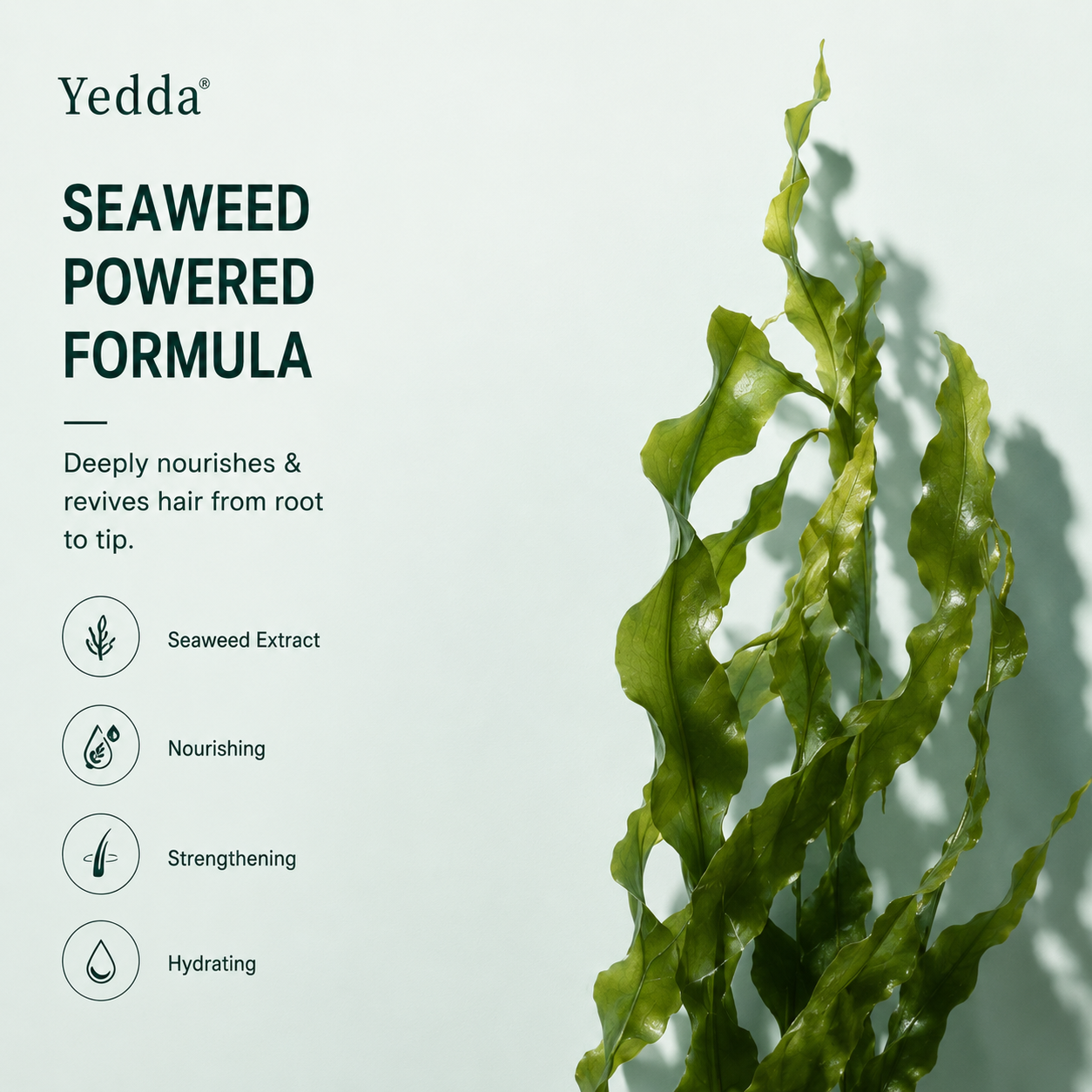
Only what is visible should be treated as confirmed: the label mentions natural seaweed extract for deep hydration. No exact ingredient list is provided here, so it would not be correct to claim sulfate-free, silicone-free, paraben-free, or medical-grade performance. If you are evaluating formulas for a product line, request the INCI list and safety documentation before making technical claims.
How does the manufacturing process usually work?
As a personal-care liquid shampoo, the product category typically involves formulation, batch mixing, quality checks, filling, capping, and labeling in primary plastic packaging. Because the exact factory process is not provided, it is best to treat this as a standard shampoo manufacturing and filling category rather than assume specialty processing. If you are sourcing for private label or retail, confirm packaging compatibility, pump performance, and fill consistency.
What are the main application scenarios?
This shampoo fits several buyer scenarios: home bathroom daily care, salon retail shelves, travel-friendly stocking in larger households, and online personal-care assortments. It is especially relevant when the customer wants a cleaner root feel but still expects softness and volume. In many hair-care lineups, this sits between a clarifying wash and a moisturizing shampoo.
How should buyers evaluate whether it is the right fit?
Start with scalp type, hair density, and washing frequency. If the hair gets oily fast and collapses at the roots, oil-control and volumizing benefits are useful. If the scalp is easily irritated, the “mild” and “soothe sensitive scalp” positioning may matter. For those focused on daily manageability, a formula that aims to Repair the damage from repeated washing or heat styling should be reviewed carefully, but only if the ingredient system actually supports that claim.
Can it be compared with a moisturizing shampoo?
Yes, but the goals are different. A Moisturizing Shampoo is usually chosen for dryness, frizz, or rough texture, while this oil-control version is more suitable for roots that need lift and a lighter finish. Some buyers prefer to alternate between the two depending on season, styling habits, and scalp condition.
What about quality control and safety checks?
For any shampoo product, buyers should confirm packaging integrity, pump function, label accuracy, fill volume, and batch consistency. Since no lab data is supplied, avoid assuming antimicrobial claims against Microorganisms or therapeutic scalp effects. Any such statement would need substantiation from the manufacturer.
Can this shampoo be customized for private label?
Typically, yes. Buyers may ask for changes to fragrance, viscosity, bottle color, label design, carton packaging, or pump style. The exact bottle material is not verified from the image, so packaging customization should be discussed with the supplier before tooling or print approval. If you are building a retail line, request samples and a spec sheet before finalizing artwork.
FAQ
Is this shampoo suitable for oily hair?
Based on the label, yes. It is presented as an oil-control volumizing shampoo for that use case.
Does it provide volume?
The visible claims say it helps boost volume, so it is positioned for flatter hair types.
Is it definitely natural?
No exact proof is supplied. The label mentions natural seaweed extract, but that does not confirm the full formula is natural.
Is this a medical scalp treatment?
No. It should be treated as a cosmetic shampoo unless the manufacturer provides regulated testing and claims.
Need a shampoo for retail, salon, or private label sourcing?
If you are building a product assortment and need a 500 ml oil-control shampoo format, this style is a strong reference point. Contact your supplier to request the full ingredient list, packaging details, and customization options before placing an order.