
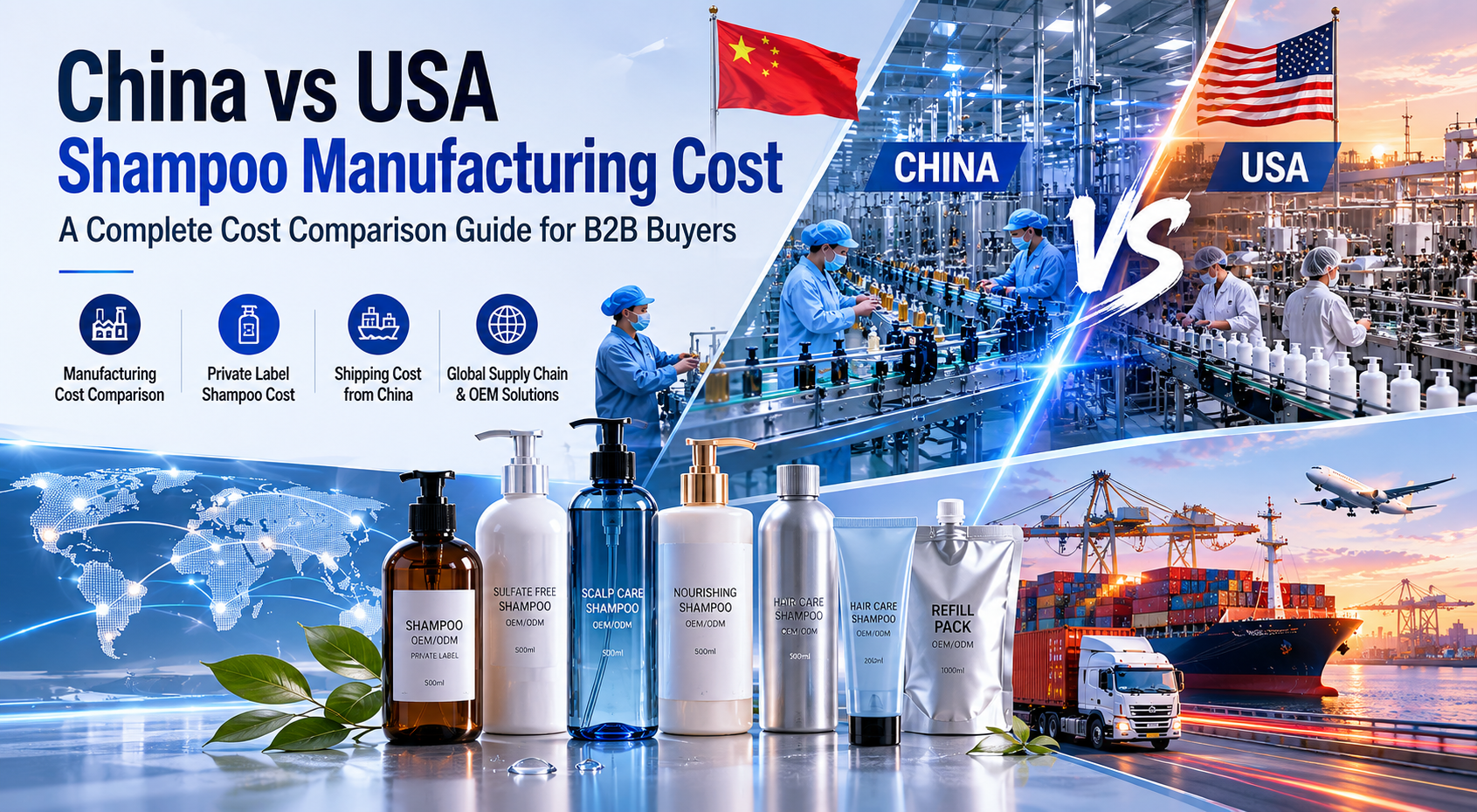
Understanding shampoo manufacturing cost has become increasingly important for beauty brands, importers, salon chains, and private label startups seeking reliable OEM partners. As global competition in the hair care industry continues growing, more brands are comparing manufacturing costs between China and the United States to identify the most cost-effective and scalable production solution.
Over the past decade, China has become one of the world’s largest cosmetic manufacturing hubs, especially in the private label hair care sector. At the same time, many brands still consider local manufacturing in the United States due to shorter shipping distances and perceived communication advantages.
However, the actual manufacturing cost comparison between China and the USA involves far more than labor expenses. Packaging supply chains, ingredient sourcing, MOQ flexibility, production scalability, shipping logistics, and factory specialization all directly affect the final product cost.
According to global hair care market research, the international hair care market continues expanding due to rising demand for premium, customized, and functional hair care products.
Understanding Shampoo Manufacturing Cost
Shampoo manufacturing cost refers to the total expense required to develop, produce, package, and deliver shampoo products.
The total cost structure typically includes:
- Raw materials
- Formula development
- Packaging materials
- Labor
- Filling and production
- Quality control testing
- Warehouse management
- Shipping and logistics
- Compliance and certification
Many brands assume labor is the only major difference between China and the USA. In reality, the most significant cost advantages often come from China’s highly integrated manufacturing ecosystem.
Chinese cosmetic manufacturing regions have developed complete supply chains that connect:
- Packaging factories
- Raw material suppliers
- Bottle manufacturers
- Label printing facilities
- Pump suppliers
- Logistics providers
- OEM production plants
This industrial integration allows a professional shampoo factory China to reduce production lead times and optimize costs more efficiently than many Western factories.
China vs USA Shampoo Manufacturing Cost Comparison
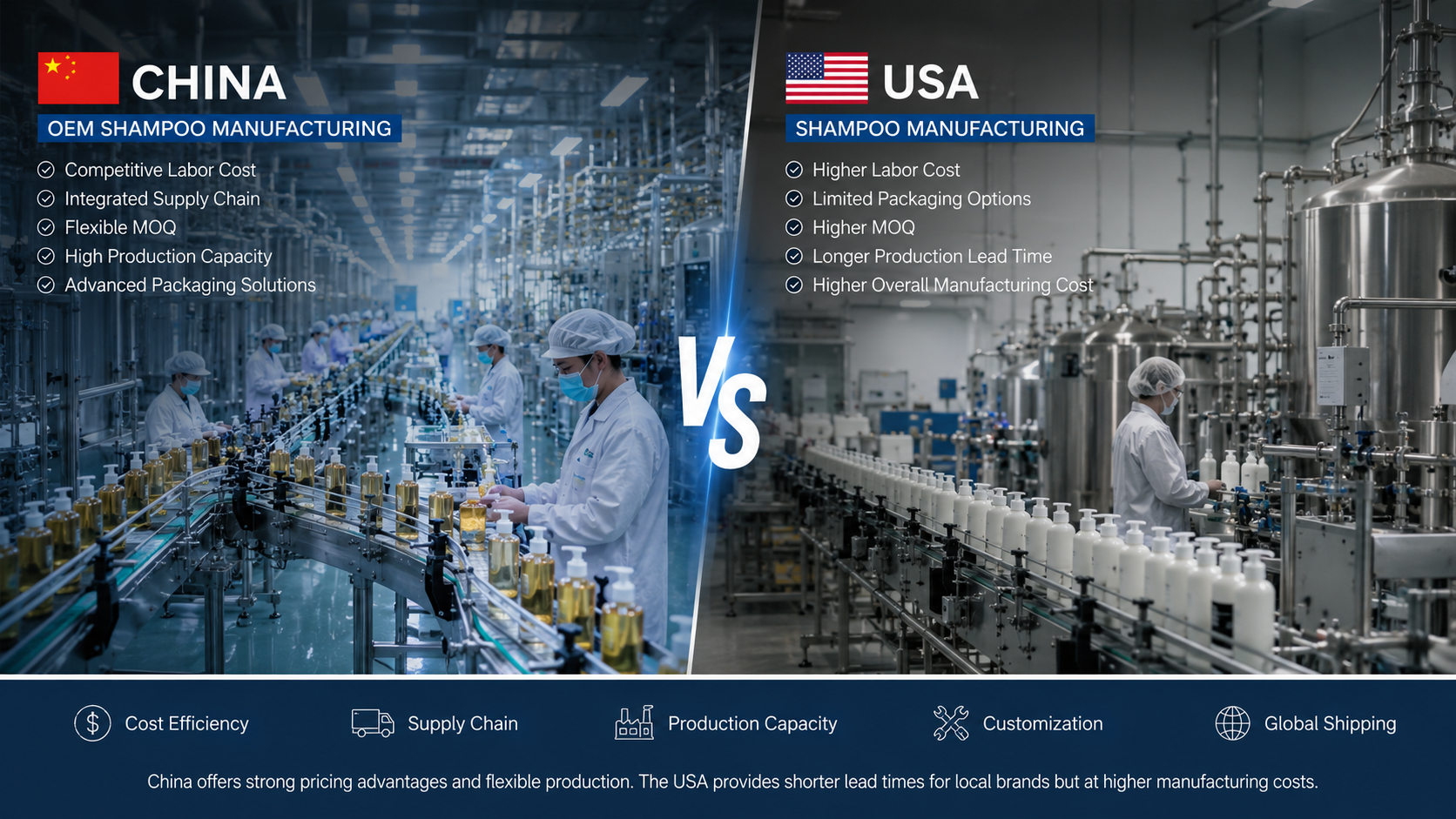
The biggest difference between Chinese and American production lies in supply chain efficiency and production scalability.
| Cost Factor | China Manufacturing | USA Manufacturing |
| Labor Cost | Lower | Higher |
| Packaging Cost | Lower | Higher |
| MOQ Flexibility | More Flexible | Usually Higher |
| Custom Bottle Production | Strong Supply Chain | Limited Options |
| Raw Material Access | Highly Competitive | Moderate |
| Shipping Cost | Higher International Freight | Lower Domestic Freight |
| Production Scalability | Very Strong | Moderate |
While domestic production in the USA may reduce transportation complexity, Chinese manufacturers often achieve lower total production costs through economies of scale.
For many private label brands, the savings in packaging, labor, and manufacturing efficiency outweigh international freight expenses.
Why Shampoo Factory China Offers Competitive Pricing
A modern shampoo factory China benefits from a mature cosmetic manufacturing ecosystem built over decades.
Unlike fragmented supply chains in some regions, Chinese manufacturers often operate near:
- Packaging factories
- Plastic molding suppliers
- Ingredient distributors
- Printing facilities
- Label manufacturers
- Freight forwarding hubs
This proximity reduces operational costs and production delays.
China also has strong manufacturing specialization in beauty and personal care production. Many factories focus specifically on:
- Private label shampoo
- Scalp care products
- Hair growth formulas
- Sulfate-free shampoo
- Salon hair care products
- Professional OEM manufacturing
According to McKinsey supply chain insights, vertically integrated supply chains continue becoming a major competitive advantage in global manufacturing industries.
Labor Cost Differences in Shampoo Manufacturing
Labor cost remains an important factor in manufacturing cost comparison.
Although labor costs in China have increased over the past decade, many Chinese factories still maintain lower operational expenses than manufacturers in the United States.
However, labor cost alone does not fully explain pricing differences.
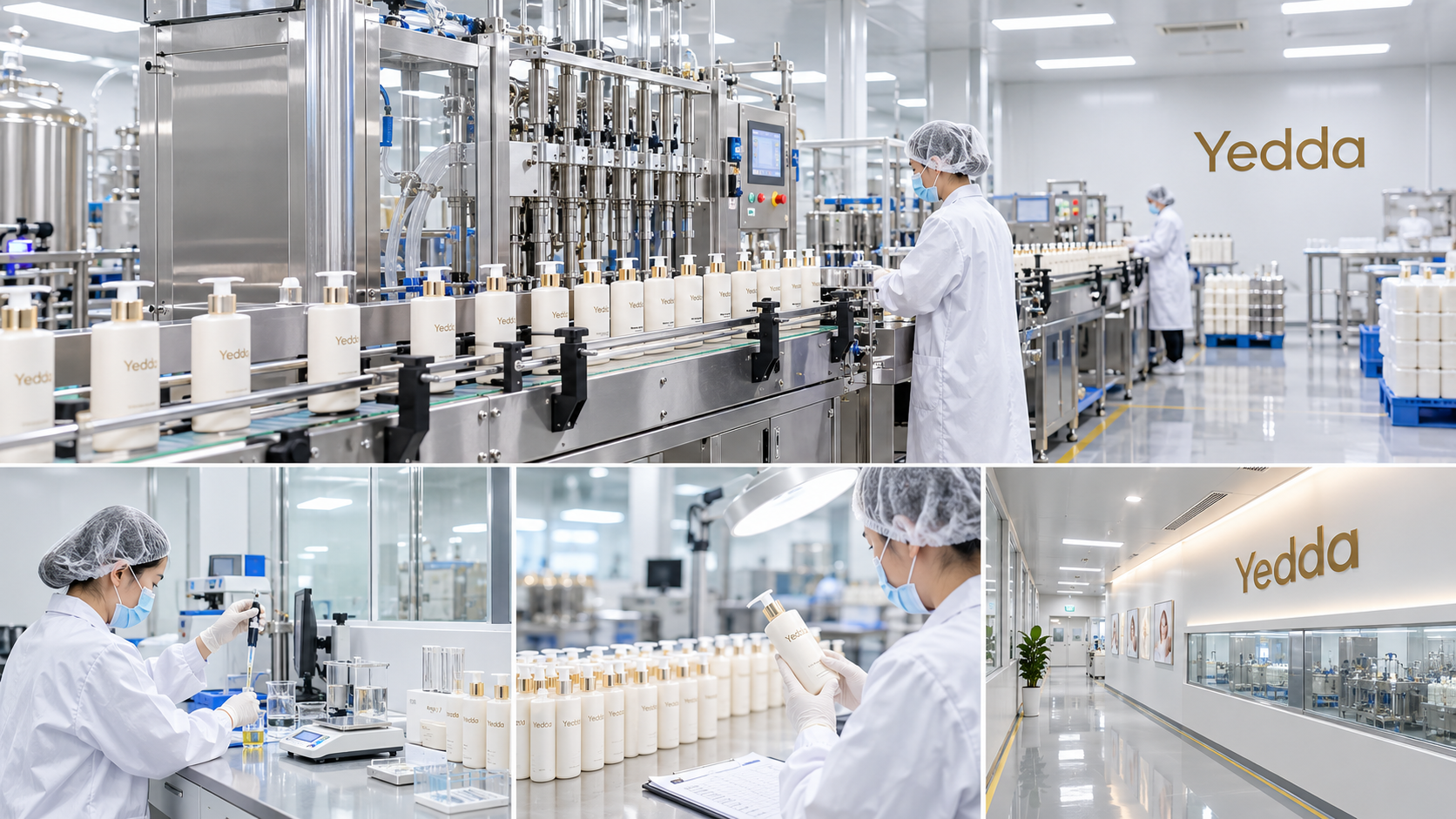
Modern Chinese OEM facilities increasingly invest in:
- Automation systems
- High-speed filling equipment
- Automated labeling
- Digital inventory management
- Integrated production planning
These upgrades improve manufacturing efficiency while reducing production waste.
American factories may offer certain advantages for small domestic distribution projects, but higher labor expenses often increase the final private label shampoo cost.
Packaging Costs and Custom Bottle Production
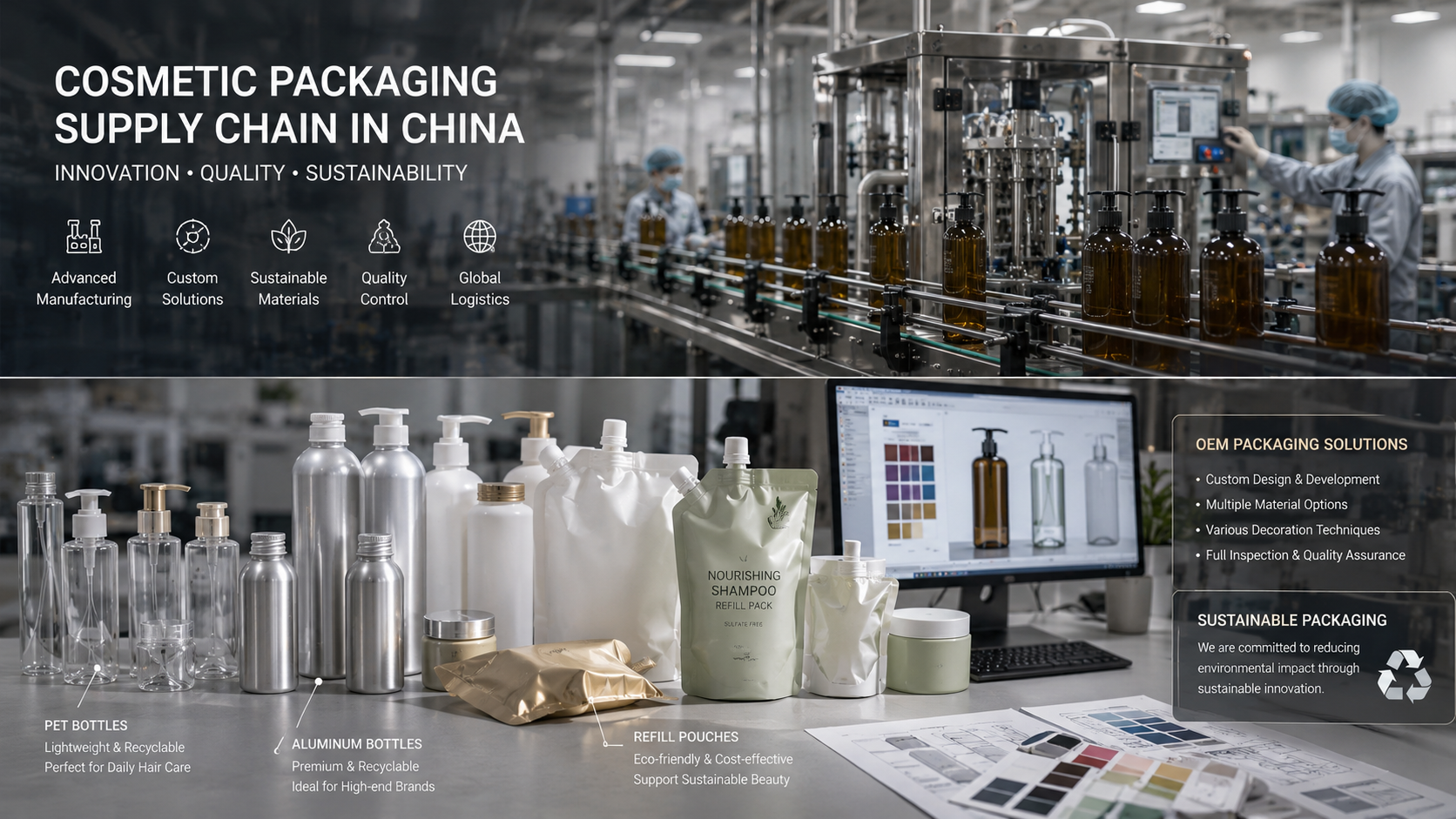
Packaging is one of the most important cost components in hair care manufacturing.
In many cases, packaging expenses account for a significant percentage of total product cost.
China maintains a major advantage in packaging production because of its extensive packaging supplier network.
Chinese suppliers offer:
- PET bottles
- HDPE bottles
- Airless pumps
- Luxury acrylic packaging
- Aluminum bottles
- Refill pouches
- Custom mold development
Factories in China can usually source packaging components more quickly and at lower cost compared to many American suppliers.
According to Packaging Digest industry insights, sustainability trends and custom packaging demand continue reshaping cosmetic packaging development globally.
For brands requiring custom packaging, China’s supply chain depth often creates significant pricing advantages.
MOQ Differences Between China and USA Manufacturers
Minimum order quantity directly affects startup brands and small businesses entering the hair care market.
Many American manufacturers require higher MOQs due to higher operational expenses and smaller production flexibility.
In contrast, many Chinese OEM factories now provide:
- Low MOQ production
- Flexible packaging options
- Small batch customization
- Private label starter programs
- Rapid sampling services
This flexibility allows emerging brands to reduce inventory pressure and control launch risks.
Lower MOQ programs have become increasingly important as more beauty startups seek fast market entry without excessive upfront investment.
Shipping Cost from China and International Logistics
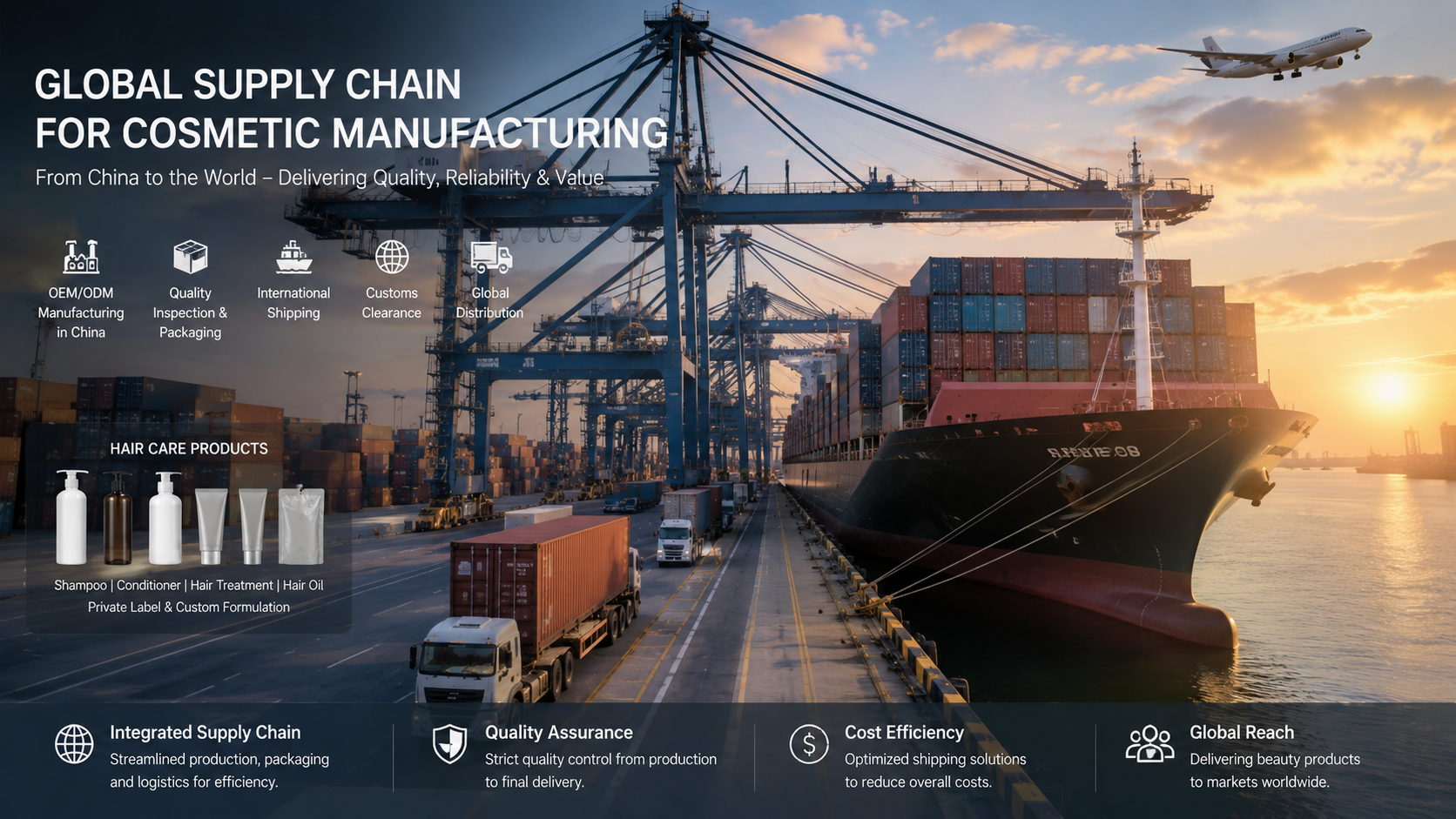
Shipping cost from China is one of the most commonly discussed concerns among international buyers.
International freight expenses increased significantly during recent global supply chain disruptions.
However, despite higher freight costs, Chinese manufacturing often remains more cost-effective overall due to lower production and packaging expenses.
Shipping costs typically depend on:
- Order volume
- Packaging size
- Destination country
- Shipping method
- Fuel prices
- Port congestion
Brands importing from China usually choose between:
- Sea freight
- Air freight
- Rail logistics
- Express courier shipping
According to UNCTAD global logistics reports, shipping efficiency and supply chain resilience remain major priorities for international manufacturers and importers.
Many professional Chinese OEM suppliers now work closely with freight forwarders to optimize international shipping efficiency.
Private Label Shampoo Cost Structure Explained
The total private label shampoo cost depends on multiple factors beyond manufacturing location.
Key cost variables include:
- Formula complexity
- Ingredient quality
- Packaging type
- Order quantity
- Customization level
- Testing requirements
- Label design
- Shipping method
For example, a sulfate-free scalp care shampoo with custom packaging and premium botanical extracts will cost significantly more than a standard stock formula.
Luxury packaging can also dramatically increase total production costs.
Brands should therefore evaluate total landed cost rather than focusing only on factory pricing.
Production Scalability and Manufacturing Efficiency
One major advantage of Chinese manufacturing is scalability.
Many Chinese OEM factories are designed for high-volume production and rapid expansion.
This is especially valuable for fast-growing beauty brands experiencing sudden sales increases.
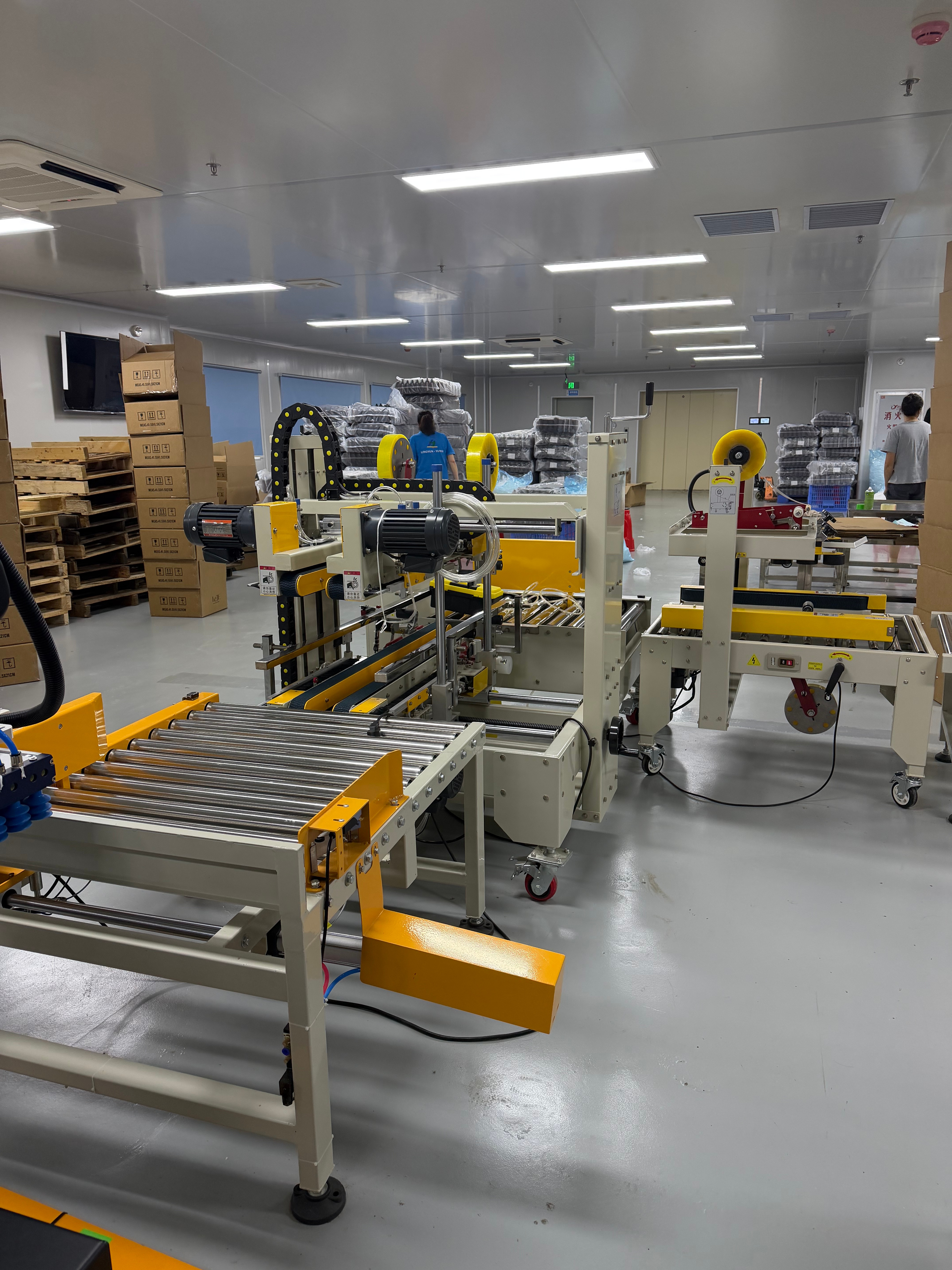
Large-scale factories often provide:
- Multiple filling lines
- Automated mixing systems
- Dedicated packaging departments
- Advanced warehouse management
- Integrated quality control systems
Production scalability helps brands avoid supply shortages during growth periods.
American manufacturers may provide strong quality standards, but some smaller facilities may face capacity limitations during rapid expansion.
Quality Control Standards in China vs USA Manufacturing
Some buyers still assume that Chinese manufacturing automatically means lower quality.
In reality, many professional Chinese OEM suppliers operate under strict international standards.
Leading factories often maintain:
- GMPC certification
- ISO standards
- Microbiological testing systems
- Stability testing procedures
- Batch traceability systems
- Automated quality inspections
Quality outcomes depend more on factory management, R&D capability, and operational systems than geographic location alone.
Brands should therefore evaluate suppliers based on technical capabilities rather than assumptions about manufacturing regions.
How to Reduce Shampoo Manufacturing Cost Without Sacrificing Quality
Reducing manufacturing cost should not mean compromising product quality.
Professional OEM suppliers help brands optimize costs through:
- Packaging optimization
- Efficient ingredient sourcing
- Formula standardization
- Bulk purchasing strategies
- Production scheduling efficiency
- Integrated supply chain management
Brands can also reduce costs by:
- Using stock bottle options
- Simplifying packaging structures
- Increasing order quantities
- Selecting efficient shipping methods
- Reducing unnecessary customization
Experienced OEM partners can often identify hidden inefficiencies that increase overall product cost.
Why More Global Brands Choose Shampoo Factory China
Despite ongoing discussions about global manufacturing diversification, China remains one of the world’s most important cosmetic manufacturing centers.
Many global brands continue choosing Chinese suppliers because of:
- Competitive production pricing
- Advanced packaging supply chains
- Strong customization capability
- Flexible MOQ support
- Fast product development
- Large-scale manufacturing capacity
- Integrated sourcing ecosystems
As the beauty industry becomes increasingly competitive, supply chain efficiency and production scalability continue playing critical roles in brand profitability.
For many companies, partnering with an experienced shampoo factory China provides the best balance between quality, customization, and cost control.
FAQ
Why is shampoo manufacturing cheaper in China?
China offers lower shampoo manufacturing cost due to integrated supply chains, competitive packaging production, scalable factories, and efficient sourcing ecosystems.
What affects private label shampoo cost?
Private label shampoo cost depends on formula complexity, ingredient quality, packaging type, MOQ, customization level, testing requirements, and shipping expenses.
Is shipping cost from China expensive?
Shipping cost from China depends on freight method, order size, destination country, and fuel prices. However, lower production costs often offset international shipping expenses.
How do China and USA manufacturing costs compare?
China generally offers lower production and packaging costs, while USA manufacturing may provide shorter domestic logistics routes but higher operational expenses.