
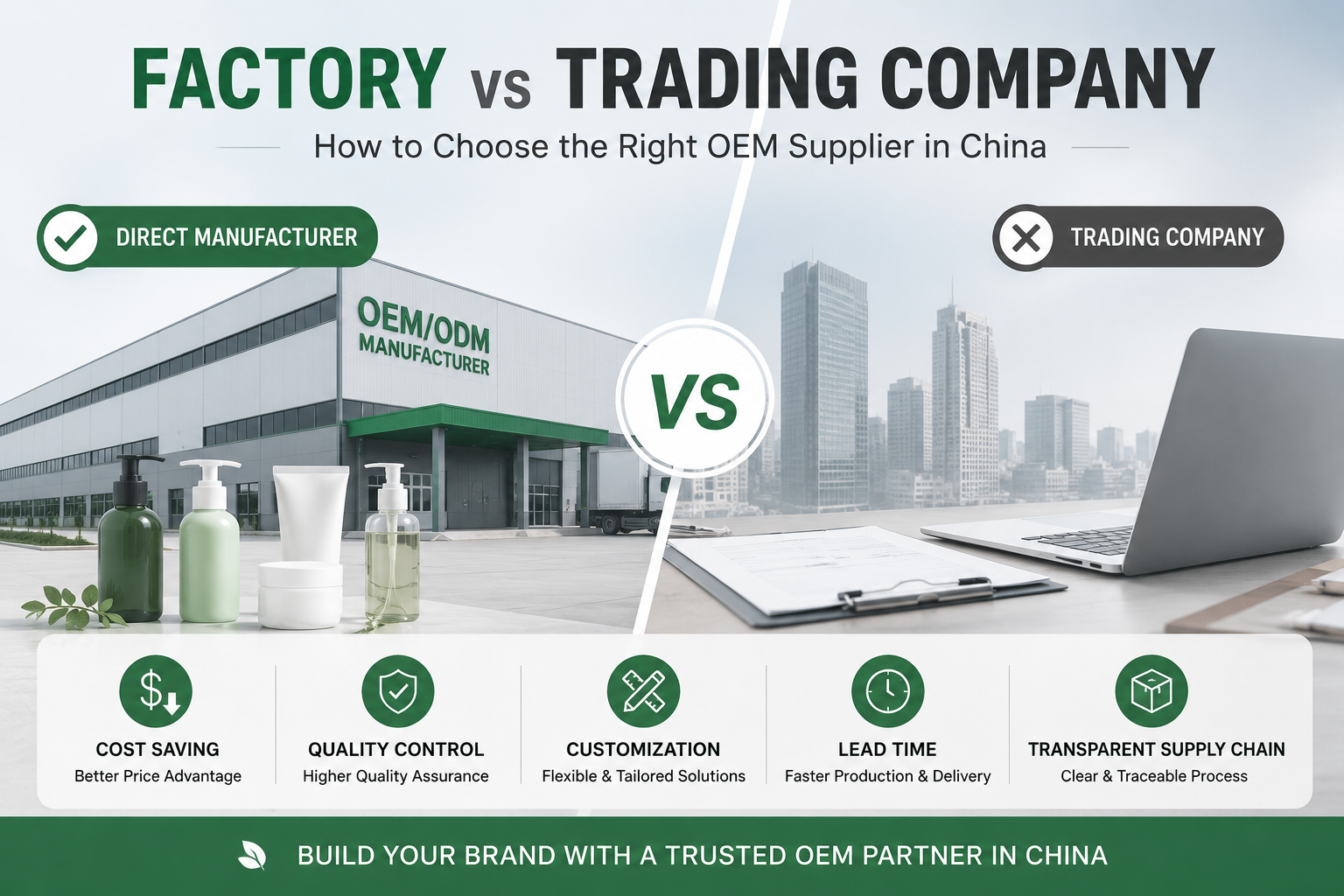
When launching a private label hair care brand, one of the most critical decisions is choosing between a direct factory and a trading company. This decision can significantly affect costs, production quality, communication efficiency, and overall project timelines. Understanding the differences between a factory vs trading company is essential for any brand aiming to scale in global markets.
Many B2B buyers in the hair care industry are unaware of the practical distinctions. While trading companies often act as intermediaries between buyers and manufacturers, direct manufacturers provide more transparent access to production, raw materials, and OEM capabilities. Selecting the right partner ensures smoother operations, cost efficiency, and higher product quality.
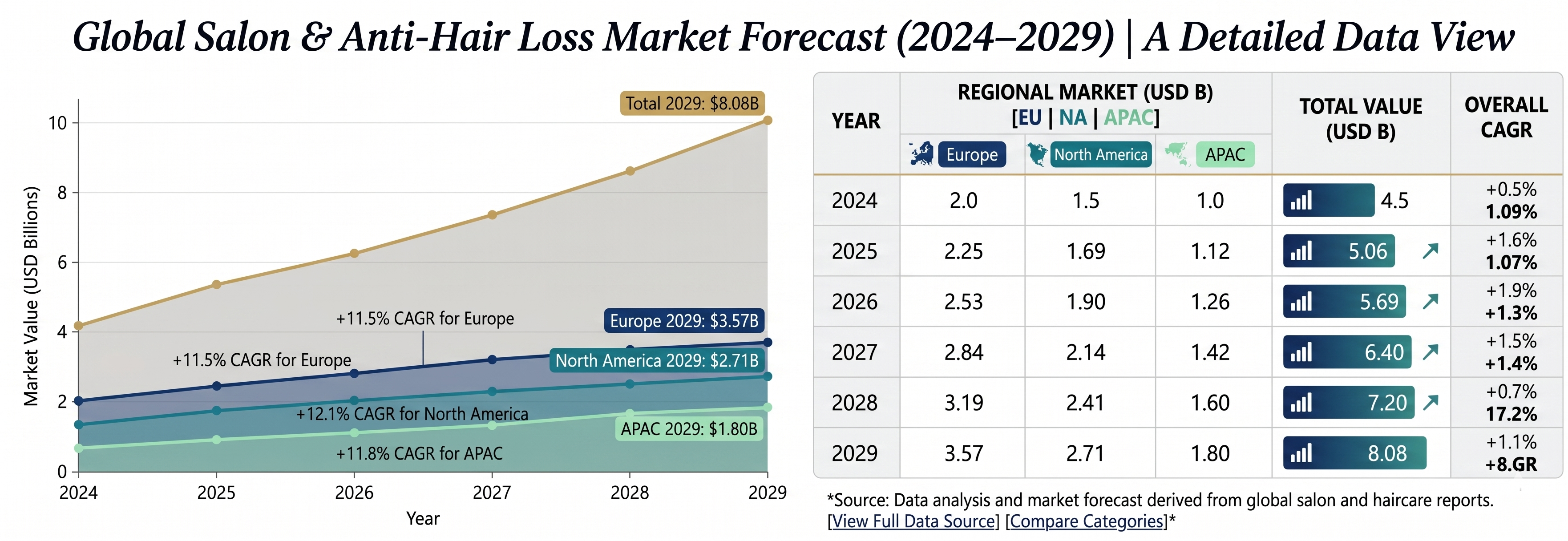
According to Grand View Research, the global hair care market continues to grow rapidly, with private label and OEM partnerships driving a large portion of new product launches.
Factory vs Trading Company: Overview
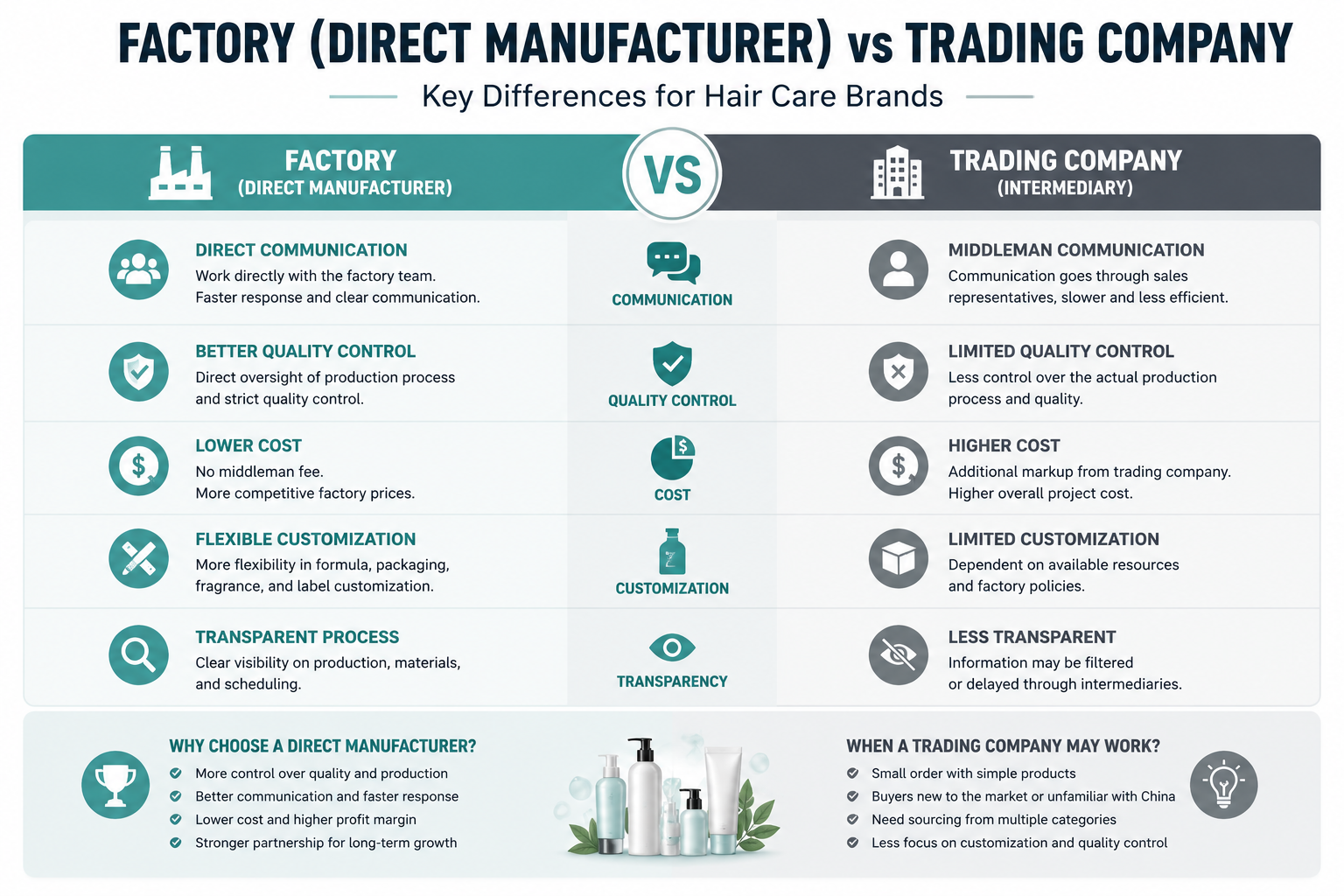
A direct manufacturer operates its own production facility, owns equipment, manages R&D, and controls the quality of each batch. In contrast, a trading company typically sources products from multiple factories, managing the logistics, quotations, and communications on behalf of the buyer.
Key differences include:
- Production control: Factories have direct oversight of every production stage.
- Customization: Factories can adjust formulas, ingredients, and packaging more flexibly.
- Lead times: Direct manufacturers often provide more accurate timelines.
- Pricing: Trading companies may charge a premium due to their intermediary role.
- Supplier transparency: Factories allow full visibility into sourcing and compliance.
Choosing between the two depends on the brand’s priorities, such as customization, cost control, and long-term partnership goals.
Cost Comparison Between Factory and Trading Company
One of the primary reasons brands consider a trading company is perceived convenience. However, this can lead to higher costs. A direct manufacturer usually offers:
- Lower per-unit cost due to elimination of middleman margins
- Better ability to negotiate bulk pricing for raw materials
- Flexibility in modifying formulas without added charges
- Reduced risk of hidden fees or packaging markups
Conversely, trading companies often include additional service fees, which can increase the final cost. According to McKinsey supply chain analysis, reducing intermediary layers in manufacturing improves cost efficiency and shortens delivery timelines.
Communication and Project Management
Effective communication is vital in private label manufacturing. Working with a direct factory allows brands to:
- Communicate directly with production managers and R&D teams
- Receive real-time updates on formula testing, batch quality, and production progress
- Resolve issues quickly without relying on a third party
Trading companies may streamline communication for buyers who lack industry experience, but this comes at the cost of slower responses and potential information distortion.
Product Customization Capabilities

Customization is a core advantage of choosing a direct manufacturer. Brands can request:
- Unique formulas and ingredient concentrations
- Custom packaging, labels, and bottle types
- Specialized hair care treatments (e.g., sulfate-free, scalp care, repair formulas)
- Sample batch testing before full production
Trading companies often limit customization because they rely on pre-existing factory products to meet multiple clients’ needs efficiently.
Quality Control and Compliance
Working directly with a factory provides greater transparency in quality assurance. Direct access allows brands to:
- Inspect production lines
- Review testing procedures and certificates
- Ensure batch-to-batch formula consistency
- Monitor adherence to hair care OEM standards
Many factories in China maintain international quality certifications such as ISO, GMP, and GMPC. Brands sourcing through trading companies may not have full visibility of the factory’s compliance protocols, potentially increasing risk. Cosmetics Europe guidelines emphasize the importance of direct oversight for compliance verification.
Supply Chain Transparency
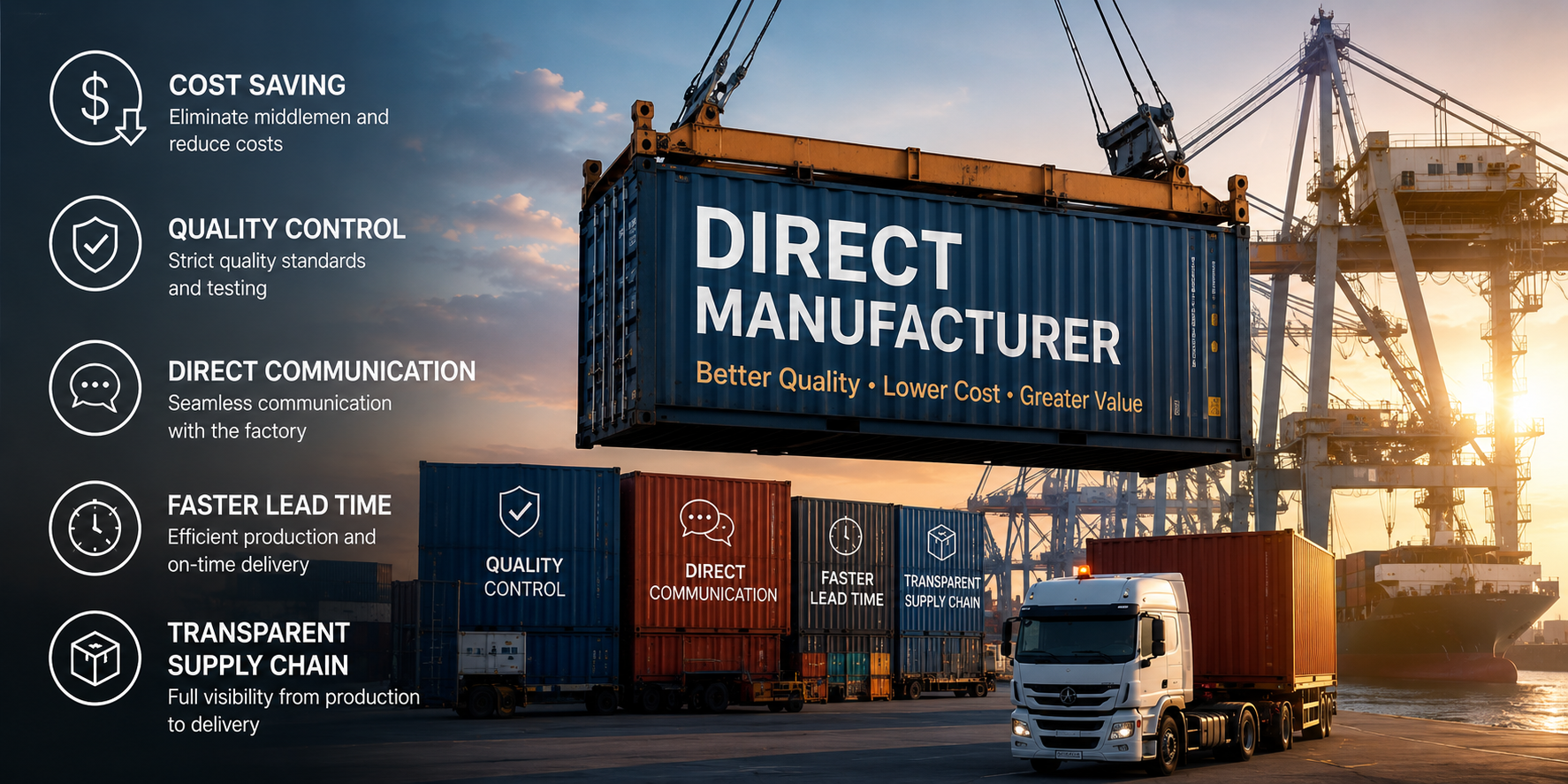
Direct manufacturers allow brands to see the full supply chain, including raw material sourcing, ingredient quality, packaging suppliers, and production scheduling. This transparency supports:
- Better cost management
- Faster problem-solving in case of production delays
- Clearer intellectual property protection
- Increased confidence in product quality
Trading companies often aggregate multiple factories’ capabilities, which can make supply chains less predictable and reduce the buyer’s control.
Lead Time Comparison
Lead time is a critical factor for brands looking to launch products quickly. Direct manufacturers usually provide more predictable production schedules because they control the entire process. Trading companies may add extra time due to coordination between multiple factories and intermediaries.
- Direct manufacturers: clearer timelines, faster adjustments, reduced delays
- Trading companies: potential delays from third-party coordination, less flexible scheduling
Efficient lead time management ensures that new product launches meet market windows and seasonal demand.
MOQ and Flexibility
Minimum Order Quantity (MOQ) requirements differ significantly. Factories often allow more flexibility for smaller or trial batches, which is ideal for startups or new product testing. Trading companies may enforce higher MOQs to streamline operations.
- Direct manufacturer: lower MOQ options, small-batch production
- Trading company: typically higher MOQs, limited flexibility
Intellectual Property Protection
Protecting proprietary formulas is a major concern. Working directly with a factory can enhance IP protection because contracts and NDAs are executed without intermediary handling. Trading companies, while convenient, can increase risk of formula leaks or miscommunication.
Brands should always ensure:
- Signed NDAs with both parties (supplier and internal team)
- Clear ownership of custom formulas
- Confidentiality agreements for packaging and branding materials
Which Option Is Better for Different Buyers?
The choice between a direct manufacturer and a trading company depends on business goals:
- Startups seeking lower MOQ, high customization, and formula control: Direct manufacturer
- Brands looking for convenience, quick sourcing, and simple product lines: Trading company
- International buyers needing guidance on compliance and logistics: Trading company may add value
- Long-term partnerships emphasizing quality, IP protection, and supply chain transparency: Direct manufacturer
Decision Matrix
| Factor | Direct Manufacturer | Trading Company |
| Cost | Lower per unit | Higher due to intermediary margin |
| Customization | High | Moderate |
| Lead Time | Predictable and fast | Variable, possible delays |
| MOQ | Flexible | Higher |
| IP Protection | Better control | Higher risk |
| Communication | Direct with production team | Through intermediary |
| Supply Chain Transparency | Full visibility | Limited insight |
Conclusion
Understanding the distinction between a factory vs trading company is critical for private label hair care brands. While trading companies can simplify sourcing, direct manufacturers provide superior control over cost, quality, customization, and supply chain transparency. Brands should assess their priorities, such as whether they value low MOQ, formula flexibility, IP protection, or convenience, before making a choice. A well-structured shampoo manufacturer checklist can assist in making an informed decision.
FAQ
What is the main difference between a factory and a trading company?
A factory owns the production facility and manages the entire manufacturing process, whereas a trading company acts as an intermediary between buyers and multiple manufacturers, coordinating sourcing, pricing, and logistics.
Why choose a direct manufacturer in China?
Direct manufacturers in China offer lower per-unit costs, better customization options, direct communication with the production team, and greater transparency in quality control and supply chain management.
Are trading companies easier for small brands?
Trading companies can simplify the purchasing process, provide guidance on compliance, and coordinate orders, which may benefit small or inexperienced brands, but often at higher costs and reduced control.
How can I protect my formula when working with a trading company?
Always use NDAs, clearly define intellectual property ownership, and limit access to sensitive formula and packaging information to trusted personnel and suppliers.