
Launching a successful beauty brand requires more than a great product idea. In today’s competitive personal care market, brands need clear positioning, reliable formulations, attractive packaging, and a trusted manufacturing partner. For entrepreneurs and beauty companies, understanding how to start a body care brand is an important first step toward building a commercially viable product line.
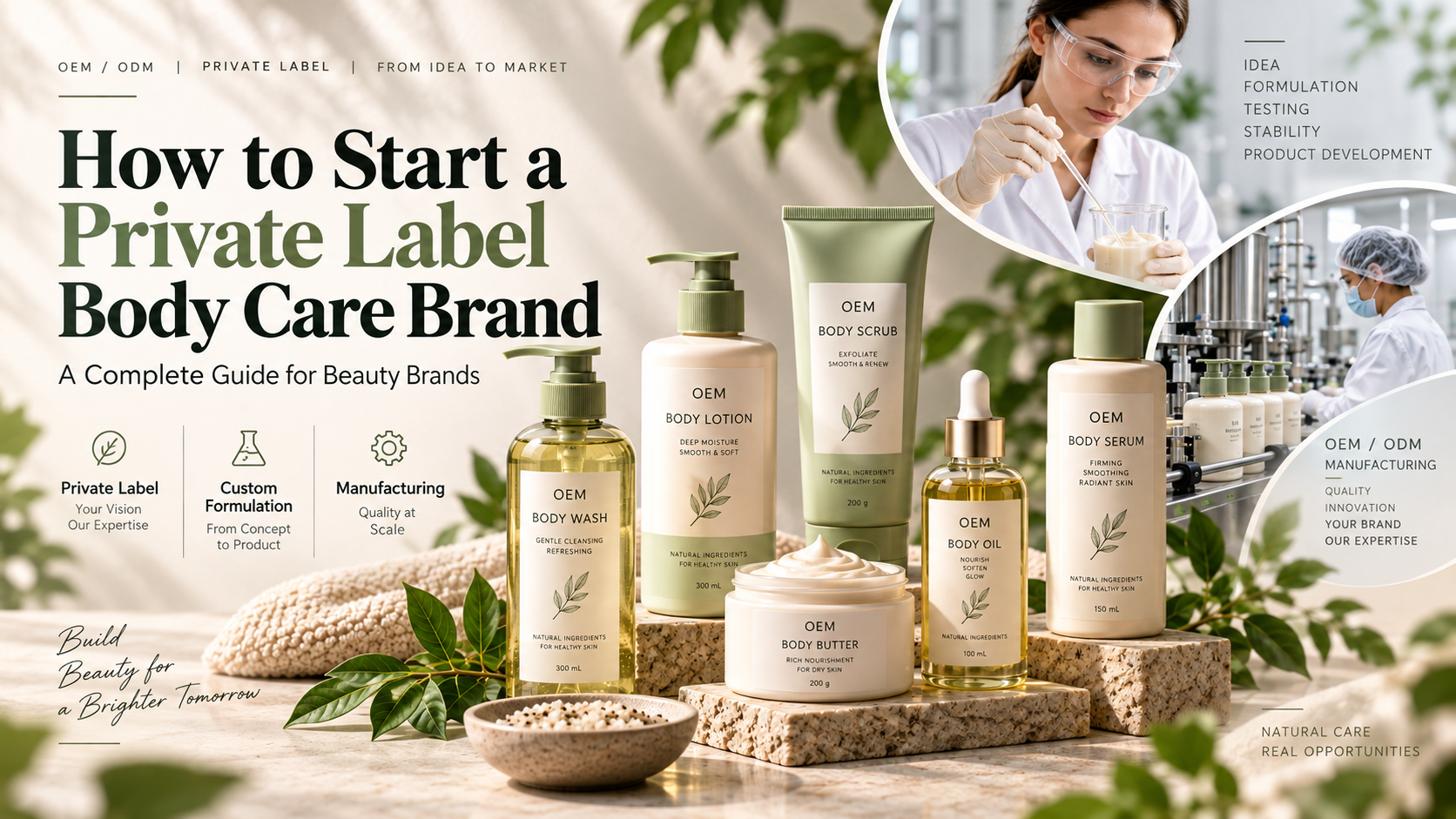
Private label body care allows brands to launch body lotions, body washes, scrubs, oils, serums, and other personal care products without investing in their own manufacturing facilities. By working with an experienced body care manufacturer, brands can move from product concept to market-ready products more efficiently.
What Is Private Label Body Care?
Private label body care refers to products manufactured by a professional supplier and sold under your own brand name. Depending on the manufacturer, brands may choose from existing formulas or request different levels of customization for ingredients, texture, fragrance, color, and packaging.
Common private label body care products include:
- Body lotion
- Body wash
- Body scrub
- Body butter
- Body serum
- Body oil
- Hand cream
- Body mist
Compared with developing a completely new formula from scratch, private label manufacturing can provide a faster and more flexible route to market, especially for startups and growing beauty brands.
Why Start a Private Label Body Care Brand in 2026?
Consumers are increasingly looking for body care products that offer more than basic cleansing and moisturizing. Skincare-inspired ingredients, premium textures, distinctive fragrances, sensitive-skin concepts, and sustainable packaging are creating new opportunities for beauty brands.
For companies planning to sell in the United States, product development should also consider applicable FDA cosmetics laws and regulations when preparing formulas, labels, and finished products for the market.
How to Choose Your Private Label Body Care Products
Product selection is one of the most important decisions when learning how to start a body care brand. Your first collection should match your target customer, price positioning, and overall brand concept.
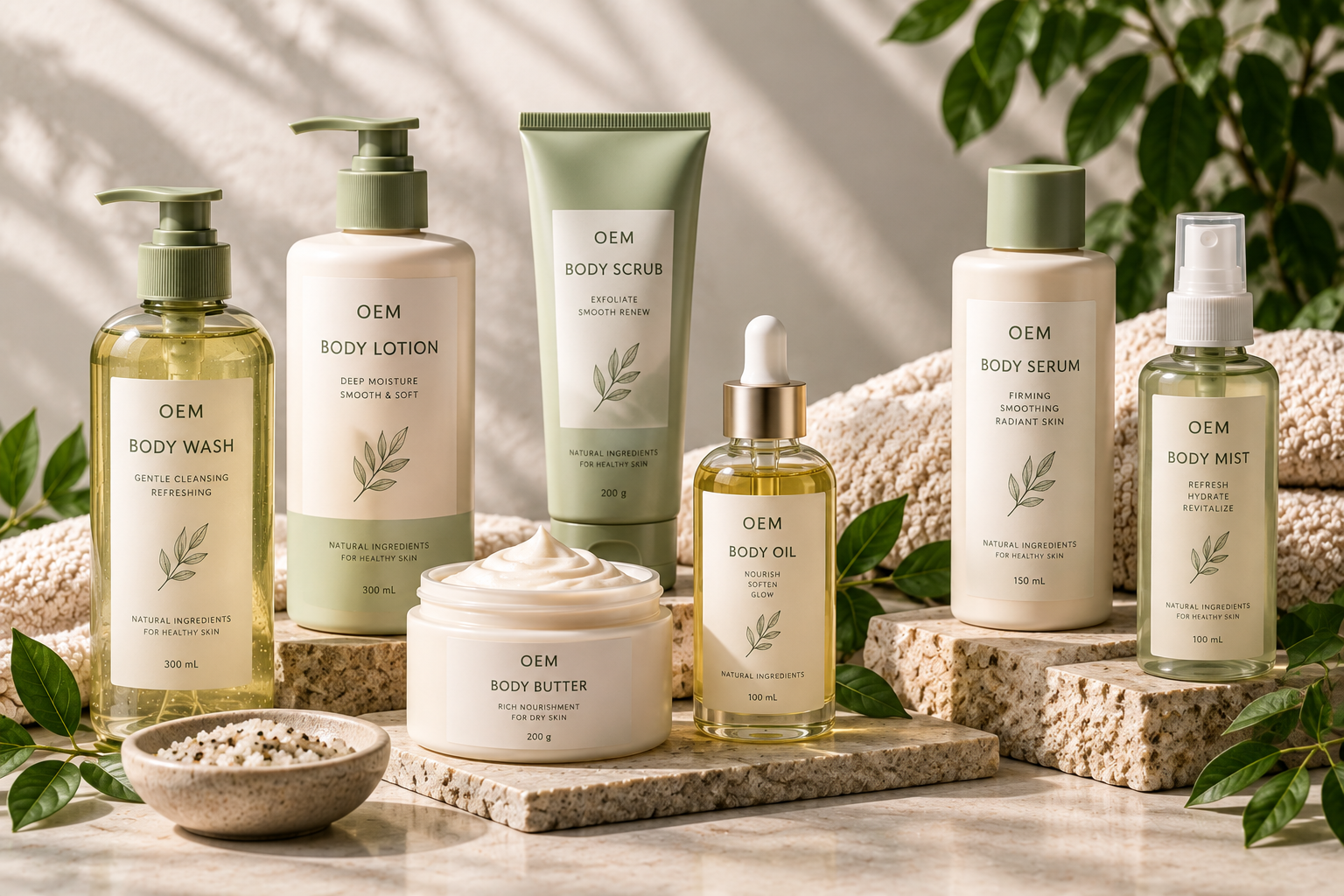
Popular Products for New Body Care Brands
- Private label body lotion: suitable for hydration, barrier-care, sensitive-skin, and premium positioning.
- Body wash: a high-frequency daily-use product with broad market appeal.
- Body scrub: ideal for exfoliating, spa-inspired, and sensorial concepts.
- Body serum: a premium format influenced by facial skincare.
- Body butter: suitable for rich textures and dry-skin concepts.
New brands do not necessarily need to launch a large number of SKUs. A focused three-product collection such as body wash, body lotion, and body scrub can create a clearer brand story while reducing initial inventory complexity.
Private Label vs Custom Formulation
Brands typically choose between existing private label formulas and fully customized formulations.
| Factor | Private Label | Custom Formulation |
|---|---|---|
| Development Time | Usually faster | Usually longer |
| Development Cost | Generally lower | Generally higher |
| Customization | Moderate | High |
| Best For | Startups and testing markets | Differentiated or established brands |
An experienced private label skincare manufacturer can help evaluate which approach is more suitable based on budget, timeline, positioning, and production volume.
Formulation Development for Private Label Body Care
A successful body care formula should balance market positioning with stability, texture, fragrance, preservation, ingredient compatibility, packaging compatibility, and consumer experience.
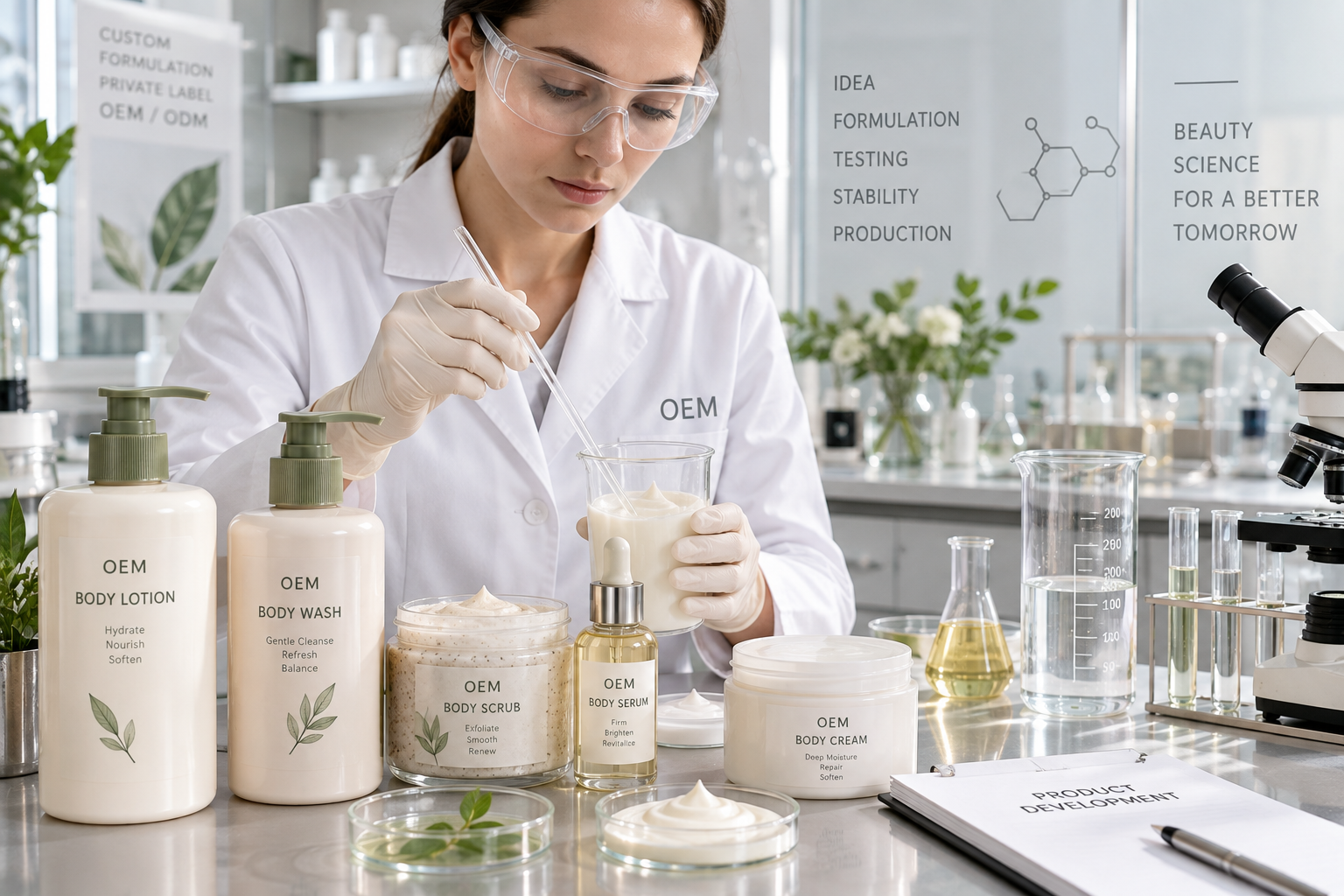
Depending on the product concept, brands may explore ingredients such as niacinamide, ceramides, panthenol, hyaluronic acid, botanical extracts, and other ingredients suitable for cosmetic positioning.
Brands selling cosmetic products in the United States should also understand responsibilities introduced by the Modernization of Cosmetics Regulation Act (MoCRA) , including applicable requirements related to safety, facility registration, product listing, and regulatory responsibilities.
How to Choose the Right Body Care Manufacturer
Choosing the right body care manufacturer can directly affect product quality, development efficiency, packaging decisions, and future scalability.
Before selecting a private label skincare manufacturer, brands should evaluate:
- Formulation and R&D capability
- Manufacturing experience
- Sampling process
- Raw material sourcing
- Quality control systems
- Packaging support
- Documentation capability
- Export market experience
Questions to Ask Your Manufacturer
- Do you offer private label and custom formulation?
- What body care categories can you manufacture?
- What is the MOQ for each product?
- Can fragrance, texture, and ingredients be customized?
- Can you help source packaging?
- What testing services are available?
- What documents can you provide for our target market?
MOQ, Packaging and Production Considerations
MOQ for private label body care products depends on the formula, packaging format, decoration method, raw materials, and level of customization.
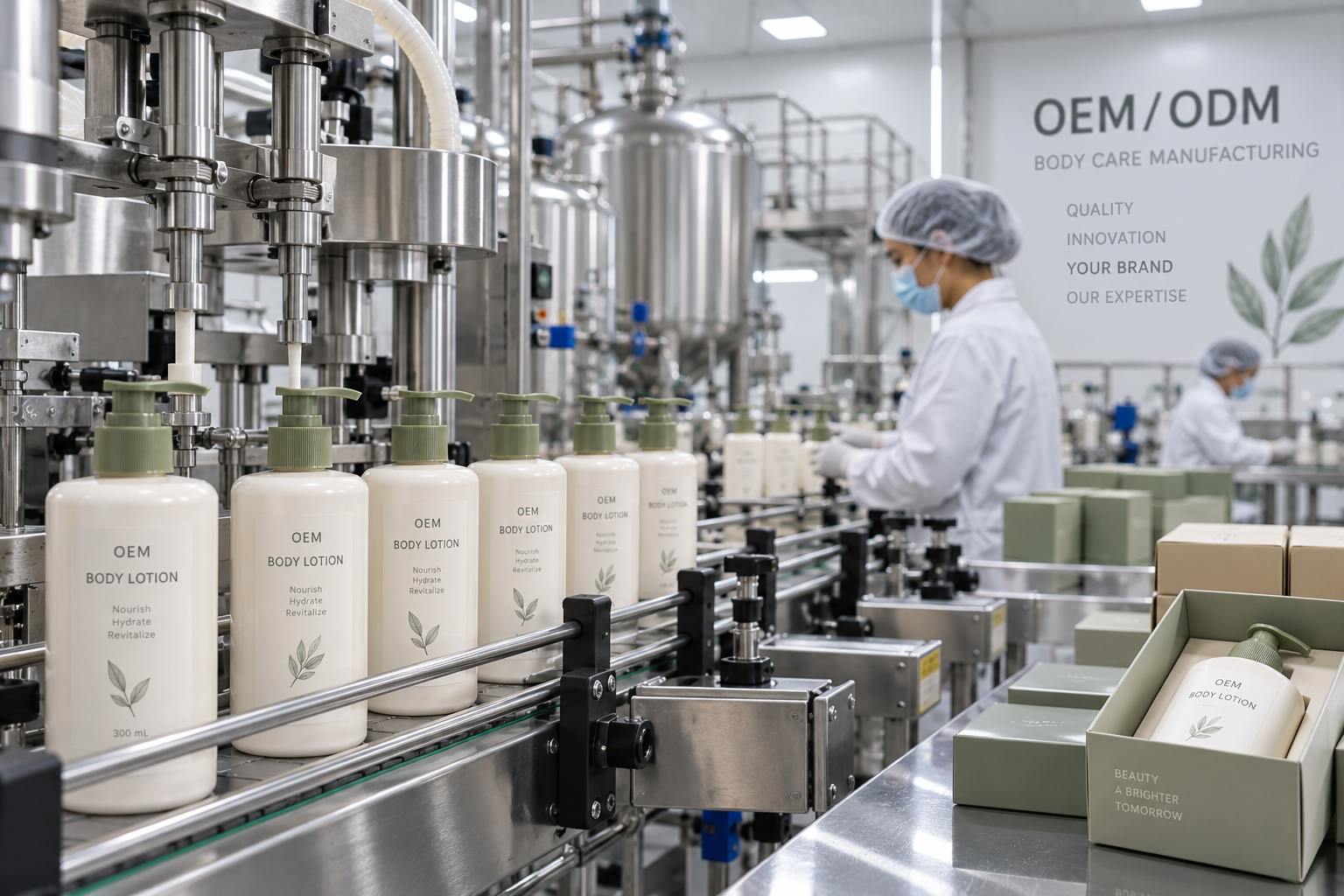
Startups can often simplify their first launch by selecting stock packaging, limiting the number of SKUs, or choosing existing formulas before moving toward more customized solutions.
Packaging should also be confirmed early because bottle availability, printing, pumps, caps, labels, and outer boxes may have separate minimum order quantities and production timelines.
Compliance for the US and EU Markets
Regulatory requirements should be considered before bulk production. Requirements may differ depending on the target market, product type, ingredients, claims, labeling, and responsible parties.
Brands planning to sell cosmetic products in the European Union should review the European Union cosmetics legislation and understand applicable requirements related to product safety, responsible persons, notification, ingredients, and labeling.
Frequently Asked Questions About Private Label Body Care
How much does it cost to start a body care brand?
The cost depends on the formula, customization level, packaging, MOQ, testing, printing, and production requirements. Existing private label formulas generally require less development work than fully custom formulations.
What are the best private label body care products for beginners?
Body lotion, body wash, body scrub, body butter, and body oil are common starting products because they offer broad positioning opportunities and can be combined into complete collections.
Is private label body lotion a good first product?
Yes. Private label body lotion is a versatile category that can support hydration, sensitive-skin, premium, fragrance-focused, and skincare-inspired positioning.
Can a body care manufacturer customize formulas?
Depending on the manufacturer, formulas can often be customized through ingredients, fragrance, texture, color, viscosity, and other product characteristics.
What is the MOQ for private label body care products?
MOQ varies according to formula type, packaging, decoration, and production requirements. Packaging suppliers may also have separate minimum order quantities.
Can packaging and fragrance be customized?
Yes. Many private label projects allow brands to customize fragrance, packaging, labels, printing, and other visual elements, subject to manufacturer and supplier requirements.
What should I confirm before bulk production?
Brands should confirm the final formula, approved sample, packaging, artwork, product specifications, labels, testing requirements, order quantity, and target-market compliance before bulk production begins.