
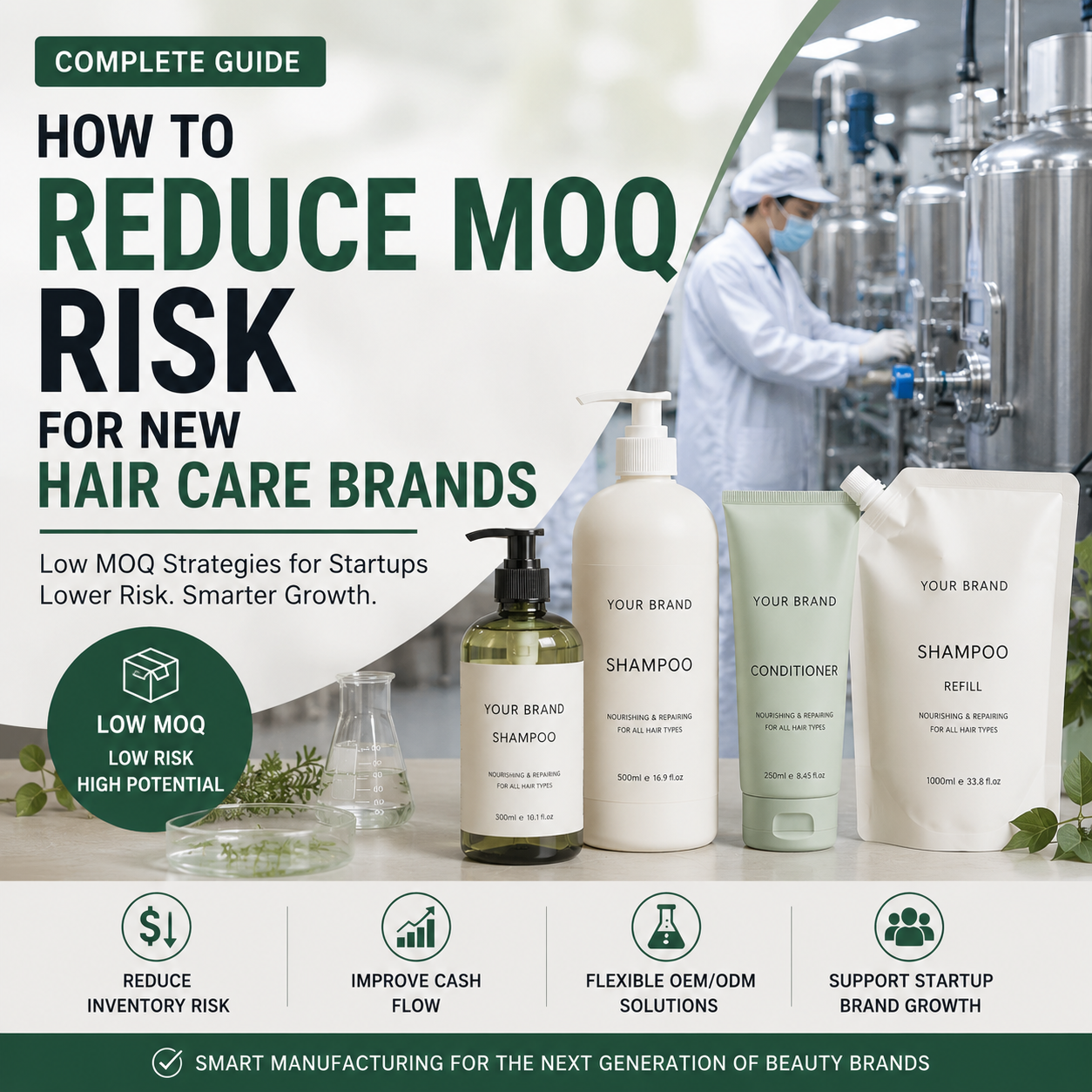
Launching a new hair care brand can be exciting, but one of the biggest challenges for startups is managing MOQ requirements and inventory pressure. Many emerging beauty brands struggle with large production quantities, high upfront costs, and slow inventory turnover during the early stages of business development.
For this reason, more startups are actively searching for low MOQ hair care solutions that allow them to test products, validate markets, and scale gradually with lower financial risk.
Today, experienced private label hair care manufacturers increasingly offer flexible production models designed specifically for startup brands, salon owners, e-commerce sellers, Amazon businesses, and TikTok beauty entrepreneurs.
In this guide, we will explain how to reduce MOQ risk, optimize inventory management, choose the right manufacturing strategy, and work with a reliable startup hair care manufacturer for sustainable business growth.
Why MOQ Is a Major Challenge for New Hair Care Brands
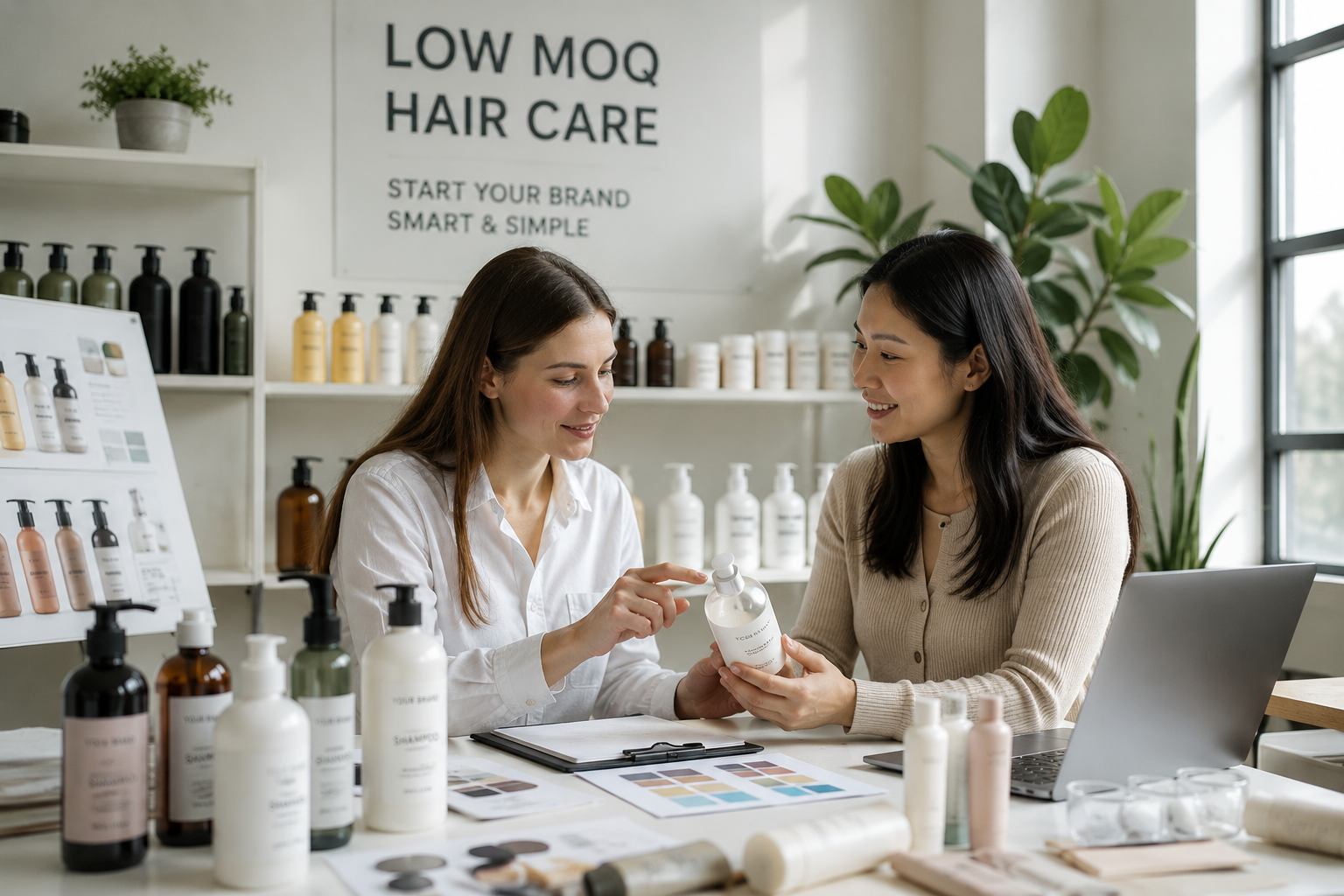
MOQ, or Minimum Order Quantity, refers to the minimum number of units a manufacturer requires for production. In the traditional cosmetics manufacturing industry, large MOQs were common because factories needed high production volumes to offset operational costs.
However, large MOQ requirements can create significant pressure for startup brands.
Common startup challenges include:
- High upfront investment
- Slow inventory turnover
- Warehouse storage costs
- Uncertain market demand
- Packaging overstock
- Cash flow pressure
- Difficulty testing new products
Many startups fail not because their products are poor, but because they order too much inventory too early.
As consumer trends evolve faster than ever, flexible production has become increasingly important for emerging beauty businesses.
How Low MOQ Hair Care Helps Reduce Inventory Risk
Working with a low MOQ hair care manufacturer allows brands to launch products with smaller initial investments while reducing operational pressure.
Instead of producing tens of thousands of units immediately, startups can validate products through smaller production runs and real customer feedback.
This approach helps brands:
- Reduce inventory risk
- Improve cash flow management
- Test multiple formulas
- Experiment with packaging designs
- Analyze consumer demand
- Scale products gradually
- Reduce dead stock
According to McKinsey & Company, beauty consumers increasingly prefer personalized and fast-changing beauty products, forcing brands to become more agile and inventory-efficient.
Flexible manufacturing strategies now play a major role in modern beauty brand success.
Low MOQ Hair Care vs Traditional High MOQ Manufacturing
Understanding the differences between traditional production models and flexible MOQ hair care manufacturing can help startups make smarter business decisions.
| Factor | Traditional MOQ | Low MOQ Hair Care |
| Initial Investment | High | Lower |
| Inventory Pressure | High | Lower |
| Product Testing Flexibility | Limited | High |
| Cash Flow Risk | High | Lower |
| Market Validation Speed | Slow | Fast |
| Brand Scalability | Moderate | Flexible |
Today, many modern OEM shampoo suppliers provide scalable production systems that support both startups and established brands.
How Startup Hair Care Manufacturers Support Emerging Brands
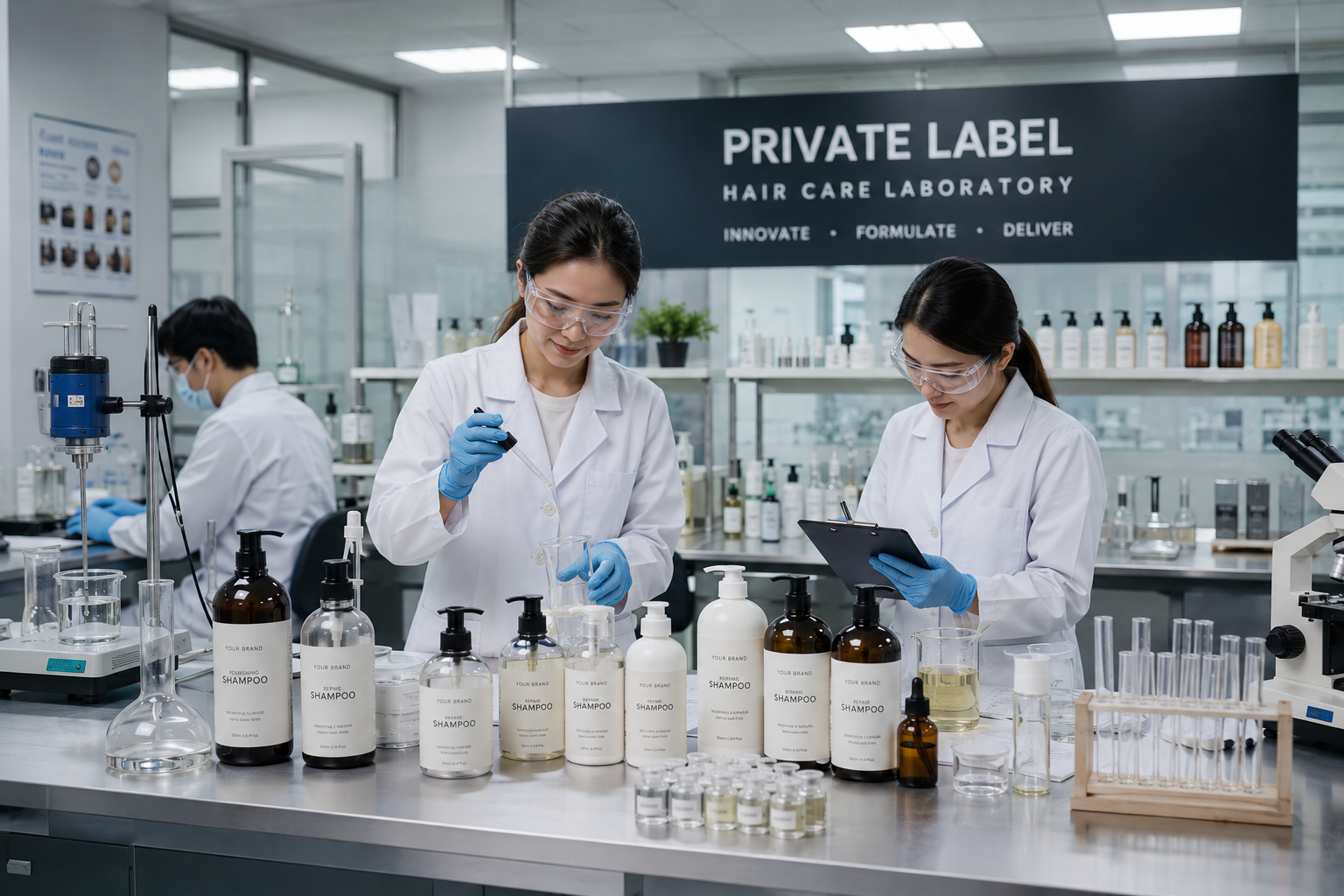
An experienced startup hair care manufacturer understands that new brands require flexibility, guidance, and lower production risk.
Unlike traditional factories focused only on large-volume buyers, startup-focused manufacturers often provide:
- Low MOQ production
- Stock formulas
- Fast sampling services
- Flexible packaging options
- Label design assistance
- Regulatory support
- Marketing-friendly product development
- Trend-based formula recommendations
This allows startups to enter the market faster while maintaining professional product quality.
For many entrepreneurs, partnering with the right private label hair care supplier becomes a key competitive advantage.
Why Small Batch Hair Care Production Is Growing
The beauty industry is increasingly moving toward small batch hair care production.
Several major market trends are driving this shift:
- Fast-changing TikTok beauty trends
- Personalized beauty demand
- Clean beauty innovation
- Scalp-focused hair care products
- Seasonal product launches
- Influencer-led niche brands
- Rapid trend testing
Small batch manufacturing allows brands to react faster to changing consumer preferences while reducing financial exposure.
According to Statista, indie beauty brands continue gaining global market share due to their agility, authenticity, and fast product innovation cycles.
As a result, flexible production has become one of the most important capabilities in modern OEM manufacturing.
How to Reduce MOQ Risk Through Smart Product Strategy
Reducing MOQ risk is not only about finding smaller production quantities. It also requires a strategic product launch plan.
Start with One Hero Product
Many successful hair care brands begin with a single hero product instead of launching a full product line immediately.
This approach reduces inventory complexity and allows brands to focus marketing resources more effectively.
Choose Existing Formulas First
Stock formulas help reduce development costs and speed up production timelines.
Experienced OEM shampoo suppliers often offer proven formulas that can still be customized with fragrance, packaging, or branding adjustments.
Use Standard Packaging
Custom molds can significantly increase production costs and MOQ requirements.
Using standard bottles and packaging components allows startups to launch faster with lower investment.
Test Market Demand Before Scaling
Many brands use Amazon, TikTok Shop, Shopify, or salon channels to test products before increasing production volume.
This helps brands reduce inventory risk and optimize future purchasing decisions.
Flexible MOQ Hair Care Manufacturing Models
Modern flexible MOQ hair care production systems are designed to help startups scale gradually.
Common flexible manufacturing models include:
- Shared production schedules
- Stock packaging inventory
- Semi-custom formulations
- Small batch production lines
- Modular packaging systems
- Refill-based production
These systems reduce production waste while improving manufacturing efficiency.
Some advanced private label hair care manufacturers even offer scalable production plans where MOQs gradually increase as the brand grows.
Why Choosing the Right OEM Shampoo Supplier Matters

Not all manufacturers are suitable for startup brands.
Some factories only focus on high-volume orders and may not provide the flexibility needed for emerging businesses.
When evaluating an OEM shampoo supplier, startups should consider:
- MOQ flexibility
- Sampling capability
- Production scalability
- R&D support
- Packaging sourcing ability
- Export experience
- Regulatory compliance
- Communication efficiency
- Trend awareness
A reliable supplier should help brands optimize long-term inventory management rather than simply maximizing short-term production volume.
How to Reduce Inventory Risk with Trend-Based Hair Care Products
One effective strategy to reduce inventory risk is focusing on high-demand product categories with strong market momentum.
Popular categories in recent years include:
- Rosemary shampoo
- Hair growth shampoo
- Sulfate-free shampoo
- Scalp detox products
- Biotin hair care
- Bond repair systems
- Clean beauty shampoo
- Natural botanical hair care
Trend-driven products often achieve faster sales velocity, reducing the risk of excess inventory.
According to Mintel, scalp health and science-backed hair repair remain among the fastest-growing categories in global hair care.
Packaging Strategies for Low MOQ Hair Care Brands
Packaging decisions can strongly affect MOQ requirements and startup costs.
To support small batch hair care production, many startups choose:
- Standard PET bottles
- White label packaging
- Digital label printing
- Eco refill pouches
- Minimalist branding
- Universal bottle molds
These options reduce manufacturing complexity while maintaining professional product presentation.
Simple packaging strategies also improve operational flexibility when brands need to update designs or expand product lines later.
How Flexible MOQ Hair Care Supports Long-Term Brand Growth
Low MOQ production is not only useful for startups. It also supports long-term brand agility.
Many established brands now intentionally use smaller production cycles to:
- Launch seasonal products
- Test influencer collaborations
- Release limited-edition products
- Improve inventory turnover
- Reduce waste
- Respond to viral trends faster
In today's fast-moving beauty industry, flexibility has become a competitive advantage.
Brands that manage inventory efficiently often achieve stronger cash flow, higher operational stability, and faster innovation cycles.
Conclusion
For emerging beauty brands, controlling inventory risk is one of the most important factors for long-term success.
Working with a low MOQ hair care manufacturer allows startups to launch products with lower financial pressure, greater flexibility, and improved market adaptability.
Modern private label hair care manufacturing is evolving rapidly to support startups through flexible production systems, small batch manufacturing, and scalable OEM solutions.
By choosing the right startup hair care manufacturer, using strategic packaging decisions, and validating products gradually, brands can successfully reduce MOQ risk while building sustainable business growth.
FAQ
What is considered low MOQ hair care production?
Low MOQ hair care production usually refers to manufacturing quantities starting from 500 to 1,000 units, depending on formula and packaging requirements.
How can startups reduce MOQ risk?
Startups can reduce MOQ risk by starting with one hero product, using stock formulas, choosing standard packaging, and working with flexible OEM manufacturers.
Why is small batch hair care production important?
Small batch production allows brands to test products, reduce inventory pressure, respond to trends faster, and improve cash flow management.
What should startups look for in an OEM shampoo supplier?
Startups should prioritize suppliers offering flexible MOQ options, scalable production, packaging support, export experience, and strong communication efficiency.