
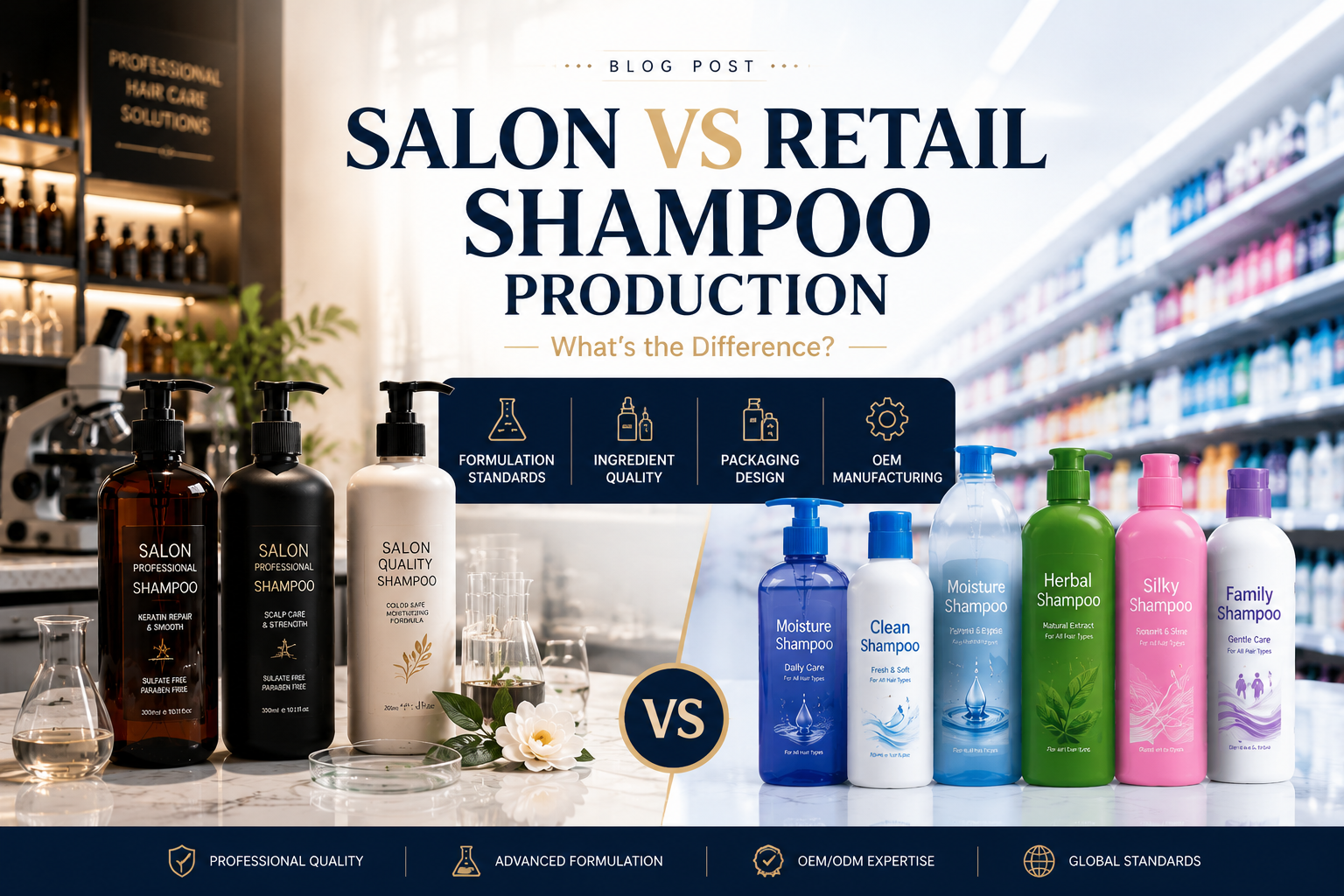
As global hair care brands continue expanding across professional salons, retail chains, e-commerce platforms, and private label markets, understanding the differences between salon and retail shampoo production has become increasingly important for beauty entrepreneurs and OEM buyers.
Many consumers assume that salon shampoos and retail shampoos are fundamentally identical. However, from formulation strategy and ingredient concentration to packaging standards and manufacturing processes, there are significant differences between these two product categories.
For OEM manufacturers and private label brands, understanding salon quality shampoo manufacturing is essential when positioning products for premium salon channels or mass-market retail distribution.
According to global hair care market research, premium and professional hair care categories continue gaining market share due to increasing consumer demand for specialized scalp care, sulfate-free products, and salon-grade performance.
This article explains the key differences between salon and retail shampoo production, including formulation standards, ingredient systems, packaging requirements, pricing structures, OEM manufacturing processes, and professional hair care positioning strategies.
Understanding Salon Quality Shampoo Manufacturing
Salon quality shampoo manufacturing refers to the development and production of professional-grade hair care products designed primarily for salon use, professional stylists, and high-performance hair treatment applications.
Unlike mass-market retail shampoos, salon shampoos are often formulated with:
- Higher active ingredient concentrations
- Specialized conditioning systems
- Professional treatment ingredients
- Advanced scalp care technologies
- Lower dilution ratios
- Premium fragrance systems
- Color-safe formulations
- Sulfate-free cleansing systems
Professional salon products are usually designed to deliver visible results for chemically treated, damaged, dry, colored, or salon-processed hair.
Because salon clients often receive recommendations directly from hairstylists, salon brands typically focus heavily on performance, sensory experience, and long-term treatment benefits.
Professional vs Retail Shampoo: Core Manufacturing Differences
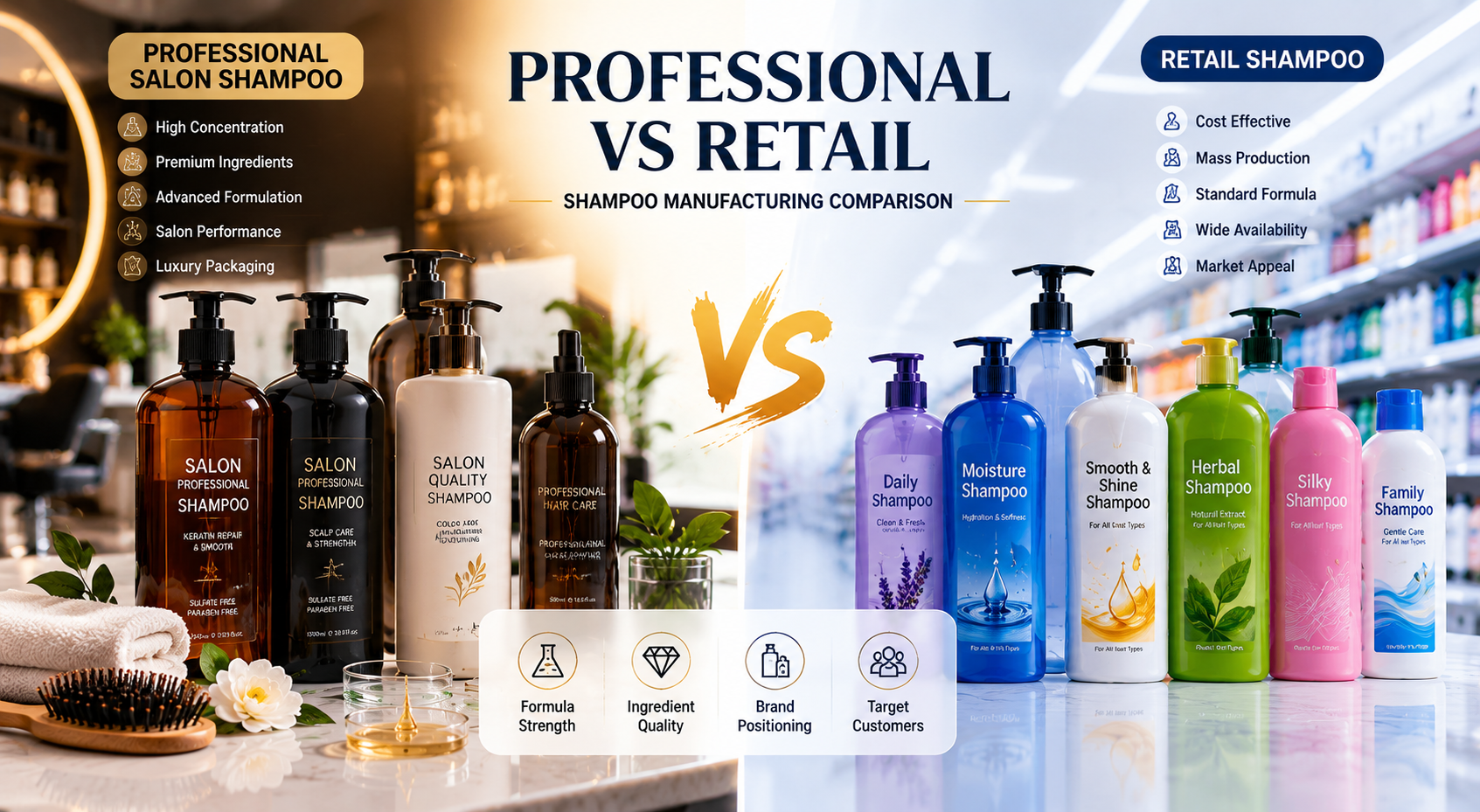
The differences between professional vs retail shampoo production go far beyond marketing.
Manufacturing strategies are often completely different depending on the target distribution channel.
| Production Factor | Salon Shampoo | Retail Shampoo |
| Target Market | Professional salons | Mass consumers |
| Formula Concentration | Higher | Moderate |
| Ingredient Quality | Premium-focused | Cost-optimized |
| Packaging Design | Luxury / professional | Mass-market friendly |
| MOQ Requirements | Usually lower volume niche production | Large-scale production |
| Marketing Strategy | Stylist recommendation | Retail advertising |
| OEM Manufacturing Flexibility | Higher customization | Standardized production |
Retail shampoos are generally developed for broader audiences and more aggressive pricing strategies.
Salon shampoos, on the other hand, often prioritize product experience, ingredient innovation, and treatment performance over low production cost.
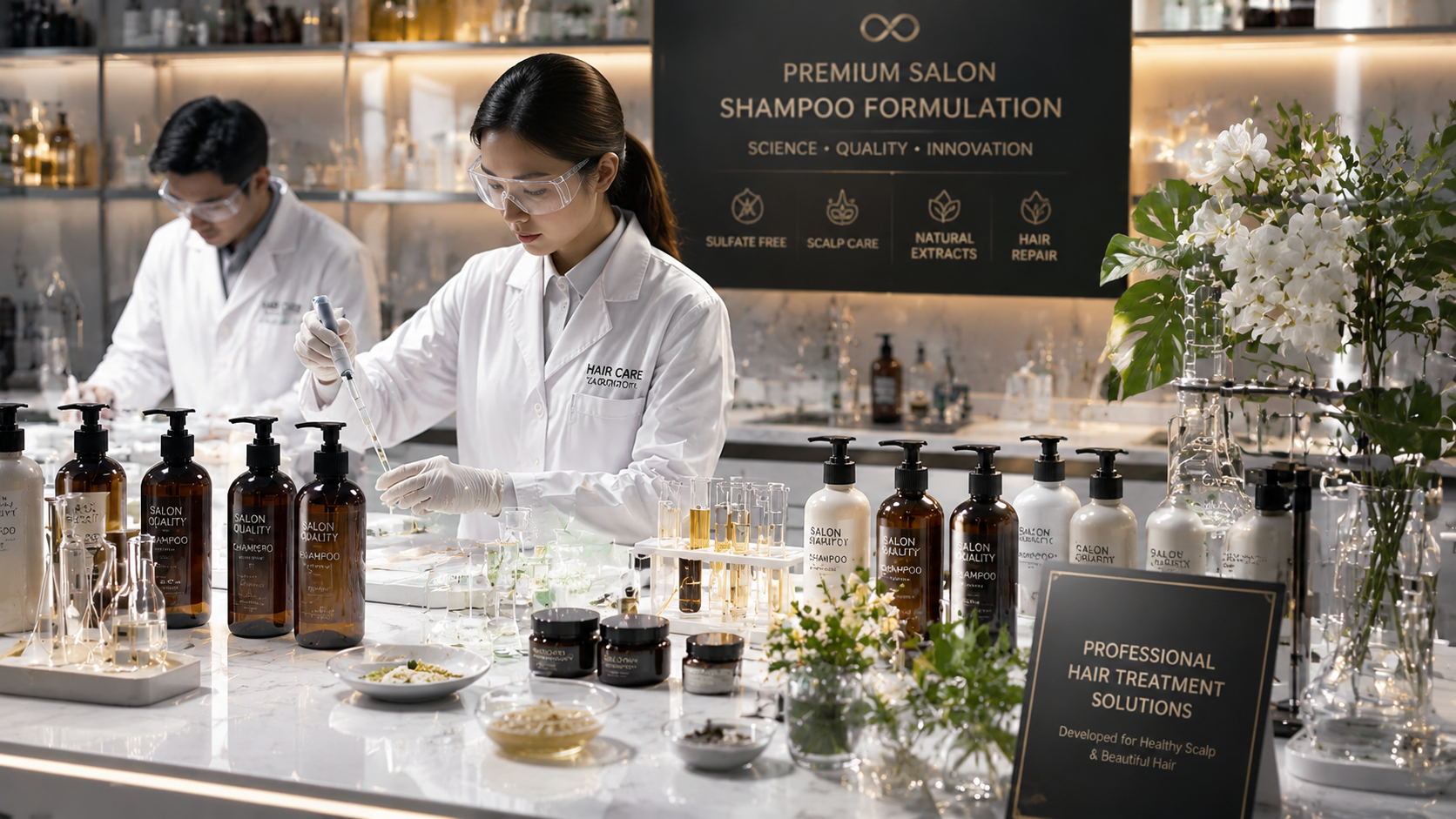
Formula Development Differences in Salon Quality Shampoo Manufacturing
One of the biggest distinctions in salon quality shampoo manufacturing is formula development.
Professional salon products frequently use more advanced formulation systems compared to retail-focused products.
Salon formulas may include:
- Hydrolyzed proteins
- Peptides
- Bond repair technology
- Botanical extracts
- Scalp treatment complexes
- Amino acid surfactants
- Premium silicone systems
- Luxury conditioning agents
Retail shampoos often focus more heavily on balancing:
- Production cost
- Mass-market appeal
- Shelf stability
- High-volume manufacturing
- Broad fragrance preference
According to Mintel beauty market research, consumers increasingly prioritize ingredient transparency, sulfate-free cleansing systems, and scalp care functionality in premium hair care products.
As a result, many salon brands are investing heavily in ingredient innovation and customized treatment solutions.
Hair Care OEM Standards for Salon Products
Hair care OEM standards for salon-grade production are often stricter than those used for mass-market retail products.
Professional salon brands typically require:
- More advanced stability testing
- Professional fragrance development
- Salon usage performance validation
- Heat styling compatibility
- Color-safe certification
- Premium packaging consistency
- Lower defect tolerance
OEM manufacturers producing salon products must often maintain stronger technical development capabilities and more sophisticated quality control systems.
Professional salon customers expect consistent texture, fragrance, foam performance, rinse feel, and post-treatment hair smoothness.
This means OEM suppliers serving salon brands usually invest heavily in:
- R&D laboratories
- Cosmetic chemist teams
- Microbiological testing
- Packaging compatibility testing
- Long-term stability analysis
Ingredient Quality and Concentration Differences
Ingredient concentration is another major difference between salon and retail shampoo production.
Salon shampoos are often formulated with higher percentages of functional ingredients designed for visible treatment performance.
These ingredients may include:
- Argan oil
- Keratin proteins
- Biotin
- Rosemary extract
- Niacinamide
- Plant collagen
- Scalp treatment peptides
Retail shampoos may still contain similar ingredients, but often at lower concentrations due to pricing constraints.
Professional salon formulas are also more likely to use:
- Low-irritation surfactants
- Sulfate-free cleansing systems
- Professional fragrance blends
- Premium conditioning polymers
This directly affects product cost and manufacturing complexity.
Packaging Design Differences Between Salon and Retail Shampoo
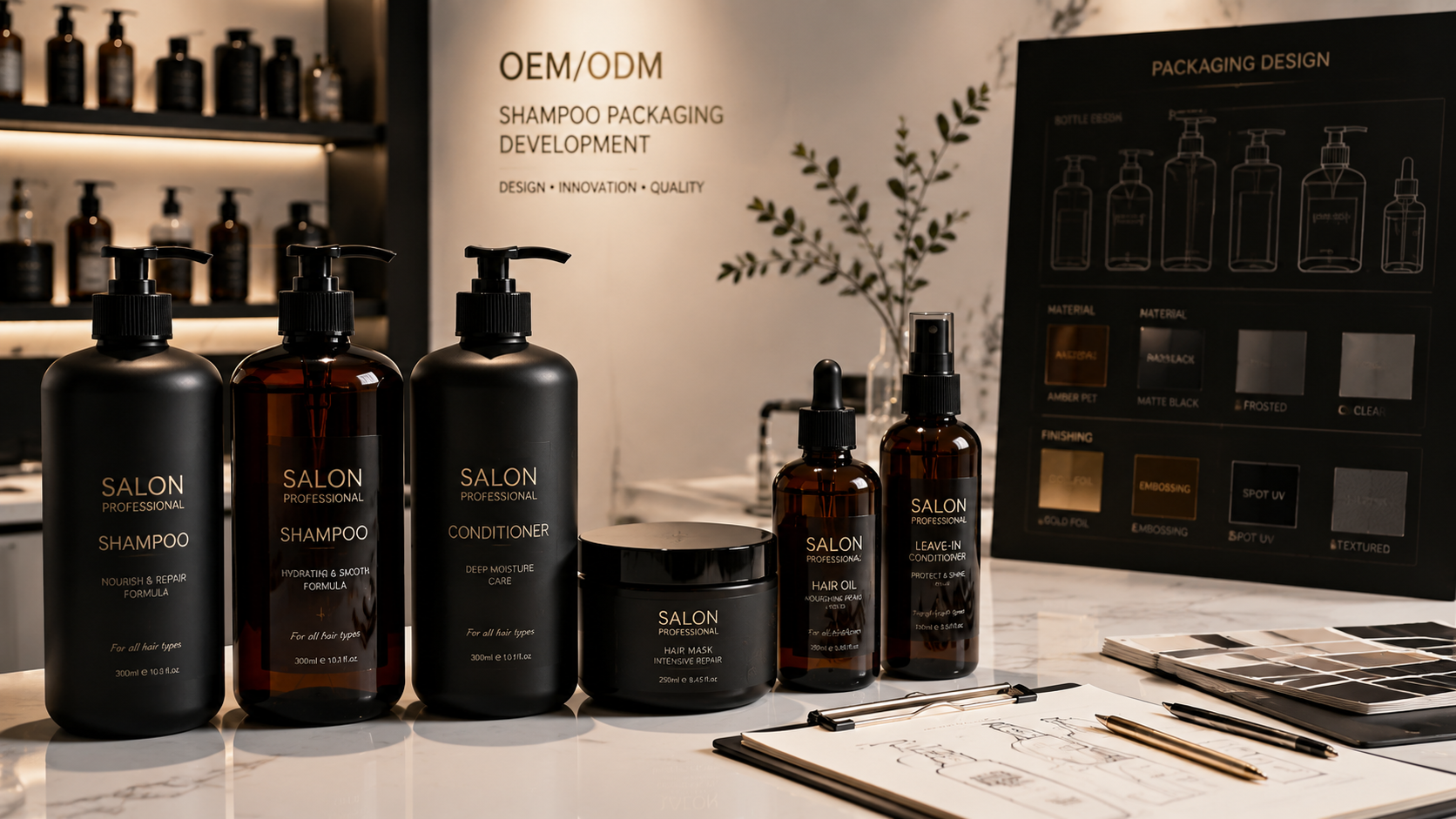
Packaging strategy is another important distinction between professional and retail products.
Salon shampoo packaging usually emphasizes:
- Luxury branding
- Professional identity
- Premium texture
- Minimalist design
- Durable pump systems
- Large-capacity bottles
- Sophisticated color schemes
Retail shampoo packaging often focuses more heavily on:
- Visual shelf impact
- Mass consumer appeal
- Lower packaging cost
- High-volume production efficiency
- Retail display optimization
According to Packaging Digest industry reports, sustainable packaging and refillable systems continue becoming important trends in both salon and retail beauty markets.
Many salon brands are now adopting:
- Refill pouches
- Recycled PET packaging
- Aluminum bottles
- Eco-friendly pumps
- Minimalist packaging structures
Production Volume and Manufacturing Scalability
Retail shampoo production is usually built around large-scale manufacturing efficiency.
Mass retail brands often produce:
- Large production runs
- High-volume inventory
- Nationwide distribution stock
- Global retail supply chains
Salon products may operate under more flexible manufacturing models.
Professional brands frequently require:
- Lower MOQ production
- Frequent formula updates
- Custom fragrance systems
- Seasonal treatment launches
- Flexible packaging changes
This flexibility creates additional manufacturing complexity for OEM suppliers.
Professional Hair Performance Requirements
Salon shampoos are often expected to deliver higher visible performance standards.
Professional hairstylists evaluate products based on:
- Foam texture
- Rinse feel
- Wet combability
- Heat protection performance
- Color protection
- Hair smoothness
- Long-term repair benefits
Because salon products are often used alongside chemical treatments such as bleaching, coloring, and perming, formulations must be compatible with damaged hair structures.
This usually requires more advanced formulation systems and higher-quality raw materials.