
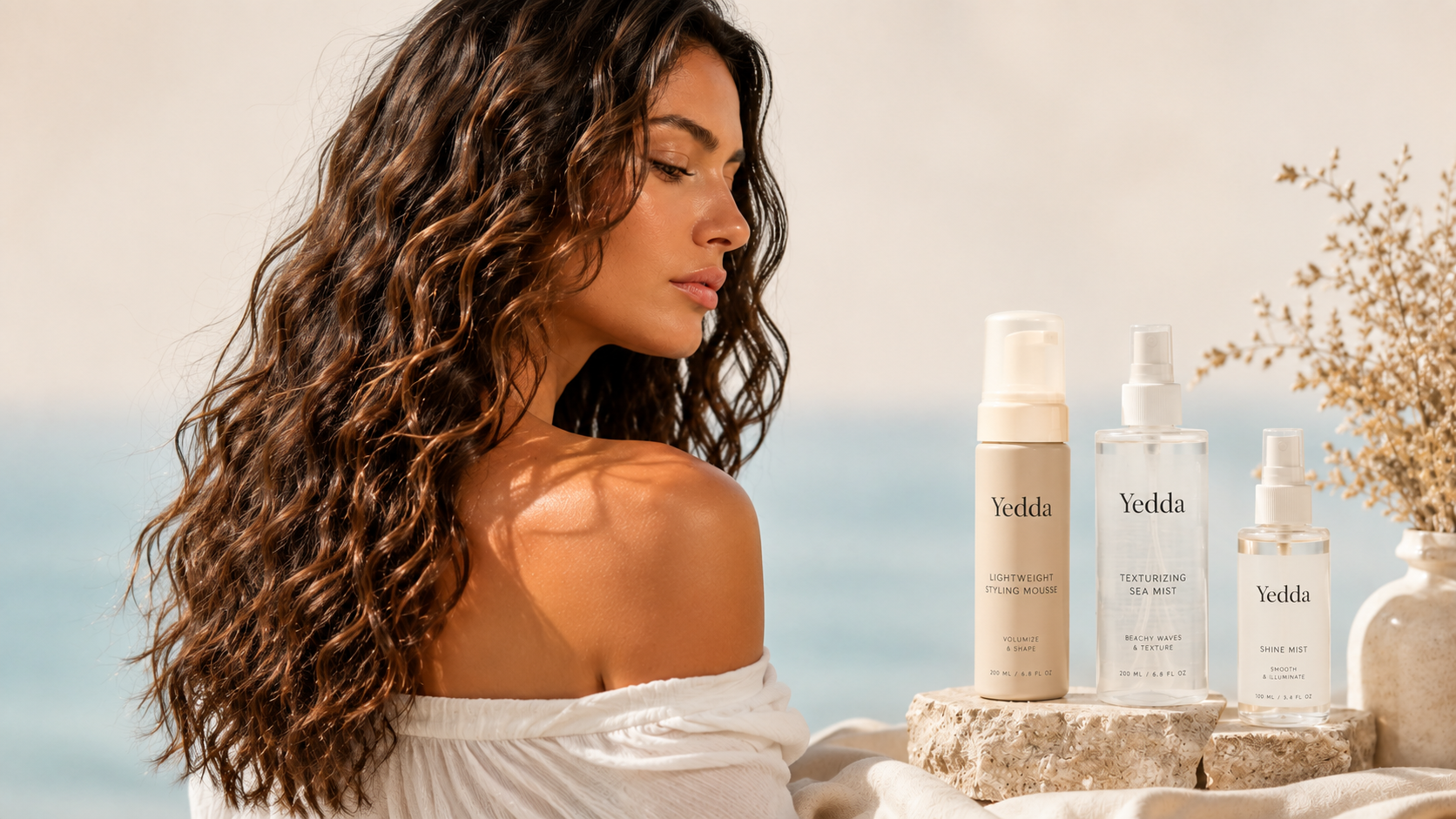
The global hair care market is undergoing a seismic structural shift. For decades, consumer hair care regimens were strictly bifurcated into two primary categories: heavy-moisture products designed for tight coily/curly hair (Type 3 and Type 4) and smoothing, volumizing formulas meant for pin-straight strands (Type 1). However, recent consumer demographic data reveals that over 40% of the global population possesses natural Type 2 wavy hair—a distinct architectural hair classification characterized by S-shaped bend patterns, varying strand density, and a extreme susceptibility to product weigh-down.
According to the latest Grand View Research Hair Care Market Report, the demand for specialized textured hair care solutions is expanding at a Compound Annual Growth Rate (CAGR) exceeding 6.8%. Brands that fail to distinguish between heavy curly regimens and specialized wavy routines miss a massive commercial opportunity. For beauty brand founders, product developers, and private label innovators, understanding how to engineer and market an effective wavy hair routine is no longer optional—it is a critical imperative for capturing market share in 2026 and beyond.
In this comprehensive industry guide, we break down the biophysical characteristics of Type 2 hair, analyze formulation science for light-density waves, map out step-by-step consumer wash day protocols, and outline how cosmetics manufacturers craft high-margin, market-ready product lines tailored specifically to wavy hair dynamics.
Understanding Type 2 Wave Architecture and Biophysics
To formulate high-performance hair care products or advise consumers on building an effective regimen, one must first master the structural anatomy of wavy hair. Unlike straight hair follicles, which emerge perpendicular to the scalp through round cross-sections, wavy hair follicles grow at an angled trajectory with an oval cross-sectional geometry. This oval shape creates structural points of flex along the hair shaft, giving rise to the characteristic "S" wave formation.
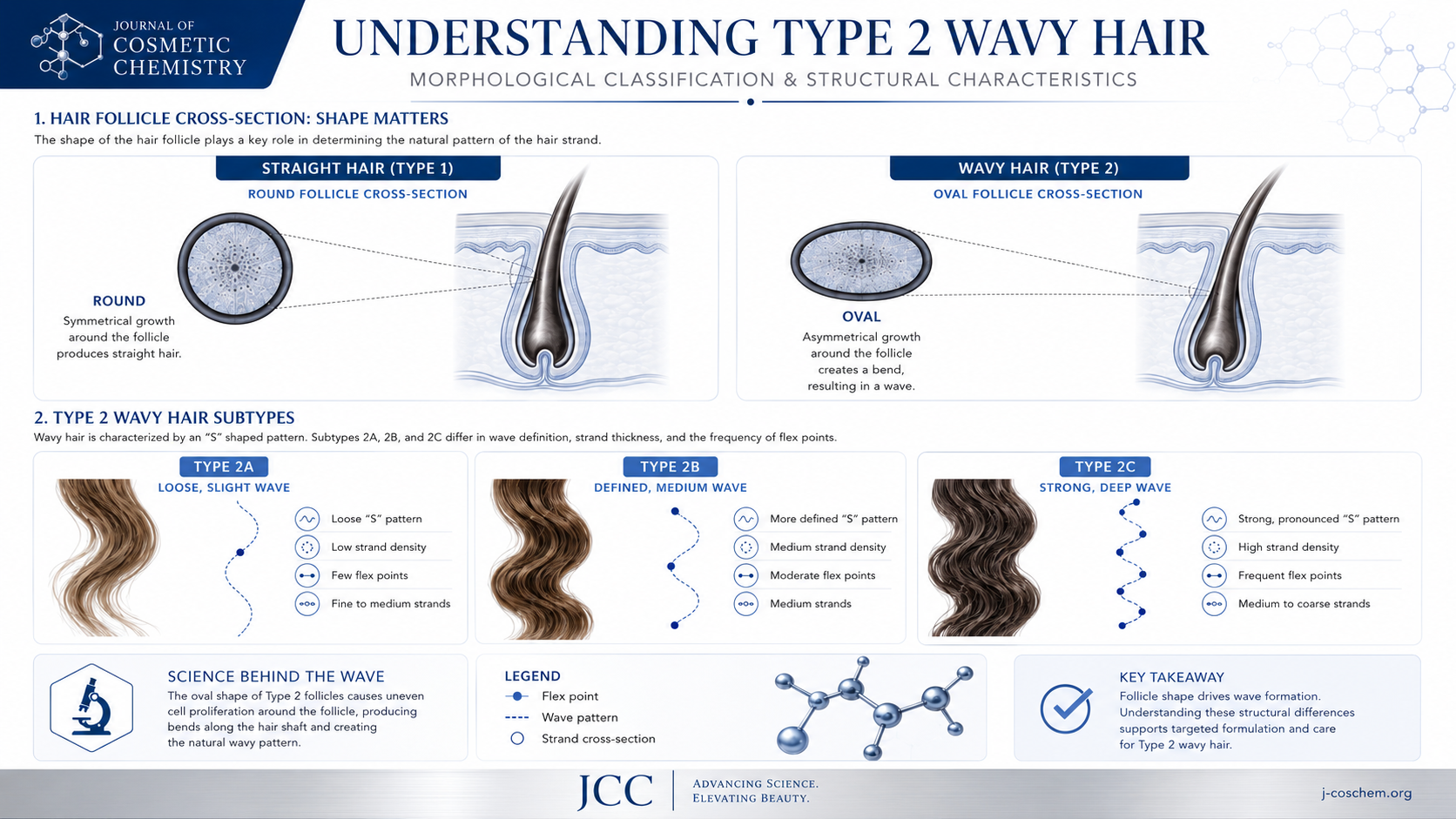
Type 2 hair is sub-categorized into three distinct morphological classifications:
- Type 2A: Fine, loose "S" waves close to the head with minimal volume at the root. Prone to oil accumulation and easily weighed down by traditional heavy butter or heavy oil formulations.
- Type 2B: Tighter "S" waves starting mid-shaft, exhibiting moderate frizz potential and slight resistance to natural scalp sebum migration down the hair shaft.
- Type 2C: Well-defined, coarse waves starting directly at the root, frequently interspersed with loose ringlets. High tendency toward volume, frizz, and atmospheric moisture reactivity.
Crucially, wavy hair possesses fewer cuticle layers than coarse afro-textured hair, yet its natural wave pattern prevents scalp sebum from seamlessly coating the length of the strand. This creates a unique formulation paradox: the hair fiber requires sufficient hydration to maintain definition and prevent frizz, yet excessive lipophilic conditioning agents (such as raw shea butter, petrolatum, or heavy silicones) easily overload the cuticle, flattening the natural wave pattern into limp, stringy strands.
The Ultimate Wavy Hair Routine for Beginners
When consumers transition away from heat-styling tools or harsh mechanical straightening toward embracing their natural texture, they frequently encounter confusion. Many attempt to adopt heavy "Curly Girl Method" protocols designed for Type 3 and Type 4 coils, resulting in greasy roots, clogged hair follicles, and stretched-out waves. Establishing a streamlined, high-efficiency wavy hair routine for beginners is essential for driving customer retention and brand loyalty.
As documented in recent Mintel Cosmetics & Beauty Trends Analysis, modern personal care consumers prioritize multi-functional simplicity over tedious 10-step regimens. A successful beginner wavy hair framework relies on a foundational four-phase architecture:
Phase 1: Clarified Scalp Cleansing
Beginners must start with a clean canvas. Wavy hair naturally traps ambient dust, styling polymers, and scalp sebum in the bends of the wave shaft. A gentle, sulfate-free clarifying shampoo formulated with sodium cocoyl isethionate or cocamidopropyl betaine removes surface accumulation without stripping essential lipid membrane layers.
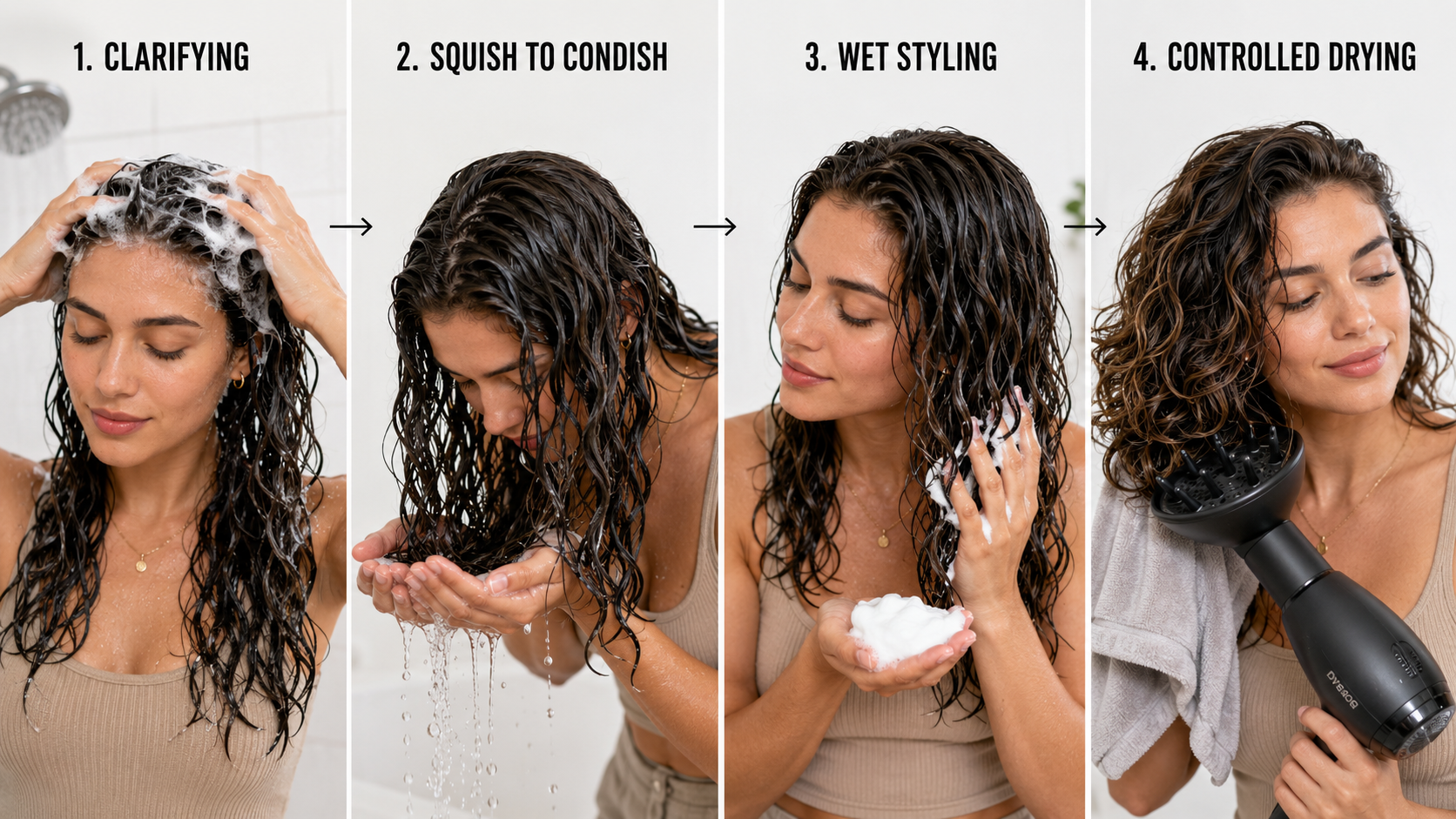
Phase 2: Hydro-Balance Conditioning
Unlike tight curls that require heavy occlusives, wavy hair requires high-phase water moisture paired with low-molecular-weight humectants. Conditioners must utilize fast-rinsing cationic surfactants (such as Behentrimonium Methosulfate or Cetrimonium Chloride) that deposit micro-thin protective layers over damaged cuticles without sealing out future moisture.
Phase 3: Wet Styling and Wave Enhancement
The single most crucial habit for beginners is applying wave-enhancing styling agents—such as lightweight mousses, airy foams, or flexible-hold gels—to soaking-wet hair. Water acts as the primary vehicle for clump formation; styling polymers then encapsulate these wet clumps, creating a protective cast as the hair dries.
Phase 4: Low-Disruption Drying
Mechanical friction from traditional terrycloth towels breaks hydrogen bonds in damp hair, causing immediate micro-frizz. Beginners should utilize micro-fiber wraps or cotton T-shirt plopping techniques followed by low-heat diffuser drying to lock in the wave architecture.
"Formulating for wavy hair requires a fundamental pivot from heavy lipid replenishment to lightweight hydro-polymer matrix design. The goal is to provide structural hold and surface lubricity while maintaining zero gravimetric strain on the hair fiber." — Chief Cosmetic Chemist, R&D Department.
Optimizing the Wavy Hair Wash Day Routine
The wash day experience is the anchor of any wavy hair product line. A poorly executed wavy hair wash day routine leads to inconsistent curl clump formation, rapid frizz recurrence, and scalp build-up. For private label brands and manufacturers, designing a cohesive kit where every product works synergistically across wash day is the key to maximizing lifetime customer value.
Step 1: Scalp Detox and Cleansing Strategy
Wash day begins with targeted scalp hygiene. A non-stripping shampoo formulation should incorporate botanicals like rosemary leaf extract, tea tree oil, or green tea extract to stimulate microcirculation while controlling excess sebum production. The cleansing agent should produce a rich, creamy lather that effortlessly rinses clean without leaving sticky film residues.
Step 2: The "Squish to Condish" Hydro-Infusion Protocol
During the conditioning step, consumers should apply conditioner from mid-lengths to ends, avoiding direct scalp application. By cup-handing water and squishing upward toward the scalp, water and conditioner are emulsified directly into the hair cuticle. According to clinical evaluations published in the Journal of Cosmetic Science Technical Studies, mechanical squishing during conditioning increases water retention within the cortex by up to 28% compared to passive surface application.
Step 3: Precision Micro-Plopping and Diffusing
After applying styling products to wet hair, "micro-plopping"—using a microfiber towel to gently squeeze out excess water in an upward pulsing motion—accelerates drying times while preserving wave memory. Diffusing with a wide-bowl diffuser attachment on low heat sets the polymer cast rapidly, inflating root volume and minimizing atmospheric frizz.
| Wash Day Phase | Target Objective | Key Active Ingredients | Formulation Texture |
|---|---|---|---|
| Cleansing | Remove sebum & product residue | Sodium Cocoyl Isethionate, Salicylic Acid | Low-viscosity clarifying gel |
| Conditioning | Cuticle smoothing & alignment | Behentrimonium Chloride, Hydrolyzed Wheat Protein | Lightweight, fast-dispersing lotion |
| Styling/Hold | Lock in wave pattern & humidity defense | VP/VA Copolymer, Polyquaternium-11, Panthenol | Aerosol/Non-aerosol volatile mousse or gel |
Tailoring the Fine Wavy Hair Routine: Preventing Buildup and Sag
One of the most underserved segments within the textured hair market is fine-density hair. A tailored fine wavy hair routine addresses two primary pain points: lack of root volume and extreme vulnerability to product overload. When fine strands absorb heavy oils or dense polymers, the weight exceeds the tensile structural strength of the wave, pulling the wave straight within hours of styling.
Key Formulation Rules for Fine Wavy Hair:
- Protein-to-Moisture Balance: Fine hair fibers feature a narrow cortex diameter. Incorporating micro-hydrolyzed proteins (such as hydrolyzed silk, hydrolyzed quinoa, or rice amino acids) fills micro-gaps in the strand structure, reinforcing internal rigidity and elasticity without adding physical weight.
- Polymer Selection: Heavy vegetable waxes and non-water-soluble silicones (like Dimethicone) must be avoided in favor of volatile cyclomethicones or water-soluble film-formers (such as Polyitaconate or PVP). These polymers form an invisible, breathable mesh around the strand that holds shape without tackiness.
- Clarification Frequency: Fine wavy hair requires more frequent clarifying interventions—typically every 3 to 4 washes—to remove invisible environmental film and mineral hard-water deposits.
From an OEM/ODM manufacturing perspective, brands developing a fine wavy hair line should focus on ultra-fluid spray leave-ins, aerosol foam styling mousse, and volumetric root-lifting powders. These formats allow targeted root application without weighing down delicate mid-lengths.
Formulating the Low Porosity Wavy Hair Routine: Moisture Absorption Strategies
Cuticle porosity dictates how hair absorbs, retains, and responds to moisture and topical ingredients. Hair with low porosity features tightly bound, flat, overlapping cuticle scales that form a hydrophobic barrier. Designing a effective low porosity wavy hair routine requires cosmetic chemistry strategies engineered to penetrate this protective outer sheath.
The Biophysical Challenge of Low Porosity Waves
Because low porosity cuticles resist moisture absorption, heavy oils or thick creams simply sit on top of the hair shaft. This creates a dull, tacky film that attracts airborne dirt while leaving the inner cortex chronically dehydrated. Furthermore, low porosity hair is prone to rapid product build-up, causing waves to feel dry and straw-like despite frequent conditioning.
Formulation Solutions for Low Porosity Hair Care:
- Small Molecule Humectants: Formulations must prioritize low-molecular-weight hydrating agents such as Sodium PCA, Glycerin, Propanediol, and Panthenol (Pro-Vitamin B5). These ingredients navigate past tight cuticle edges to draw hydration directly into the cortex.
- Penetrating Light Oils: Heavy triglycerides like coconut oil or castor oil fail to penetrate low porosity scales. Instead, formulations should leverage light, high-monounsaturated fatty acid oils such as Jojoba Oil (which closely mimics human sebum), Squalane, and Argan Oil.
- Thermal Activation: Low porosity conditioning products should be designed for thermal pairing. Applying gentle heat (such as a warm steamer or heated conditioning cap) temporarily raises cuticle scales, allowing active nutrients to enter the cortex before cooling locks them inside.
Global cosmetic consumption analytics from Euromonitor Global Personal Care Industry Report indicate that "porosity-targeted hair care" is one of the fastest-growing search trends in e-commerce, presenting private label brand owners with a highly lucrative product positioning angle.
Engineering Lightweight Products for Wavy Hair
The foundation of any commercially successful wavy hair line lies in developing true high-performance, lightweight products for wavy hair. Too many legacy brands simply dilute heavy curl creams with water and re-label them for waves, resulting in poor performance and negative consumer reviews. Authentic wave care engineering requires ground-up formulation architecture.
Essential Lightweight Product Categories for OEM Development:
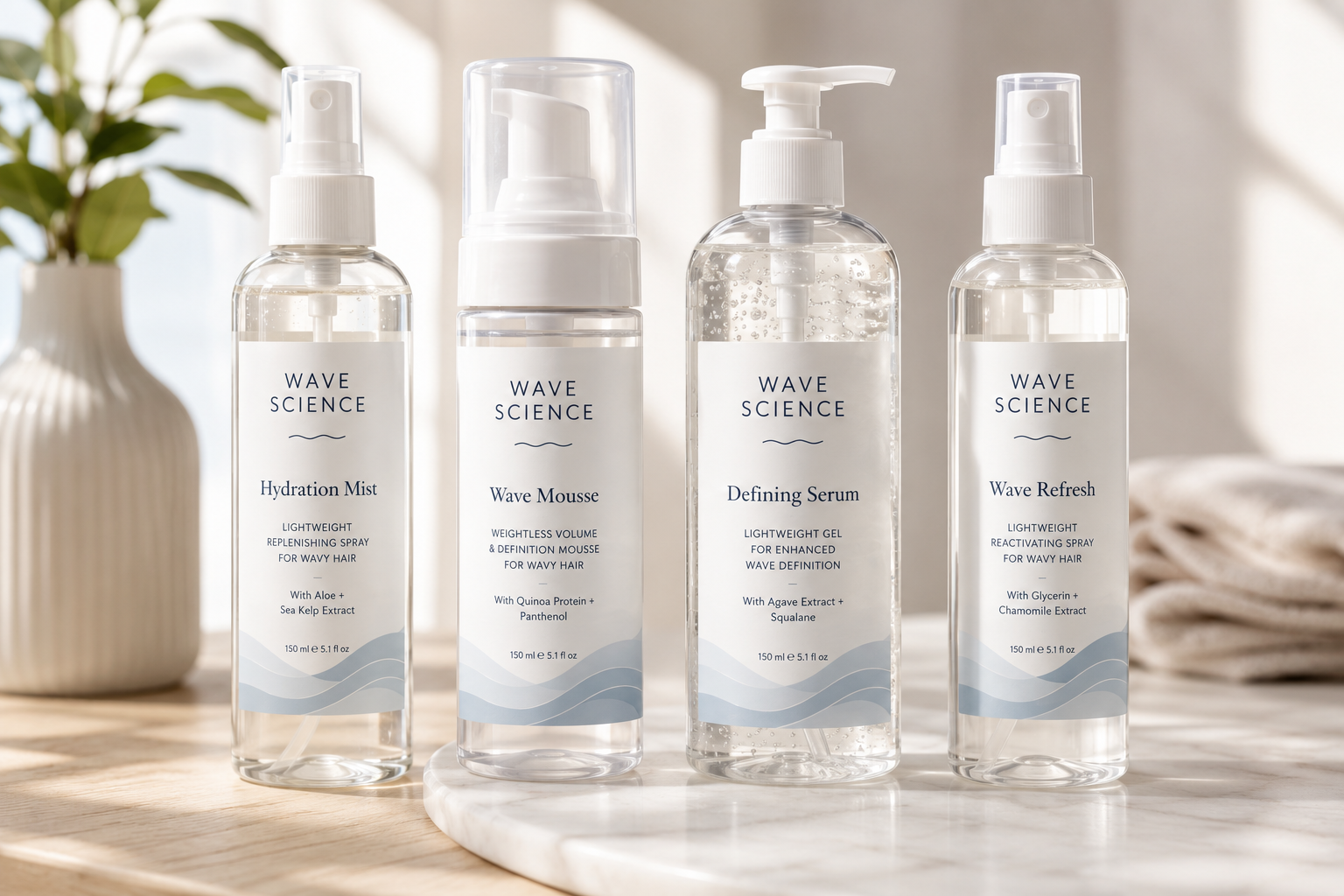
1. Liquid Hydration Mist / Leave-In Spray
Replaces heavy leave-in creams. Formulated with aloe vera gel juice, hydrolyzed botanical proteins, and ultra-light cationic conditioners. Delivers instant detangling, anti-static flyaway control, and moisture without leaving greasy residues on fine strands.
2. Volumizing Wave Mousse & Styling Foam
Utilizes precise foaming surfactants and flexible film-forming polymers (such as Polyquaternium-4 or Maltodextrin/VP Copolymer). Upon dispense, the liquid transforms into an airy foam that coats strands uniformly, encouraging clump definition and providing humidity protection up to 85% relative humidity.
3. Hydro-Gel Wave Defining Serum
A water-based gel formulation powered by natural gums (Xanthan Gum, Dehydroxanthan Gum) or synthetic carbomers. Creates a non-crunchy, touchable cast that seals in moisture while preserving high light reflectivity for elevated shine.
4. Dry Scalp & Wave Refresh Spray
Designed for non-wash days. Formulated with lightweight humectants and natural essential oils to reactivate styling polymers already present in the hair, allowing consumers to restore wave bouncy volume on Day 2 and Day 3 without re-washing.
B2B Opportunities: Developing a Private Label Wavy Hair Line
For beauty entrepreneurs, DTC brand managers, and salon chain owners, the wavy hair market represents an ideal entry point with minimal direct market saturation compared to generic straight or curly hair lines. Partnering with an experienced OEM/ODM manufacturer allows brands to launch custom-formulated, regulatory-compliant wave care collections quickly and efficiently.
Key Advantages of Custom Wave Line Manufacturing:
- Targeted Niche Positioning: Clearly addressing Type 2, fine, or low porosity consumers commands higher retail price points and builds intense brand advocacy.
- Clean Beauty & Global Compliance: Modern custom formulations easily comply with strict international regulatory frameworks, including the US MoCRA (Modernization of Cosmetics Regulation Act) and European Cosmetics Regulation (EC) No 1223/2009.
- Scalable Formulations & Sustainable Packaging: From bio-based sugarcane bottles to PCR (post-consumer recycled) plastic foamers, eco-conscious packaging options align perfectly with modern clean-beauty consumer expectations.
Whether you require low MOQ turn-key private label solutions or completely custom contract manufacturing with specialized botanical actives, our state-of-the-art R&D laboratories provide comprehensive formulation, testing, packaging, and international export support.
Frequently Asked Questions (FAQ)
1. What is the biggest mistake beginners make in a wavy hair routine?
The single biggest mistake is using heavy products designed for tight, coarse curly hair (such as unrefined shea butter, heavy coconut oil, or rich butter-based creams). These ingredients coat wavy hair strands in heavy lipids, causing waves to flatten, look greasy, and lose their natural spring. Always opt for lightweight water-based formulations, mousses, and light gels.
2. How often should you follow a wavy hair wash day routine?
Most individuals with Type 2 wavy hair achieve optimal scalp health and wave definition by washing their hair 2 to 3 times per week. Because wavy hair allows natural scalp oils to travel down the hair shaft faster than tight curls, co-washing (using conditioner only) often leads to scalp buildup. Using a gentle sulfate-free shampoo regularly, complemented by a periodic clarifying wash, maintains optimal wave bounce.
3. Can fine wavy hair use hair gels or mousses without looking crunchy or flat?
Yes! In fact, styling mousse and gel are essential for locking in wave clumps. The key is applying them to soaking wet hair and allowing the hair to dry completely to form a firm "cast." Once the hair is 100% dry, gently scrunch the hair upward with a few drops of a lightweight hair oil or dry hands to "scrunch out the crunch" (SOTC), revealing soft, defined, touchable waves with maximum volume.
4. What ingredients should I look for when developing lightweight products for wavy hair?
Look for water-soluble humectants (Glycerin, Propanediol, Panthenol, Hyaluronic Acid), micro-hydrolyzed proteins (Silk, Quinoa, Rice Protein), volatile or water-soluble conditioning agents (Behentrimonium Methosulfate, Polyquaternium-11), and light botanical oils (Jojoba, Squalane, Argan). Avoid mineral oils, heavy petrolatum, and thick waxes.