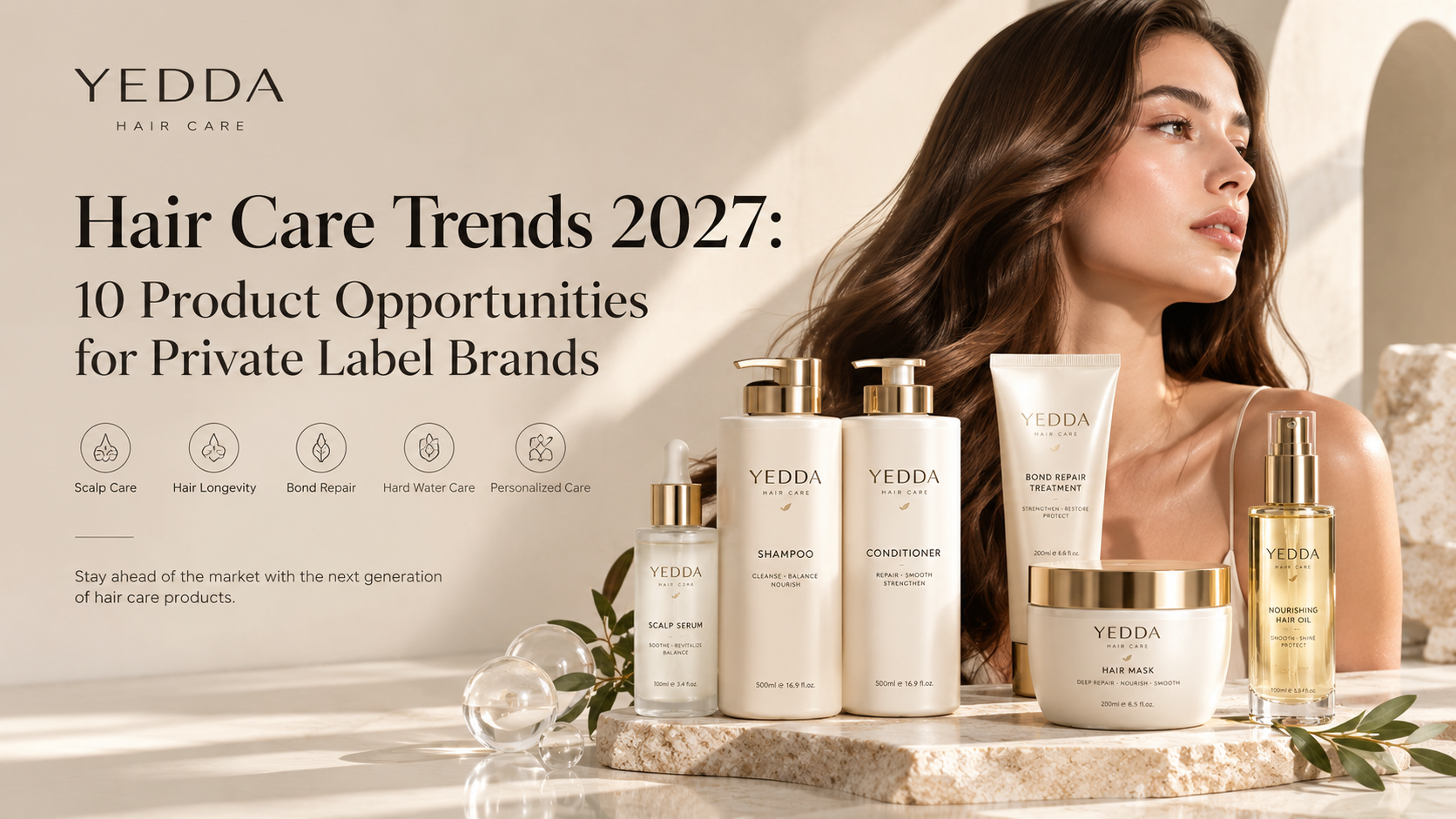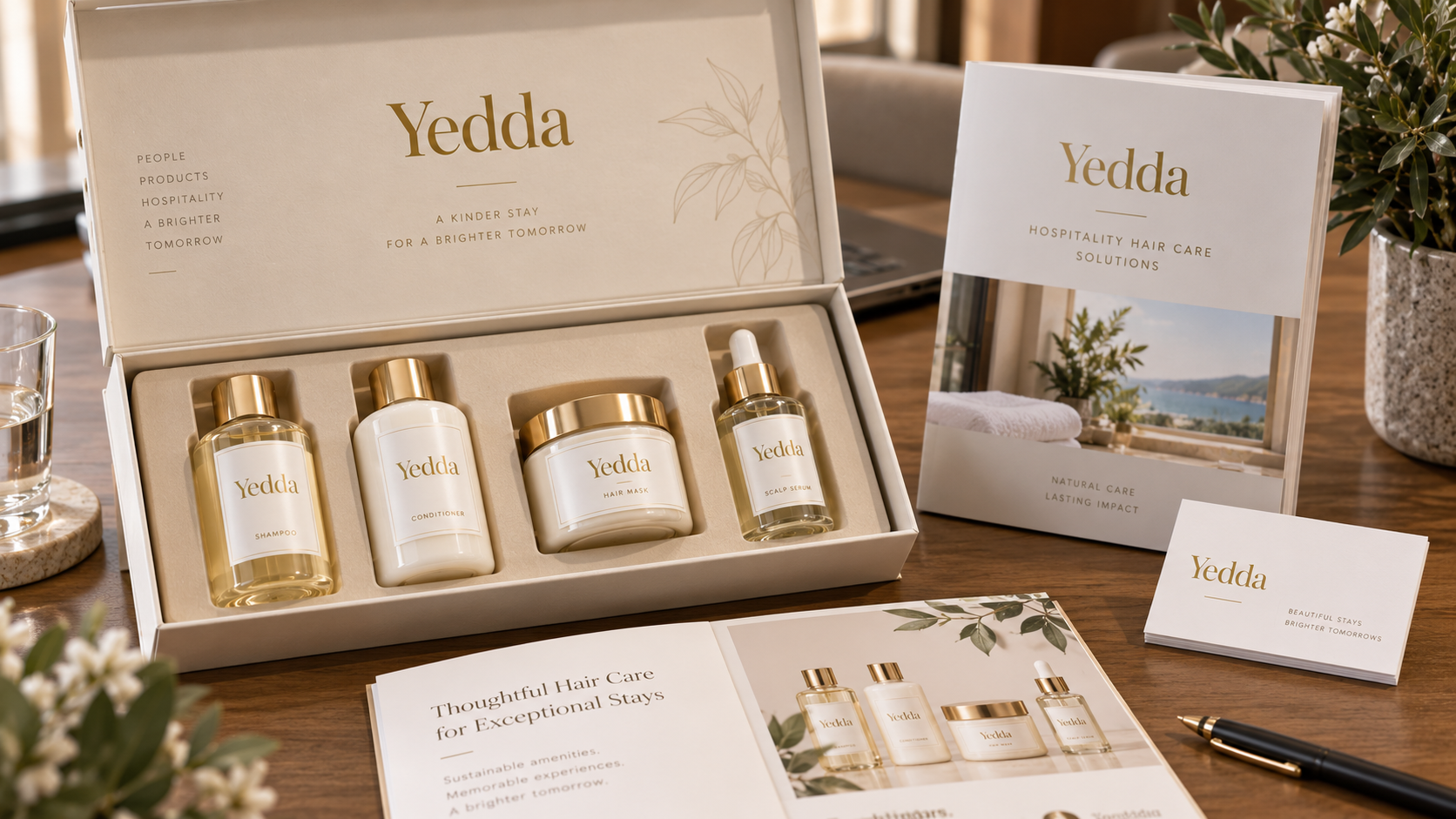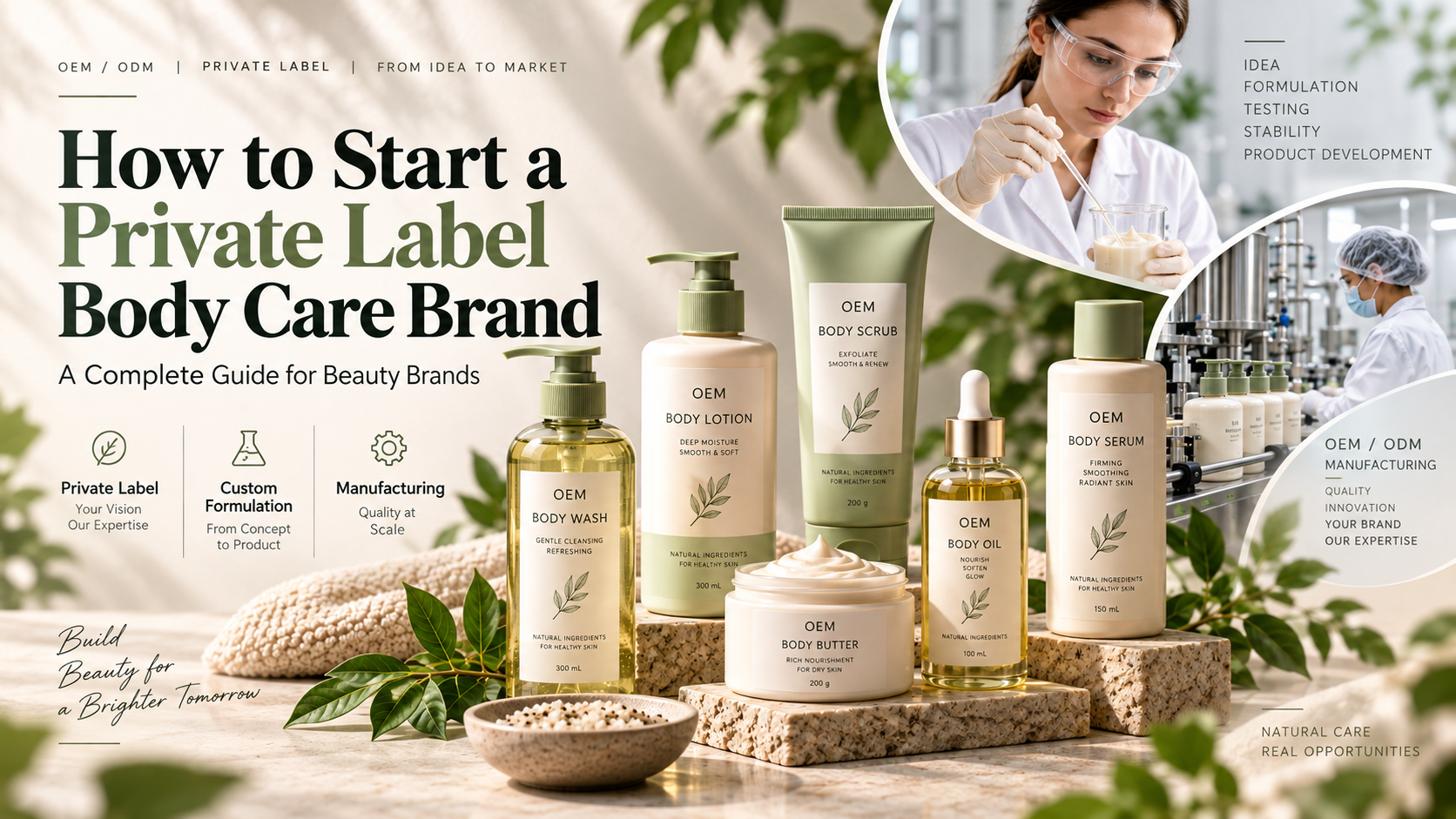

Why B2B Buyers Are Racing to Stock Plant-Based Hair Care — and the OEM Advantage Most Brands Miss
If you’re sourcing hair care for a beauty brand, a salon chain, or a cross-border distribution business, the numbers tell a story you can’t afford to ignore. The global market for natural and organic hair care products was valued at US$5.6 billion in 2024 and is projected to reach US$9.3 billion by 2030, growing at a CAGR of 8.9%. Meanwhile, the broader natural hair care products market is expected to climb from $11.63 billion in 2025 to $16 billion by 2030. These aren’t speculative projections — they reflect purchase orders already shifting from conventional chemical lines to plant-based formulations across Europe, North America, and Southeast Asia.
For professional buyers, the question is no longer “Should we add a natural line?” but “How fast can we get a truly compliant, scalable plant-based range to market — without building a factory ourselves?”
This is where the right OEM/ODM partner turns market pressure into competitive speed.
The Formulation Shift: What “Plant-Based” Actually Means at the Manufacturing Level
Retailers and brand owners often hear the term “plant-based hair care” thrown around loosely. But from a sourcing and contract manufacturing perspective, the definition is precise — and it directly impacts your margins, compliance, and brand durability. The Environmental Working Group (EWG) has evaluated thousands of personal care products through its Skin Deep® database, consistently flagging synthetic surfactants and preservatives as primary sources of consumer health concerns.
A genuinely plant-based formula doesn’t just sprinkle in a few botanical extracts after a conventional sulfate cleansing base. Instead, it replaces the entire backbone of the product. The table below breaks down the critical differences at the formulation architecture level:
| Formulation Component | Conventional Chemical System | Plant-Based / Nature-Identical System |
|---|---|---|
| Primary Surfactants | SLS, SLES, ALS (petroleum-derived, high irritation potential) | Sodium cocoyl glutamate, decyl glucoside, soapberry extract (coconut/plant-derived, dermal-friendly) |
| Conditioning Agents | Dimethicone, amodimethicone, cyclomethicone (non-biodegradable film-formers) | Cold-pressed argan oil, murumuru butter, hydrolyzed keratin, fatty alcohols (biodegradable, cortex-penetrating) |
| Preservation System | Parabens, methylisothiazolinone (MIT), formaldehyde releasers, triclosan | Potassium sorbate, sodium benzoate, phytic acid (chelating agent), nature-identical alternatives |
| Fragrance Source | Synthetic “Parfum” / “Fragrance” (proprietary blends, up to 3,000 undisclosed chemicals) | Steam-distilled essential oils, CO₂ extracts, botanical distillates |
| Certifications Typically Achievable | Limited to basic GMP | ECOCERT, COSMOS ORGANIC, EWG Verified®, USDA Organic, Halal |
Key reading: Research published in ScienceDirect confirms that the synergy between keratin peptides and natural oils such as argan and castor oil significantly enhances hair repair efficacy, demonstrating that plant-based systems can deliver measurable structural restoration — not just marketing claims.
For a B2B buyer, this formulation architecture matters in three hard business terms: regulatory clearance, product stability across climate zones, and a defensible ingredient story that resists commoditization. A private label shampoo that merely says “with argan oil” but runs on SLS will be picked apart by educated consumers — and by customs authorities in markets like the EU, where cosmetic regulation is tightening sharply.
Ingredient Heroes That Win Purchase Orders: Argan Oil, Fermented Rice, and Hydrolyzed Keratin
If you’ve sat in sourcing meetings recently, you’ve seen ingredient checklists grow more specific by the quarter. Buyers no longer accept “botanical blend” as a spec. They want to know the exact functional active — and how it translates into on-shelf differentiation. This shift is supported by hard data: the global amino acid-based surfactants market was valued at approximately USD 1.7 billion in 2024 and is expected to reach USD 2.4 billion by 2031 — proof that formulation-level change is accelerating across the industry.
Argan Oil: The Cold-Pressed Workhorse of Premium Lines
Argan oil’s value in sulfate-free, silicone-free conditioner formulas is undeniable. Rich in tocopherols (Vitamin E) and essential fatty acids, it penetrates the cuticle without leaving a heavy residue. A 2025 study published in the Journal of Molecular Liquids found that the synergy between keratin peptides and argan oil enhanced the formulation‘s efficacy for hair treatment and growth, offering protective and restorative effects that synthetic silicones simply cannot replicate. For brands selling into diverse ethnic markets, argan oil’s universal hair-type compatibility is a critical supply chain advantage.
Fermented Rice Water: The Dual-Function Ingredient
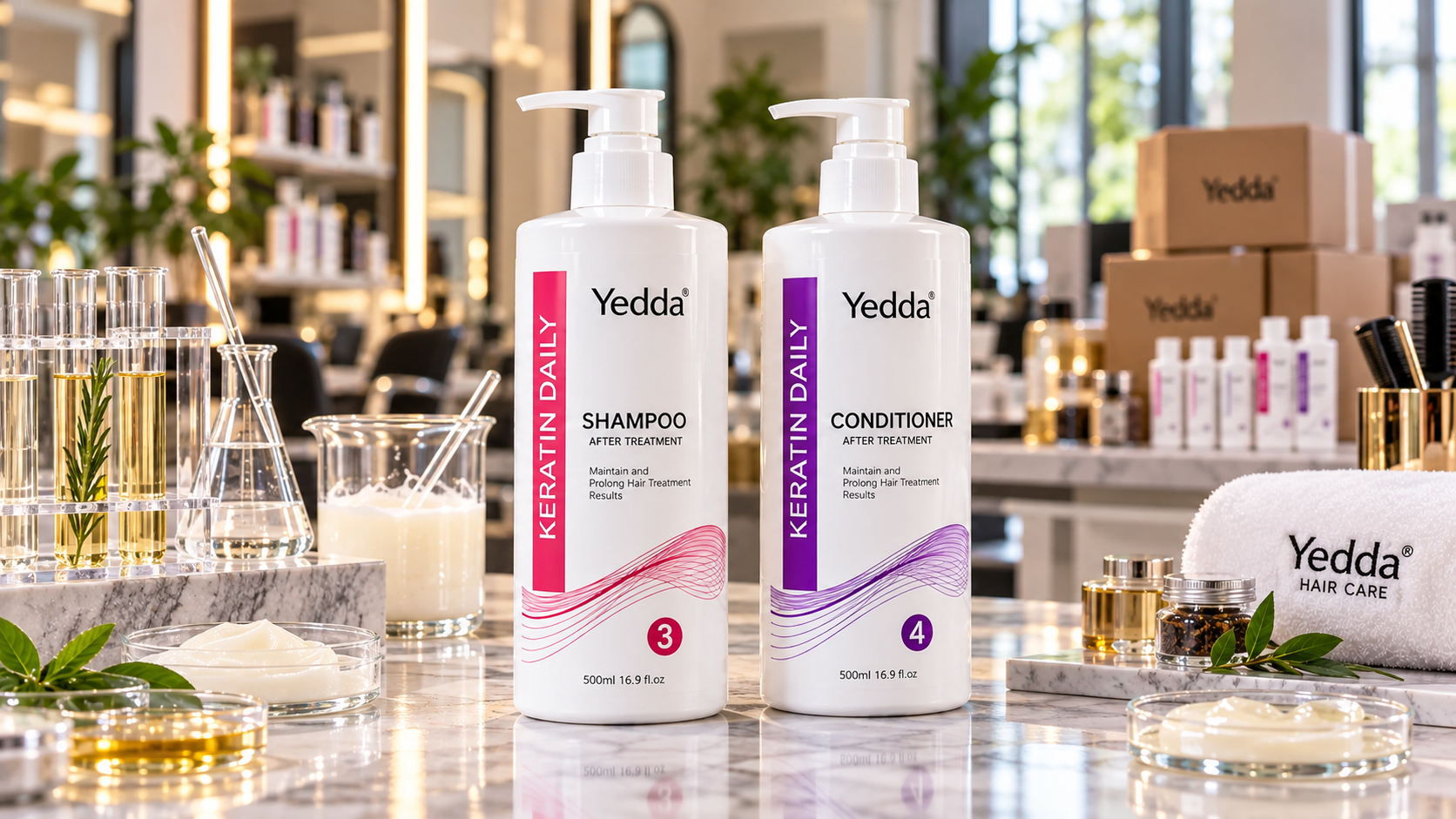
Fermentation transforms rice starch into bioactive peptides and amino acids. In a shampoo, fermented rice water delivers gentle cleansing while depositing nutrients that fill porosity gaps along the hair shaft. For B2B buyers building a complete wash-line, this ingredient allows a single hero product to carry both a “gentle cleanse” and a “repair” claim — simplifying marketing and inventory. Explore Yedda’s plant-based OEM/ODM catalog to see how fermented rice water can be integrated into your next product line.
Hydrolyzed Keratin: Reconstructing the Cortex
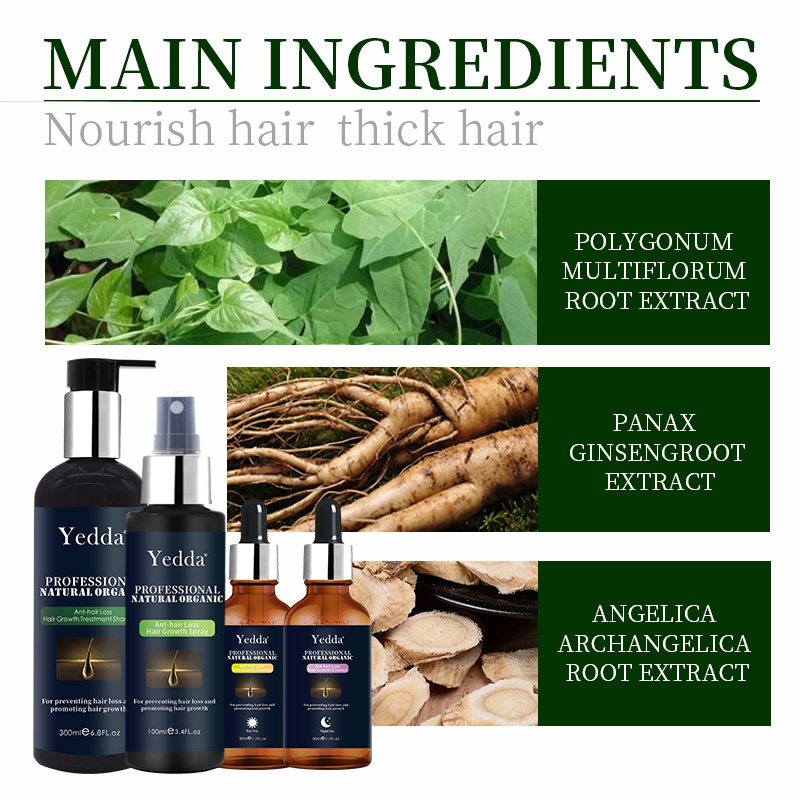
While keratin isn’t plant-derived, it’s often the missing piece in a plant-based repair treatment. Low-molecular-weight hydrolyzed keratin penetrates the cortex and mends disulfide bonds, delivering the structural reinforcement that plant oils alone can’t achieve. In a well-designed OEM formula, keratin works alongside botanical moisturizers to create a genuinely restorative product — not just a silicone-free version of a conventional conditioner. Products combining these actives, such as Yedda’s Hair Growth Oil, already demonstrate how botanical and protein-based ingredients can work in synergy to address multiple hair concerns simultaneously.
Further reading: A peer-reviewed study published on ScienceDirect demonstrated that keratin peptide-loaded nanostructured lipid carriers — formulated using argan and castor oils — achieved 82% entrapment efficiency and significantly improved the mechanical strength and flexibility of damaged hair through disulfide bond reassembly.
When these actives appear in a manufacturer’s ready-to-customize library, brand owners skip months of lab iteration and move directly into packaging, branding, and sales.
The B2B FAQ: Plant-Based Hair Care OEM/ODM Demystified
- Is “natural” just a marketing label, or does it affect formula safety?
-
In legitimate OEM/ODM natural hair care manufacturing, “natural” is a formulation architecture, not a claim. It means replacing synthetic surfactants, silicones, and preservatives with ingredients derived from plants or nature-identical sources that meet biodegradability and safety thresholds. The EWG Skin Deep® database evaluates thousands of products based on ingredient safety studies, and consistently rates plant-derived surfactants and nature-identical preservation systems as lower-hazard alternatives to conventional synthetic systems. This directly impacts safety assessments, stability testing, and export clearance for eco-conscious markets like Scandinavia or Southeast Asia’s halal-focused retail channels.
- How big is the plant-based hair care market opportunity for B2B buyers?
-
The natural and organic hair care products market is projected to grow from US$5.6 billion in 2024 to US$9.3 billion by 2030 at a CAGR of 8.9%, while the broader natural hair care products segment (including professional and mass-market) is forecast to reach $16 billion by 2030. The global natural surfactants market — the ingredient backbone of plant-based formulations — was valued at USD 10.4 billion in 2024 and is expected to reach USD 15.8 billion by 2031. These figures confirm that demand is rising across the entire supply chain, from raw materials to finished goods.
- What certifications should a plant-based hair care manufacturer hold?
-
At minimum, expect GMP (Good Manufacturing Practice) and ISO 22716 for cosmetic quality management. For European export, formulas should be pre-aligned with ECOCERT or COSMOS standards. Under the COSMOS ORGANIC standard, at least 95% of plant-based ingredients must be organic, and at least 20% of the entire formula must be organic (10% for rinse-off products). Depending on your target region, you may also need Halal certification, CPSR (Cosmetic Product Safety Report), and REACH compliance documentation. A strong OEM partner provides a compliance documentation package as a core part of the service — not as a costly add-on.
- How have EU regulations changed the preservative landscape for hair care?
-
Since 2017, methylisothiazolinone (MIT) has been banned from leave-on cosmetic products in the EU and is restricted to a maximum concentration of 0.0015% (15 ppm) in rinse-off products only. This regulatory shift has forced manufacturers to adopt natural or nature-identical preservation systems — potassium sorbate, sodium benzoate, and chelating agents like phytic acid — as the new formulation baseline for any brand targeting European retail shelves.
- How long does it take to develop a custom natural shampoo from scratch?
-
If a manufacturer already holds a robust proprietary formula library, a typical custom project moves from brief to finished sample in 2–4 weeks, with additional time for stability and compatibility testing. If every formula must be built from zero, lead times stretch to months. This is why B2B buyers increasingly prioritize suppliers with pre-existing, tested, market-ready plant-based bases. Discover Yedda’s ready-to-customize plant-based formulations and see how fast your next product line can move from concept to commerce.
- What is the minimum order quantity for private label natural hair care?
-
This varies significantly. Some factories demand large MOQs that block small and medium-sized brands. Others offer flexible MOQ structures designed to grow with brands — from trial batches to full container loads — without forcing buyers into unsold inventory.
- Can a single OEM partner handle shampoo, conditioner, and body care?
-
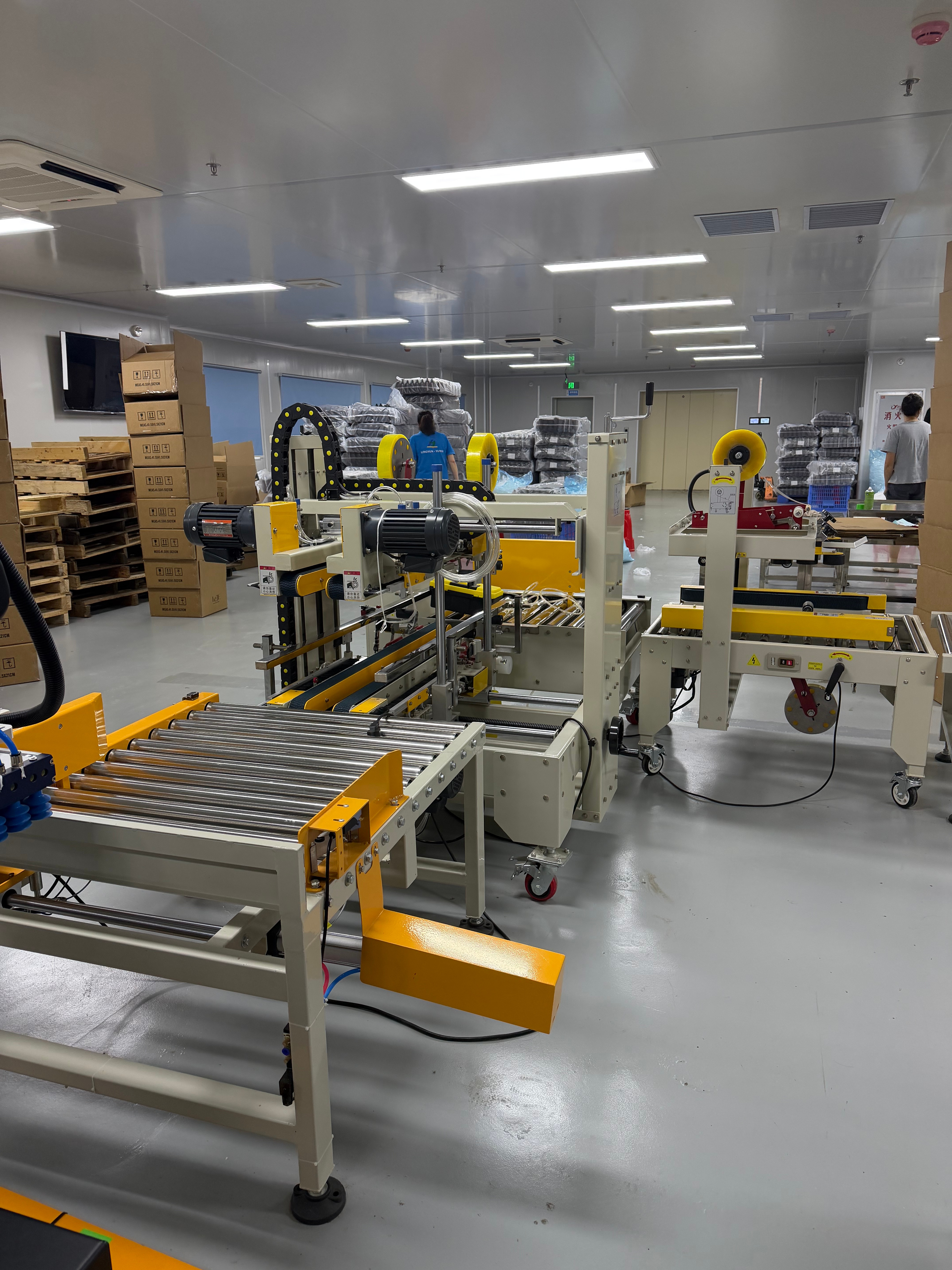
Yes. Integrated manufacturers with dedicated R&D teams and multiple production lines can often provide shampoo, silicone-free conditioner, body wash, scalp serums, and even baby care lines from a single facility. This vertical consolidation reduces logistics friction, quality variance, and compliance complexity — key advantages when scaling a multi-SKU brand across borders. Visit Yedda’s official website to explore the full OEM/ODM product range.
Southeast Asia and Europe: Two Markets, Two Drivers, One Common Demand
B2B purchasing behavior in Southeast Asia and Europe differs in rhythm but converges on ingredient integrity.
In Southeast Asia, the rapid expansion of halal beauty, the influence of Korean and Japanese beauty trends, and high humidity create demand for lightweight, non-greasy, plant-based formulas that feel clean without heavy buildup. A sulfate-free shampoo with fermented rice water, for example, resonates strongly because it aligns with regional hair care traditions while satisfying modern “clean beauty” expectations.
In Europe, the driver is regulatory evolution and retailer mandates. Since 2017, the EU has banned methylisothiazolinone (MIT) from leave-on cosmetic products, and its use in rinse-off products is restricted to a maximum concentration of 0.0015% (15 ppm). Major drugstore and department store chains have set aggressive targets for “clean” chemistry, phasing out cyclic silicones, certain preservatives, and microplastics. A brand entering this market without a properly certified plant-based supply chain will face retailer rejection — not from consumers, but from gatekeepers at the shelf level.
A single, well-architected OEM/ODM range that can flex across these markets — adjusting fragrance profiles, preservation requirements, and packaging compliance — turns regional complexity into a scalable asset.
What a World-Class Plant-Based Hair Care Supply Chain Must Deliver
If you’re evaluating a long-term hair care contract manufacturer, these are the non-negotiable checkpoints:
- Proprietary Formula Library: A library of stability-tested, market-ready plant-based formulas — not a factory that starts from scratch with every inquiry.
- MOQ Flexibility: The ability to support brands through their growth curve, from small-batch trial orders to full-scale commercial runs.
- Compliance Documentation Package: The capacity to provide REACH, CPSR, Halal, and other target-market certifications without delay.
- Raw Material Traceability: End-to-end control from the origin of plant raw materials to the finished product leaving the warehouse.
The table below summarizes the certification standards your OEM/ODM partner should be able to support, depending on your target export market:
| Certification / Standard | What It Covers | Target Market Relevance |
|---|---|---|
| ISO 22716 (GMP for Cosmetics) | Quality management across production, storage, and distribution | Global baseline requirement |
| ECOCERT / COSMOS ORGANIC | ≥95% of plant-based ingredients organic; ≥20% organic content in total formula (10% for rinse-off) | EU, North America, premium natural retail |
| REACH Compliance | Chemical substance registration, evaluation, and authorization | Mandatory for EU market entry |
| CPSR (Cosmetic Product Safety Report) | Product-specific safety assessment signed by qualified safety assessor | Mandatory for EU and UK |
| Halal Certification | Ingredient and production compliance with Islamic law | Southeast Asia, Middle East |
| EWG Verified® | Product meets EWG‘s strictest health and safety standards; full ingredient transparency | North America, clean beauty positioning |
Yedda has built a standardized, repeatable delivery process across every one of these dimensions — dramatically shortening the timeline from product selection to market launch for our B2B partners.
Not Every Factory Can Rightfully Call Itself a “Natural Factory”
Let’s be blunt: the market is flooded with supply chains claiming “natural hair care.” Very few possess genuine, in-depth R&D capability in true plant-based formulations.
The test is brutally simple: flip the bottle and read the first five ingredients after water. If SLS or SLES shows up before any botanical active, “natural” is just a word on the label. Authentic plant-based hair care starts with a mild, plant-derived cleansing base — it’s non-negotiable. A 2025 market analysis confirms that consumers are increasingly opting for formulations free from sulfates, parabens, silicones, and synthetic fragrances, relying instead on plant-based ingredients that nourish hair and scalp without harmful chemicals.
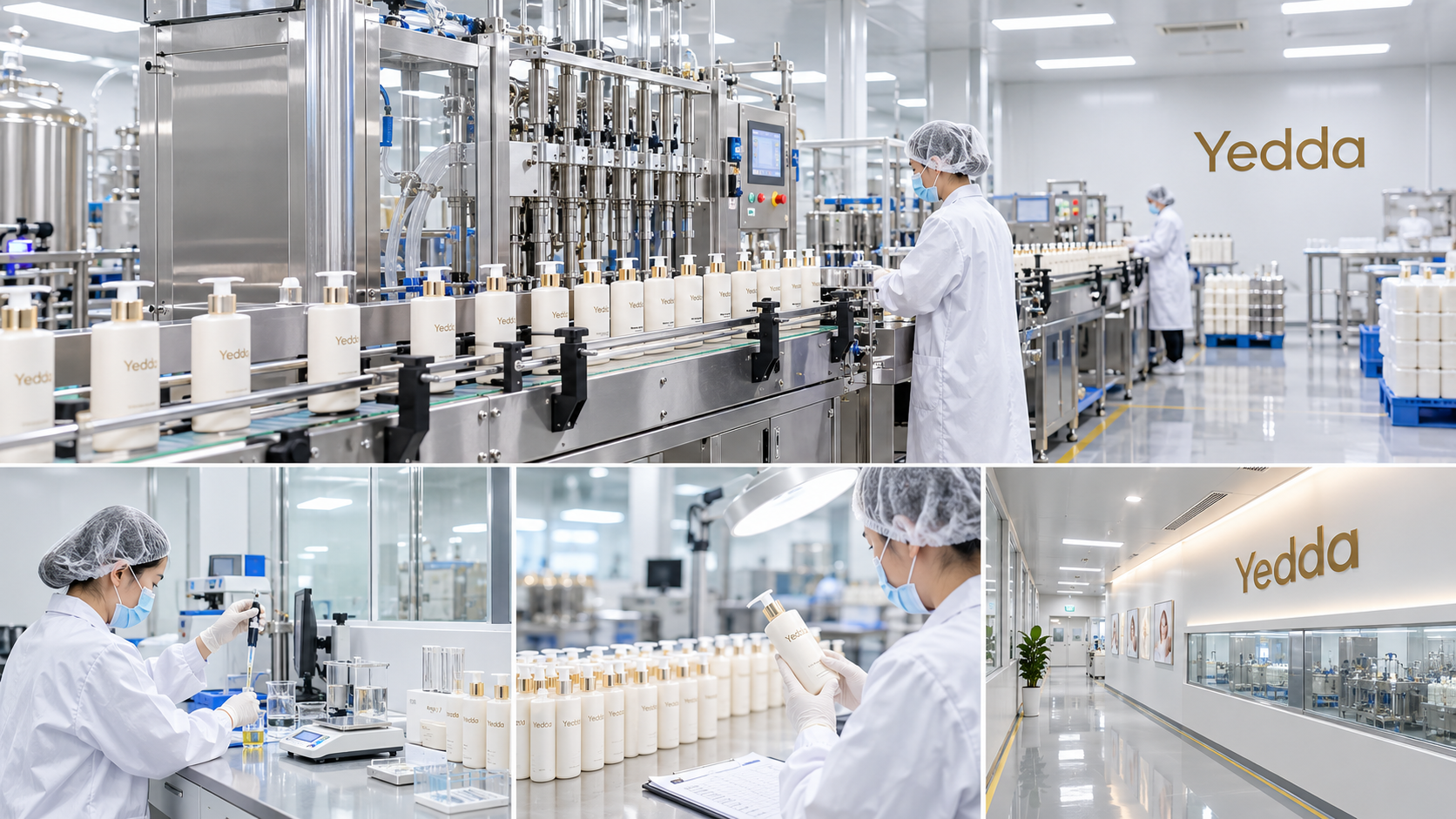
Yedda‘s entire product system is built on one conviction: supply chain transparency is your ultimate marketing credibility. We deliver end-to-end plant-based OEM/ODM services for global brands and distributors. From raw materials and formulations to finished products, every link is engineered to withstand the scrutiny of today’s hyper-informed end consumer.
The plant-based hair care wave isn’t coming — it‘s already reshaping purchase orders, shelf space, and brand valuations. Secure your supply chain advantage early. Explore Yedda’s complete OEM/ODM catalog and turnkey brand solutions by visiting our official website and Alibaba international store.