
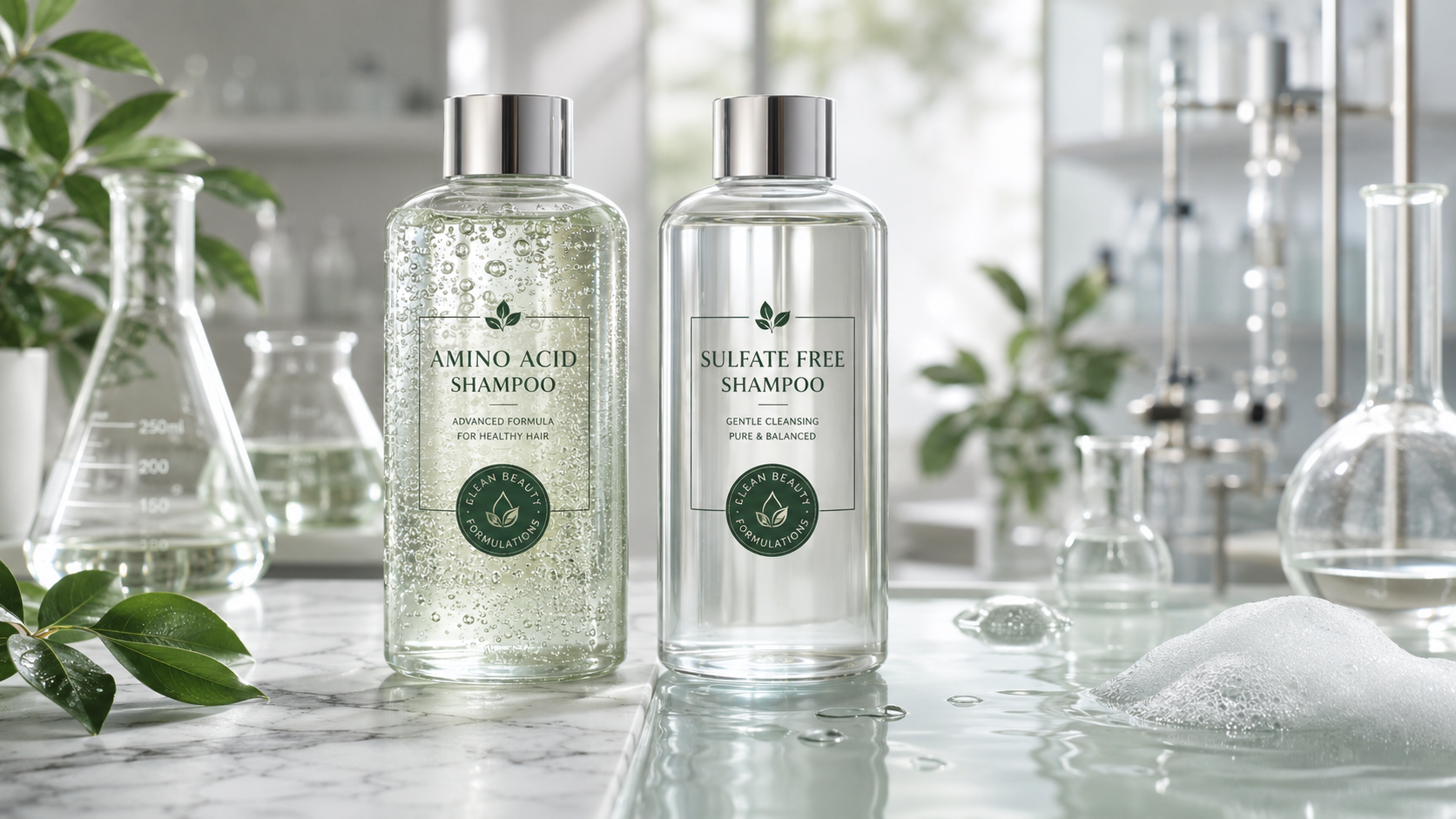
The global hair care market in 2026 is undergoing a profound paradigm shift. Driven by the "skinification of hair" movement, consumers no longer view shampoo merely as a tool to strip away oil; instead, they treat it as an extension of their skincare routine. This evolution has placed scalp health, microbiome preservation, and barrier protection at the center of consumer demand, making the development of a gentle cleansing formula the absolute baseline for any emerging or established beauty brand.
For brand founders, product managers, and R&D executives, navigating this shift requires making critical strategic decisions during the hair care formulation stage. The most pressing debate currently dominating the B2B supply chain is the choice between two massive formulation trends: Amino Acid Shampoo and Sulfate-Free Shampoo. While both concepts promise mildness and appeal to the "clean beauty" demographic, they rely on entirely different surfactant chemistries, cost structures, and manufacturing processes. This comprehensive analysis will break down the technical differences, formulation challenges, and market dynamics to help your brand choose the winning formulation strategy for 2026.
The Rise of Gentle Cleansing Formula in 2026 Hair Care Trends
According to recent beauty market consumer insights published by Mintel, over 65% of global consumers actively seek "mild" or "scalp-safe" claims when purchasing hair cleansing products. The traditional dominance of harsh anionic surfactants—specifically Sodium Lauryl Sulfate (SLS) and Sodium Laureth Sulfate (SLES)—is rapidly declining due to widespread consumer awareness of their potential to cause contact dermatitis, lipid depletion, and hair color fading.
To capture this highly discerning market, brands must understand that "mildness" is no longer just a marketing buzzword; it is a measurable scientific metric. A true gentle cleansing formula must selectively remove excess sebum and environmental pollutants while leaving the scalp’s essential intercellular lipids (such as ceramides and cholesterol) intact. As we analyze the market data for 2026, the choice between amino acid-based systems and alternative sulfate-free systems will define a brand’s positioning, margins, and consumer retention rates.
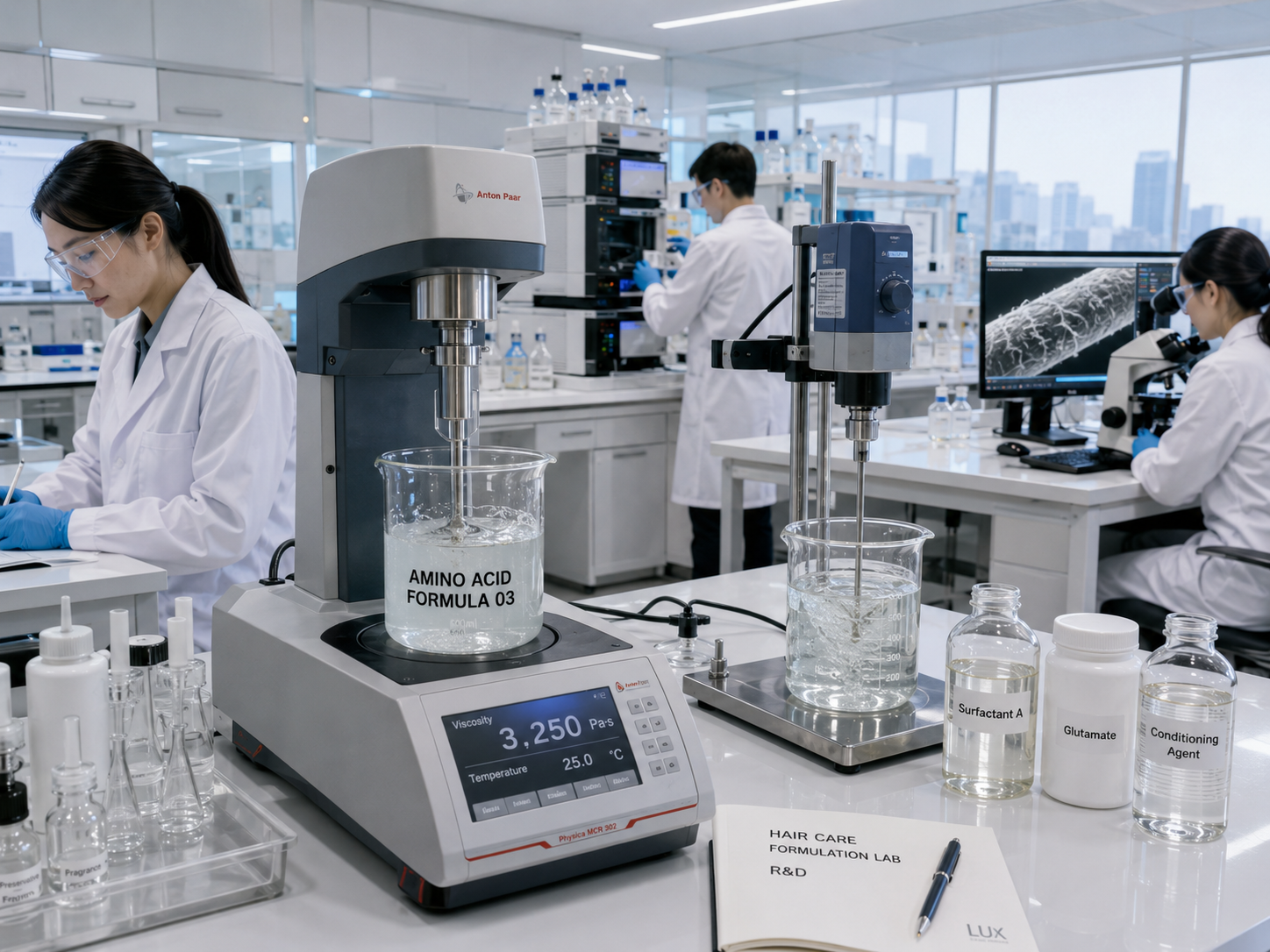
Decoding Amino Acid Shampoo: Technical Advantages in Hair Care Formulation
An authentic amino acid shampoo utilizes amino acid surfactants as the primary cleansing agents (typically accounting for more than 50% of the total surfactant active matter). These surfactants are synthesized by reacting fatty acids derived from natural sources (such as coconut oil) with amino acids (such as glutamate, glycine, alanine, or sarcosine).
From a chemical standpoint, the most common amino acid surfactants utilized in premium hair care formulation include:
- Sodium Cocoyl Glutamate / Potassium Cocoyl Glycinate: Known for their exceptional mildness and ability to produce a soft, luxurious foam. Glutamates are highly biocompatible with the skin's natural pH.
- Sodium Lauroyl Sarcosinate: Offers superior foaming capabilities and excellent stability in slightly acidic conditions, making it highly effective for conditioning shampoos.
- Sodium Cocoyl Alaninate: Provides excellent flash foam elasticity and rinses cleanly without leaving a heavy residue on fine hair textures.
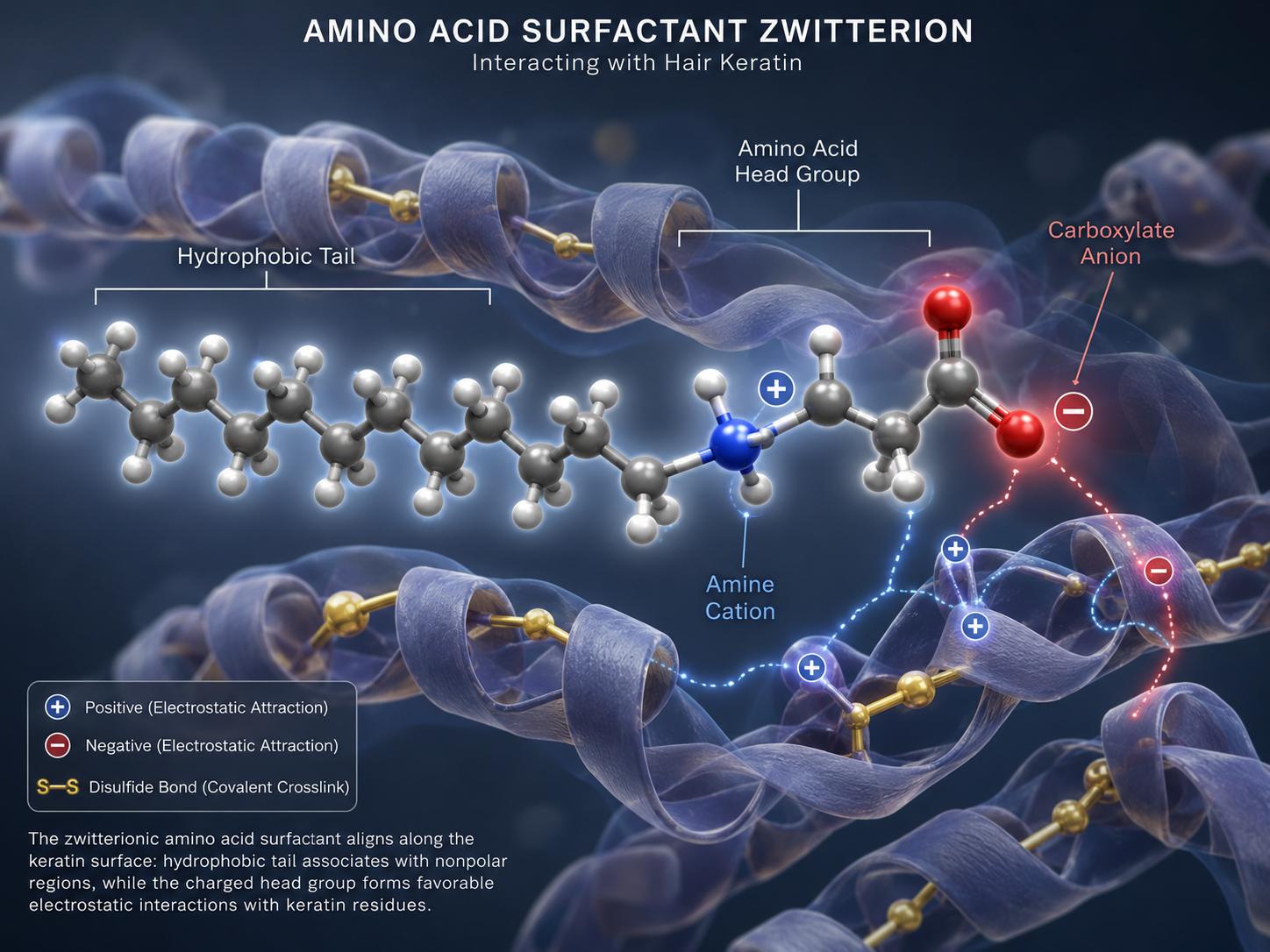
The Mechanism of Scalp Protection
Why are amino acid surfactants considered the gold standard for scalp health? The answer lies in their interaction with keratin. Traditional sulfates carry a high charge density that denatures stratum corneum proteins, leading to barrier disruption. In contrast, amino acid surfactants possess a molecular structure that matches the natural proteins found in human skin and hair. Data from the Cosmetic Ingredient Review (CIR) confirms that amino acid surfactants exhibit significantly lower protein denaturation indexes compared to traditional alkyl sulfates, rendering them ideal for sensitive, dry, or compromised scalps.
The Market Evolution of Sulfate Free Shampoo Alternatives
The term sulfate free shampoo serves as a broader category. It encompasses any formulation that completely omits alkyl sulfates (SLS, SLES, ALS). While an amino acid shampoo is inherently sulfate-free, the vast majority of commercial products labeled as "sulfate-free" rely on alternative synthetic or plant-derived anionic, non-ionic, and amphoteric surfactants that are more cost-effective than pure amino acids.
Standard building blocks for a conventional sulfate-free gentle cleansing formula include:
- Sodium C14-16 Olefin Sulfonate: A highly powerful anionic surfactant. It is frequently used because it mimics the high foam volume and strong degreasing power of traditional sulfates, though it can sometimes be slightly stripping if not properly balanced.
- Alkyl Polyglucosides (APGs - e.g., Coco-Glucoside, Decyl Glucoside): Non-ionic surfactants derived from plant sugars. They offer excellent environmental biodegradability and zero skin irritation, but produce a coarse, short-lived foam profile.
- Cocamidopropyl Betaine (CAPB) / Sodium Cocoamphoacetate: Amphoteric surfactants used to boost flash foam, build viscosity, and reduce the overall irritation potential of primary anionic cleansers.
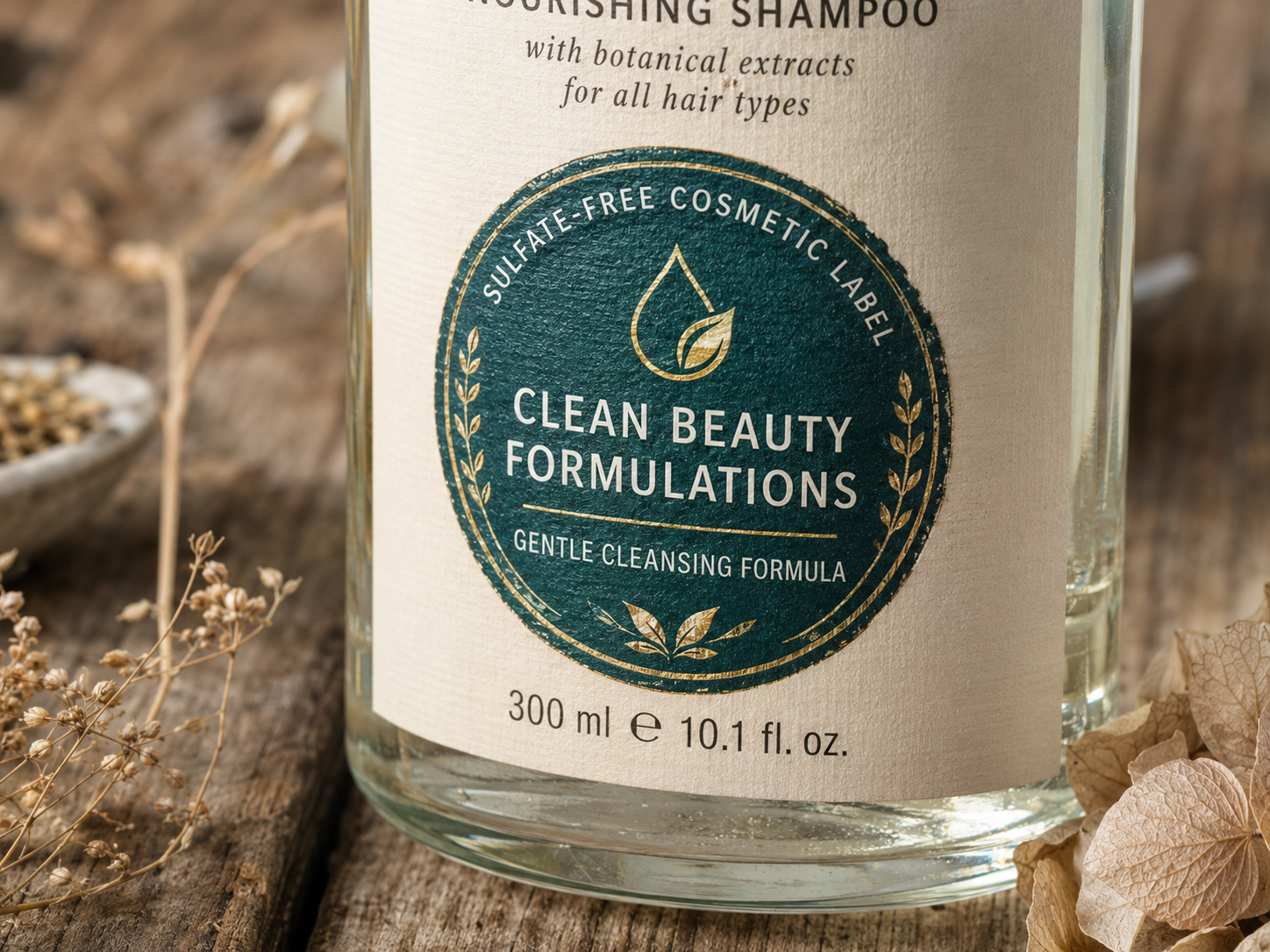
For brands targeting mass and mass-premium retail channels, a standard sulfate-free approach provides an accessible way to claim "0% Sulfates" on the front label without completely rewriting the manufacturing playbook or drastically increasing the Cost of Goods Sold (COGS).
Technical Showdown: Amino Acid Shampoo vs Sulfate Free Shampoo
To provide clear guidance for your brand’s 2026 product development roadmap, let's contrast these two dominant systems across critical performance, manufacturing, and financial metrics.
| Evaluation Parameter | Amino Acid Shampoo System | Standard Sulfate-Free System |
|---|---|---|
| Primary Surfactant Active Matter | Glutamates, Glycinates, Alaninates, Sarcosinates | Olefin Sulfonates, APGs, Isethionates, Betaines |
| Scalp Mildness & Biocompatibility | Maximum. Does not denature proteins; protects the moisture barrier. | Moderate to High. Highly dependent on the exact surfactant ratios used. |
| Foam Sensory Profile | Dense, creamy, micro-bubble texture resembling a face wash. | High flash foam volume, but can feel airy or dissipate quickly. |
| Thickening & Rheology Modification | Highly challenging. Non-responsive to NaCl (salt); requires expensive polymer thickeners. | Relatively straightforward. Responsive to salt adjustments and standard thickeners. |
| Raw Material Cost (COGS) | Premium ($3.50 - $6.00+ per kg of raw surfactant active). | Economical to Moderate ($1.50 - $3.00 per kg). |
| Target Consumer Demographics | Prestige hair care, anti-aging scalp treatments, salon-grade lines. | Mass-market clean beauty, color protection, daily family care. |
Cleansing Performance and Sebum Regulation
A frequent critique of early-generation amino acid systems was their tendency to leave oily hair feeling weighed down. Because amino acid surfactants possess excellent conditioning properties and a weaker affinity for hydrophobic lipids compared to harsh industrial degreasers, they leave a thin, protective mono-layer on the hair shaft. For dry, damaged, or bleached hair, this is a premium benefit. However, for consumers with oily scalps, a standard sulfate-free formulation relying on Sodium C14-16 Olefin Sulfonate will provide a much cleaner, squeaky-clean finish that extends the time needed between washes.
The Thickening Dilemma in the Laboratory
From an OEM/ODM manufacturing perspective, formulating a pure amino acid shampoo is notoriously complex. Traditional shampoos build viscosity through the addition of simple Sodium Chloride (salt), which causes surfactant micelles to switch from spherical shapes to elongated, entangled rod-like networks. Amino acid surfactants do not respond to salt thickening. To achieve a luxurious, pourable gel texture, cosmetic chemists must utilize advanced rheology modifiers such as PEG-120 Methyl Glucose Dioleate, natural gums (Xanthan, Guar), or synthetic acrylates. This addition not only increases raw material costs but can also negatively affect the flash foam clarity and speed of the formulation.
Formulation Strategies: Optimizing Your Next Hair Care Formulation Project
Given the strengths and limitations of both systems, leading cosmetic scientists in 2026 are increasingly abandoning "pure" single-category systems in favor of advanced hybrid systems. By strategically blending these technologies, your brand can claim both trend designations while optimizing performance and profitability.
The 2026 Hybrid Formulation Blueprint: By utilizing an amino acid surfactant (such as Sodium Lauroyl Sarcosinate) at 30-40% of the surfactant chassis, combined with a mild alternative surfactant like Sodium Cocoyl Isethionate (SCI) and a stabilizing amphoteric like Cocamidopropyl Hydroxysultaine, formulators can construct a high-performing product that meets market needs.
This hybrid architecture allows brands to leverage the premium marketing story of an amino acid shampoo on their packaging while achieving the competitive cost structure, structural stability, and satisfying lather volume expected of a commercial sulfate free shampoo. Furthermore, incorporating specialized conditioning polymers—such as Polyquaternium-10 or plant-derived proteins—helps neutralize any structural harshness from secondary cleansers, securing an undeniable gentle cleansing formula status during independent clinical trials.
Market Insights: Which Trend Should Your Brand Choose in 2026?
The decision to formulate either a dedicated amino acid line or an alternative sulfate-free product ultimately hinges on your brand identity, target demographic, and retail channel strategy. According to macro-economic retail data from Euromonitor International, the prestige and clinical hair care sectors are growing at double the rate of mass-market commodities, with consumers showing a strong willingness to pay a premium for specialized scalp-care claims.
When to Choose the Amino Acid Trend:
If your brand operates in the prestige, clinical, salon, or dermatological space, amino acids are non-negotiable. It is the ideal choice for targeting consumers addressing specific scalp pathologies, such as dry scalp syndrome, hair thinning, chemical over-processing, or age-related hair density loss. The premium price point of these channels easily absorbs the higher raw material and rheology-modifier costs, allowing you to highlight complex, high-tier scientific stories around biomimetic cleansing.
When to Choose the Broad Sulfate-Free Trend:
If you are scaling an Omni-channel brand destined for mass retail, e-commerce bundles, or masstige markets, a robust sulfate-free formula is highly recommended. It allows you to check all the essential consumer safety boxes—"Sulfate-Free," "Color-Safe," and "Cruelty-Free"—while protecting your gross margins. This setup gives your brand the financial flexibility required to fund aggressive digital marketing campaigns, global supply chain compliance, and attractive custom packaging formats.
Strategic Takeaway for Growing Brands
The choice between amino acid and sulfate-free pathways is not merely a matter of chemical selection; it is a fundamental pillar of your brand's market positioning. If your business goal is to build a high-volume, globally scalable brand that appeals to mainstream clean beauty buyers, investing in a high-performing, cost-efficient sulfate-free system will deliver the best return on investment. Conversely, if you want to capture the absolute highest tier of consumer loyalty by addressing scalp health at a cellular level, mastering the complexities of a true amino acid system will position your brand as a true forward-thinking pioneer in the 2026 hair care landscape.
Frequently Asked Questions (FAQ)
Q1: Why are amino acid shampoos significantly more expensive to manufacture than standard sulfate-free alternatives?
A: Amino acid surfactants require complex multi-step organic synthesis involving purified natural fatty acids and isolated amino acid chains, which increases processing costs. Additionally, they cannot be thickened using inexpensive industrial table salt (NaCl). Manufacturers must instead integrate costly hydrocolloids, hydrophilic polymers, or specialized fatty acid esters to achieve commercially viable product viscosity.
Q2: Can a sulfate-free shampoo cause scalp irritation or build-up over long-term use?
A: Yes. If a sulfate-free product relies on weaker non-ionic surfactants (like Decyl Glucoside) without a balanced anionic co-surfactant, it may fail to thoroughly solubilize heavy styling polymers, water-insoluble silicones, and dense environmental particulates. Over time, this residual accumulation can clog hair follicles, oxidize on the stratum corneum, and trigger localized scalp inflammation or flaking.
Q3: Is an amino acid shampoo formulation safe for chemically treated or color-dyed hair?
A: Absolutely. Because amino acid surfactants carry a weak net negative charge under typical formulation pH levels, they show minimal affinity for the artificial color pigments trapped within the hair cortex. Clinical testing proves that amino acid bases preserve hair color vibrancy up to 40% longer than traditional SLES-based platforms, making them exceptional for post-treatment care lines.
Q4: How should an OEM brand list amino acid ingredients on their packaging for maximum transparency?
A: To build consumer trust, ensure your contract manufacturer lists the precise INCI names clearly within the top five positions of the ingredient deck. Look for identifiers such as Sodium Cocoyl Glutamate, Potassium Cocoyl Glycinate, or Sodium Lauroyl Sarcosinate. Avoid general or ambiguous terms like "amino acid blend," as sophisticated B2B buyers and clean-beauty retail gatekeepers regularly audit labels for exact surfactant classifications.