
How to Build a Clean Beauty Hair Brand: A Manufacturer’s Guide to Ethical Sourcing
In the rapidly evolving haircare market of 2026, "Clean Beauty" has transitioned from a marketing buzzword to a fundamental supply chain requirement. For brand founders and Amazon sellers, the challenge is no longer just about removing parabens—it’s about radical transparency and performance-driven ethical sourcing.
As a leading shampoo manufacturer, we’ve seen that the most successful brands are those that balance consumer safety with professional-grade results. This guide explores how to build a clean brand from the laboratory up.
The Foundation: Ethical Sourcing & Ingredient Integrity
In the rapidly evolving haircare market of 2026, "Clean Beauty" has transitioned from a marketing buzzword to a fundamental supply chain requirement. For brand founders and Amazon sellers, the challenge is no longer just about removing parabens—it’s about radical transparency and performance-driven ethical sourcing.
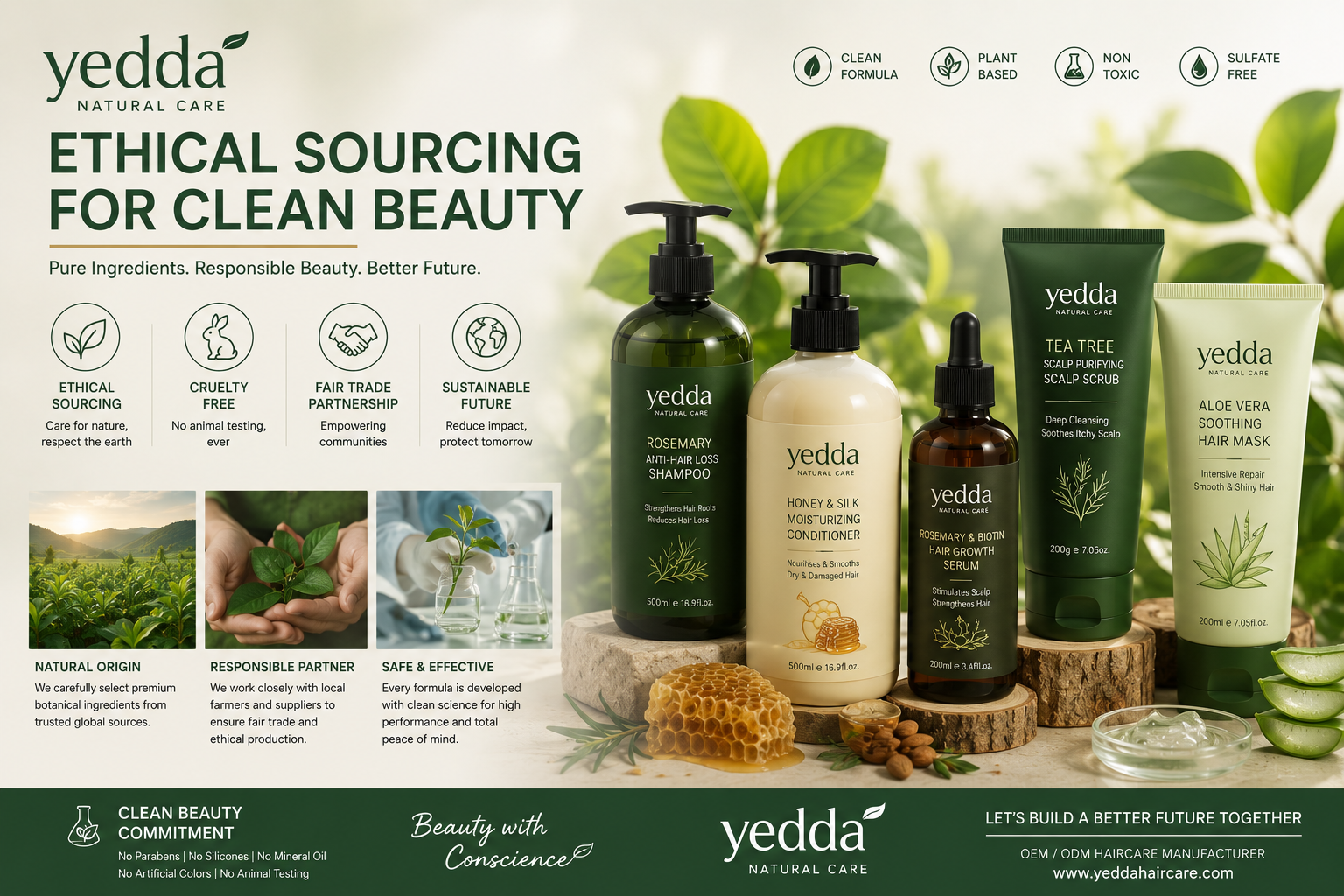
Ethical sourcing starts at the origin. For a brand to claim the "Clean" title, every raw material—from the honey in your hydrating shampoo to the botanical extracts—must be traceable. As noted by industry experts at Healthline’s Clean Beauty Guide , ingredient purity is the top priority for modern consumers.
B2B buyers should focus on:
- Cruelty-Free Certification: Ensuring no animal testing at any stage of ingredient manufacturing.
- Sustainable Harvesting: Using ingredients that do not deplete local ecosystems.
- Fair Trade Partnerships: Supporting the communities that produce your raw materials.
The Technical Core: Advanced Sulfate-Free Surfactants
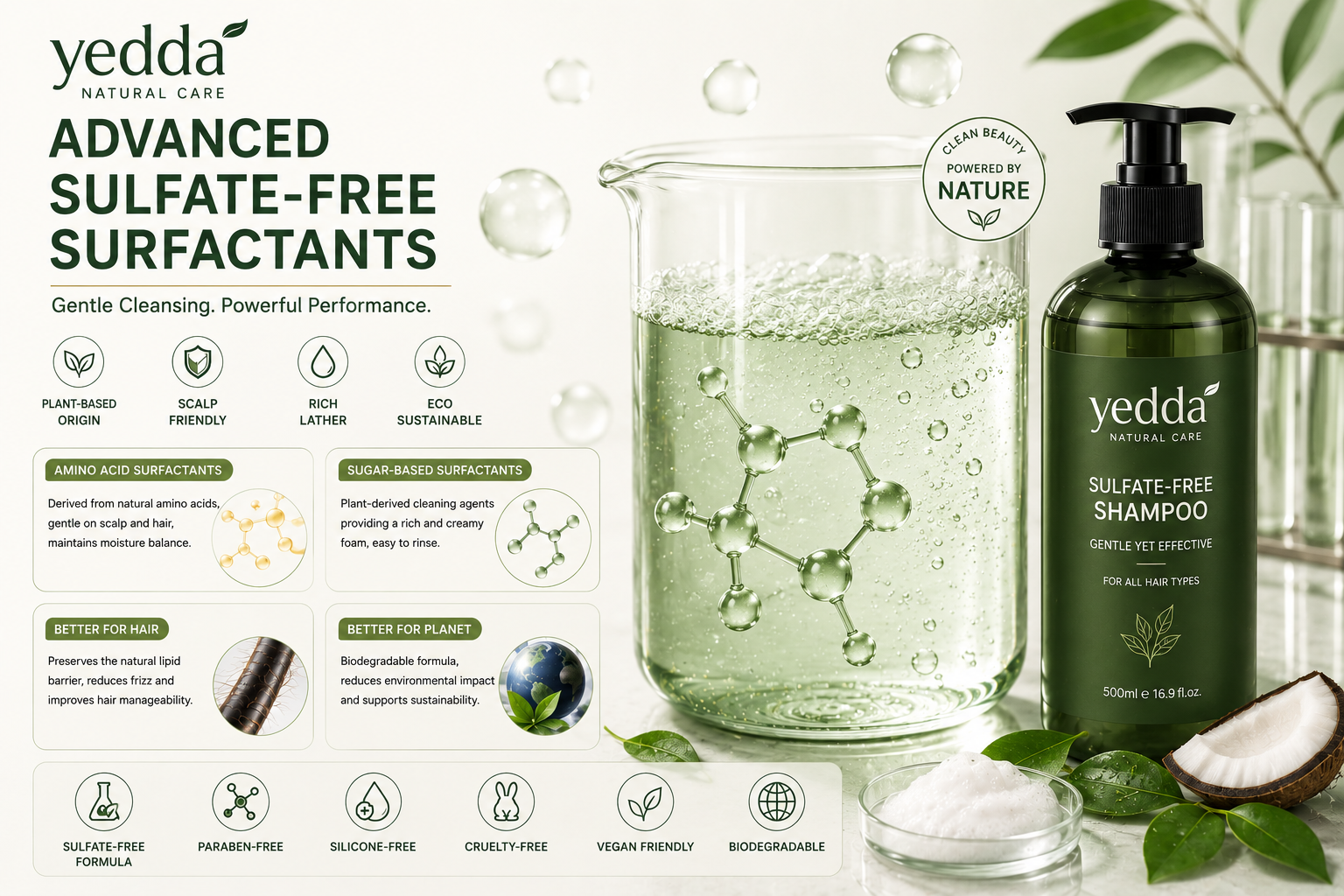
The biggest hurdle in clean haircare is maintaining a luxurious lather without using harsh sulfates like SLS or SLES. This is where Advanced Sulfate-Free Surfactants come into play. Many top-rated professional formulas, often highlighted in Cosmopolitan’s Best Sulfate-Free Reviews , now rely on these complex alternatives.
Modern formulations now utilize amino acid-based and sugar-derived surfactants. These "Advanced Sulfate-Free Surfactants" provide a dense, creamy foam while preserving the hair’s natural lipid barrier and protecting the scalp microbiome. For a manufacturer like Yedda Haircare, sourcing these high-purity alternatives is the key to creating a premium product.
Data-Driven Insights: Ingredient Performance Comparison
| Feature | Traditional Sulfates (SLS/SLES) | Advanced Sulfate-Free Surfactants |
|---|---|---|
| Scalp Irritation | High (Potential for dryness) | Extremely Low / Soothing |
| Foam Quality | High / Aggressive | Rich / Creamy / Stable |
| Color Retention | Poor (Strips color quickly) | Excellent (Long-lasting) |
Designing for Performance: The Yedda Approach
We believe clean beauty shouldn't mean compromised efficacy. By integrating Advanced Sulfate-Free Surfactants with nourishing agents like organic honey and silk proteins, we create formulations that repair the hair shaft while meeting the strictest "Clean at Sephora" or "Eco-cert" standards.
FAQ: Expert Insights for B2B Haircare Buyers
Q1: What is the typical lead time for custom shampoo orders?
A: For custom formulations involving specific ethical sourcing, the lead time usually ranges from 45 to 60 days. Ready-to-go private label formulas can often be shipped within 20-30 days.
Q2: Can I claim "Dermatologist-Tested" for my private label brand?
A: Yes. As your manufacturing partner, we can coordinate third-party clinical testing to validate your "Clean Beauty" claims.
Q3: Are Advanced Sulfate-Free Surfactants effective for oily hair types?
A: Absolutely. They are highly effective at removing excess sebum without triggering the "rebound effect" of oil overproduction caused by harsh stripping agents.