
Industry research has pointed to this shift. Circana sees scalp health as an urgently important area of hair care, including products such as scalp removers and pre-wash treatments. Mintel also highlighted the importance of hair health solutions, holistic anti-hair loss care, technology and convenience in the future of the category. CircanaBeauty Industry InsightsandThe future of Mintel haircare researchProvides useful industry context for brands planning new product categories.
dir="auto" style="vertical-align: inherit;">, and more importantly, explains what fashion trends can mean.
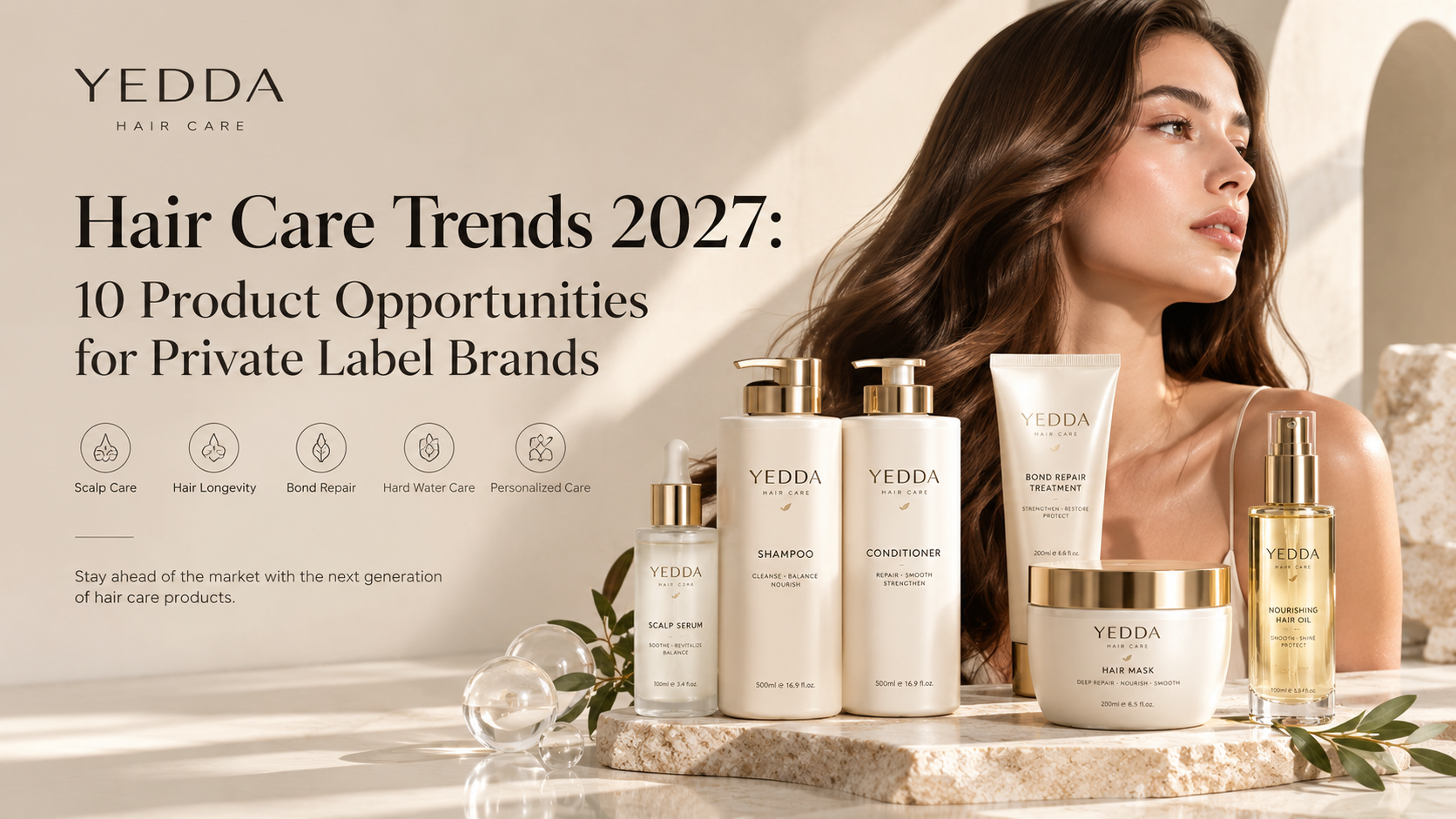
What are the biggest hair care trends of 2027?
The next generation of hair care products are moving away from broad promises like "clean," "natural" or "moisturizing" to more specific, performance-driven solutions. Consumers increasingly want to understand why their hair behaves a certain way and which products are designed to address specific issues.
For brands, product development has become more professional. Shampoo can still form the basis of a hair care range, but may increasingly be supported by scalp serums, pre-wash treatments, care and repair products, masks, leave-in treatments, oils and sleep styling products.
So, The top hair care trends of 2027
 1. Scalp care trends in 2027: from shampoo to Scalp health
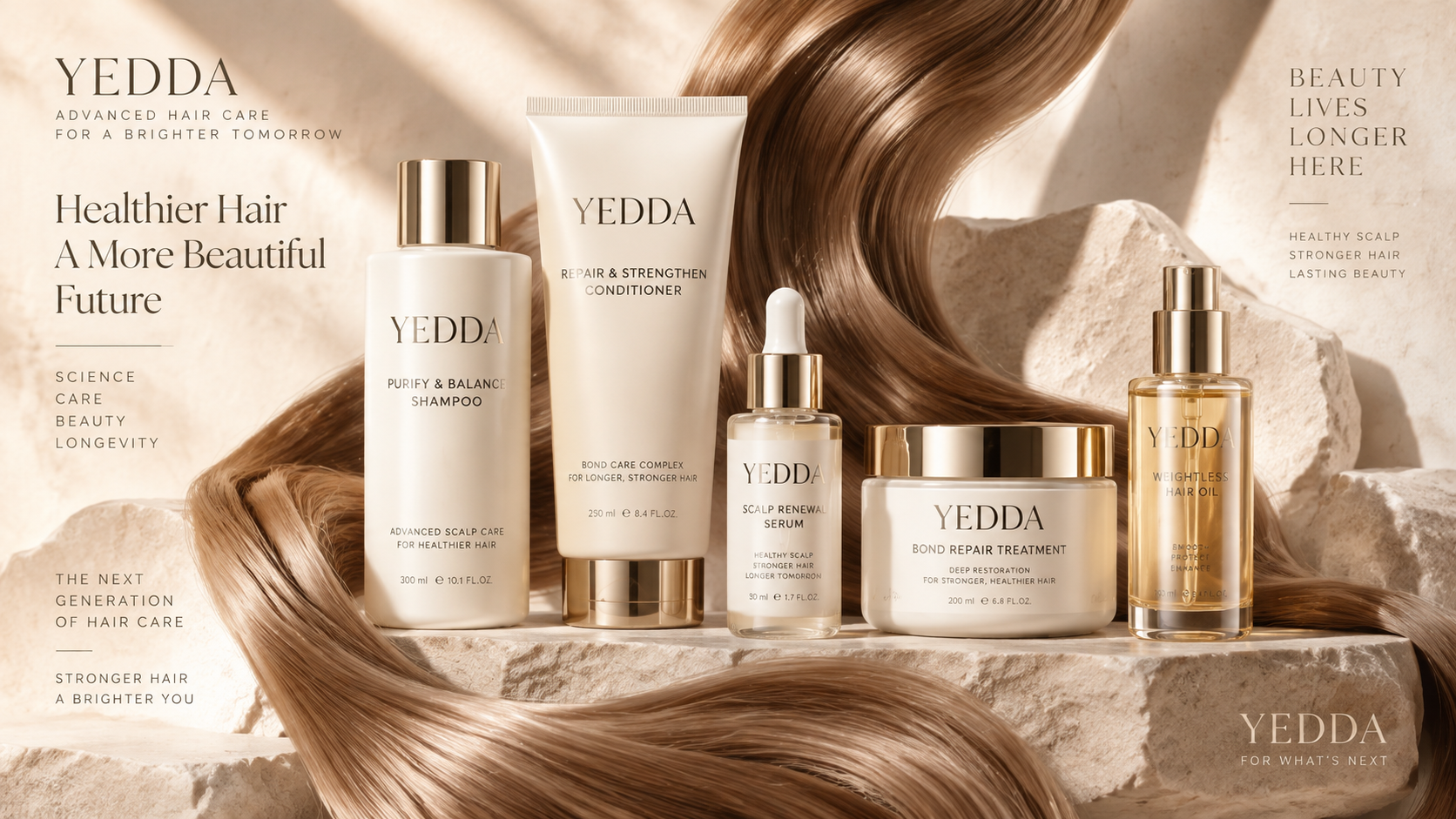
The most important hair care trends of 2027is the continued evolution from traditional hair care to one of scalp-first care. For years, hair care marketing has focused primarily on hair problems such as dryness, frizz, split ends, princess hair, and baldness. The scalp is often considered a secondary consideration.
That's changing.
Consumers are increasingly associating scalp care with the overall look and feel of their hair. This encourages brands to develop products that sit between the popular traditional shampoo and professional care categories.
Circana currently describes scalp health as a major area of focus for the beauty community, highlighting products such as exfoliating scrubs and pre-wash treatments. This creates opportunities for brands to move beyond traditional shampoo and conditioner systems.
style="vertical-align: inherit;">For brands, scalp care can become a complete product structure rather than a single SKU. Potential product lines may include:
- Balancing Shampoo
- Scalp Exfoliating Scrub
- Pre-wash scalp care
- Scalp Serum
- Scalp Tonic
- Scalp Moisturizing Care
- Purifying Scalp Shampoo
- Scalp Oil or Light Treatment
The business advantage is that this approach creates multiple opportunities for repeat purchases and cross-selling. Rather than requiring consumers to buy one shampoo each month, the brand can be surrounded by several complementary products to build daily habits.
For manufacturers, scalp care also allows for greater formulation differentiation. Brands can explore ingredients such as peptides, niacinamide, caffeine, extracts, moisturizers, conditioners and scalp conditioning ingredients based on the intended positioning and regulatory requirements of their target market.
The key to 2027 is not simply another shampoo labeled "scalp care." The greater opportunity is to build clear scalp care systems around specific consumer needs.
2. Hair longevity: From hair repair to long-term hair health
Hair longevityis the most interesting emerging opportunity in the premium hair care market. Instead of waiting for obvious damage to start using, consumers are becoming increasingly interested in maintaining hair quality over time.
This concept shapes the transition of skin care products from basic cleansing to preventive daily care. Hair care increasingly addresses long-term issues such as repeated chemical treatments, heat exposure, environmental stress, breakage, changes in loss of elasticity, scalp aging and hair density.
Industry trend analysis has identified a shift from reactive repair to protection and long-term hair health. BeautyMatter Hair care trend analysisdescribes the eager focus on preservation, scalp biology, personalization and early care.
This isPrivate label hair care productscreate huge opportunities.
Potential products include:
- Hair care long-lasting shampoo
- Scalp Longevity Serum
- Hair anti-aging care
- Beauty serum that supports hair density
- Protective leave-on treatment
- Antioxidant scalp care
- Peptide hair care products
- Repair and Strengthening Hair Mask
For brands, positioning should focus on keeping hair healthy, improving elasticity, supporting scalp conditions and protecting the hair fiber from daily stress around it. Cosmetics should avoid inappropriate medical claims and should be produced and sold according to the regulations of the target market.
Hair care is particularly interesting from an OEM perspective because it can combine multiple product categories into one premium concept. A brand can create a "hair care system" that includes shampoo, conditioner, scalp serum and daily care.
This type of product architecture also provides more room for differentiation in formula technology, ingredients, texture and packaging.
3. Bond Repair Protection: Damage repair
Bond Repair Hair Care is another main direction in 2027. Consumers whose hair has been bleached, dyed, chemically treated, or frequently heat styled are increasingly looking to outside products to provide temporary softening.
The appeal of restorations is based on a simple consumer proposition: Rather than simply covering the surface of the hair, advanced treatments are designed to improve the condition and strength of the hair fiber through yarn-based technology.
Recent industry reports continue to identify bonded construction and advanced restorative treatments as important areas of innovation. For example, Vogue's 2026 hair care trend analysis highlights connection-building treatments and scalp-focused herbal hair care trends. Vogue's 2026 Hair Care Trends Analysis provides a useful snapshot of this shift.
For private label hair care brands, bonded repair can support premium product lines such as:
- Bond Repair Shampoo
- Bond Repair Conditioner
- Bond Repair Hair Mask
- No-clean adhesive repair treatment
- Pre-shampoo repair care
- Adhesive Strengthening Essence
- Professional salon restorative treatment
The best opportunity isn't necessarily creating another "damage shampoo." Instead, brands can develop a complete restorative system, distributing different products to different stages of consumers’ daily lives.
For B2B buyers, this also provides a clearer sales story. Private labels can position product lines around bleaching, dyeing, heat styling, chemical treatments or frequent environmental exposure.
Manufacturers should pay close attention to formulation performance, compatibility between products, sensory properties, stability, packaging and substantiation when developing adhesive restoration products. Claims of high performance should be supported by appropriate testing rather than relying solely on ingredient stories.
4. Hard water hair care: New product opportunities for private label brands
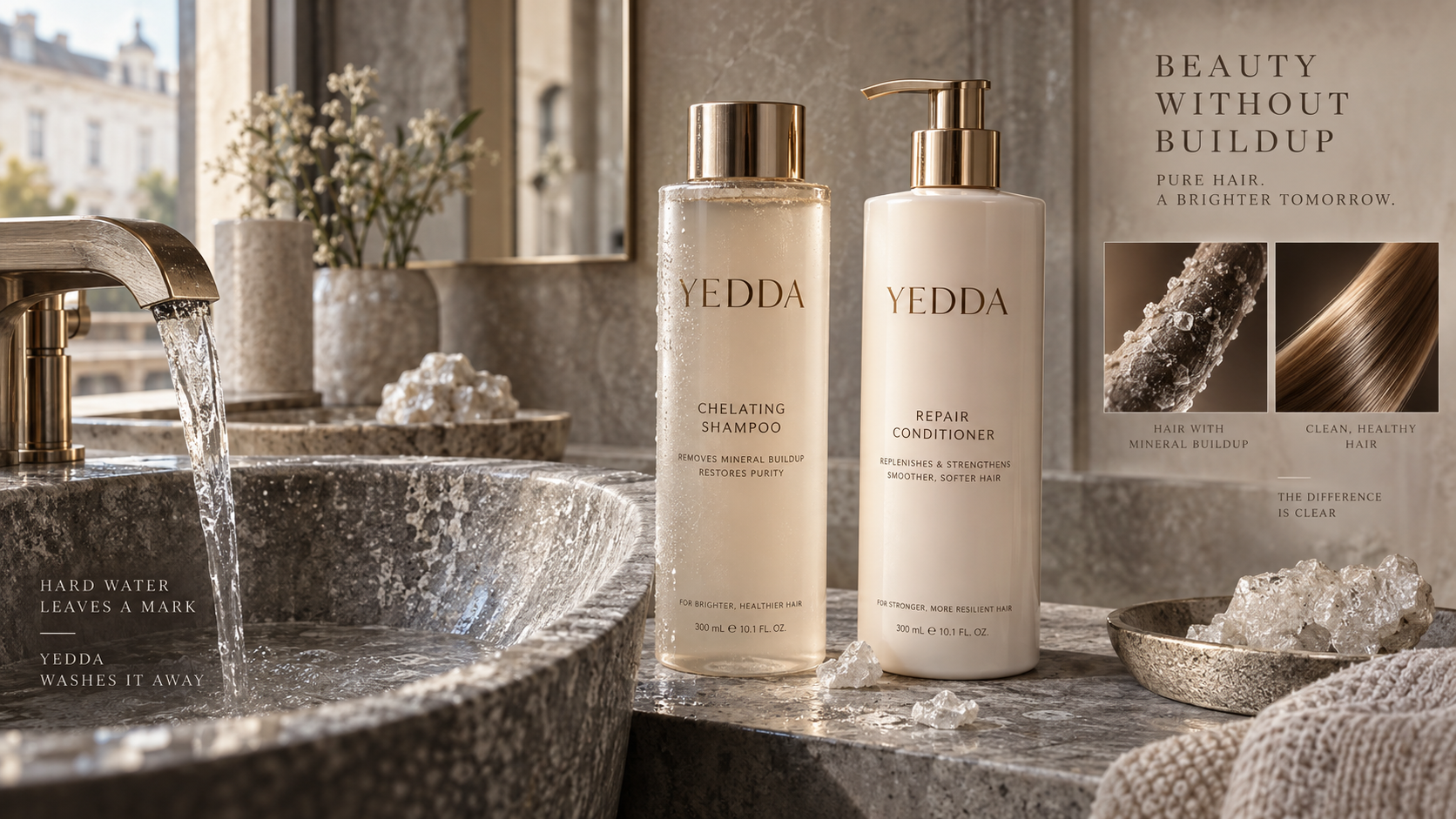
Hard Water Hair Care is a particularly interesting opportunity because it addresses a specific environmental issue that many consumers experience, but may not immediately connect to their hair care routines.
Hard water contains dissolved minerals, especially calcium and magnesium. Repeated exposure may cause mineral buildup in the hair and may leave the hair feeling dull, rough, coated, or unmanageable. Consumers may interpret these problems as dryness or product buildup without understanding the potential role of water quality.
This creates opportunities for specialist products such as:
- Hard water shampoo
- Chelated shampoo
- Demineralizing Hair Treatment
- Hard Water Detox Shampoo
- Clarifying treatment
- Hard water hair mask
- Mineral Accumulation Scalp Treatment
For brands targeting Europe, the UK, parts of the US and other regions, water hardness may be a meaningful consumer concern, which could become a highly targeted product proposition.
From a search engine optimization perspective, Hard water hair care also presents valuable long-tail opportunity as consumers search for specific questions such as "hard water shampoo," "hair feels coated after washing," "mineral buildup in hair," and "best shampoo for hard water."
For private label development, the formulation should be based on the intended statement and target market. Chelation system, cleansing intensity, conditioning balance and frequency of use all need to be considered. Products designed for frequent use may require different sensory and regulatory properties than intensive monthly detox treatments.
This is exactly the kind of niche opportunity that can help private label brands avoid direct competition with hundreds of generic moisturizing shampoos.
 5. Personalized hair care products become more targeted
Another big hair care trend for 2027 is personalization.
Consumers are increasingly realizing that hair is not a one-size-fits-all category. Hair texture, scalp condition, chemical treatment history, climate, styling habits and lifestyle all influence product requirements.
For brands, personalization doesn’t necessarily mean creating thousands of individual recipes. A more practical strategy is to develop targeted product lines.
For example, a brand could create separate product lines for:
- The hair is thin and flat
- Dry and damaged hair
- Curly hair and curly hair
- Color-treated hair
- Oily and dry scalp
- Sensitive scalp
- Exposure to hard water
- Heat damaged hair
This approach is particularly important for the development of private label hair care products as manufacturers can help brands adapt to formulas, textures, fragrances, packaging formats and product mixes for different target consumers.
Personalization also changes the way brands communicate. Instead of simply saying “suitable for all hair types,” a product can communicate a clearer relationship between problem and solution.
For example:
“Provides lightweight moisture to fine, dry hair. ”
More specific than:
“Hydrating shampoo for healthy hair. ”
More precise targeting can help brands create stronger product identities and more relevant marketing campaigns.
6. High-performance hair care and professional-grade results
The distinction between professional salon products and quality home hair care products is becoming less and less obvious. Consumers increasingly expect visible, professional-grade performance from products purchased online or through retail channels.
This creates opportunities for High Performance Hair Care and professional private label products.
Potential categories include:
- Professional bonding repair treatment
- Deep Repair Mask
- Keratin and protein treatments
- Advanced smoothing
- Professional Color Care System
- Scalp care products
- Salon Style Setting Spray
- Intensive hair care
Current market data supports a broader movement towards treatment-led beauty. Circana reports that the U.S. beauty market continued to grow in the first quarter of 2026, with both high-end and mass beauty showing positive dollar sales and continued growth in demand for treatment-oriented products. Circana's First Quarter 2026 U.S. Beauty Market Report provides useful market context for evaluating brands in performance-driven categories.
For private label manufacturers, performance positioning requires more than just a great-looking bottle. Brands should consider formula efficacy, sensory experience, packaging functionality, compatibility between products and appropriate testing.
For example, a high-quality restorative mask may require a smooth texture, easy rinseability, and a clear before-and-after consumer experience. Scalp serums may require products that are lightweight, absorb quickly, and don’t leave too much residue.
By 2027, product performance will increasingly become part of the brand story.
7. Textured hair care: more professional products for curly and curly hair
Textured hair care is another area that private brands should pay close attention to, especially in the United States and other diverse consumer markets.
The category is moving toward more detailed segmentation based on hair characteristics and consumer needs, rather than relying solely on broad demographic categories. Mintel’s US Textured Hair Care research describes the transformation the market is undergoing, driven by demographic changes, new brands and demand for practical solutions. Mintel's US Textured Haircare and Hair Styles Market Report provides further market context.
For brands, this means the opportunity to develop products around specific performance needs:
- Hydrating
- Untangling
- Sliding and manageability
- Curl definition
- Frizz control
- Reduce breakage
- Light conditioning
- Scalp cleansing
- Protect styling support
Potential products include curly hair shampoos, co-wash products, intensive conditioners, leave-in creams, curl styling gels, lightweight oils, scalp treatments and restorative masks.
The important lesson for private label brands is that textured hair should not be viewed simply as another marketing label. Formula texture, conditioning performance, residue, curl definition and application experience need to be considered during product development.
This is also an area where manufacturers can help brands test multiple textures and conditioning systems before choosing a final formula.
8. Waterless concentrated hair care products
Sustainability is increasingly linked to product form. Rather than relying solely on recyclable packaging claims, some brands are exploring concentrated, solid and waterless formats to reduce the amount of water shipped in the finished product or create more compact packaging systems.
This includes:
- Solid shampoo bar
- Powdered Shampoo
- Concentrated Shampoo
- Waterless scalp care
- Concentrated hair mask
- Refillable hair care system
However, private labels should not launch water-free products just because of the sustainability trend. The format must make sense to the consumer and product category.
The concentrate process may provide a stronger business opportunity than converting each traditional shampoo into a solid soap bar. Convenience, consumer education, packaging, stability, preservation and user experience all need to be considered.
For OEM and ODM manufacturers, centralized specifications also create opportunities for formulation innovation. The challenge is to provide a pleasant consumer experience while maintaining product stability and performance.
9. Scalp Serum and Multi-Step Scalp Treatment System
Scalp serums are closely related to the development of scalp-first hair care concepts, but they deserve separate attention because they can create a higher value product category than traditional shampoos.
Consumers are becoming increasingly familiar with serum-based skin care routines, and this behavior is transferring to the hair care space. The result is growing interest in targeted scalp products that can be used after cleansing or as part of a daily routine.
For Private Label Scalp Care brands, a multi-step procedure may include:
- Scalp Cleansing Shampoo
- Scalp exfoliation care
- Scalp supplements
- Scalp Essence
- Once a week scalp mask or treatment
This model provides more opportunities for premium targeting and repeat purchases.
Recent beauty reports also indicate growing consumer interest in targeted scalp and hair density products. However, brands should differentiate between beauty claims and medical claims. Depending on the formulation and regulatory market, terms such as “supports healthy hair,” “helps improve the appearance of hair density,” or “supports a healthy scalp environment” may be more appropriate, while claims related to treating a disease or medically diagnosed hair loss may trigger additional requirements.
For manufacturers, this makes claims strategy an important part of product development, rather than something added after the formulation is complete.
10. Climate-adaptive hair care for different global markets
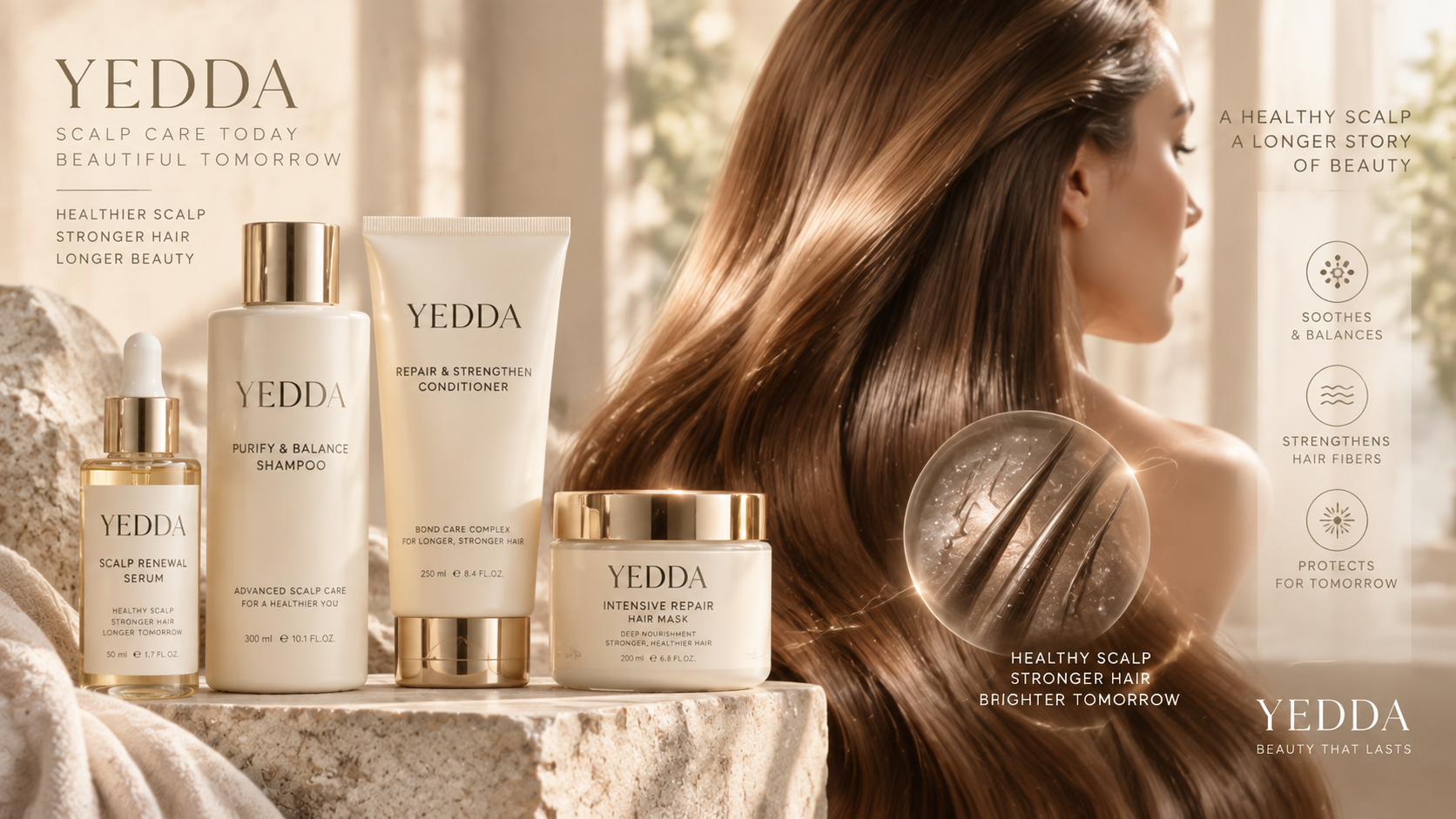
Hair care brands increasingly need to consider the environment in which their products are used. Temperature, humidity, UV exposure, water quality and seasonal dryness all play into consumer hair concerns.
This creates opportunities for climate-adapted hair care.
For example, different markets can have different product priorities:
| Market environment | Common hair problems | Potential product opportunities |
|---|---|---|
| Hot and dry climate | Dry, rough, moisture loss | Moisturizing shampoo, hair oil, powerful facial mask |
| humid climate | Frizz, deformation, excessive greasiness | Anti-frizz shampoo, lightweight conditioner, smoothing spray |
| Hard water areas | Mineral accumulation, dullness, rough texture | Chelation shampoo, detoxifying care, purifying mask |
| Cold and dry climate | Dry scalp, static electricity, fragile hair | Scalp moisturizing, nourishing conditioner, repair care |
| High UV exposure | Fading, drying, environmental damage | No-wash protection, color care products, conditioning care |
This approach is particularly valuable to international hair care manufacturers because it links product development to consumer needs in specific markets.
Instead of creating one universal formula and selling it everywhere, brands can develop regional product variations based on climate and consumer behavior.
For example, a brand targeting the Middle East might prioritize hydrating hair oils, deep conditioning masks, and anti-dryness treatments. Brands targeting the UK or certain European markets may have greater opportunities in hard water, humidity and scalp care. Brands entering Southeast Asia are likely to emphasize lightweight texture, oil control and anti-frizz properties.
This market-specific approach can help private brands create stronger differentiation.
How should private brands choose the right hair care trends in 2027?
Not every trend is suitable for every brand. A common mistake is to see a popular ingredient or product category and immediately launch a similar product.
A better strategy is to evaluate each opportunity based on five factors.
1. Consumer issues
Start with a clear consumer problem. Are your target customers dealing with scalp buildup, hard water, breakage, frizz, dryness, thinning hair, or damage from chemical treatments?
The bigger the problem, the easier it is to build a product proposition.
2. Market demand
Focus on specific target markets, not just global demand. A product that performs well in the United States may require different positioning in Germany, Italy, Spain, the United Kingdom, or the Middle East.
3. Product differentiation
Ask if your product has a clear reason for existing. It's hard to tell the difference from regular hydrating shampoos. Hard water detox shampoos or scalp longevity treatments have more specific claims.
4. Recipe feasibility
The formulation should be consistent with the intended consumer experience and proposition. Texture, fragrance, cleaning strength, conditioning, stability, packaging compatibility and preservation all need to be evaluated during the development process.
5.Business potential
Finally, consider whether the trend can support a product line, not just a SKU. A powerful opportunity often involves brands creating shampoo, conditioner, serum, serum and mask products around the same consumer problem.
What will 2027 hair care trends mean for OEM and ODM manufacturing?
The development of the hair care market has put forward new requirements for manufacturers.
In the past, many private label projects focused primarily on selecting stock recipes and adding custom labels. Today, more and more brands want differentiated formulas, specialized textures, targeted ingredients, premium packaging and market-specific positioning.
This means that hair care product development is becoming increasingly important in OEM relationships.
A competent manufacturer should be able to support the brand through several stages:
- Market and product concept development
- Ingredients and formula selection
- Prototype recipe
- Texture and sensory testing
- Stability evaluation
- Packaging Compatibility
- Perform performance testing when appropriate
- Regulatory and Claims Review
- Mass production
- Private brand packaging
- Quality Control
- International export support
This is especially important for emerging categories such as scalp care, bond repair, hard water hair care and hair longevity. These products require more precise positioning than traditional shampoos.
How Yedda supports private label hair care product development
For brands looking to translate Hair Care Trends 2027 into commercial products, the most important step is to connect market trends to real-world product development.
Yedda specializes in personal care and hair care manufacturing, providing OEM and ODM solutions to international brands looking to develop private label products. Rather than treating each project as a standard shampoo order, product development can be structured around target markets, consumer needs, formulation direction, packaging concepts and intended product positioning.
For example, a brand interested in scalp care trends could develop a complete system that includes scalp shampoo, scalp serum, and scalp care. Brands interested in hair longevity can develop premium shampoos, conditioners, treatment masks and daily scalp serums. Brands targeting hard water areas can explore detoxifying shampoos and mineral removal treatment systems.
The advantage of working with an experienced private label hair care manufacturer is that brands can evaluate these opportunities before committing to a large product portfolio.
Product development should start with a clear brief:
- Target Market
- Target consumers
- Hair care
- Product categories
- Required targeting
- Ingredients Preference
- Texture and fragrance preferences
- Packaging form
- Target price range
- Estimated order volume
Once these elements are defined, manufacturers can help translate concepts into commercially viable formulations and product systems.
Why there will be more targeted hair care products in 2027
The most important lesson from the current Hair Care Trends 2027 is that the market is becoming more specialized.
Consumers no longer believe that one shampoo can solve all their hair problems. They are becoming increasingly familiar with scalp care, targeted treatments, bonded repairs, specialty textures, hair longevity and environmental impacts.
For private label brands, this creates a major opportunity.
Rather than competing in a crowded generic shampoo market, brands can identify a specific problem and build an entire product ecosystem around it.
Scalp health can become a complete routine. Hair longevity can be a premium anti-aging concept. Hard water can be a targeted detox category. Bond repair can be a professional treatment system. Textured hair could become a dedicated product line. Climate-specific needs can create localized product opportunities.
The winner of the next phase of hair care won’t necessarily be the brand with the most products. They will be brands that understand a specific consumer need and develop products that clearly and convincingly address that need.
For manufacturers and private label partners, this means the role of the OEM is also evolving. The future isn't just about mass-producing shampoo. It is designed to help brands translate emerging consumer trends into differentiated, stable and commercially viable hair care products.
FAQs about hair care trends for 2027
What are the biggest hair care trends of 2027?
Key hair care trends for 2027 include scalp-first hair care, hair longevity, bond repair, hard water hair care, personalized formulas, professional-grade performance, textured hair care, concentrated forms, scalp serums and climate-adaptive hair care. The biggest opportunities for private label may be in categories that solve specific consumer problems and can be expanded to complete product lines.
What hair care products should private brands develop in 2027?
Private brands can consider targeted products such as scalp serums, scalp treatments, bonded repair systems, hard water shampoos, hair longevity treatments, textured hair care products, anti-frizz treatments and professional repair masks. The best product depends on the target market, consumer profile, positioning and price range.
Is scalp care a good opportunity for private label hair care brands?
Scalp care is becoming an increasingly part of the care category. Rather than relying on a single shampoo, brands can develop complete scalp care systems, including high-end scalp shampoos, in-doctor treatments, tonics, serums and masks. This creates opportunities for positioning and multiple complementary products.
How can hair care manufacturers help develop new trend products?
QualifiedHair care OEM or ODM manufacturer can support consideration of product concept development, formula selection, prototype development, testing, packaging compatibility, private label customization and mass production. For emerging categories, brands should work with manufacturers early so that market positioning, formulation requirements, claims and packaging are considered together, rather than separately.