
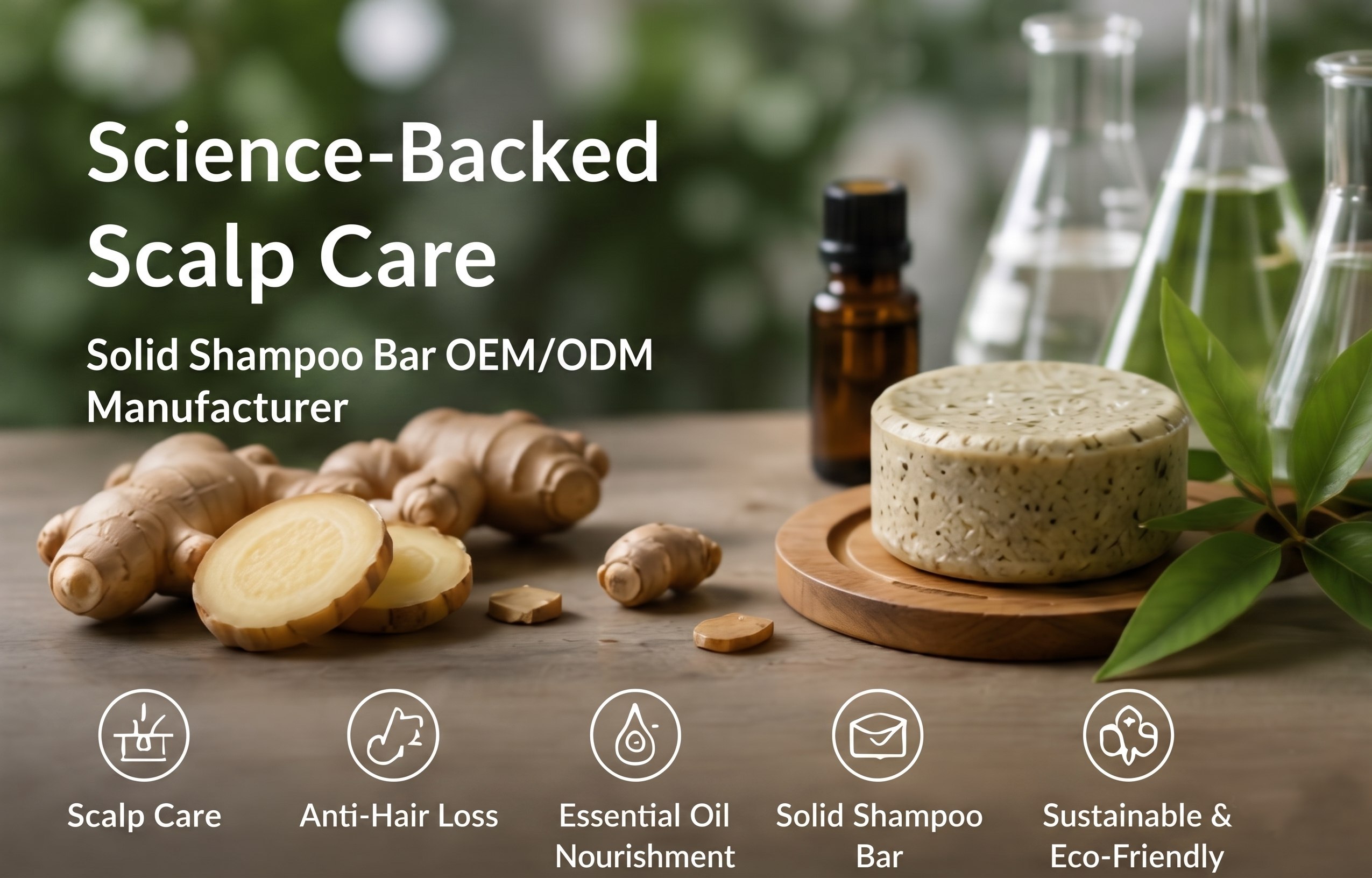
Introduction: The Hair Care Industry Is Shifting from Cleansing to Scalp Care
Over the past few years, the global hair care industry has undergone a significant transformation. Consumers are no longer focused solely on cleansing performance. Instead, they are increasingly prioritizing scalp health, ingredient transparency, functional formulations, sustainable packaging, and mild cleansing systems.
At the same time, retailers, salon chains, and private label brands are paying more attention to sulfate-free formulations, solid shampoo products, waterless beauty concepts, scalp-focused hair care, and botanical active ingredients.
As a result, shampoo bars are evolving from niche eco-friendly products into a scalable category within the global hair care market.
Market Insights: The Shampoo Bar Category Continues to Grow
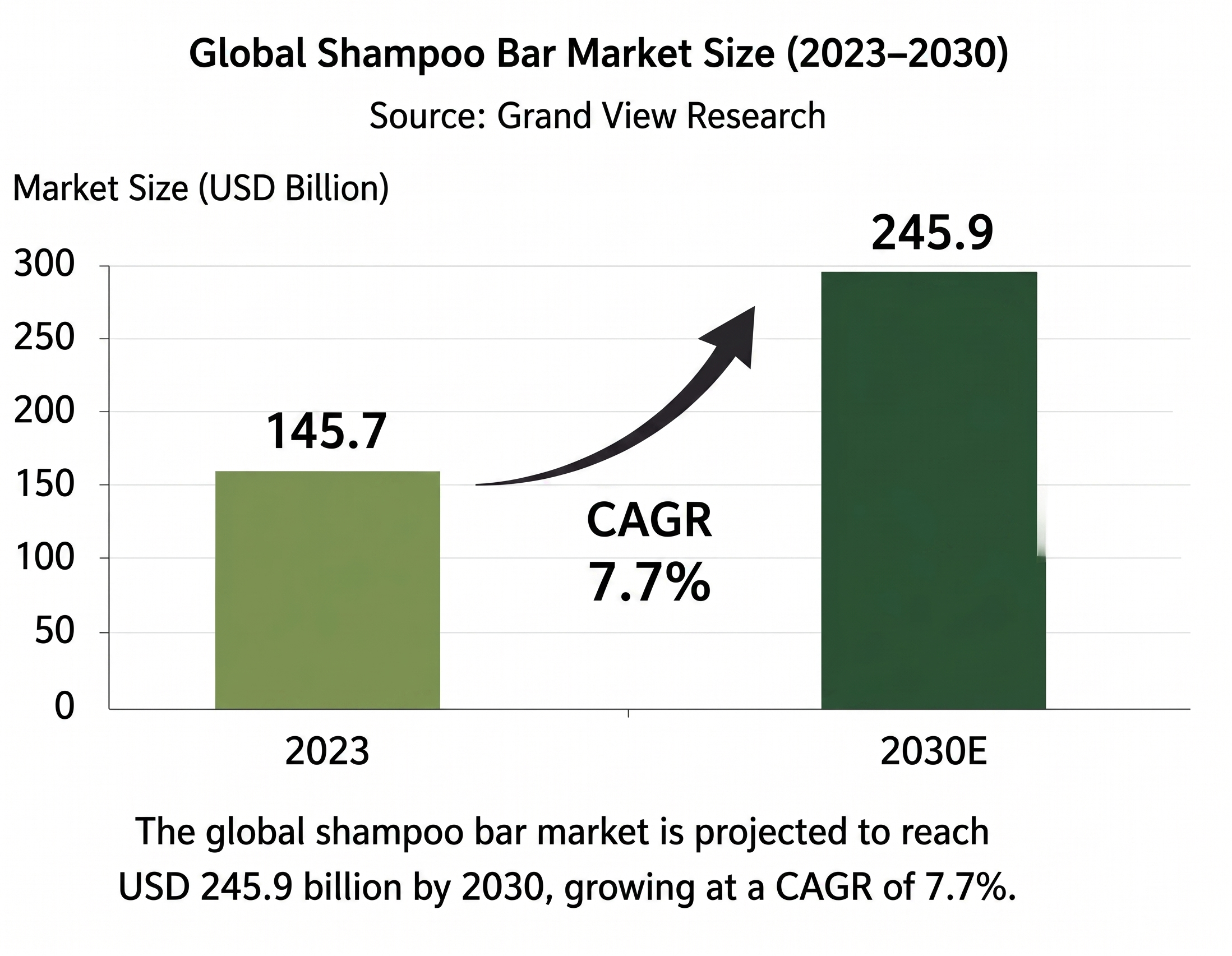
According to Grand View Research, the global shampoo bar market was valued at approximately USD 14.57 billion in 2023 and is projected to reach USD 24.59 billion by 2030, with a CAGR of 7.7%.
Industry publications such as Vogue Business and Allure have also reported increasing demand for scalp-care products, functional hair treatments, haircare skinification trends, and sustainable packaging solutions.
These trends suggest that consumer demand for high-performance hair care products is becoming a long-term market shift rather than a temporary marketing trend.
What Is Haircare Skinification?
Definition: Haircare Skinification
Haircare skinification refers to the growing consumer behavior of evaluating hair care products using skincare standards.
- Active ingredients
- pH balance
- Scalp microbiome support
- Ingredient transparency
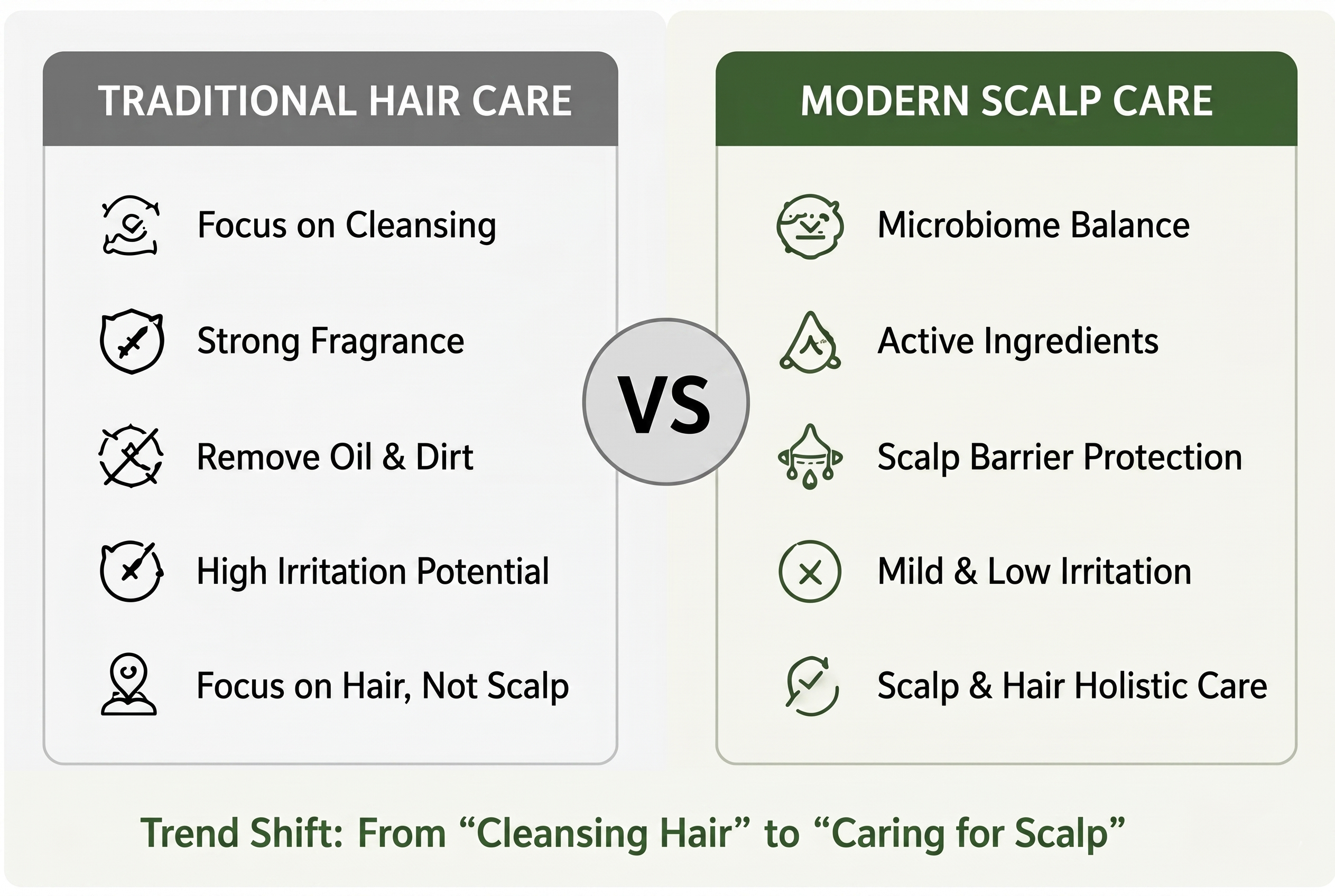
This trend is gradually replacing traditional cleansing-focused shampoos with scalp-treatment-oriented products.
Why Scalp Care Trends Are Driving Shampoo Bar Growth
Modern consumers are increasingly concerned about:
- Hair thinning
- Excess oil production
- Sensitive scalp conditions
- Scalp barrier damage
- Post-color treatment care
Compared with traditional liquid shampoos, modern shampoo bars now offer:
- Higher concentration
- Reduced packaging waste
- Milder surfactant systems
- Stronger botanical positioning
- Better portability
Traditional Soap Bars vs Syndet Shampoo Bars
| Comparison | Traditional Soap Bar | Syndet Shampoo Bar |
|---|---|---|
| pH Level | Alkaline | Closer to scalp pH |
| Mildness | Lower | Higher |
| Color-Treated Hair | May fade color | More compatible |
| Foam Texture | Dense foam | Finer foam |
| Residue | Higher | Lower |
| Formula Flexibility | Limited | Higher |
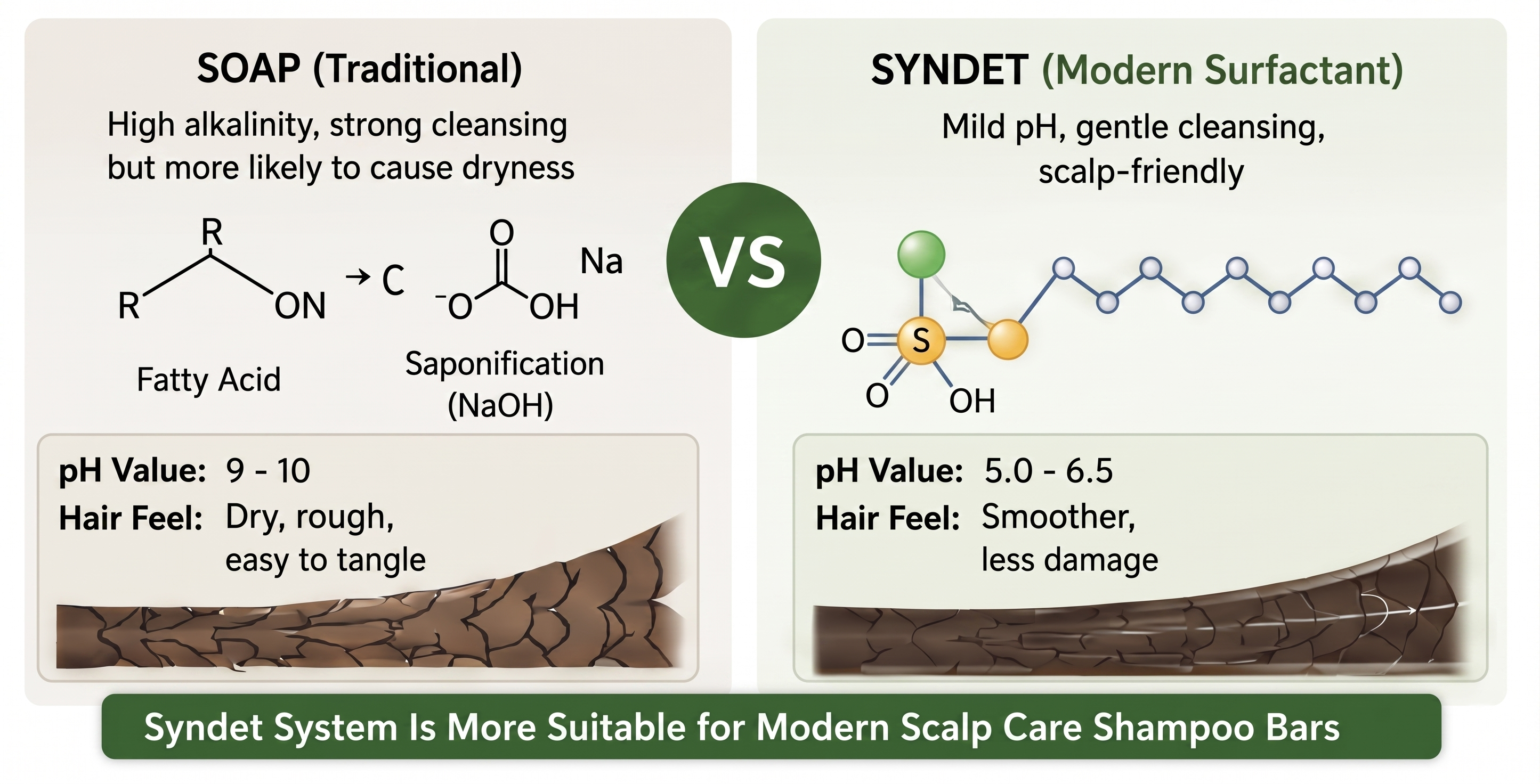
Modern premium shampoo bars increasingly use syndet systems due to their better scalp compatibility and formulation flexibility.
Why Ginger-Based Scalp Care Continues to Gain Attention
Definition: Ginger Extract
Ginger extract is a widely used botanical active ingredient in scalp-focused hair care products.
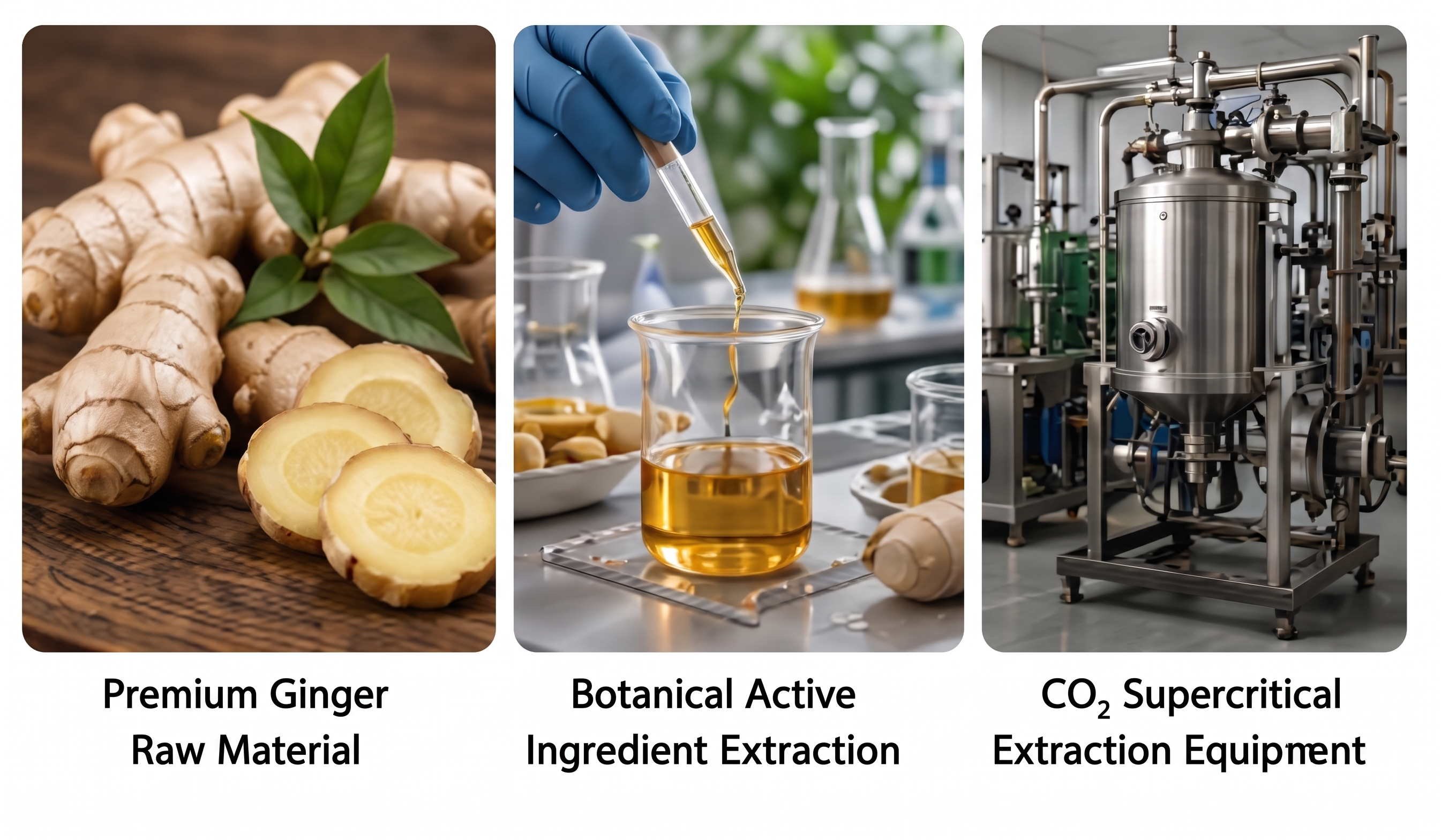
- Scalp care
- Hair thinning products
- Essential oil formulations
- Men’s grooming products
According to research published by the National Center for Biotechnology Information (NCBI), botanical extracts are increasingly studied for scalp-conditioning and antioxidant applications in cosmetic formulations.
Why Waterless Beauty Is Expanding Globally
Definition: Waterless Beauty
Waterless beauty refers to concentrated or solid-format products designed to reduce unnecessary water content while improving sustainability and transportation efficiency.
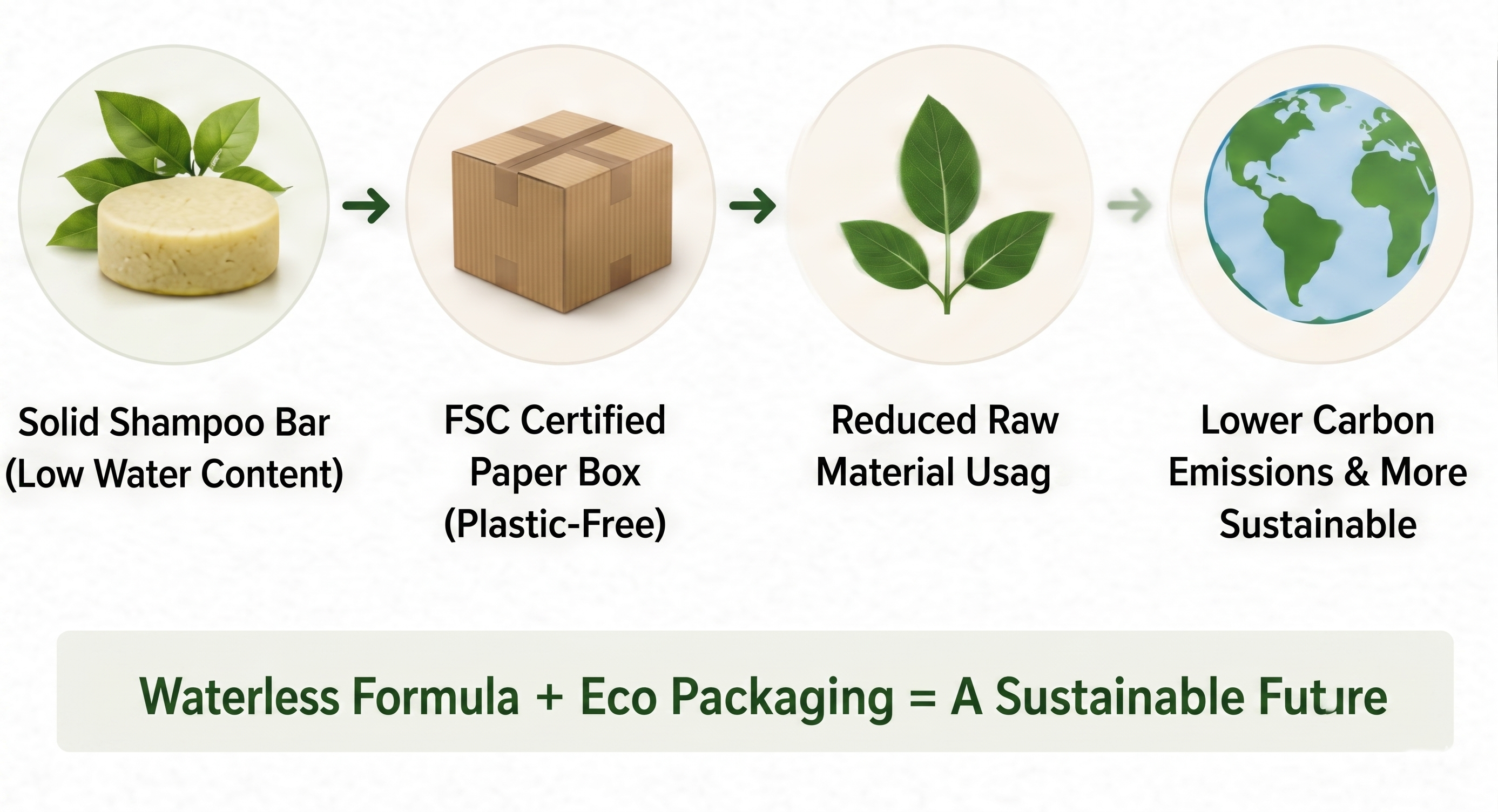
- Reduced plastic packaging dependency
- Lower shipping weight
- Reduced warehouse space requirements
- Better travel retail compatibility
FAQ: Common Questions from B2B Buyers
Why Is Ingredient Transparency Becoming More Important?
Consumers and retailers increasingly want detailed information about ingredient sourcing, formulation systems, and regulatory compliance.
Why Are GMP and ISO22716 Important?
These standards help ensure batch consistency, traceability, and export compliance for international markets.
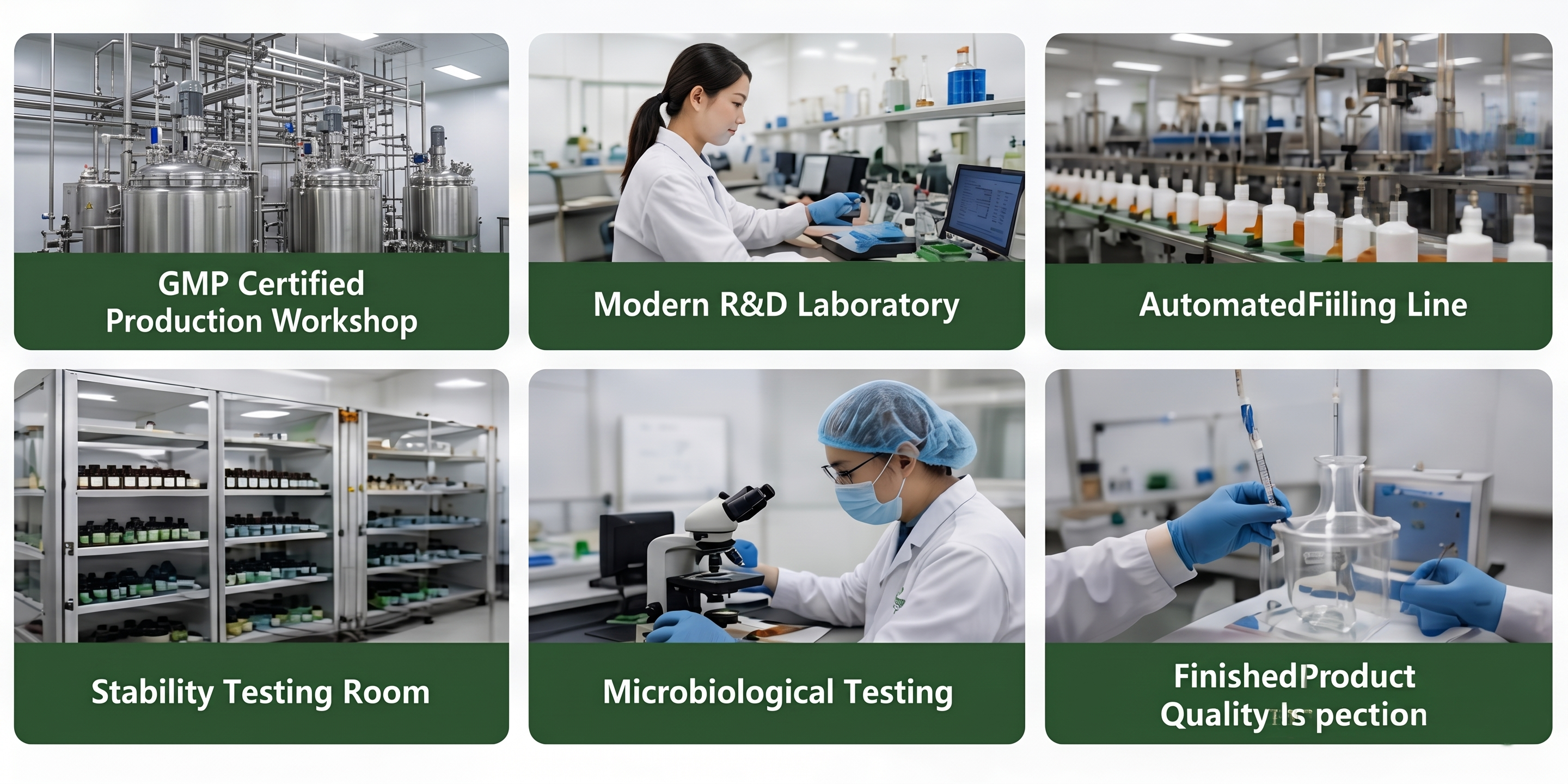
What B2B Buyers Should Evaluate Before Choosing a Shampoo Bar Manufacturer
- Sulfate-free formulation capability
- Scalp-care formulation expertise
- GMP manufacturing systems
- ISO22716 quality management
- Scalable production capability
- Sustainable packaging solutions
- Botanical oil formulation experience
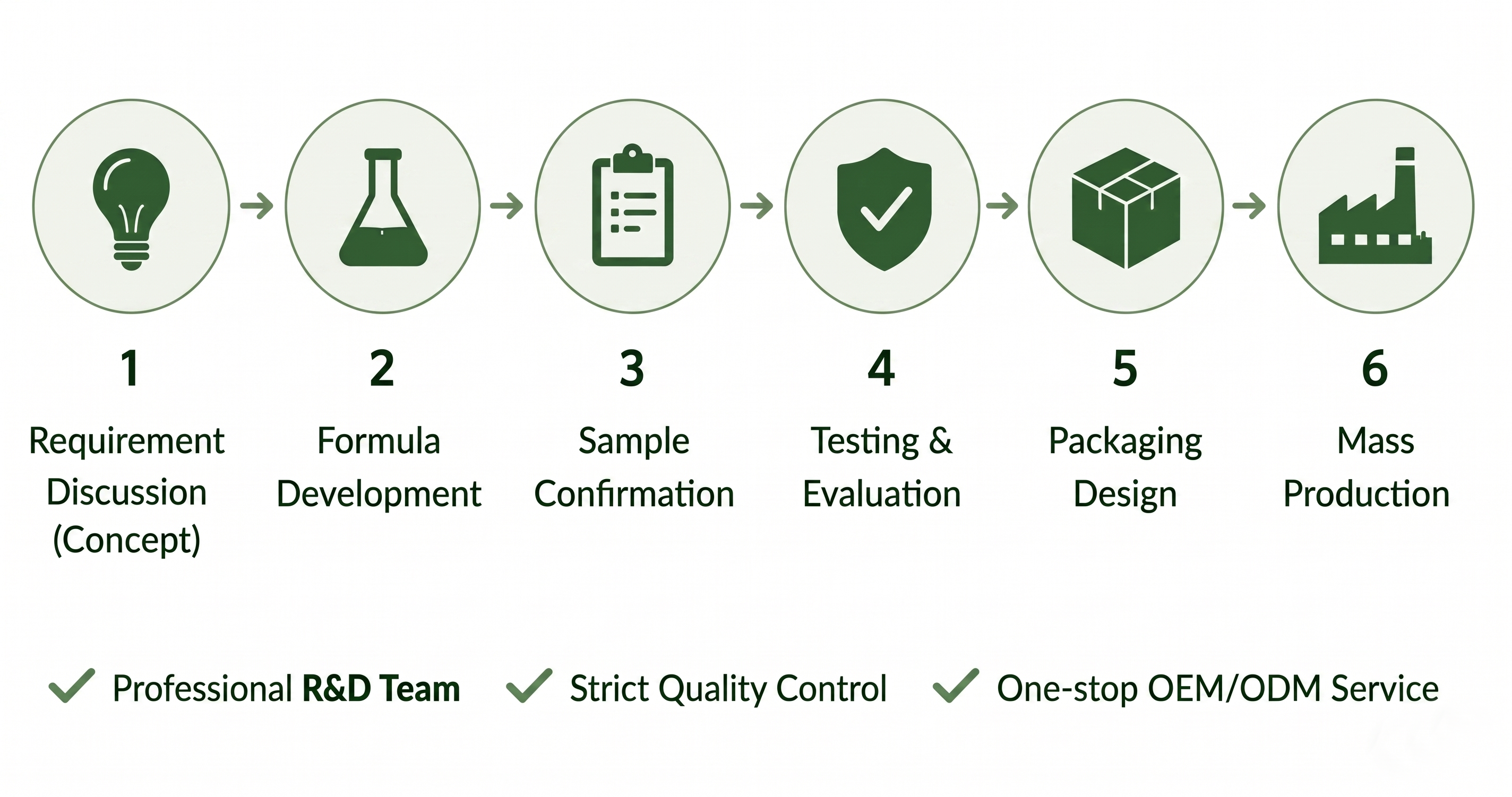
Conclusion
The shampoo bar market is no longer driven solely by environmental positioning.
Its growth is increasingly supported by:
- Scalp-care demand
- Ingredient transparency
- Science-driven formulations
- Sustainable packaging systems
- Waterless beauty trends
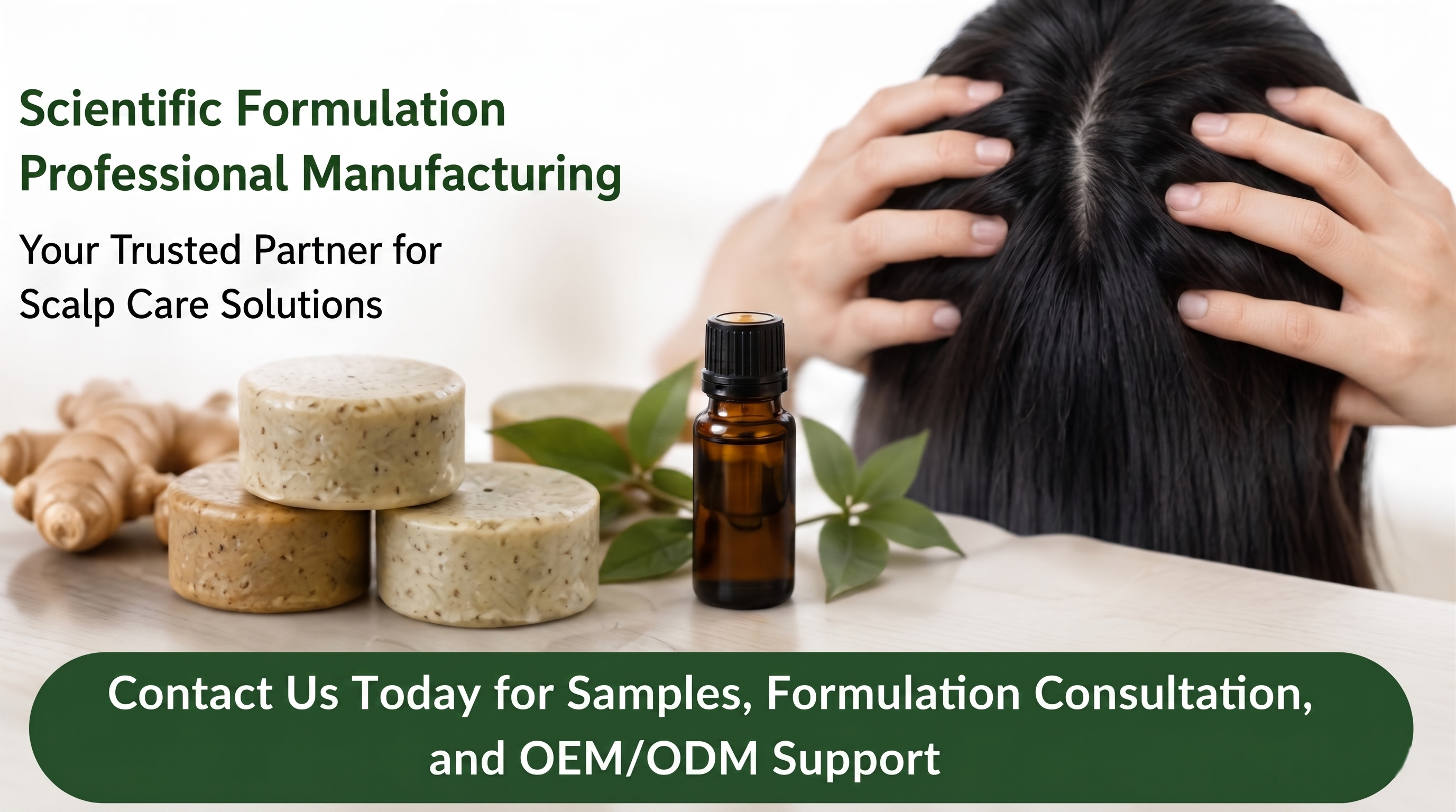
Start Your Custom Shampoo Bar Project
Looking to develop your own private label shampoo bar, ginger scalp care line, or sulfate-free hair care collection?
Contact our OEM/ODM team to start your custom hair care project.