
For startups and established beauty brands alike, understanding the shampoo manufacturing timeline is essential for successful product launches, inventory planning, and supply chain management. Many businesses underestimate how long private label shampoo production actually takes, especially when custom packaging, formula development, and international shipping are involved.
According to recent hair care market analysis published by Grand View Research, the global hair care industry continues expanding rapidly as brands increasingly invest in customized formulations, scalp care innovation, and premium private label products.
Whether you are launching a new hair care brand or scaling an existing product line, knowing each stage of the shampoo OEM timeline can help reduce delays, improve communication with suppliers, and optimize your go-to-market strategy.
In this guide, we will explain the full private label shampoo production process, including formula development, packaging lead time, custom bottle production, sampling, manufacturing, quality testing, and global shipping timelines.
What Is a Shampoo Manufacturing Timeline?
The shampoo manufacturing timeline refers to the complete production schedule required to develop, manufacture, package, and deliver shampoo products to market.
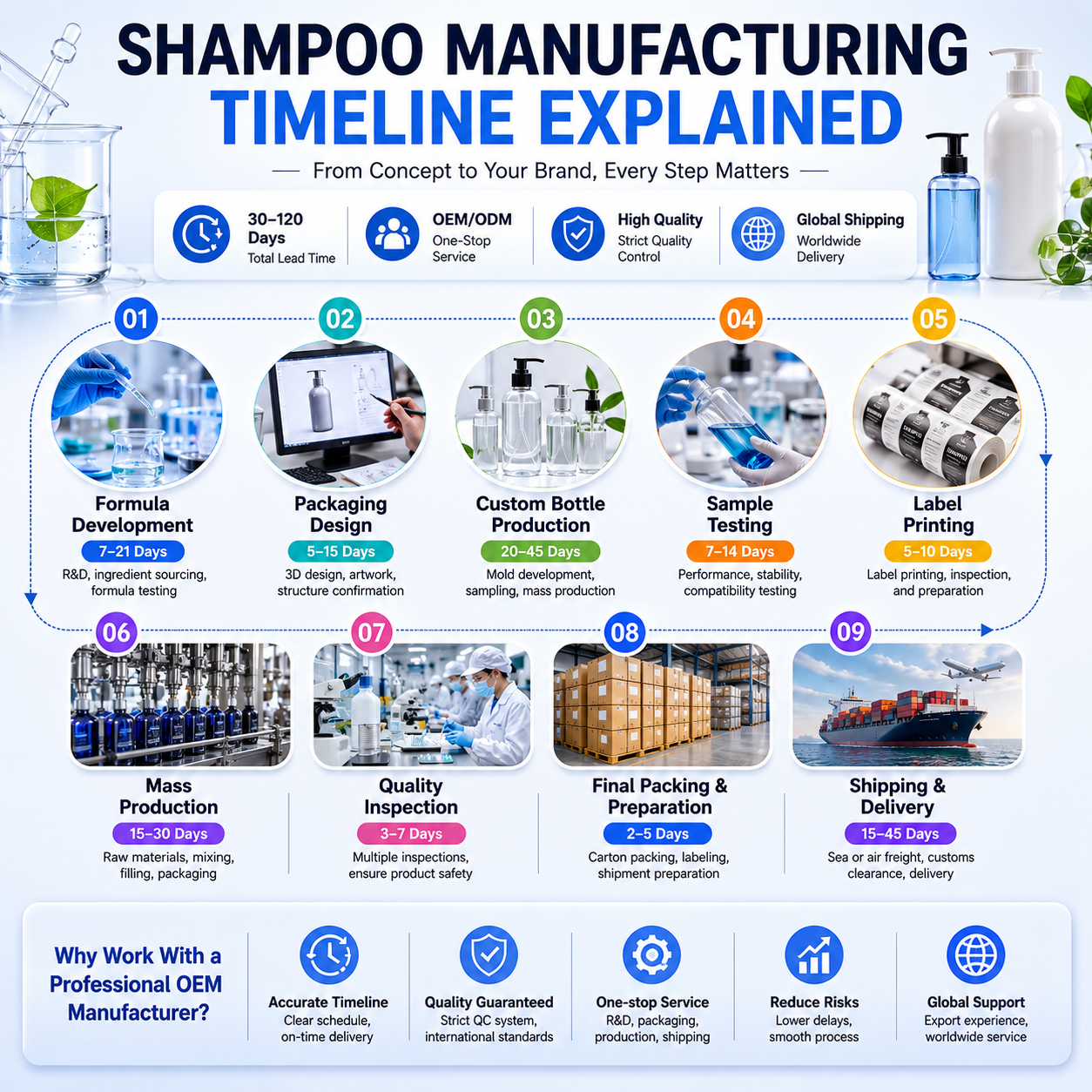
A typical timeline includes multiple stages:
- Product concept development
- Formula research and testing
- Packaging design
- Custom bottle production
- Label printing
- Sample approval
- Mass production
- Quality inspection
- International shipping
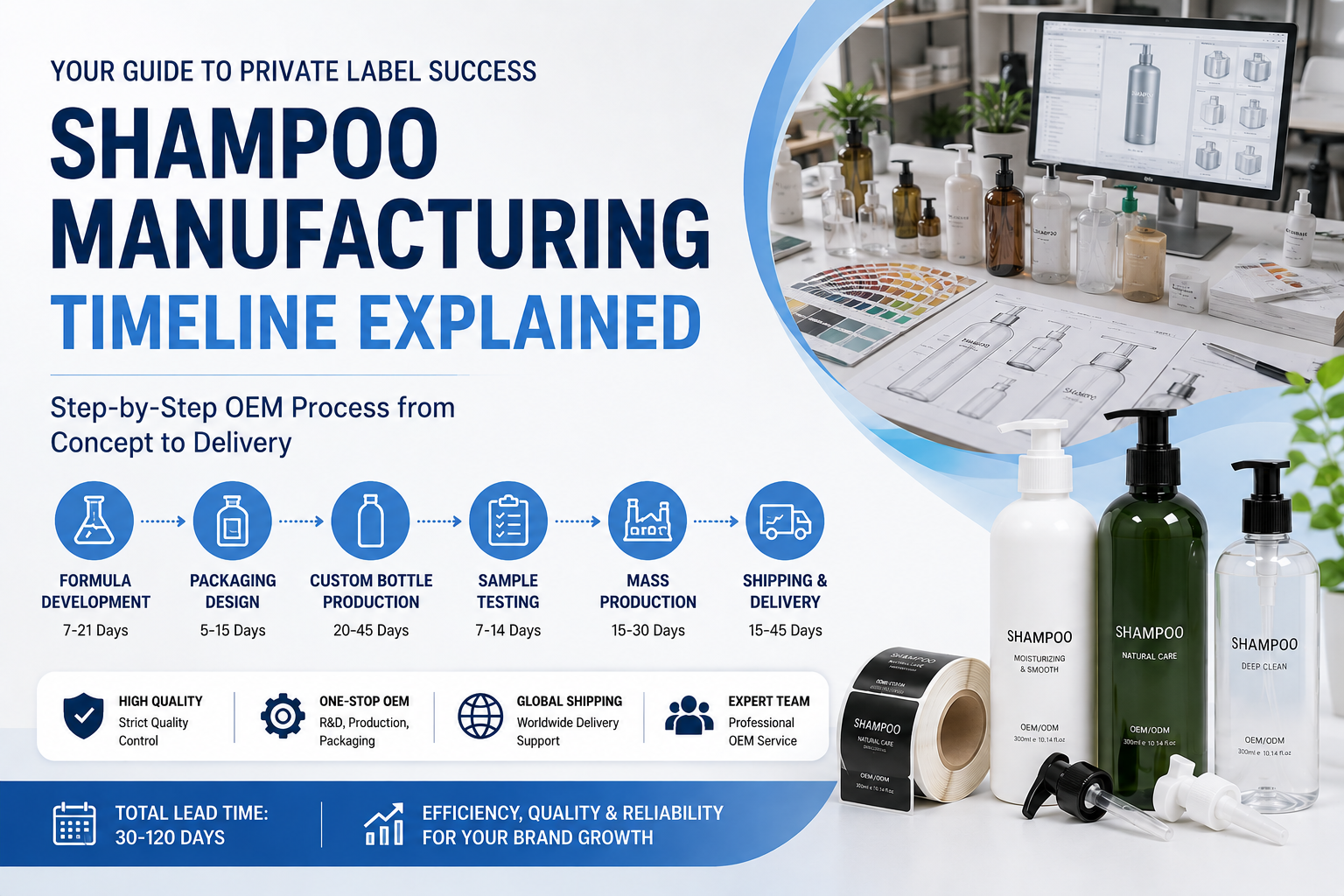
Many new brands assume shampoo production can be completed within a few weeks. However, depending on customization complexity, the process may take anywhere from 30 to 120 days.
Average Shampoo OEM Timeline for Private Label Brands
The average shampoo OEM timeline depends heavily on the level of customization required.
Stock formulations with standard packaging usually move faster, while custom formulas and unique packaging designs require additional lead time.
| Production Stage | Estimated Timeline |
| Formula Development | 7–21 Days |
| Packaging Design | 5–15 Days |
| Custom Bottle Production | 20–45 Days |
| Sample Testing | 7–14 Days |
| Label Printing | 5–10 Days |
| Mass Production | 15–30 Days |
| Quality Inspection | 3–7 Days |
| International Shipping | 15–45 Days |
Understanding these timelines allows brands to build realistic launch schedules and reduce operational risks.
Formula Development Timeline in Shampoo Manufacturing
Formula development is one of the first stages in the private label shampoo production process.
Brands can either select stock formulations or develop custom formulas based on specific market positioning and ingredient preferences.
Custom formulation timelines vary depending on:
- Ingredient complexity
- Functional claims
- Natural or organic certification
- Scalp treatment requirements
- Hair growth ingredients
- Fragrance customization
- Performance testing
For example, sulfate-free shampoos, hair growth formulas, and microbiome-focused scalp care products often require additional compatibility and stability testing.
Experienced OEM shampoo suppliers may reduce development timelines by offering pre-tested base formulas that can still be customized for different markets.
According to beauty market research from Mintel, consumers increasingly prefer science-backed hair care solutions with targeted benefits such as scalp health, bond repair, and hair growth support, which continues driving demand for custom formulations.
Packaging Lead Time in Shampoo OEM Production
Packaging lead time is often one of the biggest causes of production delays.
Many brands focus heavily on formula development while underestimating the time required for packaging sourcing and manufacturing.
Packaging timelines depend on:
- Standard versus custom packaging
- Bottle mold requirements
- Decoration techniques
- Label printing complexity
- Pump and cap sourcing
- Sustainable packaging materials
Standard PET bottles usually have shorter lead times because molds already exist and inventory may already be available.
However, fully customized luxury packaging often requires longer development schedules.
Custom Bottle Production Timeline Explained
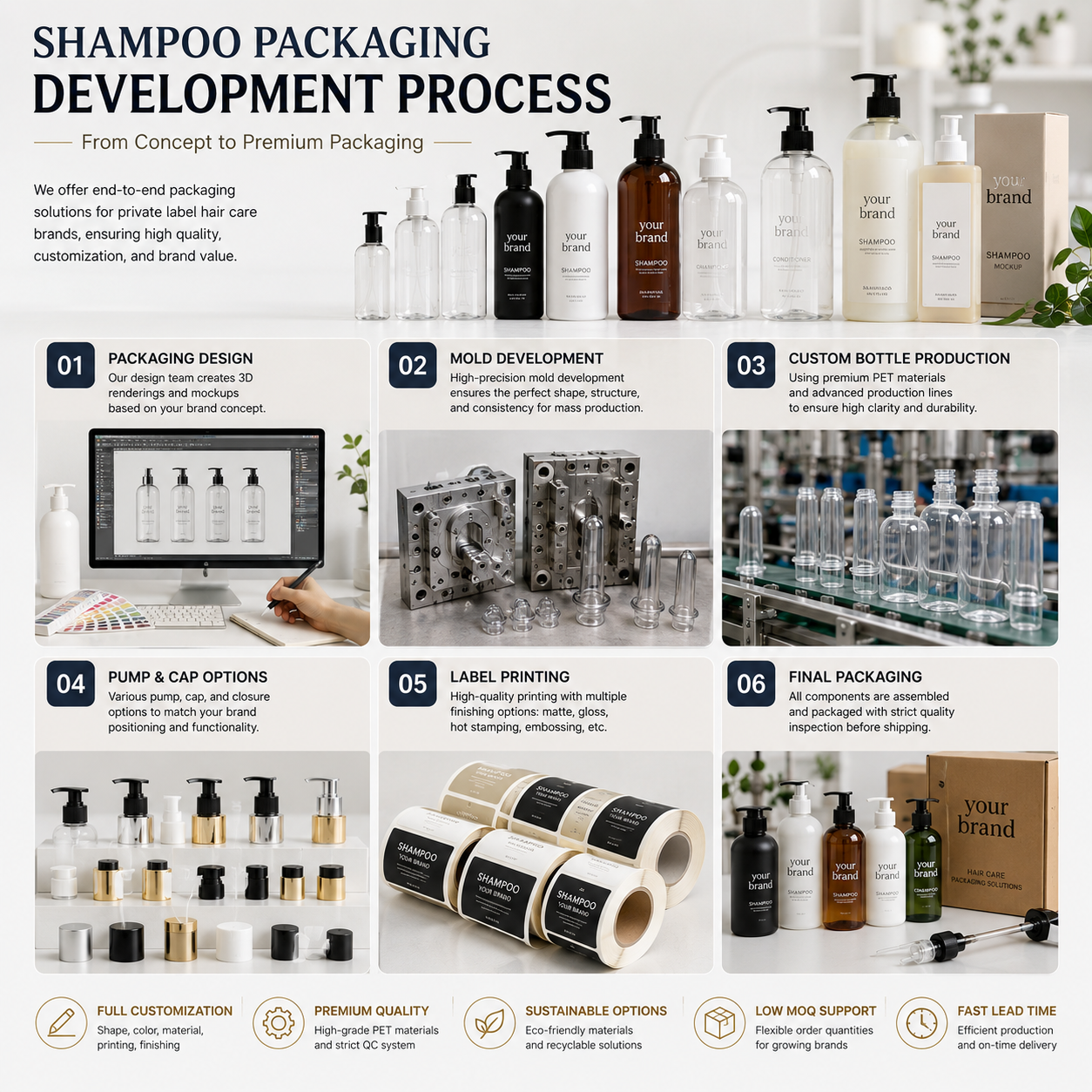
Custom bottle production is one of the most time-intensive stages in shampoo manufacturing.
When brands require exclusive packaging designs, manufacturers may need to:
- Create 3D bottle renderings
- Develop bottle molds
- Test mold durability
- Conduct color matching
- Approve bottle samples
- Perform leakage testing
Depending on complexity, custom bottle development can take 20 to 45 days or longer.
Luxury packaging typically requires additional surface treatments such as:
- UV coating
- Soft-touch finishes
- Metallic printing
- Hot stamping
- Silk screen printing
Brands aiming to reduce timeline risks often begin packaging development simultaneously with formula development.
Sampling and Testing in the Shampoo Manufacturing Timeline
Sampling is a critical stage before mass production begins.
Sample approval helps ensure product performance, packaging compatibility, fragrance accuracy, and overall quality expectations.
Typical testing stages include:
- Formula stability testing
- Viscosity evaluation
- Foaming performance
- Fragrance assessment
- Packaging compatibility testing
- Leakage testing
- Transportation simulation testing
Some international markets may also require microbiological testing or regulatory documentation.
According to regulatory guidance published by Cosmetics Europe, product safety verification and compliance testing are becoming increasingly important in modern cosmetic manufacturing and international exports.
Mass Production Timeline for Private Label Shampoo Production
Once formulas and packaging are approved, the project enters mass production.
Mass production timelines vary depending on:
- Order quantity
- Factory production capacity
- Packaging availability
- Raw material inventory
- Seasonal demand
- Production scheduling
Large-volume orders during peak seasons may experience extended production schedules.
For this reason, experienced brands often place orders several months ahead of major sales periods.
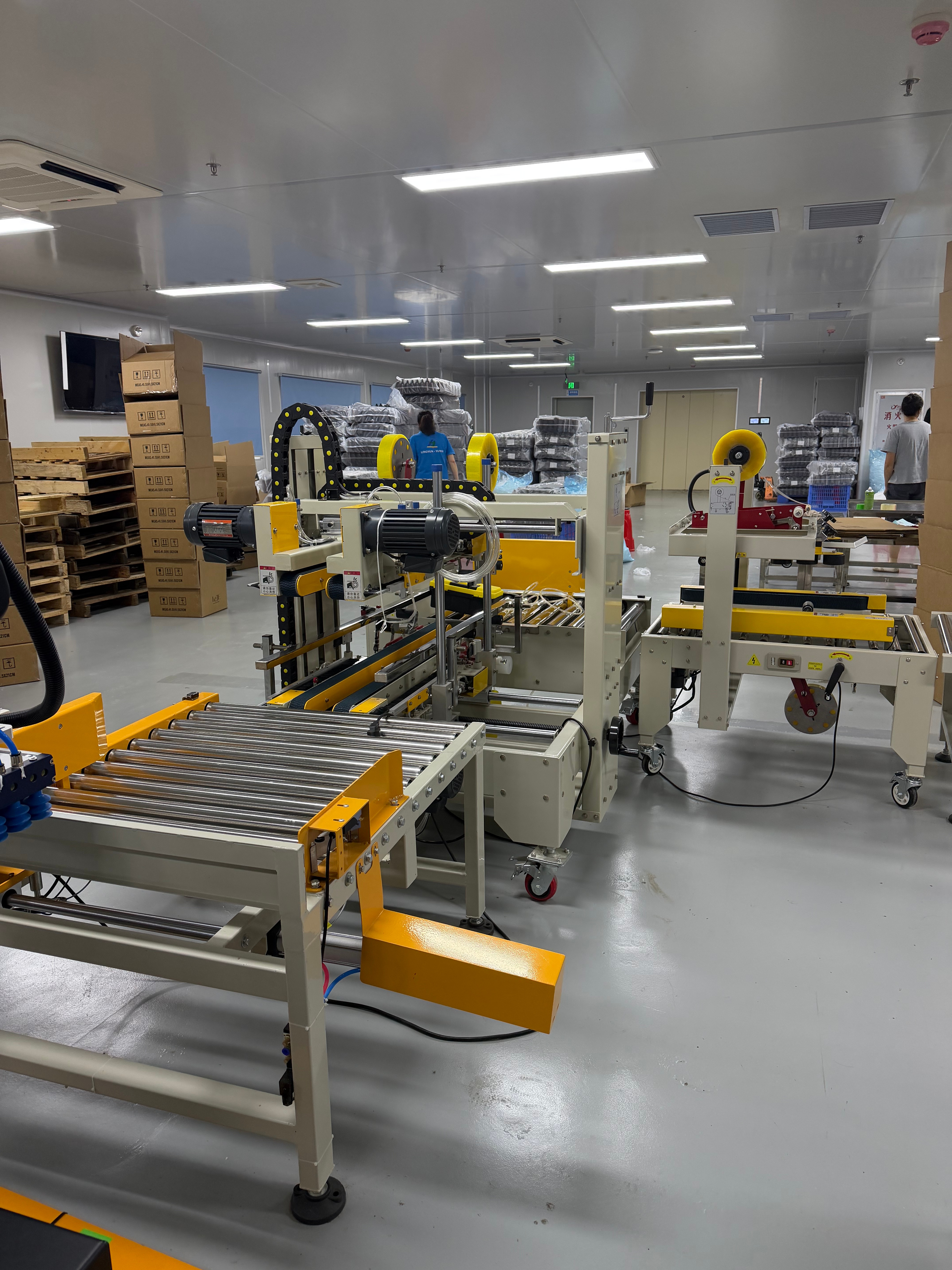
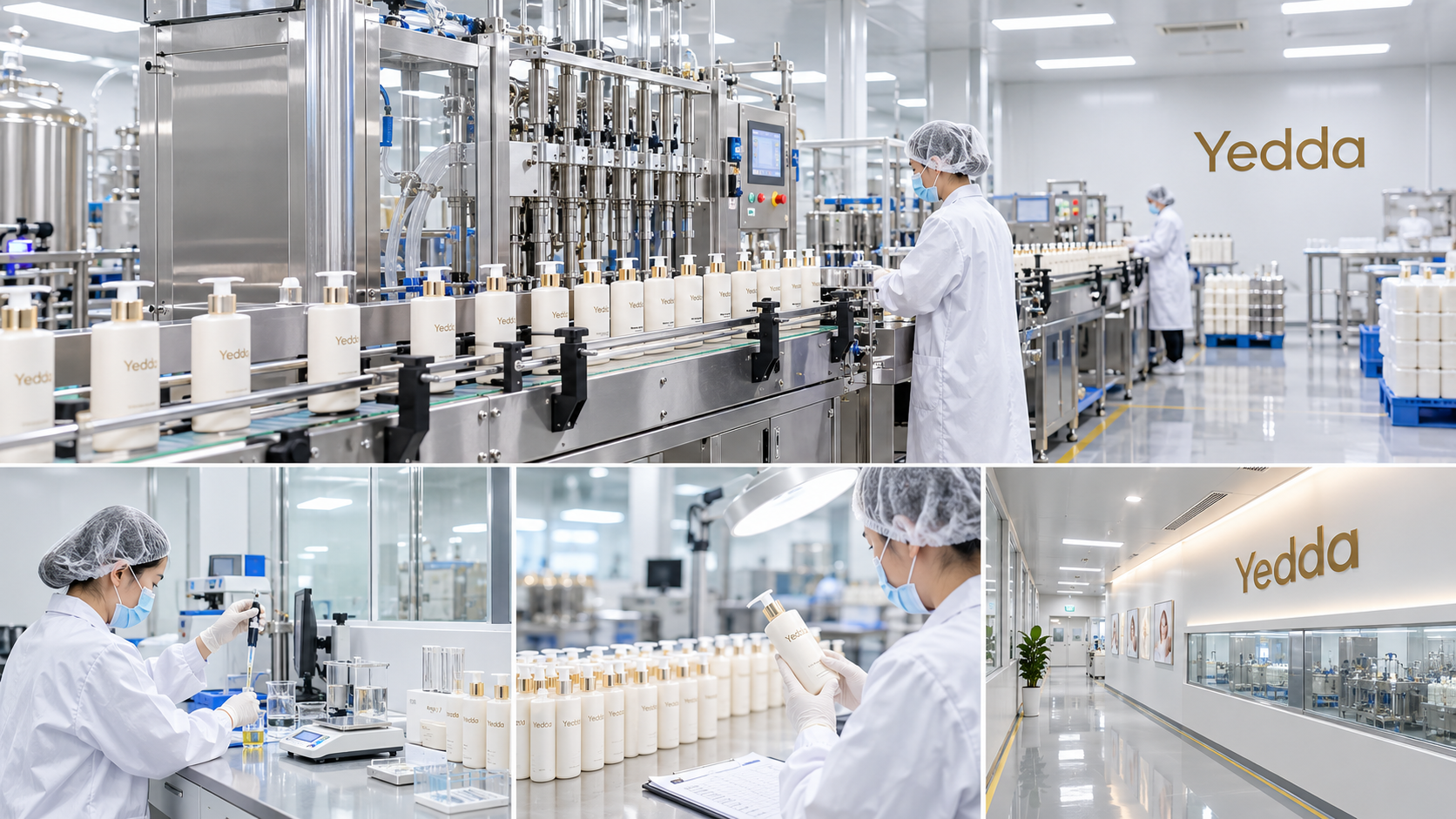
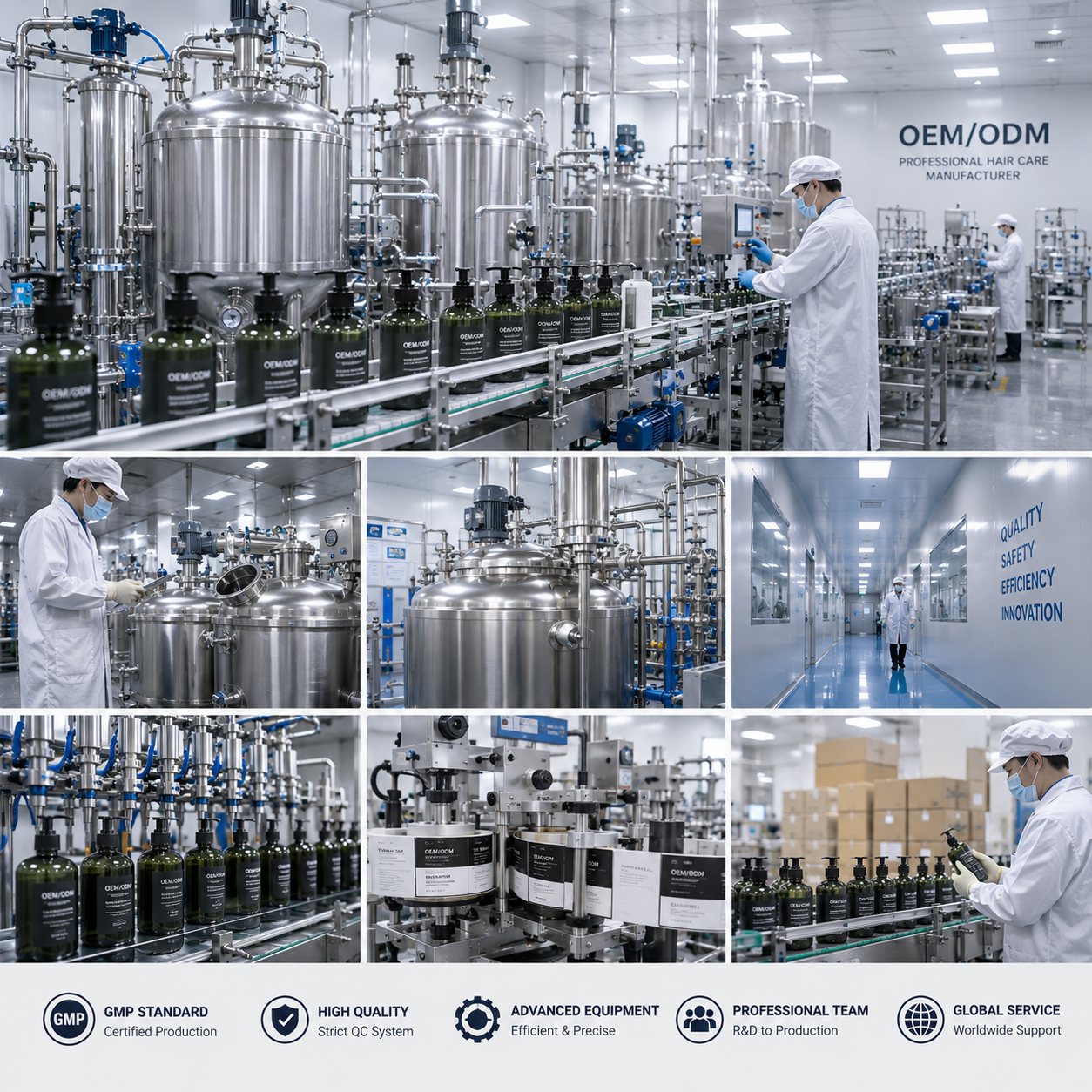
Modern OEM shampoo suppliers increasingly use automated production lines to improve manufacturing efficiency and reduce lead times.
Quality Inspection and Compliance Timeline
Quality control plays an essential role in the shampoo manufacturing timeline.
Professional manufacturers typically conduct multiple inspections throughout production.
Inspection stages may include:
- Raw material inspection
- In-process quality checks
- Packaging inspection
- Finished product testing
- Carton drop testing
- Barcode verification
- Final shipment inspection
International buyers may also request third-party inspections before shipment approval.
Compliance documentation may include:
- MSDS documents
- COA certificates
- Ingredient lists
- GMP certifications
- FDA-related compliance documents
International Shipping Timeline for Shampoo Products
Shipping is another important factor affecting overall production lead time.
Shipping timelines vary depending on:
- Destination country
- Sea freight versus air freight
- Customs clearance
- Peak shipping seasons
- Port congestion
Typical international shipping timelines include:
| Shipping Method | Estimated Timeline |
| Air Freight | 5–10 Days |
| Sea Freight to USA | 25–40 Days |
| Sea Freight to Europe | 30–45 Days |
| Sea Freight to Middle East | 20–35 Days |
Brands should always include buffer time when planning launch schedules.
What Causes Delays in the Shampoo OEM Timeline?
Several factors can delay private label shampoo production.
Common causes include:
- Late packaging approvals
- Custom mold delays
- Raw material shortages
- Frequent formula revisions
- Label artwork changes
- Holiday production shutdowns
- Shipping congestion
- Regulatory approval delays
Poor communication between brands and manufacturers can also significantly increase lead times.
According to supply chain analysis from McKinsey & Company, global manufacturing disruptions and shipping instability continue impacting consumer goods production, making lead time planning increasingly critical for beauty brands.
How to Reduce Packaging Lead Time and Production Delays
Brands can significantly improve efficiency by optimizing project management and simplifying customization requirements.
Recommended strategies include:
- Using standard bottle molds
- Selecting stock formulas
- Approving artwork quickly
- Starting packaging production early
- Consolidating packaging suppliers
- Planning around holidays
- Choosing experienced OEM partners
Many successful brands begin packaging development and formula testing simultaneously to shorten the total production timeline.
How to Choose a Reliable OEM Shampoo Supplier
Selecting the right OEM shampoo supplier is essential for maintaining stable production schedules and product quality.
When evaluating suppliers, brands should consider:
- Production capacity
- R&D capability
- Packaging sourcing ability
- Export experience
- Communication efficiency
- Lead time stability
- Quality control systems
- Regulatory support
Reliable manufacturers should provide transparent production schedules, realistic delivery estimates, and proactive communication throughout the project.
Why Understanding the Shampoo Manufacturing Timeline Matters
Understanding the complete shampoo manufacturing timeline helps brands make smarter business decisions, improve inventory planning, and reduce launch risks.
As the global hair care industry becomes increasingly competitive, supply chain efficiency is becoming a major competitive advantage.
Brands that understand production lead times can:
- Launch products faster
- Reduce inventory shortages
- Improve seasonal planning
- Reduce operational delays
- Optimize cash flow
- Improve customer satisfaction
For modern hair care startups and established beauty brands alike, successful timeline management is now a core part of brand growth strategy.
FAQ
How long does shampoo manufacturing usually take?
The complete shampoo manufacturing timeline typically ranges from 30 to 120 days depending on formula customization, packaging requirements, and shipping methods.
What causes the biggest delays in private label shampoo production?
Packaging lead time, custom bottle production, formula revisions, and shipping congestion are among the most common causes of delays.
How can brands reduce shampoo OEM timeline risks?
Brands can reduce risks by using stock packaging, approving artwork quickly, choosing experienced OEM suppliers, and planning production schedules early.
How long does custom bottle production take?
Custom bottle production usually takes 20 to 45 days depending on mold development, decoration techniques, and packaging complexity.