
Rosemary Oil for Hair Growth: The Science-Backed Alternative Your Salon Clients Are Asking For
If you have glanced at TikTok, Instagram, or Google Search trends over the past year, you already know that one botanical ingredient is completely dominating the global haircare conversation: Rosemary Oil. What started as a viral DIY remedy has rapidly evolved into a massive, consumer-led movement. Today, salon retail consumers are no longer just looking for generic "strengthening" or "volumizing" shampoos; they are actively flipping bottles over at the retail counter to search the ingredient deck for Rosmarinus Officinalis Leaf Oil.
As a salon owner, independent stylist, hospitality procurement manager, or B2B brand manager, you cannot afford to treat this phenomenon as a passing social media fad. When a client sits in your styling chair, looks in the mirror, and asks, "Does rosemary oil actually work for my thinning hair?" or "Should I drop my minoxidil treatments for a botanical alternative?", your response defines your professional authority.
More importantly, in the B2B sector, integrating verified botanical active lines into your salon retail curation, hotel amenities, or independent product portfolio opens up a highly profitable, high-margin revenue stream. To win this market, you must look past the viral videos. Let’s break down the deep clinical science of rosemary oil, analyze how it stacks up against pharmaceutical benchmarks, uncover hidden formulation pitfalls, and establish a professional protocol that drives real-world business growth.
1. The Molecular Trichology: How Rosemary Oil Stimulates the Scalp Matrix
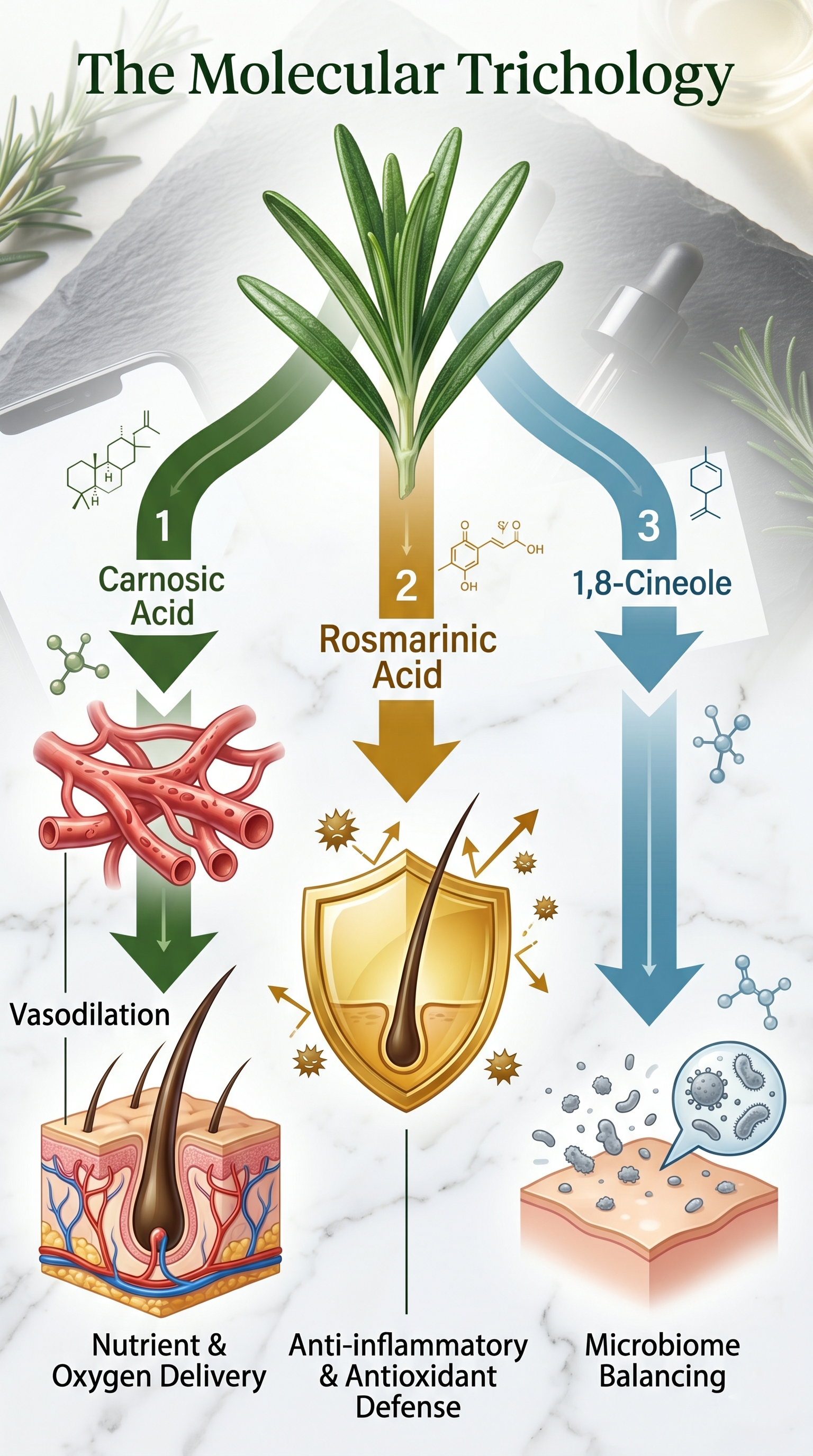
To confidently explain the power of rosemary oil to a discerning client, a salon team, or a corporate procurement board, you need to understand its exact molecular and biological mechanisms. Rosemary oil isn’t a magical, overnight cosmetic quick-fix; it is a complex, volatile chemical matrix rich in bioactive phytochemicals. The primary therapeutic drivers behind its performance are carnosic acid, rosmarinic acid, camphor, alpha-pinene, and 1,8-cineole.
A. Vasodilation and Cellular Nutrient Delivery
The primary biological driver behind hair thinning and premature shedding—whether dictated by genetics (androgenetic alopecia), chronic stress (telogen effluvium), or mechanical scalp tension—is the restriction of blood flow to the dermal papilla. The dermal papilla sits at the base of the hair follicle, acting as the control center for hair growth. When localized blood vessels constrict, the follicle is systematically starved of oxygen, amino acids, and essential vitamins. Over time, this starvation leads to follicular miniaturization, where thick terminal hairs degrade into fine, barely visible vellus hairs.
The carnosic acid present in high-quality rosemary oil acts as a powerful topical vasodilator. Upon application, it interacts with the microvascular pathways surrounding the hair follicle, stimulating local blood flow and expanding the localized capillaries. Think of this process as expanding a congested, single-lane rural road into a high-speed, multi-lane highway. By forcing a rush of nutrient-dense, oxygenated blood directly to the root matrix, rosemary oil effectively extends the Anagen (active growth) phase of the hair cycle and rejuvenates miniaturized follicles before they senesce completely.
B. Topical Antioxidant Support & DHT Mitigation
On a hereditary level, androgenetic alopecia is driven by the hormone Dihydrotestosterone (DHT), a byproduct of testosterone synthesized by the enzyme 5-alpha reductase. When DHT binds to susceptible receptors in the hair follicle, it forces the follicle to enter a premature resting stage, shrinking its lifespan.
While internal pharmaceutical interventions focus on blocking 5-alpha reductase systemically throughout the entire body, the rich phenolic profile of rosemary oil—specifically rosmarinic acid—provides intense topical antioxidant protection. It works to neutralize the oxidative stress, lipid peroxidation, and localized micro-inflammation that accelerate follicular degradation. By calming the scalp’s dermal layers and defending tissue against environmental free radicals (such as UV exposure and urban pollution), it helps maintain a healthy, uninhibited environment for hair anchored deep within the dermis.
C. Scalp Microbiome Homeostasis
A congested scalp prone to excessive sebum production is the ideal breeding ground for opportunistic microflora, most notably Malassezia furfur—the yeast responsible for dandruff, seborrheic dermatitis, and persistent scalp itching. When Malassezia overproliferates, it breaks down sebum into irritating free fatty acids, inducing a state of chronic low-grade inflammation that suffocates the hair root and alters healthy hair anchorages.
Rosemary oil possesses proven natural antimicrobial, antibacterial, and antifungal properties. By regulating overactive sebaceous glands and breaking down microbial biofilms, it cleanses the follicular opening without stripping the scalp's vital acid mantle. It replaces aggressive synthetic anti-dandruff chemicals with a holistic balancing mechanism, ensuring that new hair growth isn't throttled at the surface by inflammation or scaly buildup.
2. Head-to-Head: The Landmark 2015 Clinical Study Decoded
In the B2B haircare environment, your ultimate tool for building trust and converting premium buyers is empirical, published clinical data. When clients or retail buyers question the efficacy of botanical lines compared to traditional drugstore chemical remedies, your staff should immediately reference the benchmark study in modern trichology: The 2015 Panahi Clinical Trial.
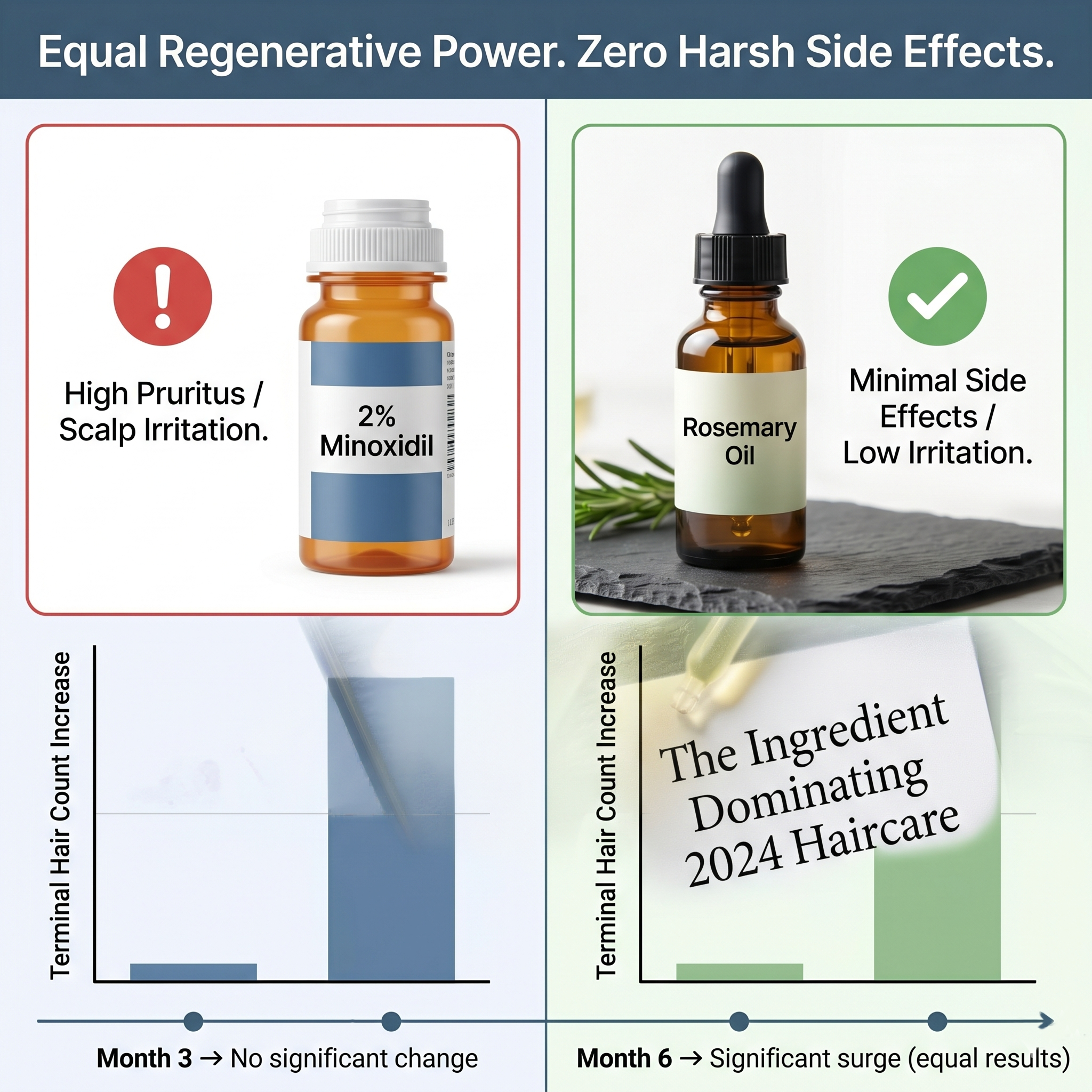
This independent, randomized comparative study evaluated the efficacy of topical Rosemary Essential Oil directly against 2% Minoxidil (the gold-standard pharmaceutical active used in over-the-counter hair regrowth foams and drops) over a strict six-month period on human subjects diagnosed with androgenetic alopecia. You can review the full peer-reviewed data on the official National Center for Biotechnology Information (NCBI) PubMed Database.
The Six-Month Growth Trajectory
The study revealed a fascinating timeline that highlights the necessity of patience and structural consistency in professional hair therapy:
- The 3-Month Mark: At the end of 90 days, neither the minoxidil group nor the rosemary oil group demonstrated a statistically massive increase in new hair count. This finding aligns perfectly with human hair biology; it takes a minimum of 90 to 120 days for a dormant follicle to exit the Telogen (resting) phase, transition through the Catagen phase, and begin sprouting a new shaft in the Anagen phase.
- The 6-Month Mark: By day 180, the data shifted dramatically. Both the group treated with topical rosemary oil and the group treated with 2% minoxidil demonstrated a statistically significant, virtually identical surge in terminal hair count. The botanical oil matched the pharmaceutical benchmark blow-for-blow in pure regenerative power.
The Side-Effect Profile: The Ultimate B2B Selling Point
While the two ingredients tied in terms of pure hair count increases, the study revealed a critical divergence in consumer comfort and scalp tolerance:
- The Minoxidil Group: This group reported a significantly higher incidence of scalp pruritus (intense itching), dry flaking, contact dermatitis, and rebound irritation. This occurs because pharmaceutical minoxidil solutions frequently require high concentrations of propylene glycol and alcohol as solvents to keep the active ingredient stable in liquid form. These solvents strip the scalp's natural lipid barrier, causing chronic dryness.
- The Rosemary Oil Group: This group demonstrated a remarkably low irritation profile. The oil delivered the exact same structural results with a much gentler, side-effect-free, and luxurious sensory experience.
For a high-end salon or luxury SPA, this data is gold. It allows you to offer your clientele a clean, botanical product line that delivers pharmaceutical-grade performance without causing red, irritated, or flaky scalps that ruin the customer experience.
3. B2B Formulation Secrets: Raw Essential Oils vs. Surfactant Delivery Vehicles
As a professional B2B buyer, salon distributor, or product developer, you must understand a hard truth that social media influencers ignore: dumping raw, unmitigated rosemary essential oil directly onto a client's head or into a cheap bulk shampoo base is a recipe for disaster.
Pure essential oils are highly concentrated, volatile organic compounds. If applied raw to an already inflamed scalp, they can cause acute chemical burns, severe contact allergies, and systemic sensitization. Conversely, if you simply drop rosemary oil into a standard, cheap surfactant base without proper molecular stabilization, the oil will simply separate, float to the top of the bottle, or degrade rapidly when exposed to salon lighting and oxygen.
When vetting a premium rosemary collection for your brand portfolio or backbar, you must analyze the product through the lens of Advanced Emulsification and Surfactant Synergy:
The Importance of the Surfactant Chassis
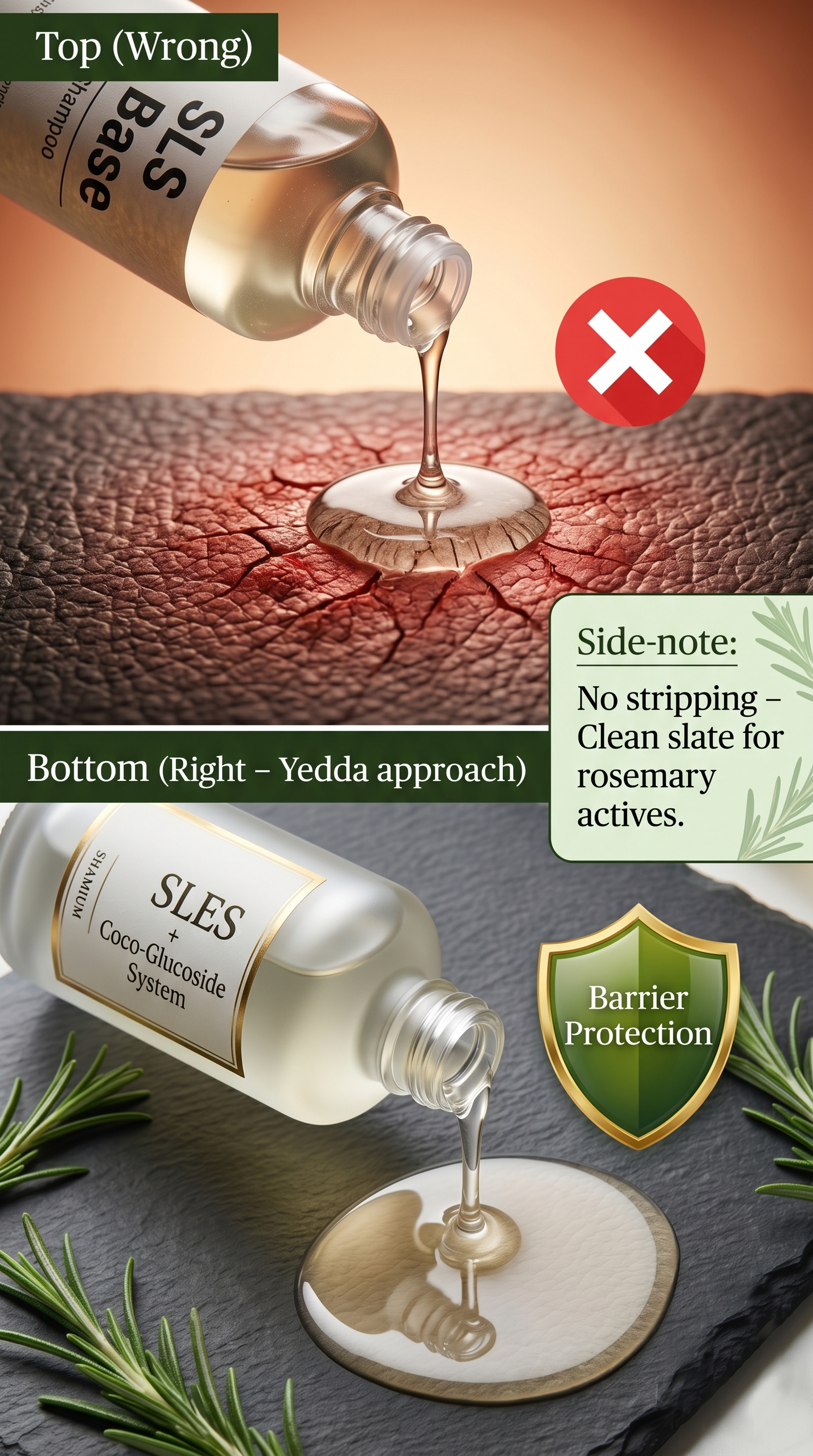
If a rosemary shampoo uses aggressive, high-penetration primary surfactants like raw, unmitigated Sodium Lauryl Sulfate (SLS), the formulation defeats its own purpose. The SLS will penetrate the stratum corneum, strip away the scalp’s protective intercellular lipids, and trigger inflammation—effectively canceling out the soothing, microcirculatory benefits of the rosemary oil.
Instead, look for a balanced, low-penetration surfactant system. For example, in our research and development labs at Yedda, when engineering our flagship Natural Onion Rosemary Biotin Shampoo and Conditioner Set for Hair Growth, we chose to avoid raw SLS entirely. Instead, we constructed a sophisticated primary chassis utilizing Sodium Laureth Sulfate (SLES) mitigated with Coco-Glucoside.
Because SLES has a larger, bulkier molecular weight due to its ethoxylation process, it stays safely on the surface of the skin to cleanse oils, while the non-ionic Coco-Glucoside cushions the hair cuticle. This clean slate allows the active rosemary compounds to reach the follicular opening smoothly without breaking down the surrounding epidermal barrier.
The Role of Lipid Carrier Matrices
To maximize the bio-availability of rosemary oil, it must be bound to a stable, nourishing carrier matrix that mimics the scalp's natural sebum. If the vehicle is too heavy (such as raw castor oil), it will clog the follicle, leading to sebum blockage and increased shedding. If it is too light, it evaporates before penetrating the follicular funnel.
A masterfully executed formulation blends the volatile rosemary essential oil with lightweight, biomimetic lipids suspended in a hydrophilic (water-loving) tea infusion base. The Squalane acts as a smart carrier, instantly absorbing into the scalp to reinforce the skin barrier, while slowly releasing the active carnosic acid down into the root matrix over a prolonged period. This sophisticated delivery system completely eliminates the dry, brittle "rebound effect" that commonly plagues lower-tier, poorly formulated botanical shampoos.
4. B2B Comparative Matrix: Botanical Actives Under the Microscope
To help your procurement team or salon group build a highly strategic inventory, you must understand where rosemary oil stands compared to other popular botanical and chemical hair-growth ingredients currently circulating in the global supply chain.
| Hair Growth Active | Primary Mechanism of Action | Scalp Irritation Risk | Ideal Hair/Scalp Profile | B2B Procurement Strategy & Positioning |
|---|---|---|---|---|
| Rosemary Essential Oil | Vasodilation via Carnosic Acid; local microcirculation boost. | Very Low (When properly formulated in a carrier lipid) | Fine, thinning hair; oily or highly sensitive scalps. | Premium Clean Beauty Mainstream. Perfect for high-margin retail lines and premium backbar scaling. |
| Minoxidil (2% - 5%) | Synthetic potassium channel opener; widens blood vessels chemically. | High (Frequent itching, flaking, dryness from solvents) | Severe, advanced androgenetic alopecia. | Pharmaceutical / Medical Grade. Restricted to pharmacy retail; not suitable for luxury salon or spa environments. |
| Batana Oil (Ojon Oil) | Extreme lipid replenishment; rich in oleic and linoleic fatty acids. | Very Low | Ultra-dry, coarse, over-processed, or high-porosity texturized hair. | Niche Moisture & Repair. Excellent for deep-conditioning backbar treatments and curly/coily retail categories. |
| Ginger Root Extract | Thermal stimulant; local circulatory irritation to force blood flow. | Moderate (Can cause a warming/tingling sensation) | Sluggish, non-sensitive scalps; dull, devitalized hair. | Traditional / Herbal Appeal. Best paired alongside rosemary or green tea to balance out its potential for surface redness. |
5. Professional Salon Protocols: Customizing Rosemary Treatments for Client Success
To turn this widespread online trend into a high-converting retail reality at your salon’s front desk, you cannot simply hand a client a bottle and tell them to go wash their hair. Your styling team should be trained to diagnose the client's hair density, texture, and scalp condition using a structured professional protocol:
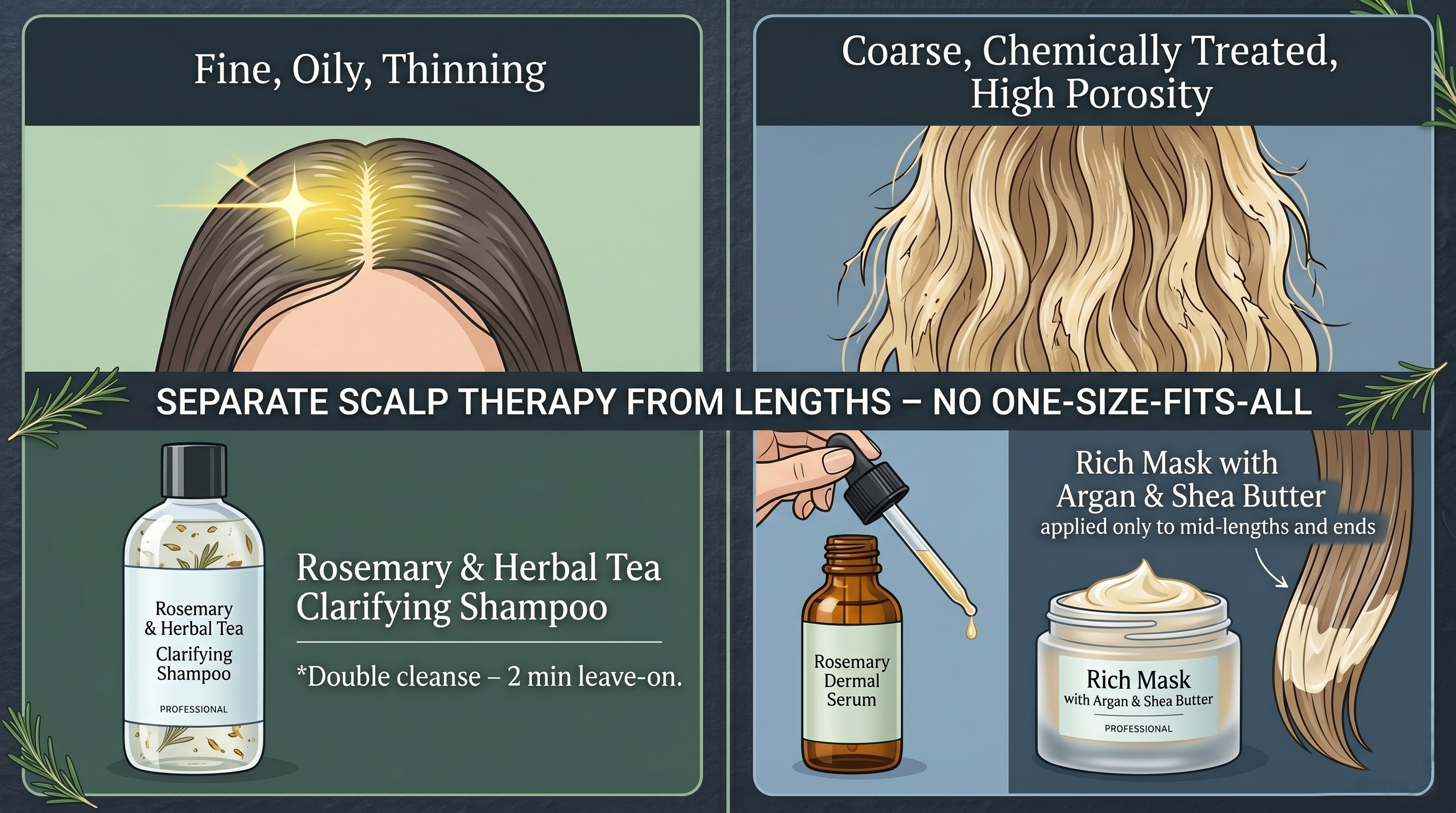
Protocol A: The Fine, Thinning, & Sebum-Prone Client
- The Client Profile: Fine strands, flat roots, hair that gets greasy within 24 hours of washing, visible scalp showing along the parting line.
- The Salon Protocol: Utilize a clear, lightweight Rosemary & Herbal Tea Clarifying Shampoo on the backbar. The herbal tea infusion acts as a natural astringent to control overactive sebaceous glands, while the rosemary oil instantly stimulates the roots.
- Retail Prescription: Instruct the client to double-cleanse at home three times a week, leaving the second lather on the scalp for a full 2 minutes to allow the carnosic acid to fully engage with the vascular pathways before rinsing.
Protocol B: The Coarse, Chemically Treated, or High-Porosity Client
- The Client Profile: Bleached blondes, clients with vivid fashion colors, or those with naturally dry, coarse curly textures who are also experiencing stress-related hair shedding.
- The Salon Protocol: Never use a harsh clarifying base on these delicate mid-shafts and ends. Instead, treat the scalp separately using a targeted, lightweight topical formula at the shampoo bowl. Follow this by applying a rich, lipid-replenishing conditioner like our Deep Repair Seaweed Hair Conditioner strictly to the mid-lengths and ends.
- Retail Prescription: A weekly overnight scalp routine using a nutrient-dense carrier like our Natural Aramari Hemp Seed Oil Hair Care Essential Oil paired with a color-safe, sulfate-free maintenance system to protect artificial pigments while continuing to feed the root matrix.
6. The Business Logic: Turning Viral Trends into Salon Profitability
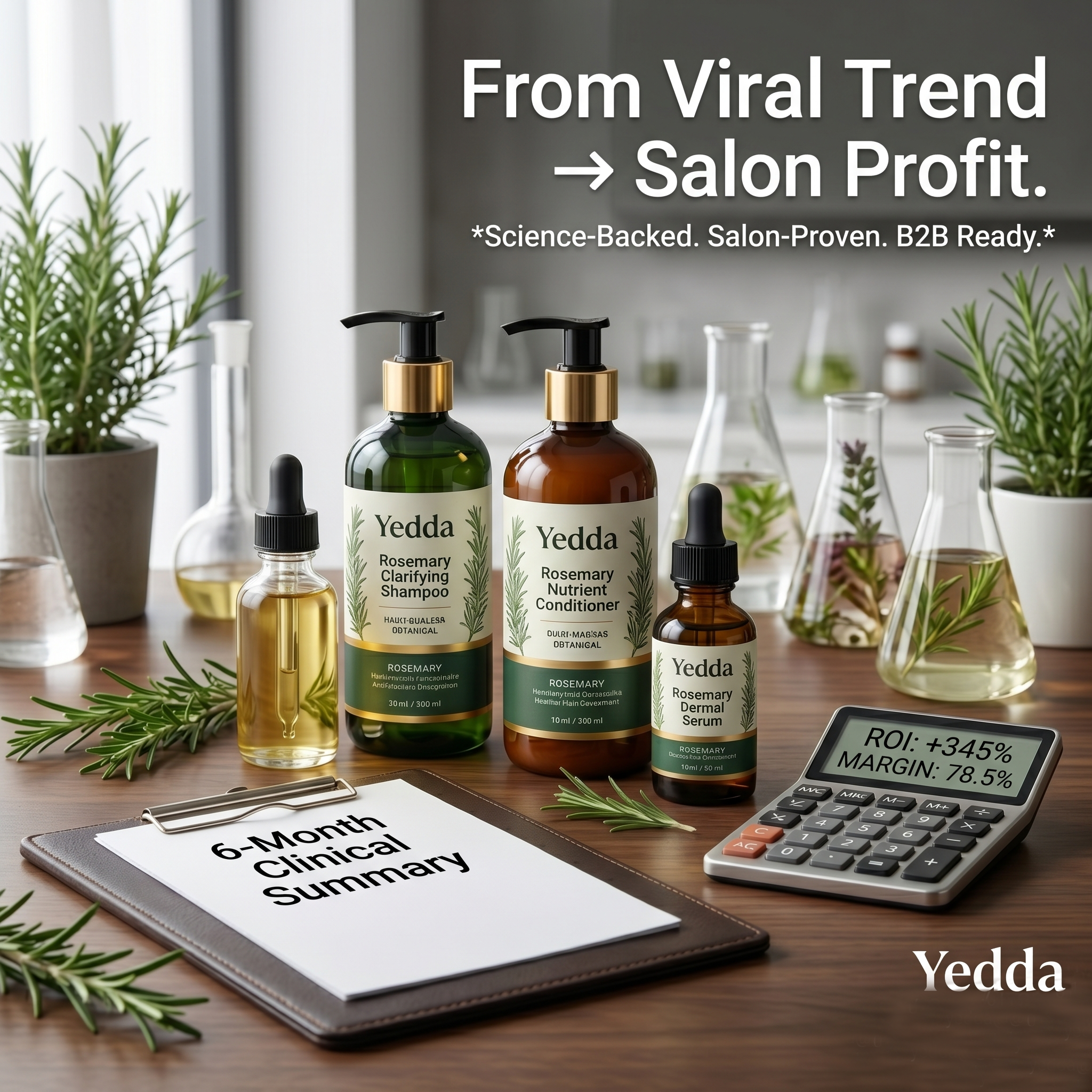
The ultimate goal of B2B content marketing is to convert global consumer enthusiasm into real, measurable profitability for your enterprise. When your salon group or brand chooses to stock or formulate a high-purity, scientifically validated rosemary line, you are positioning your business at the intersection of two of the fastest-growing trends in the beauty economy: The Skinification of Hair and Clean-Clinical Performance.
Consumers are tired of empty marketing promises and harsh synthetic chemicals that leave their scalps dry and irritated. By providing them with a product line that offers clear, peer-reviewed clinical data—showing performance equal to pharmaceutical alternatives but wrapped in a luxurious, safe, and aromatic botanical experience—you eliminate buying hesitation.
For brand managers seeking to manufacture custom white-label formulations, evaluating the manufacturing numbers is essential. You can deep-dive into our financial analysis on the true cost of custom product development by reading our specialized industry report: How Much Does Private Label Shampoo Cost.
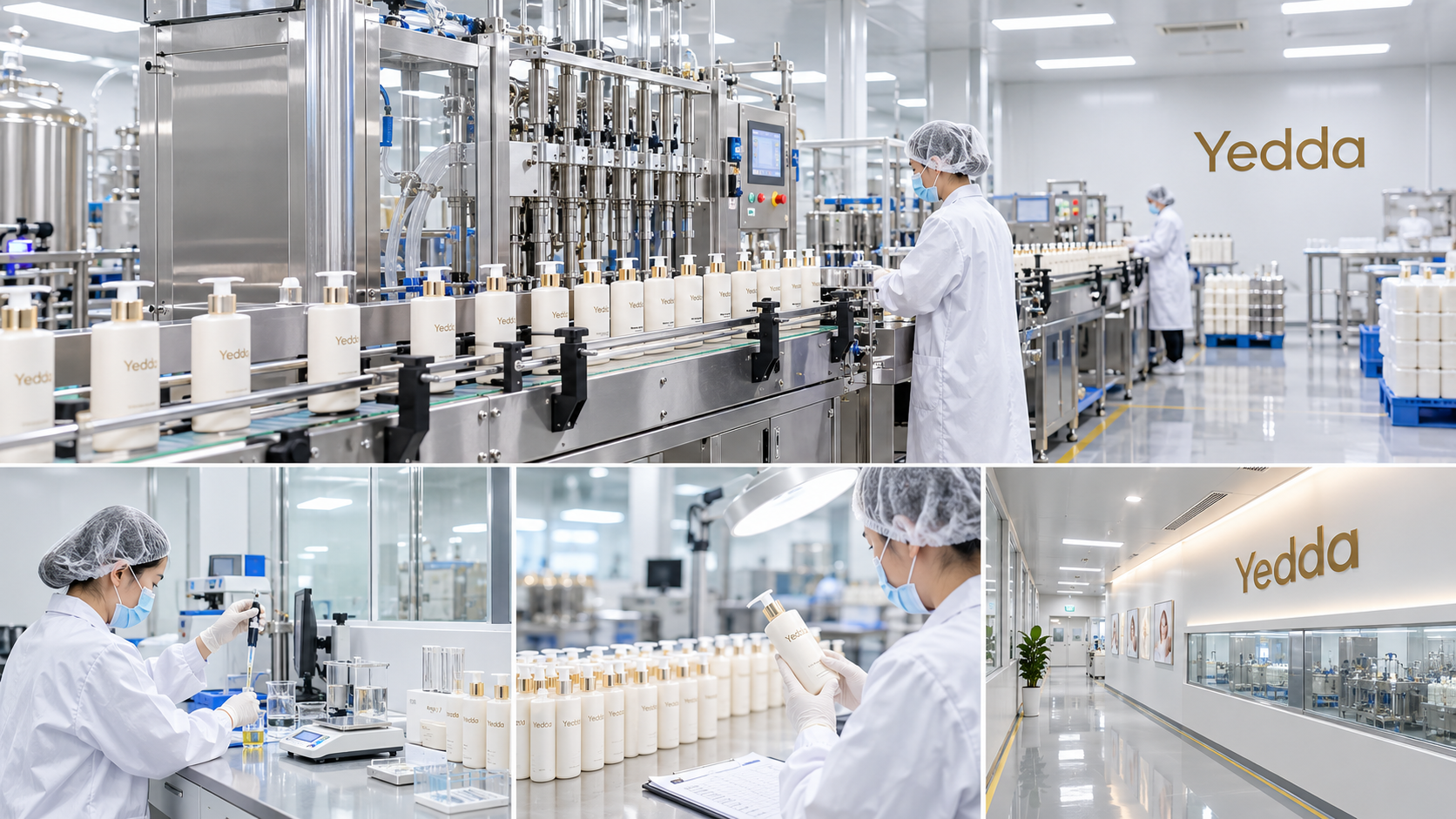
At Yedda Haircare, we build our entire brand philosophy around this transparent, fact-based approach to beauty. We don't ask you to buy our products because they are "natural." We ask you to invest in our formulations because the underlying molecular science makes sense for your business, your staff, and your bottom line. We ensure every batch of our rosemary extract is rigorously standardized for active carnosic acid content, giving your business a reliable, high-performance tool that turns everyday hair washing into an unforgettable, result-driven therapeutic ritual.
7. Frequently Asked Questions (FAQ)
Q1: Can rosemary-infused shampoos completely replace pharmaceutical hair loss treatments like Minoxidil or Finasteride?
Answer: For clients suffering from early to moderate stages of androgenetic alopecia or stress-related thinning (telogen effluvium), a clinically optimized rosemary formulation can serve as a highly effective, side-effect-free alternative. As demonstrated in the 2015 comparative study, pure rosemary active compounds delivered equal regenerative results to 2% Minoxidil over a 6-month period. However, for advanced, severe genetic hair loss, botanical systems function best as an auxiliary therapy alongside medical interventions to optimize scalp microcirculation and barrier health.
Q2: Why do some clients complain that rosemary shampoos make their scalp oilier or cause temporary breakouts?
Answer: This occurs almost exclusively when products are poorly formulated using heavy, non-cosmetic-grade carrier oils (like raw castor or standard soybean oil) that clog the hair follicle funnel. Professional-grade formulations, such as Yedda’s balancing ranges, circumvent this by incorporating volatile rosemary oil into lightweight, biomimetic carrier matrices like Squalane and Argan oil, suspended in a water-loving herbal tea infusion. This provides deep vascular stimulation without disrupting the scalp’s sebaceous equilibrium.
Q3: Is it safe to use rosemary-infused hair care products on color-treated, bleached, or high-porosity hair?
Answer: Yes, provided the primary surfactant chassis is non-stripping. If a rosemary shampoo relies on raw Sodium Lauryl Sulfate (SLS), it will cause rapid color fading and hair shaft dryness. However, when the rosemary actives are built into a cushioned, low-penetration system—such as SLES mitigated with Coco-Glucoside—the product cleanses surface sebum cleanly while completely protecting artificial pigments and structural keratin proteins.
Q4: How long does a salon client need to use a rosemary system consistently before visible hair density changes occur?
Answer: Based on human hair biology and clinical trial timelines, initial improvements in scalp health and reduced shedding can be observed within 60 to 90 days. However, true visible increases in terminal hair count and density require a minimum of 6 months (180 days) of continuous, structured application. This allows dormant follicles sufficient time to reset their cycle and sprout healthy new hair shafts through the scalp matrix.
Q5: Why should a B2B buyer choose a standardized rosemary extract line over standard bulk herbal hair products?
Answer: Standard "herbal" formulas often feature unstandardized plant waters that look good on a label but contain zero bio-active material. Professional-grade sourcing ensures that the rosemary extract is strictly standardized for carnosic acid and rosmarinic acid content. For a salon owner or independent brand looking to co-develop products through dynamic OEM/ODM Bespoke Manufacturing Services, buying a chemically standardized line ensures that every single batch delivered to your shelves yields the precise clinical vasodilation required to produce real, client-retaining results.