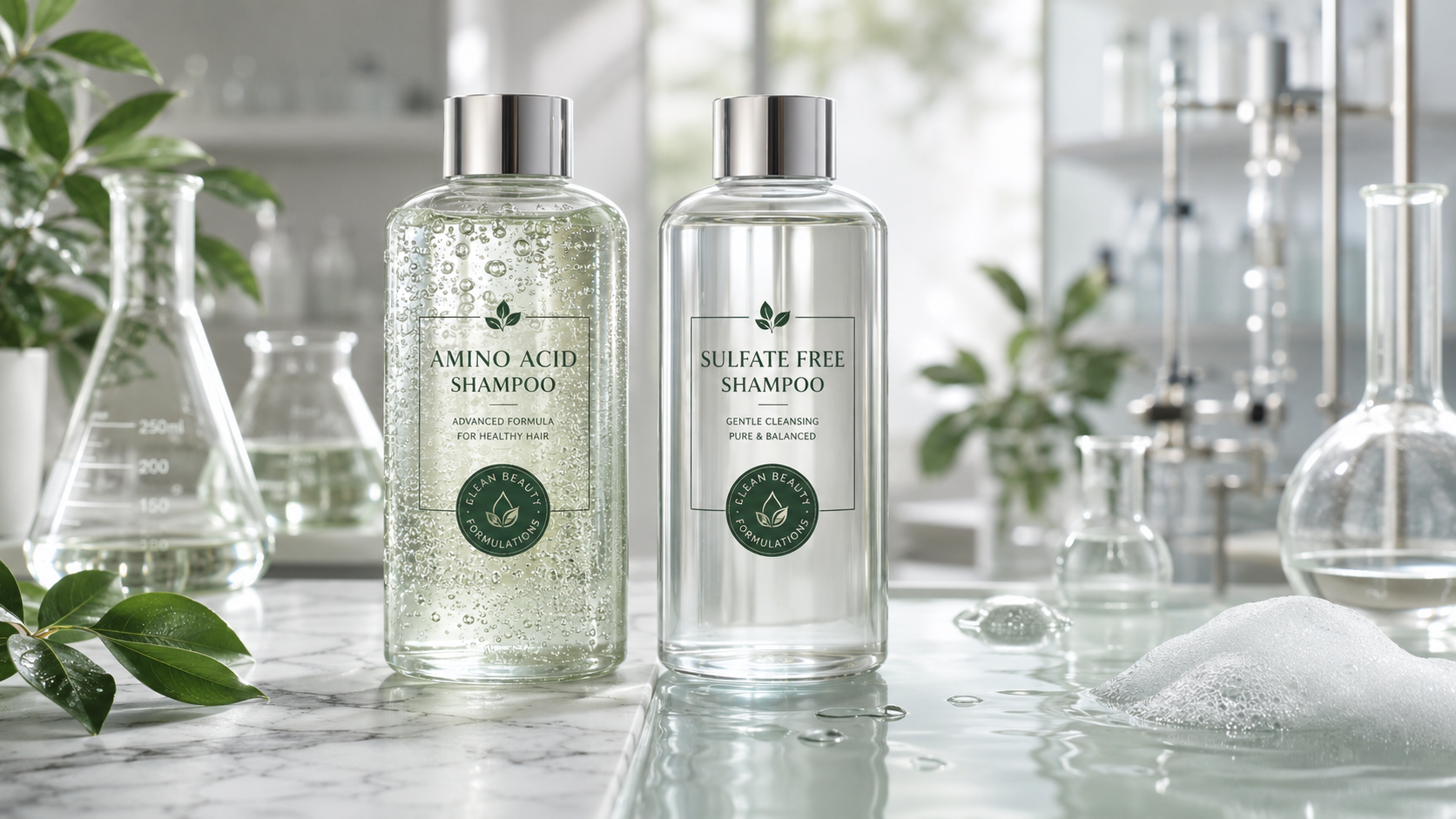

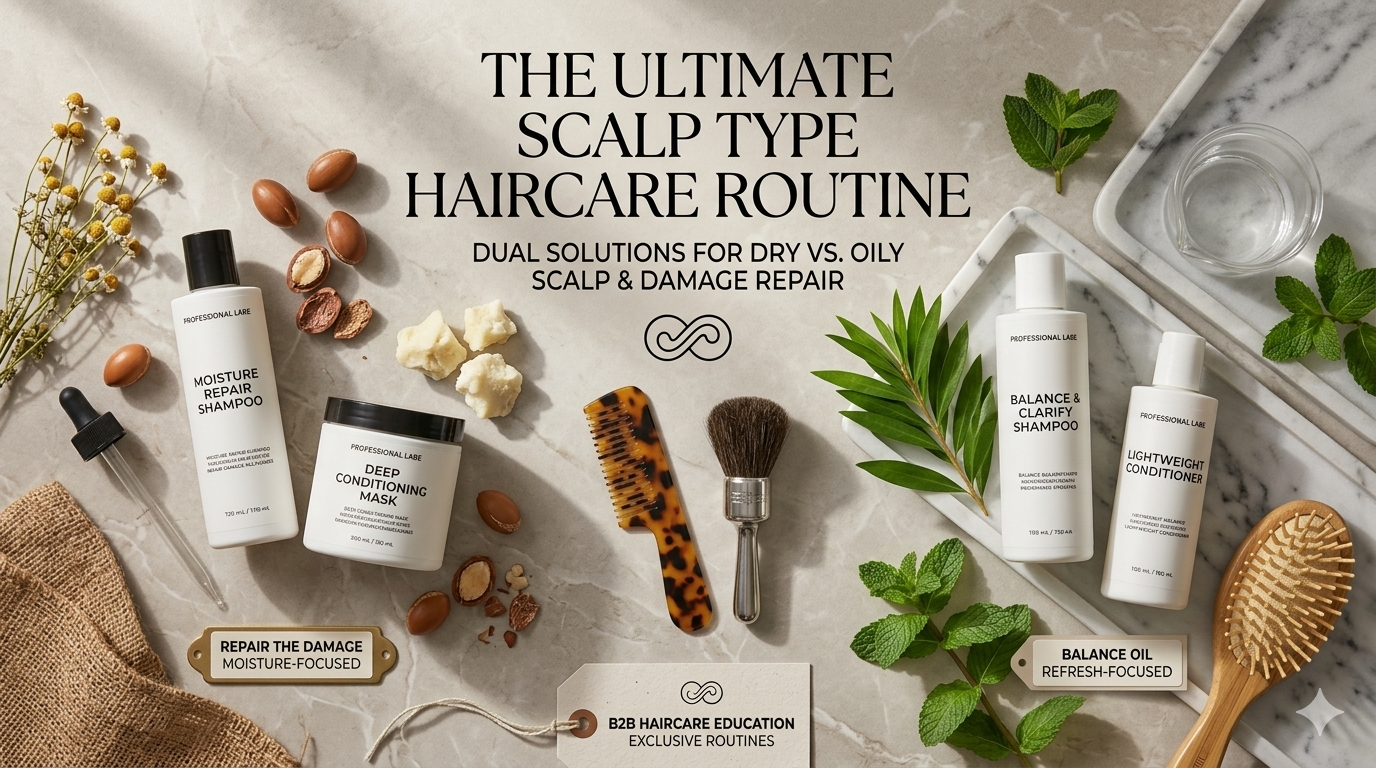
Understanding Dryness vs Oil Balance Haircare
Proper dryness vs oil balance haircare is essential for maintaining healthy hair and scalp. Both overly oily and dry scalps present unique challenges that impact hair strength, growth, and overall appearance. Understanding these differences helps B2B buyers, distributors, and salon professionals select the right formulations for their clients.
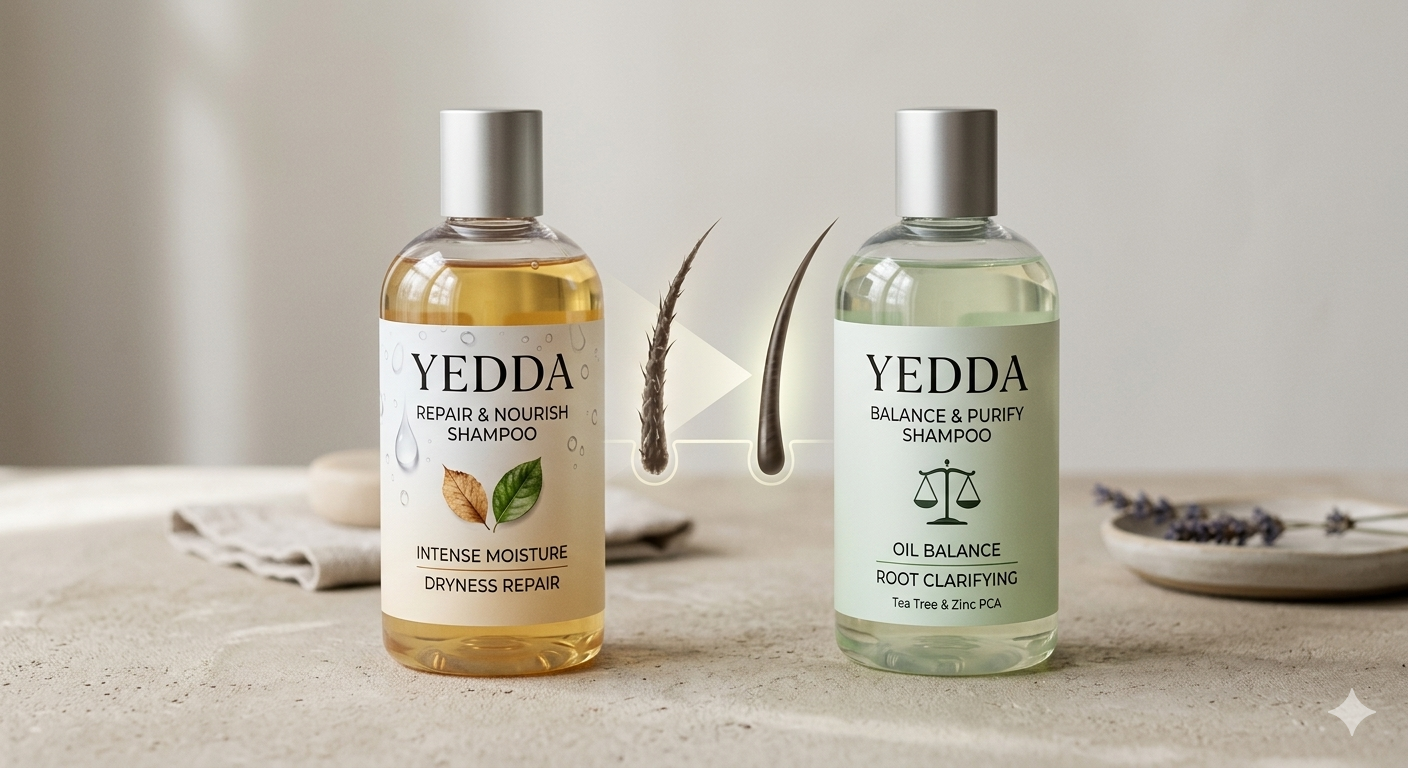
According to Statista, scalp conditions such as excessive oiliness or chronic dryness affect more than 65% of consumers globally, driving demand for products that target specific scalp types.
Why Dryness vs Oil Balance Haircare Is Crucial
Different scalp types require tailored approaches. Using generic products can exacerbate issues such as flaking, itching, excessive sebum, or brittle hair. Brands that understand dryness vs oil balance haircare principles gain a competitive edge in delivering value to consumers and salons.
Oily Scalp Challenges
Excess sebum production leads to greasy hair, clogged follicles, and can accelerate scalp irritation. Solutions require specialized formulas that manage oil while maintaining scalp hydration.
- Best products for oily scalp include gentle clarifying shampoos with pH-balanced formulas.
- Oily scalp hair care tips recommend avoiding heavy conditioners on the roots and using scalp-specific treatments.
- Regular cleansing helps control buildup without stripping essential moisture.
Dry Scalp Challenges
Dry scalp is often caused by environmental stress, harsh shampoos, or insufficient hydration. It can lead to itching, flaking, and compromised hair growth.
- Dry scalp repair shampoo often contains ceramides, natural oils, and humectants to restore barrier function.
- Regular moisturizing treatments improve elasticity and reduce hair breakage.
- Educating consumers about gentle haircare routines is essential for long-term results.
Key Ingredients for Dryness vs Oil Balance Haircare
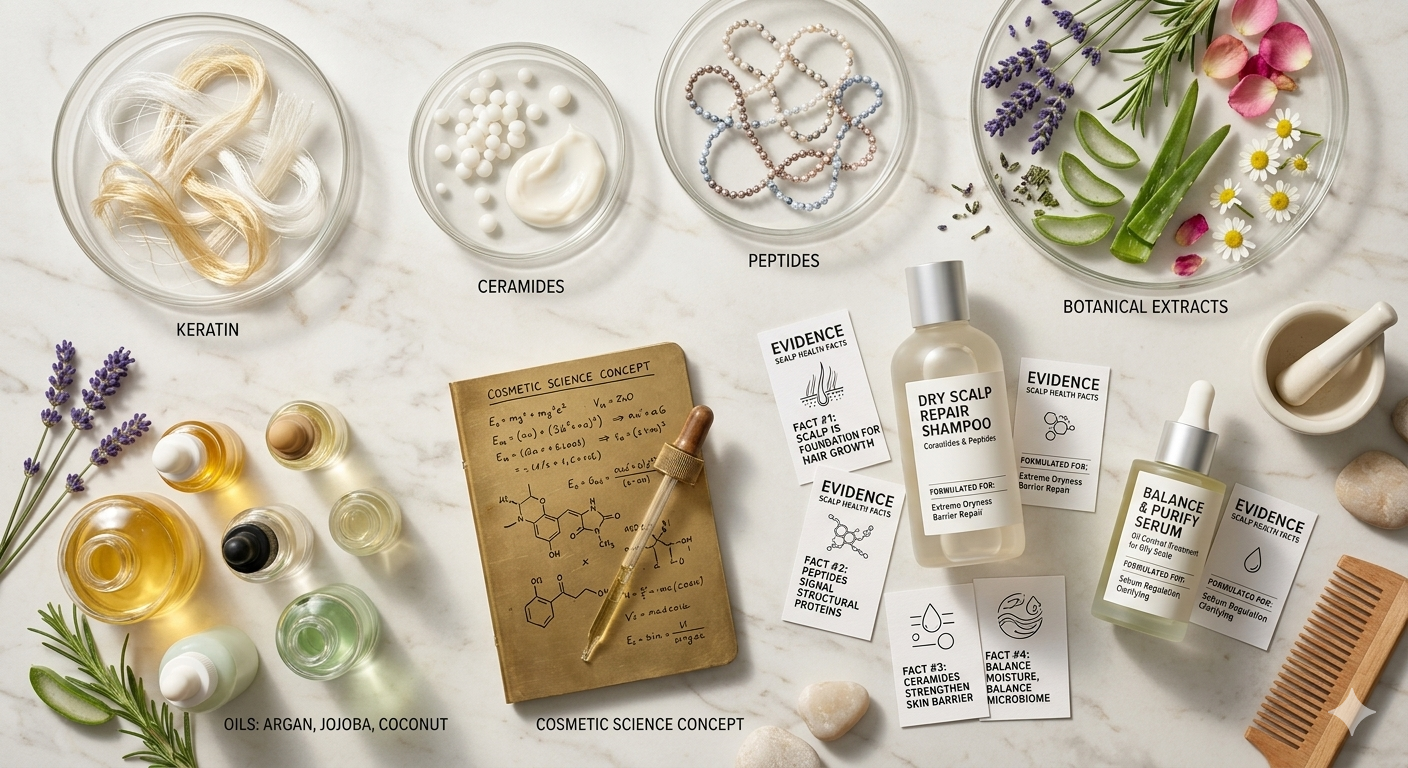
Evidence-based ingredient selection supports targeted scalp treatment and hair repair. B2B buyers and OEM partners should evaluate active components that are clinically validated.
Peptides and Protein Complexes
Peptides strengthen hair shafts, improve elasticity, and help repair damage caused by mechanical or chemical stress. These are beneficial for both oily and dry scalp formulations.
Botanical Extracts
Extracts like green tea, chamomile, and rosemary have anti-inflammatory and antioxidant properties, aiding in maintaining a healthy scalp environment.
Moisturizing Lipids and Ceramides
Lipids reinforce the scalp’s protective barrier and maintain hair hydration, especially in dry scalp formulations.
Evidence Scalp Health Facts
Clinical studies highlight that products designed for specific scalp types yield better results. For example, Grand View Research reports that personalized scalp-targeted products demonstrate higher customer satisfaction and improved hair growth metrics.
Scalp pH Balance
Maintaining a balanced pH reduces irritation and optimizes enzyme activity critical for hair follicle function.
Microbiome-Friendly Formulations
Formulations that support scalp microbiome health enhance barrier function and reduce sensitivity. Ingredients such as prebiotics and postbiotics have been shown to support scalp homeostasis.
Haircare Routines Based on Scalp Type
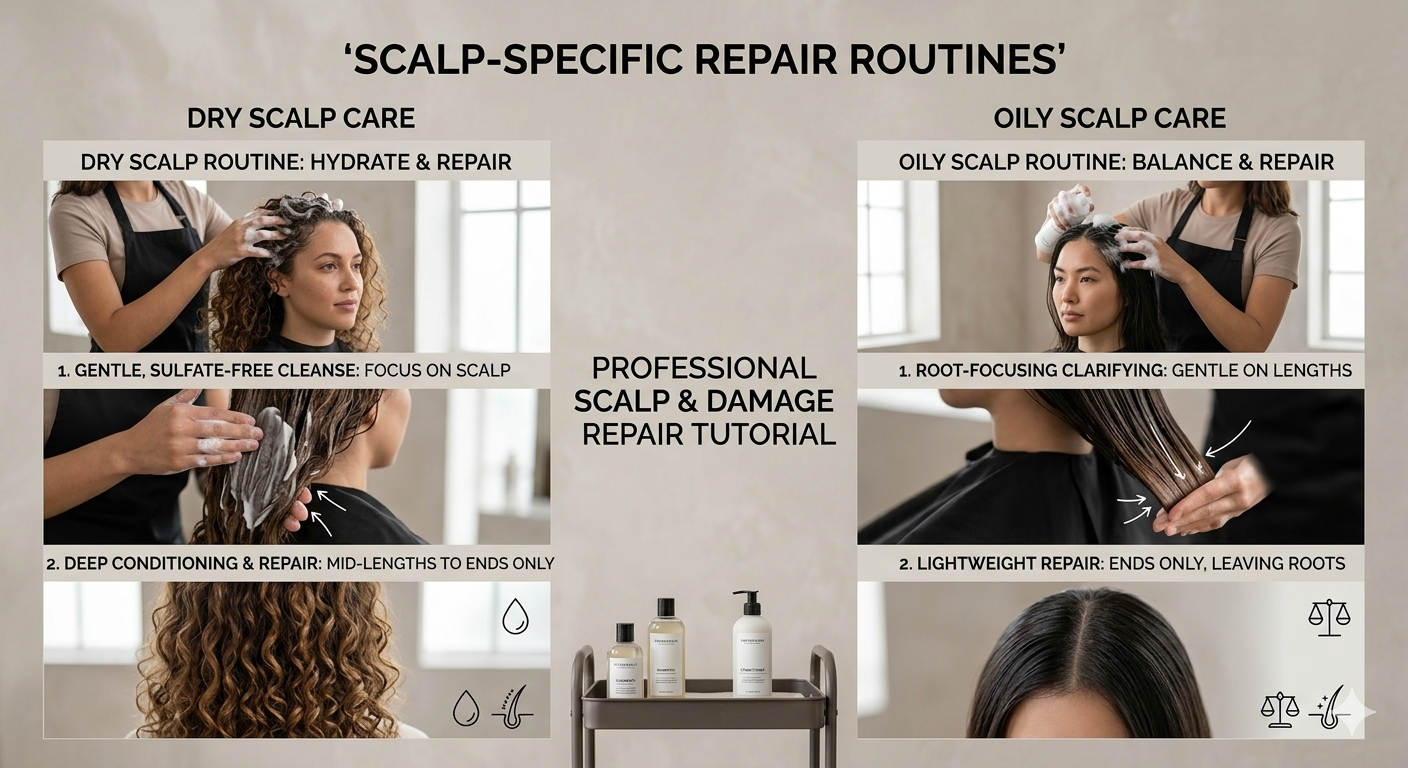
A structured scalp type haircare routine ensures proper maintenance for both oily and dry scalp types.
- Use tailored shampoos based on oil or dryness level.
- Apply conditioners or masks selectively—roots for oily scalp, mid-length to ends for dry scalp.
- Incorporate leave-in treatments to enhance scalp moisture or sebum control.
- Schedule regular scalp treatments or exfoliation for buildup removal.
Case Studies: Success in Evidence-Based Scalp Care
- Oily Scalp Program: Brands using sebum-regulating ingredients saw 25% reduction in scalp oil accumulation within 4 weeks.
- Dry Scalp Program: Incorporating ceramides and hyaluronic acid led to 35% improvement in scalp hydration and 20% reduction in flaking.
- Mixed Scalp Care: Combination formulations balanced moisture and oil production, resulting in overall improved hair appearance and reduced breakage.
FAQ: Dryness vs Oil Balance Haircare
1. How do I identify my scalp type?
Observe oil production, flaking, and sensitivity patterns. Oily scalp tends to feel greasy within a day or two, whereas dry scalp exhibits tightness, flakes, and irritation.
2. Can the same shampoo be used for oily and dry scalp?
No. Formulations should be tailored: oily scalp needs sebum control, while dry scalp requires moisturizing actives. Evidence supports targeted routines for best results.
3. Are natural oils suitable for both scalp types?
Oils can help dry scalp, but may worsen oily scalp. Incorporating actives like ceramides or peptides ensures proper repair without exacerbating sebum issues.
4. How often should B2B buyers recommend scalp-specific treatments?
Frequency depends on scalp type: oily scalp may benefit from 2-3 times/week cleansing and treatments, while dry scalp may require daily mild hydration and weekly deep conditioning.