
The Chemistry of Post-Chemical Hair Repair: A Formulator's Guide to OEM/ODM Bond Rebuilding
For beauty brands catering to consumers who regularly color, bleach, or perm their hair, "repair" is far more than a marketing claim—it is a genuine chemical necessity. The damage inflicted by salon chemical treatments is multi‑layered and cumulative. Without scientifically formulated intervention, compromised hair structure will inevitably continue to degrade over time.
For B2B brand owners, international sourcing managers, and product formulators, understanding the microscopic mechanisms of chemical damage and the three distinct repair pathways is the essential first step in developing a high‑margin, private label post‑chemical repair product line. As a leading hair care manufacturer, we break down the science behind premium structural restoration.
I. The Chemistry of Chemical Damage: What Actually Happens to Hair?
To engineer a successful custom formulation for chemically damaged hair, one must first understand "damage." Chemical treatments compromise hair structure at three distinct levels:
1. The Cuticle Layer: Collapse of the Primary Barrier
The cuticle is the outermost protective layer of hair, composed of keratin scales that overlap like roof tiles. During chemical processing, alkaline agents and oxidizers force the cuticle to swell and open—allowing dye molecules or perming agents to penetrate the cortex. However, this process simultaneously causes cuticle erosion, lifting, and micropore formation.
Research demonstrates that chemical treatments significantly cleave the disulfide bonds between cuticle scales, substantially weakening intercellular cohesion. Compromised cuticles can no longer effectively retain moisture or protein, resulting in porous, rough hair that is highly prone to breakage—a major pain point that premium hair care contract manufacturing must solve. When building a brand, missing these structural details is a common haircare product development mistake that can impact product efficacy.
2. The Cortex: Degradation of Keratin Structure
The cortex constitutes over 80% of hair's total mass and consists of helical keratin microfibrils that provide strength and elasticity. During chemical processing, reagents penetrate the cuticle to reach the cortex, causing:
- Degradation of the α‑helical keratin structure: ordered α‑helical conformations transition to disordered β‑sheet configurations, a phenomenon thoroughly documented in NCBI structural biology studies.
- Substantial protein loss: cortical keratin is hydrolyzed, creating voids and cavities within the fiber.
3. Disulfide Bonds: The "Molecular Rivets" of Hair Strength Are Severed
This represents the most critical and irreversible dimension of chemical damage. Disulfide bonds (-S-S-) are the chemical "bridges" crosslinking keratin polypeptide chains—they are the molecular determinants of hair's strength, elasticity, and shape memory.
Perming agents employ reductants (e.g., thioglycolates) to cleave disulfide bonds for reshaping; bleaching agents utilize oxidizers (e.g., hydrogen peroxide) to oxidize disulfide bonds into sulfonic acid groups. According to research published by the American Chemical Society (ACS), this cleavage drastically alters the fiber's mechanical load-bearing capacity. This is why disulfide bond rebuilding technology has become the highest-grossing segment in professional hair care.
---
II. Three Repair Pathways: Engineering the Perfect OEM/ODM Formulation
Based on the three levels of chemical damage, hair care private label manufacturers must utilize three corresponding pathways to achieve comprehensive restoration from the surface to the core.
Pathway One: Surface Occlusion – Instant Smoothness and Protection
Target: Cuticle layer
Mechanism: Forms a protective film, seals cuticle gaps, reduces frictional damage and moisture loss.
Key Ingredients for Hair Care Manufacturing:
| Ingredient Category | Representative Actives | Functional Profile & Customization Benefit |
|---|---|---|
| Cationic Surfactants | Behentrimonium Chloride, BTMS | Positively charged, electrostatically adsorb to negatively charged damaged hair surfaces, neutralize static charge, smooth cuticle scales. Highly substantive for salon-grade formulations. |
| Silicones & Derivatives | Dimethicone, Amodimethicone | Form hydrophobic protective films, enhance gloss, reduce combing friction. (Water-soluble options available for clean beauty brands). |
| Botanical Oils | Argan Oil, Jojoba Oil, Rosemary Oil | Replenish intercellular lipids, seal cuticle gaps, and support trending natural claims. For targeted scalp health alongside strand repair, incorporating natural antimicrobials like those found in our Tea Tree Scalp Care Set can provide a comprehensive treatment experience. |
Pathway Two: Penetrative Repair – Replenishing Lost "Building Materials"
Target: Cortex
Mechanism: Low‑molecular‑weight actives penetrate into the cortex, replenishing depleted keratin and amino acid reserves.
| Ingredient Category | Representative Actives | Functional Profile & OEM Scaling |
|---|---|---|
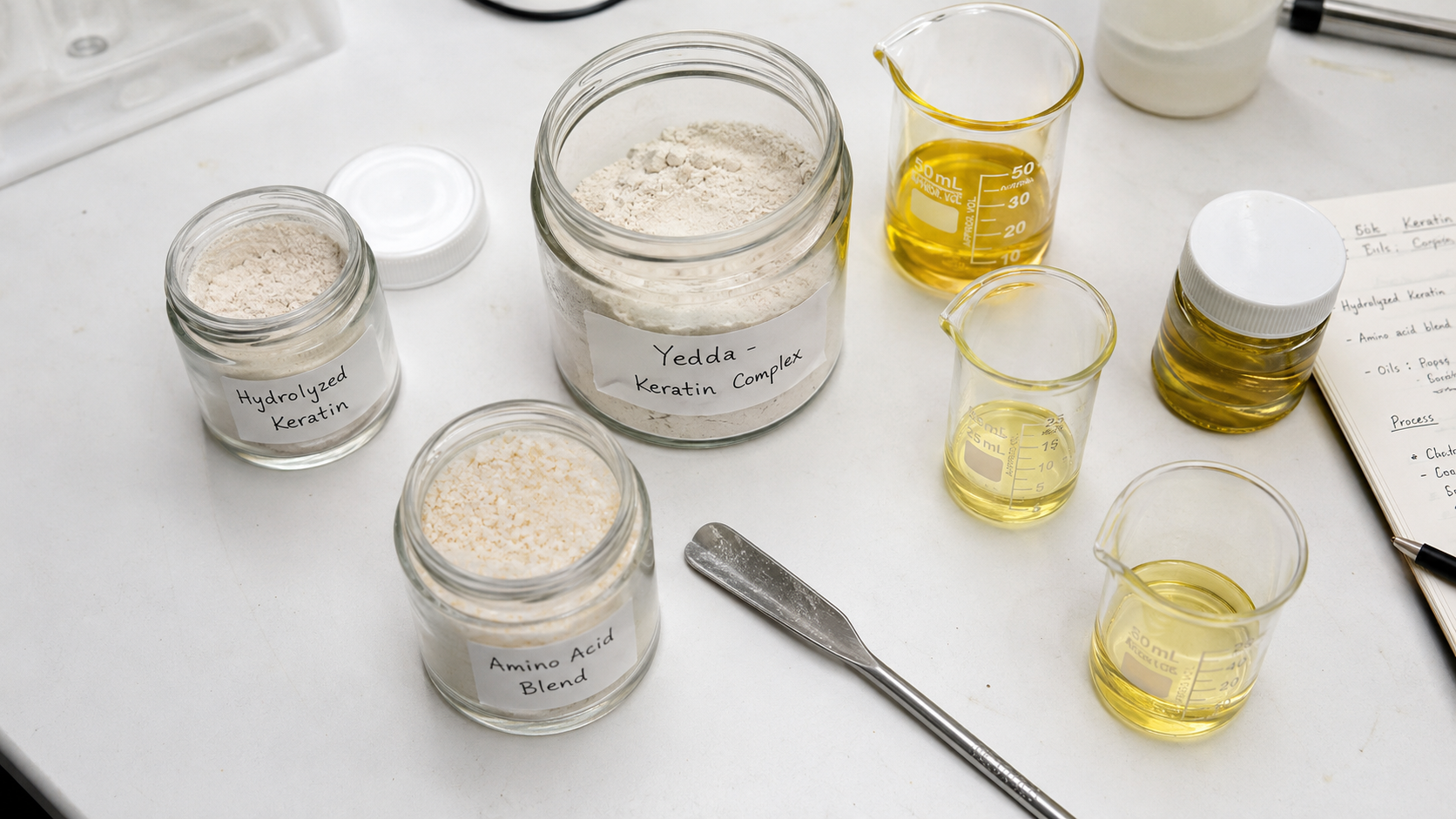
| Hydrolyzed Proteins | Hydrolyzed Keratin, Hydrolyzed Wheat Protein | Low‑MW peptides penetrate the fiber; amino acid profile closely matches native hair keratin. Essential for damaged hair repair formulations. |
| Amino Acids | Serine, Arginine, Cysteine | Directly supply the monomeric building blocks of keratin. While adult repair focus centers on high substantive deposition, mildness remains key for younger demographics, as detailed in our guide on low-irritation kids shampoo science. |
| Ceramides | Phytoceramides, Biomimetic Ceramides | Restore the lipid barrier within the cortex to improve long-term elasticity. |
Pathway Three: Bond Rebuilding – "Chemical Surgery" for Disulfide Restoration
Target: Disulfide bonds (molecular crosslinks within the cortex)
Mechanism: Specialty reactive agents penetrate the cortex and reform covalent crosslinks at sites of disulfide cleavage. This is the ultimate benchmark for a premium bond repair hair products manufacturer.
| Ingredient Category | Representative Actives | Functional Profile & Market Advantage |
|---|---|---|
| Maleic Acid Technology | Maleic Acid | Penetrates deep into the fiber and facilitates reformation of cleaved disulfide bonds. A proven crowd-pleaser for Amazon and independent Shopify brands. |
| α,β‑Unsaturated Michael Acceptors | Shikimic Acid, Bisaminopropyl Diglycol Dimaleate | React with free thiol groups on keratin to reform disulfide crosslinks. Ideal for premium positioning. |
| Bio‑inspired Peptides | Sequence-specific peptides | Reform disulfide bonds in situ at thiol sites without compromising tensile performance. Excellent for Clean Beauty bond repair claims. |
---
III. Turnkey Product Line Architecture for Post‑Chemical Repair Brands
For B2B buyers looking to launch a comprehensive post‑chemical repair line, our factory offers turnkey OEM/ODM customization services across three essential SKU categories:
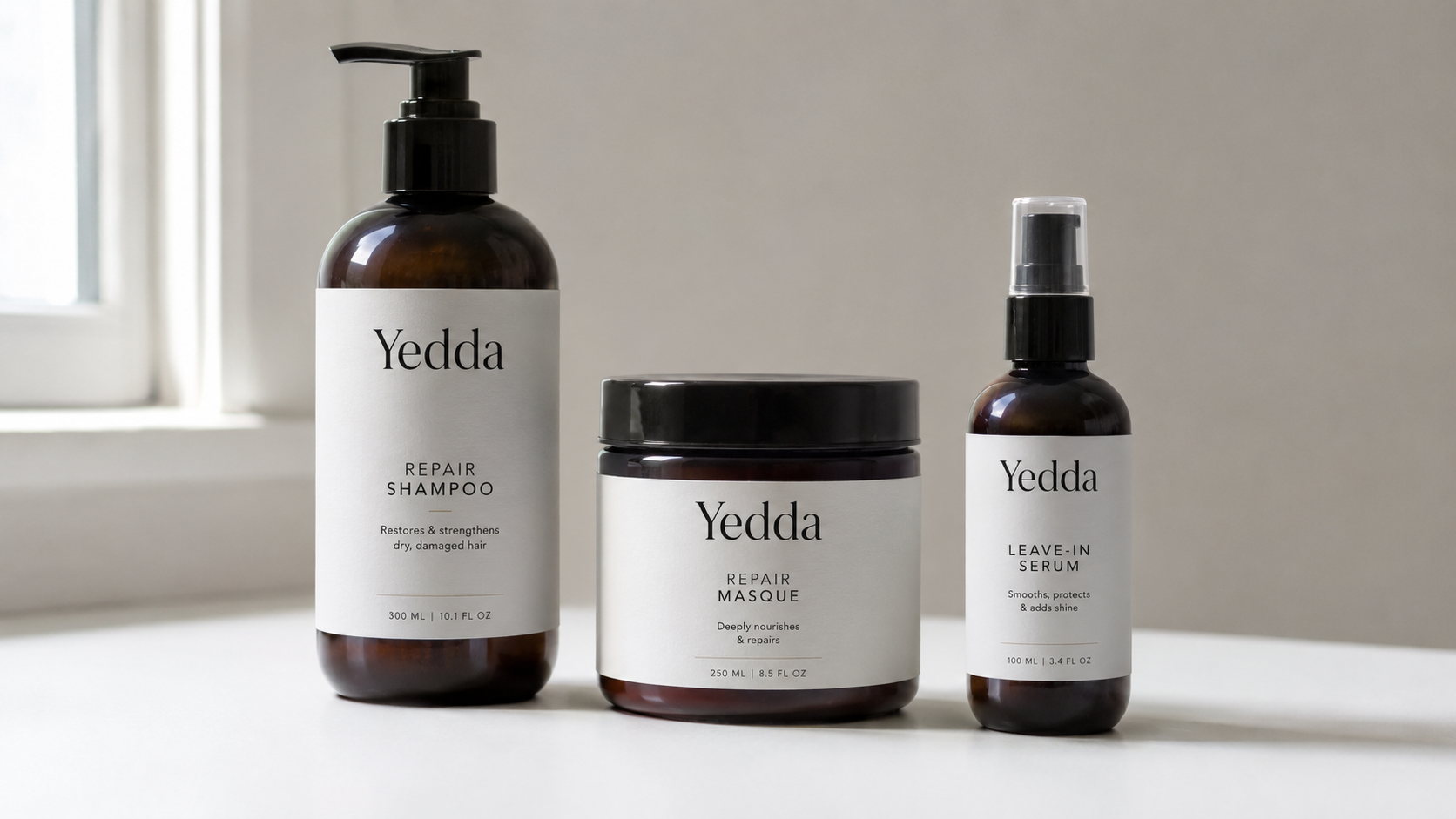
1. Repair‑Focused Shampoo (Cleansing Phase)
- Mild Surfactant Systems: Sulfate-free formulas to prevent stripping compromised hair. Formulators target high performance by using advanced ternary surfactant systems for salons to achieve rich foam without irritation.
- Low Detergency: Protects the hair's remaining natural lipid barrier.
- Cationic Deposition: Built-in conditioning actives that preferentially target highly damaged, high-anionic regions.
2. Repair Masque / Intensive Conditioner (Treatment Phase)
- High-Concentration Actives: Robust antistatic properties and deep substantive smoothness.
- Cortical Replenishment: Rich in hydrolyzed protein + amino acid complexes. Our ready-to-customize Organic Argan Oil & Biotin Cream Treatment balances deep moisturization with intensive structural repair.
- Advanced Options: Optional infusion of maleic acid for premium hair bond repair private label collections.
3. Leave‑in Repair Serum / Hair Oil (Maintenance Phase)
- Lightweight Botanical Bases: Jojoba, argan, or trending rosemary oils provide daily protection without weigh‑down.
- Thermal Protection: Shields against heat damage from blow‑drying and styling tools.
---
IV. B2B Selection Guide: How to Test Hair Bond Repair Efficacy
Before partnering with a hair care factory, rigorous efficacy validation is essential to ensure regulatory compliance and consumer satisfaction in strict markets like the EU, UK, Australia, and Southeast Asia. We support your brand with comprehensive laboratory testing:
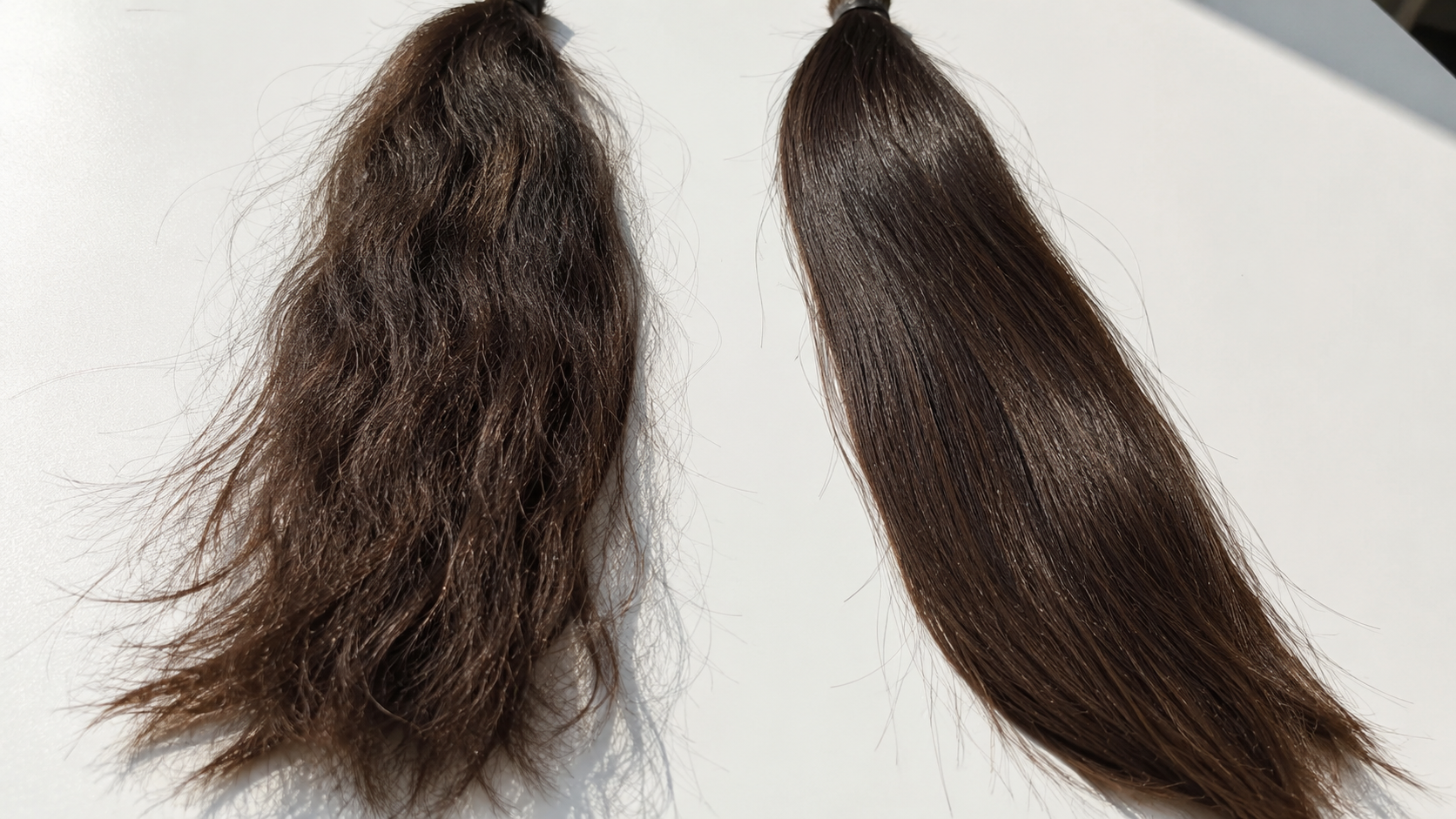
- Hair Tensile Strength Testing: Single fibers are subjected to uniaxial extension on a tensile tester until breakage. Our effective repair formulations yield a statistically significant increase in the mechanical integrity of damaged fibers.
- Combing Force Measurement: Instrumental wet‑ and dry‑combing resistance tests guarantee reduced inter‑fiber friction and smoother cuticle surfaces.
- Gloss & Luster Measurement: Quantifying specular reflection geometry to prove visible shine improvements.
- Microscopic Imaging (SEM): Scanning Electron Microscopy directly documents the physical transformation of the hair cuticle from lifted, eroded scales to smooth, contiguous surfaces.
---
V. Partner with Yedda: Your Premier Hair Care Private Label Manufacturer
Post‑chemical repair formulation represents a fundamental technological progression from surface‑level masking to molecular‑level restoration. Launching products that genuinely deliver on these claims is what establishes long-term brand equity.
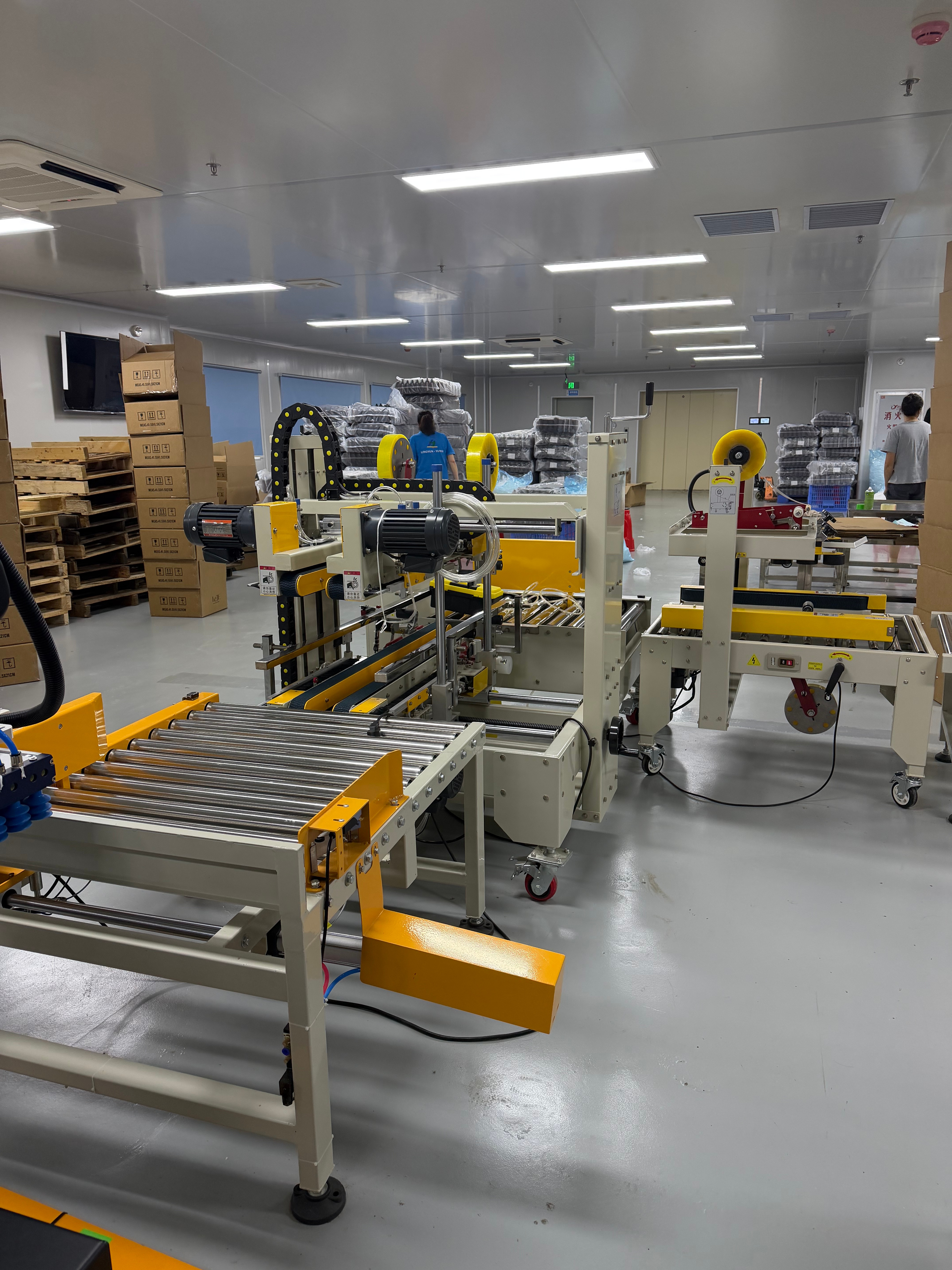
Yedda Hair Care operates a state-of-the-art 20,000㎡ Guangzhou factory with 13 years of roots in the industry. We maintain an extensive formulation library and custom development expertise across the post‑chemical repair category, specializing in full-scale OEM/ODM/OBM services. All our formulations are engineered to meet global compliance standards, making them perfect for brands looking to export worldwide.
📩 Ready to elevate your product line? Contact our B2B team today to request:
1. Free benchmark samples of our Maleic Acid Bond-Repair Masque.
2. Full Efficacy & Lab Testing Reports (Tensile Strength & SEM Data).
3. Custom formulation and packaging MOQs tailored for your target market.