
The Evolution of Botanical Actives: Driving Demand for Private Label Batana Oil Shampoo
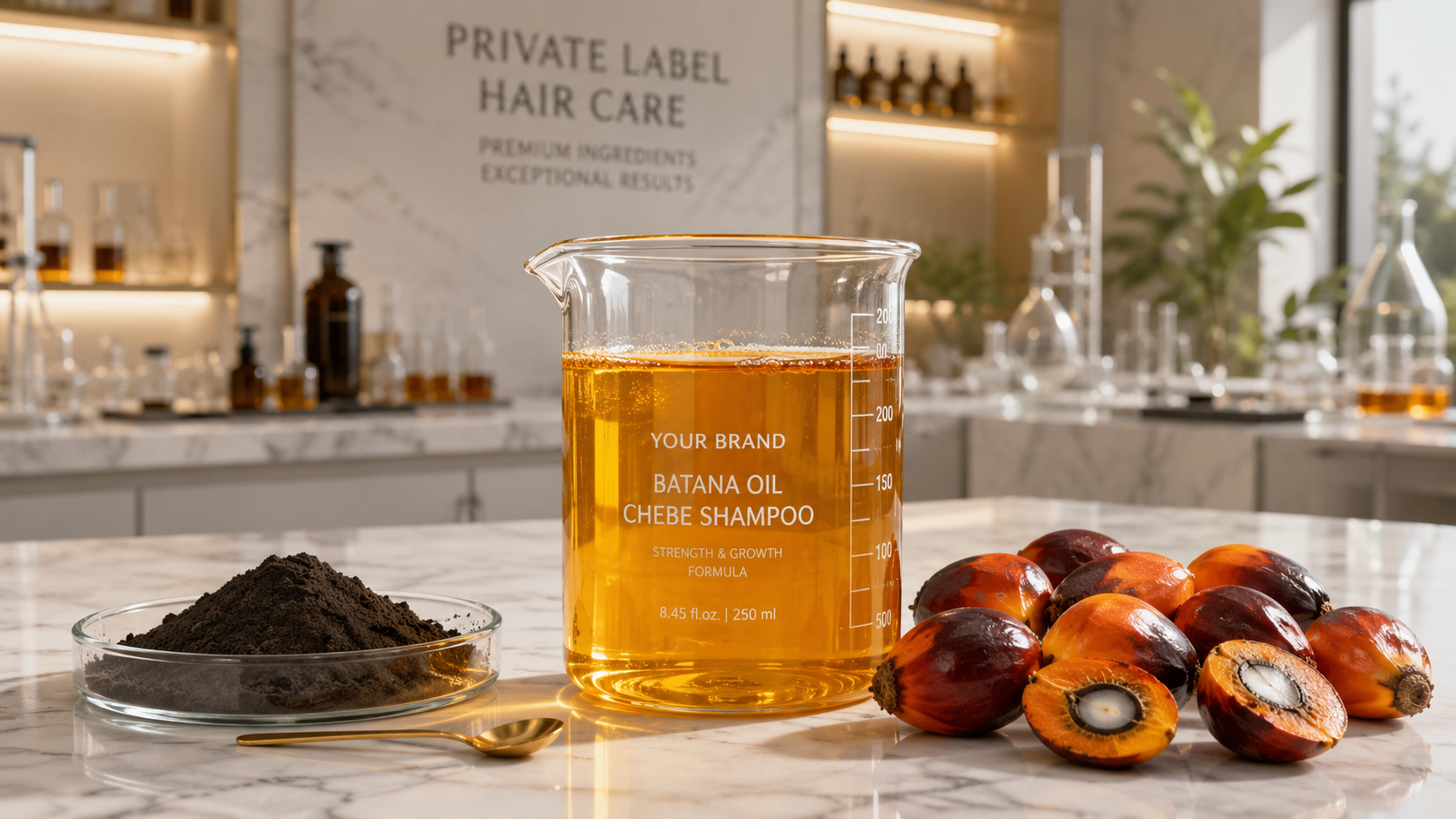
The global hair care market is undergoing a structural paradigm shift. Discerning consumers are moving away from purely synthetic formulations, demanding functional, heritage-rich ingredients that deliver verifiable results. Among these, Batana oil—extracted from the nuts of the Elaeis oleifera palm—has emerged as a powerhouse ingredient due to its exceptionally high concentration of oleic acid, linoleic acid, and tocotrienols. Concurrently, Chebe powder, a traditional Chadian blend of organic shébé seeds, mahllaba, and resins, has gained international acclaim for its unparalleled ability to retain moisture, prevent mechanical breakage, and fortify the hair shaft.
For independent brands and procurement managers looking to capitalize on this movement, bringing a Chebe Powder Hair Growth Formulation to market requires partnering with an advanced Cosmetic OEM/ODM Factory in China capable of navigating complex chemical systems. The modern consumer does not merely look for these ingredients as marketing tokens at the bottom of the International Nomenclature of Cosmetic Ingredients (INCI) list; they expect high-concentration, functional formulations that comply with stringent global Clean Beauty standards. This necessitates an shift from traditional surfactant bases to sophisticated, mild, and non-sulfated surfactant matrices.
According to comprehensive cosmetic safety reviews published by the Cosmetic Ingredient Review (CIR), the demand for non-irritating, biocompatible topicals has rewritten the rules of modern product formulation. For a brand owner, understanding the backend manufacturing hurdles is crucial for minimizing product development cycles and preventing costly post-launch batch failures, such as phase separation, discoloration, or rapid microbial contamination.
The Interfacial Tension Dilemma: Sulfate-Free Hair Care Manufacturing Realities
Traditional shampoos rely heavily on alkyl sulfates, such as Sodium Lauryl Sulfate (SLS) and Sodium Laureth Sulfate (SLES). These anionic surfactants are highly efficient, inexpensive, and resilient to the presence of lipids; they possess low interfacial tension, allowing them to rapidly emulsify sebum and added oils while producing a dense, stable flash foam. However, these harsh sulfates are well-documented to strip the hair cuticle of natural lipids and cause significant scalp irritation, making them entirely incompatible with modern premium salon positioning.
In a true Sulfate-Free Hair Care Manufacturing environment, formulators must construct an alternative surfactant matrix using a blend of mild surfactants. This typically includes:
- Isothionates: Such as Sodium Cocoyl Isethionate (SCI), which provides exceptional, creamy lathering properties but exhibits limited water solubility at lower temperatures.
- Glucosides: Such as Lauryl Glucoside and Decyl Glucoside, which offer excellent environmental biodegradability and mildness but can compromise the sensory profile by leaving a squeaky, rough texture on the hair shaft if not balanced correctly.
- Betaines and Amphoacetates: Such as Cocamidopropyl Betaine and Sodium Cocoamphoacetate, which serve as secondary co-surfactants to boost viscosity, stabilize foam structures, and mitigate the irritation potential of the primary surfactants.
The core dilemma arises when high concentrations of raw, unrefined Batana oil are introduced into this delicate, sulfate-free matrix. Hydrophobic lipids natively suppress the micellar structure of mild surfactants. The triglyceride molecules of the oil insert themselves into the surfactant micelles, disrupting their spherical orientation and driving a transition toward planar bilayers or macro-emulsions. This results in two major formulation failures: immediate foam suppression and drastic viscosity drops. Without precise stabilization, a premium shampoo quickly degrades into a thin, watery liquid incapable of generating a satisfying lather for the end consumer.
Overcoming Phase Separation: Advanced Emulsification Protocols for Formulating with Batana Oil
To successfully integrate Batana oil into a sulfate-free matrix without experiencing thermodynamic instability or phase separation, manufacturing plants must employ advanced emulsification strategies. Thermodynamic stability in an emulsion system is governed by the total Gibbs free energy of the system. To keep the droplets dispersed uniformly over a two-year shelf life, the interfacial tension between the hydrophobic Batana oil phase and the hydrophilic aqueous surfactant continuous phase must be driven as close to zero as possible.
This is achieved through the implementation of a dual-action stabilization approach combining steric hindrance and electrostatic repulsion. Our R&D laboratory utilizes optimized Hydrophilic-Lipophilic Balance (HLB) matching. Batana oil, consisting heavily of unsaturated fatty acids, possesses a required HLB value of approximately 7 to 8 for Water-in-Oil (W/O) systems and 11 to 12 for Oil-in-Water (O/W) shampoo systems. By blending a low-HLB surfactant (such as Glyceryl Stearate) with a high-HLB non-ionic surfactant (such as Polysorbate 20 or a natural PEG-free alternative like Polyglyceryl-4 Laurate), we construct a dense interfacial film around each individual Batana oil droplet.
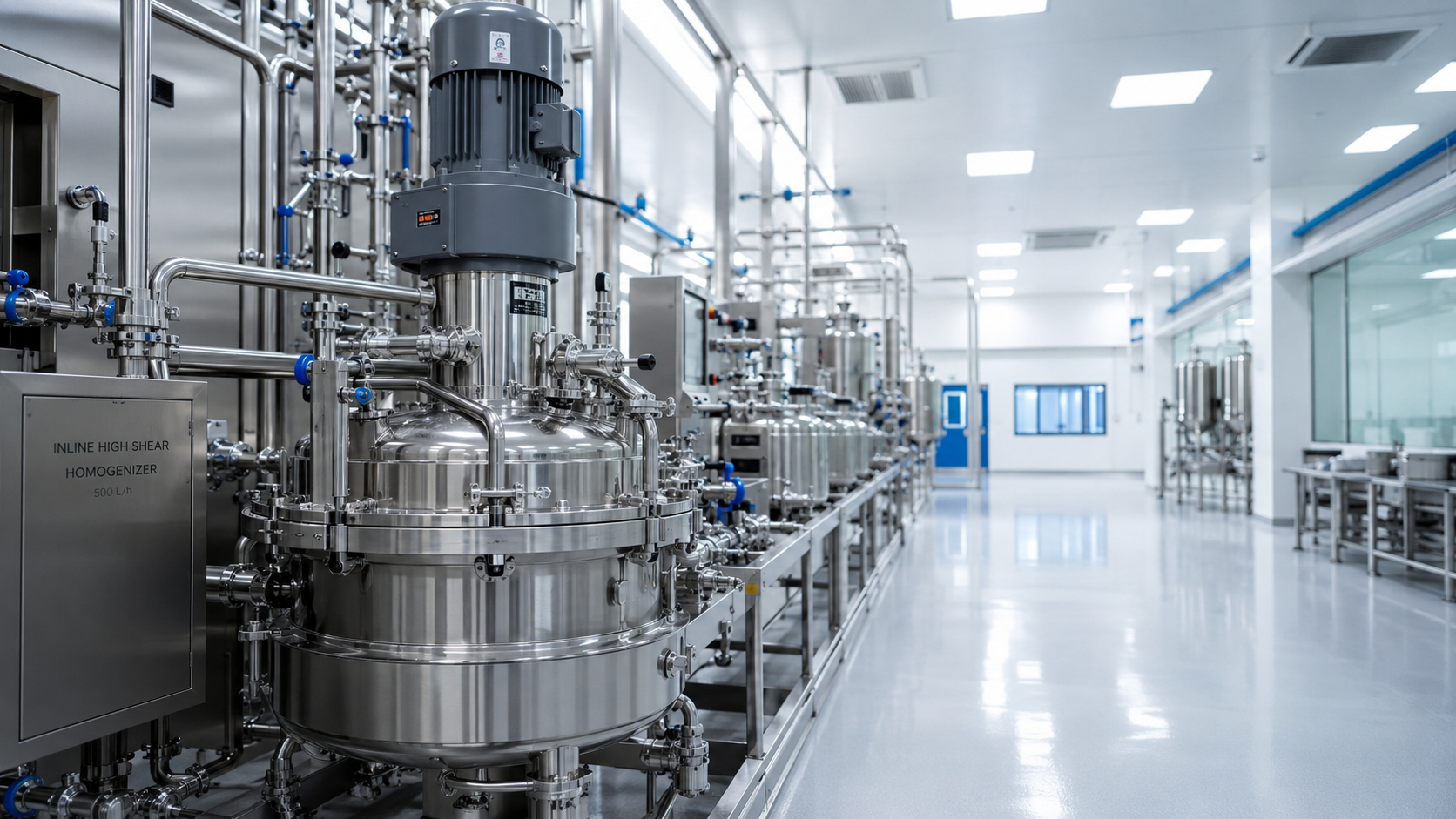
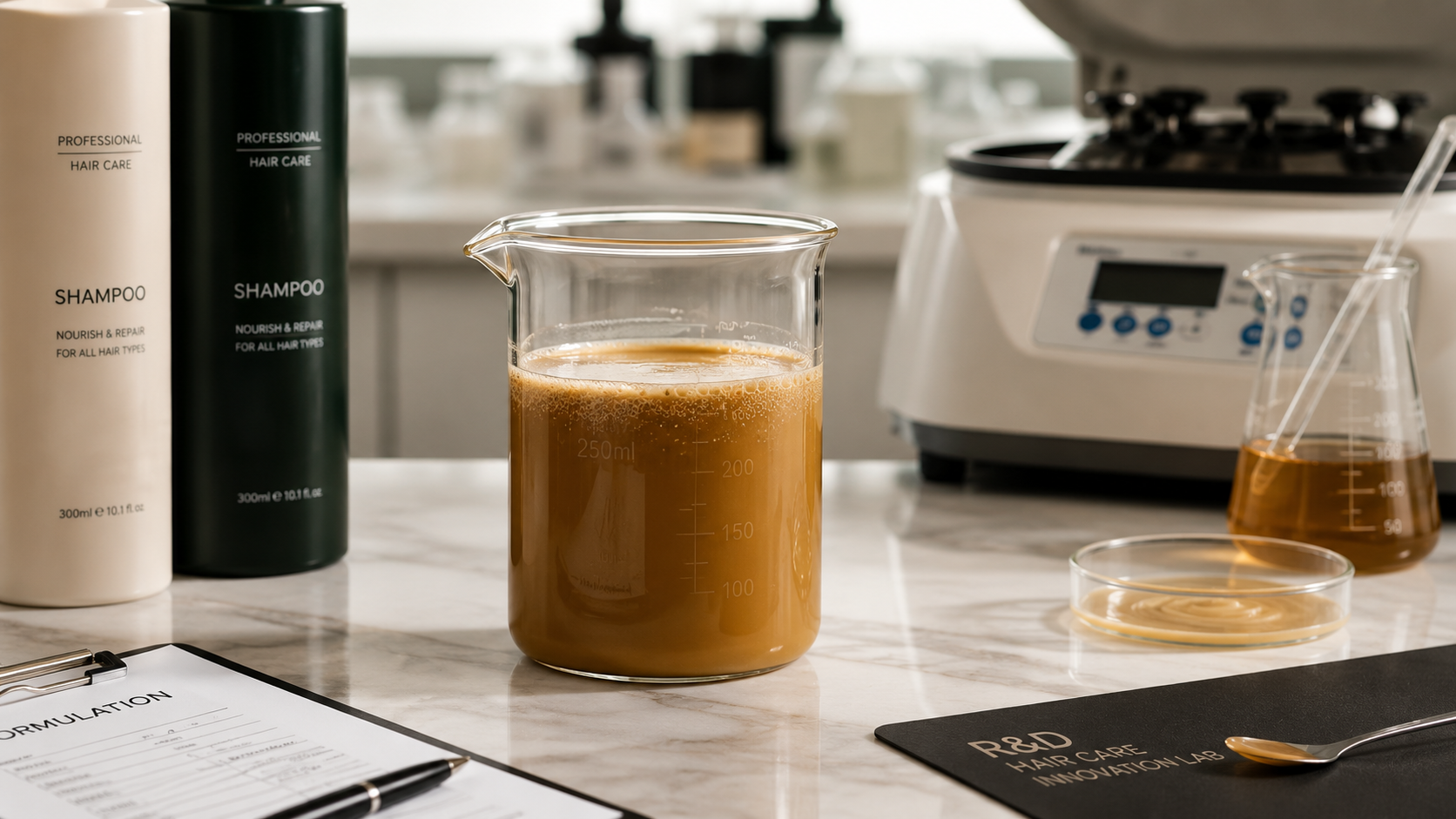
Furthermore, the physical processing of the batch plays a definitive role in long-term stability. Simple overhead paddle mixers are fundamentally incapable of achieving the particle size reduction necessary for long-term suspension. At our 30,000-square-meter GMP-standard production facility, the oil phase is injected into the aqueous phase under high-shear inline homogenization. Operating at shear rates ranging from 3,000 to 5,000 RPM, the mechanical energy breaks down the macro-droplets of Batana oil into sub-micron or nano-scale droplets. This drastically reduces the rate of creaming or sedimentation as described by Stokes' Law, where the velocity of separation is directly proportional to the square of the droplet radius.
Rheological Control and Particle Suspension in Clean Beauty Hair Care Contract Manufacturing
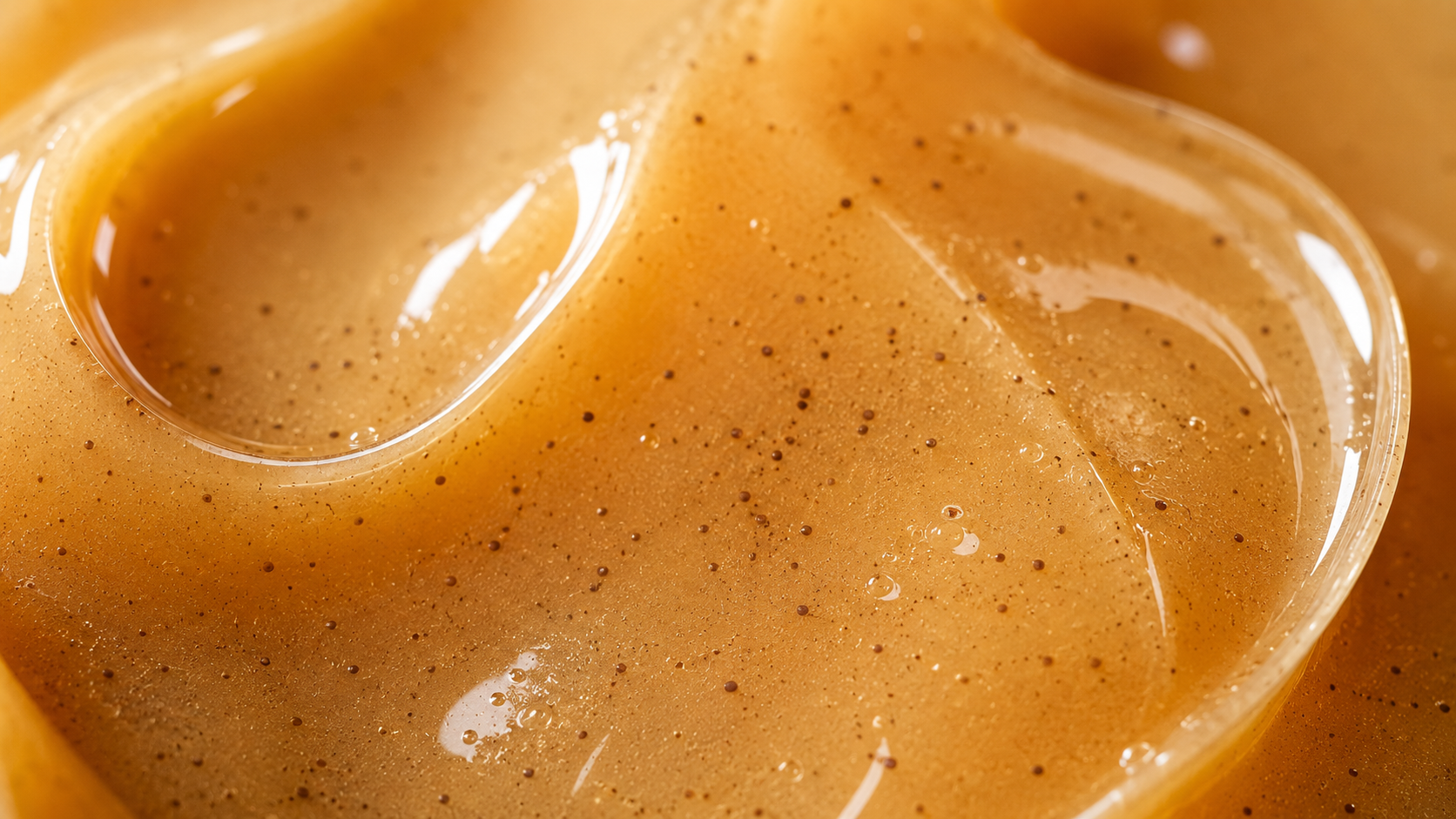
While dissolving and emulsifying a liquid oil presents one set of hurdles, introducing a raw, insoluble botanical particulate like Chebe powder introduces an entirely different layer of manufacturing complexity. Chebe powder does not dissolve in water or oil; it exists as a solid particulate phase that must be uniformly suspended throughout the high-viscosity liquid matrix of the shampoo. If the rheological profile of the shampoo is incorrect, gravity will inevitably cause the Chebe particles to sediment to the bottom of the bottle, creating an unattractive, unmarketable sludge and leaving the top layer of the product devoid of its active ingredients.
To construct a successful Chebe Powder Hair Growth Formulation, the fluid must exhibit non-Newtonian, thixotropic, or pseudoplastic behavior with a highly defined yield value. Yield value is the minimum force or stress that must be applied to a fluid to make it flow. If the gravitational force exerted by a suspended Chebe particle is lower than the yield value of the shampoo matrix, the particle will remain permanently suspended in place.
We achieve this precise rheological control through a multi-tiered polymer network:
- Natural Cross-Linked Polysaccharides: Xanthan Gum combined with Veegum (Magnesium Aluminum Silicate) creates a synergistic network that provides high yield stress at rest without causing the final product to feel slimy or stringy during application.
- Modified Cationic Polymers: Guar Hydroxypropyltrimonium Chloride serves a dual purpose. It builds the viscosity of the surfactant system via micellar entanglement while simultaneously depositing onto the negatively charged keratin proteins of the hair shaft during rinsing, providing essential anti-frizz and conditioning benefits.
- Hydrophobically Modified Alkali-Soluble Emulsions (HASE): For brands targeting high-end salon performance, synthetic or naturally derived acrylate copolymers are integrated to provide crystal-clear optical clarity while maintaining an extraordinary capacity to suspend heavy particulates.
Independent research available via the National Center for Biotechnology Information (NCBI) highlights the critical nature of rheological stability in cosmetic suspension systems, noting that failure to establish a proper polymeric matrix inevitably leads to irreversible particle aggregation and syneresis over accelerated aging testing timelines.
Upscaling to Industrial Mass Production: Thermal Dynamics and Quality Control
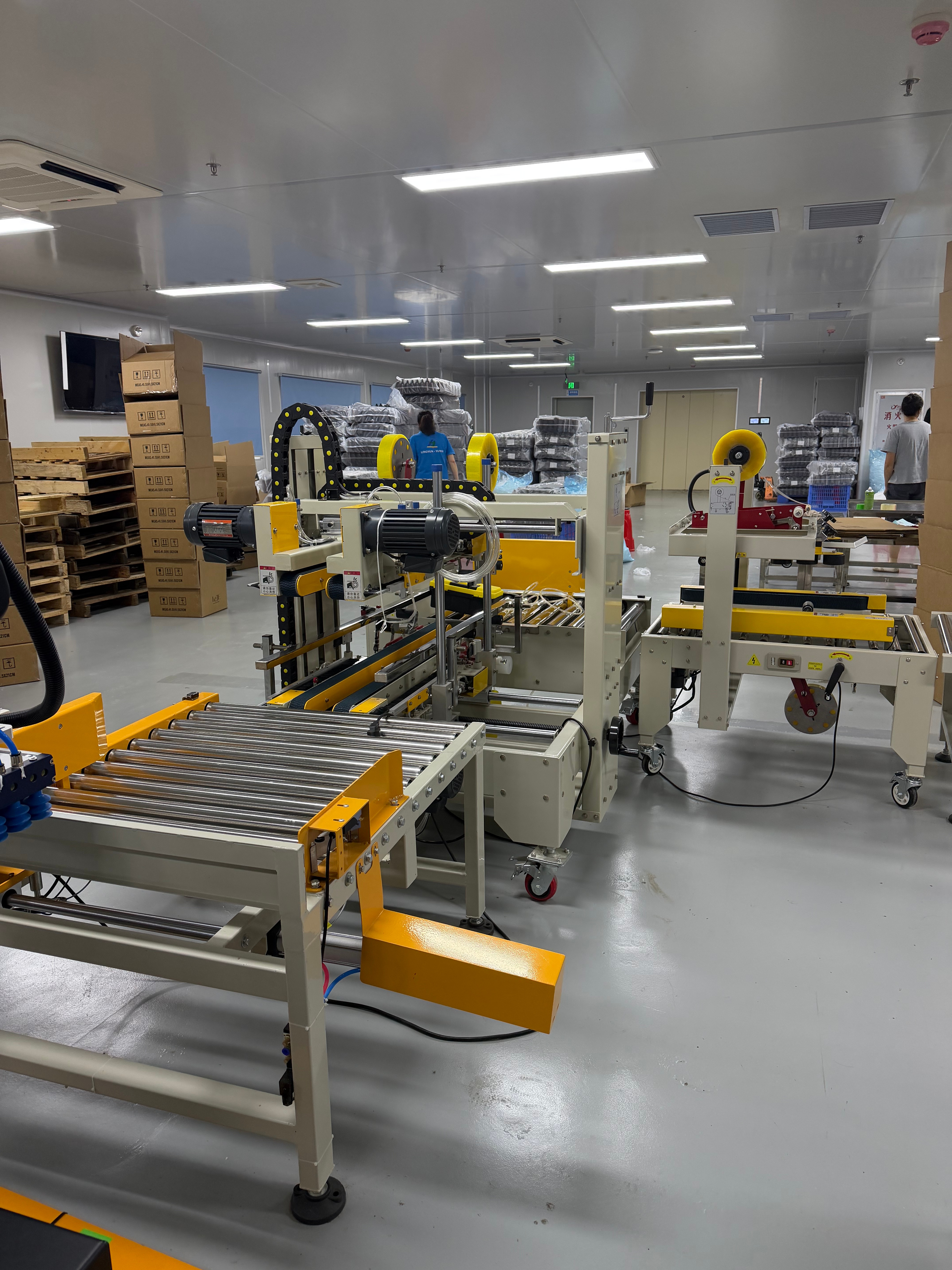
Formulating a perfect 200-milliliter sample beaker in an R&D laboratory is a starkly different reality from manufacturing a 5-ton commercial batch inside an automated industrial mixing vessel. As batch sizes scale up, the surface-area-to-volume ratio decreases exponentially, fundamentally altering the thermal dynamics, mass transfer, and fluid mechanics of the formulation process. Managing these changes is what separates an amateur factory from a premier Cosmetic OEM/ODM Factory in China operating with a 1,000-ton monthly capacity.
One of the primary considerations during mass production scaling is the thermal sensitivity of Batana oil's active constituents. Exposure to prolonged high temperatures (above 75 degrees Celsius) inside massive stainless-steel compounding tanks can induce rapid oxidation of the sensitive unsaturated fatty acids and destroy the delicate tocotrienols (Vitamin E isomers) that give Batana oil its potent scalp-nourishing properties. To circumvent this, our manufacturing workflow utilizes a precise cold-phasing or post-addition technique.
The primary surfactant base and rheology modifiers are heated and hydrated in the main jacketed vessel to ensure complete dissolution and polymer uncoiling. Once the base matrix is uniform, the system is subjected to a controlled cooling cycle utilizing automated cooling jackets. Only when the core temperature of the batch drops below 45 degrees Celsius is the raw Batana oil and micronized Chebe powder slurry introduced via a secondary closed-loop homogenization line. This completely prevents thermal degradation, preserves the structural integrity of the botanical actives, and ensures that the final product delivered to the consumer matches the precise biochemical footprint of the original lab-validated sample.
Clean Beauty Preservation and International Regulatory Audits
A high-performance formulation is worthless if it cannot pass international regulatory compliance audits or if it fails microbial challenge testing within weeks of arriving at a global distribution center. Standard mass-market hair care relies heavily on aggressive, broad-spectrum preservatives such as parabens, formaldehyde-releasers (e.g., DMDM Hydantoin), and methylisothiazolinone (MIT). These compounds are strictly prohibited under modern Clean Beauty guidelines, retail blacklists, and evolving governmental frameworks such as the Modernization of Cosmetics Regulation Act (MoCRA) in the United States and the European Union’s Cosmetic Products Notification Portal (CPNP).
The presence of water, rich plant lipids from Batana oil, and nitrogenous organic material from Chebe powder creates an absolute breeding ground for opportunistic pathogens, including Pseudomonas aeruginosa, Staphylococcus aureus, Aspergillus brasiliensis, and Candida albicans. In a sulfate-free system, building an unyielding hurdle-technology preservation matrix is paramount.
Our approach avoids traditional harsh preservatives entirely, opting instead for a synergistic blend of multi-functional organic acids and caprylyl glycol derivatives:
Hurdle Technology Matrix: Our standard clean preservation system utilizes a combination of Sodium Levulinate, Sodium Anisate, Glyceryl Caprylate, and Phenethyl Alcohol. By carefully adjusting the final pH of the shampoo formulation to a bio-compatible, slightly acidic range of 4.8 to 5.3, we optimize the concentration of undissociated organic acids. These undissociated molecules smoothly penetrate the cell membranes of microorganisms, disrupting their internal pH and metabolic pathways, thereby ensuring absolute microbial stability while remaining exceptionally gentle on the human scalp ecosystem.
Every single batch produced undergoes a mandatory, rigorous 28-day microbial challenge test matching the standards outlined by the U.S. Food and Drug Administration (FDA) and ISO 11930 protocols. This uncompromised commitment to technical compliance guarantees that your private label brand can smoothly clear customs and safely enter major retail spaces worldwide without legal or financial liabilities.
Comparative Technical Matrix: Laboratory Bench vs. Industrial Mass Production
To visualize the critical operational adjustments required when transitioning a high-end Batana oil and Chebe shampoo from development into massive commercial production, review the verified engineering parameters in the tracking matrix below:
| Operational Parameter | Laboratory R&D Bench Scale (1 kg) | Industrial Mass Production Scale (1,000+ kg) | Impact on Product Quality & Stability |
|---|---|---|---|
| Mixing Equipment | Standard overhead propeller blade mixer (200 - 800 RPM) | Multi-stage anchor scraper paired with High-Shear Inline Homogenizer (3,000 - 5,000 RPM) | Controls the droplet size distribution of Batana oil; critical for preventing macro-emulsion separation and creaming. |
| Thermal Management | Direct hotplate heating; rapid cooling via ambient room transfer | Automated PLC-controlled jacketed steam heating and chilled-water rapid cooling loops | Prevents thermal oxidation of active lipids, preserving vital tocotrienols and oleic acids from heat degradation. |
| Polymer Hydration | Manual sifting over prolonged periods with localized vortexing | High-vacuum powder induction systems for instantaneous, lump-free polymer hydration | Ensures full hydration of rheology modifiers to establish the exact yield value required for Chebe powder suspension. |
| Deaeration Process | Passive settling over 12 - 24 hours in open glass beakers | Continuous inline vacuum deaeration during the primary emulsification phase | Eliminates micro-air bubbles that cause internal oxidation, premature rancidity, and unexpected density shifts in bottles. |
Frequently Asked Questions (FAQ)
Q1: What is the minimum order quantity (MOQ) for a custom Private Label Batana Oil Shampoo, and can the formula be tailored to our specific brand requirements?
A1: Our standard MOQ for custom shampoo manufacturing typically starts at 3,000 to 5,000 units per SKU, depending on the complexity of the packaging and the specific active ingredients chosen. Our in-house R&D team can completely customize the formulation—allowing you to adjust the concentration of Batana oil, integrate custom scent profiles, incorporate specific honey extracts, or adapt the base to meet unique regional compliance standards.
Q2: How do you guarantee that the Chebe powder inside the shampoo will not settle to the bottom of the bottle over time?
A2: Long-term suspension is guaranteed through our advanced rheological engineering. We do not simply thicken the liquid; we introduce specific cross-linked polymeric networks that establish a high yield stress value. This cross-linked matrix exerts a continuous upward structural force that completely counteracts the gravitational pull on the micronized Chebe particles, keeping them perfectly suspended and uniformly distributed throughout a multi-year shelf life.
Q3: Does your factory provide full documentation and certifications required for exporting to the US and European markets?
A3: Yes. As an export-oriented manufacturer, we provide complete technical documentation dossiers to ensure smooth global market entry. Our documentation package includes comprehensive Safety Data Sheets (SDS) compliant with GHS standards, Certificates of Analysis (COA) for every production batch, detailed Ingredient Declaration lists (INCI), and full microbiological testing reports. We strictly operate under ISO 22716 and GMPC quality management frameworks to facilitate hassle-free registration in both US MoCRA and EU CPNP portals.
Q4: How does your sulfate-free base manage to produce a rich lather despite containing heavy botanical oils like Batana?
A4: We overcome the foam-suppressing properties of lipids by engineering a multi-tenside synergistic matrix. By combining high-purity Sodium Cocoyl Isethionate with secondary amphoteric co-surfactants and natural non-ionic glucosides, we create structurally resilient micelles. This specific blend maintains high interfacial elasticity, enabling the generation of a luxurious, dense, and stable flash foam that meets professional salon expectations without stripping or irritating the scalp.