
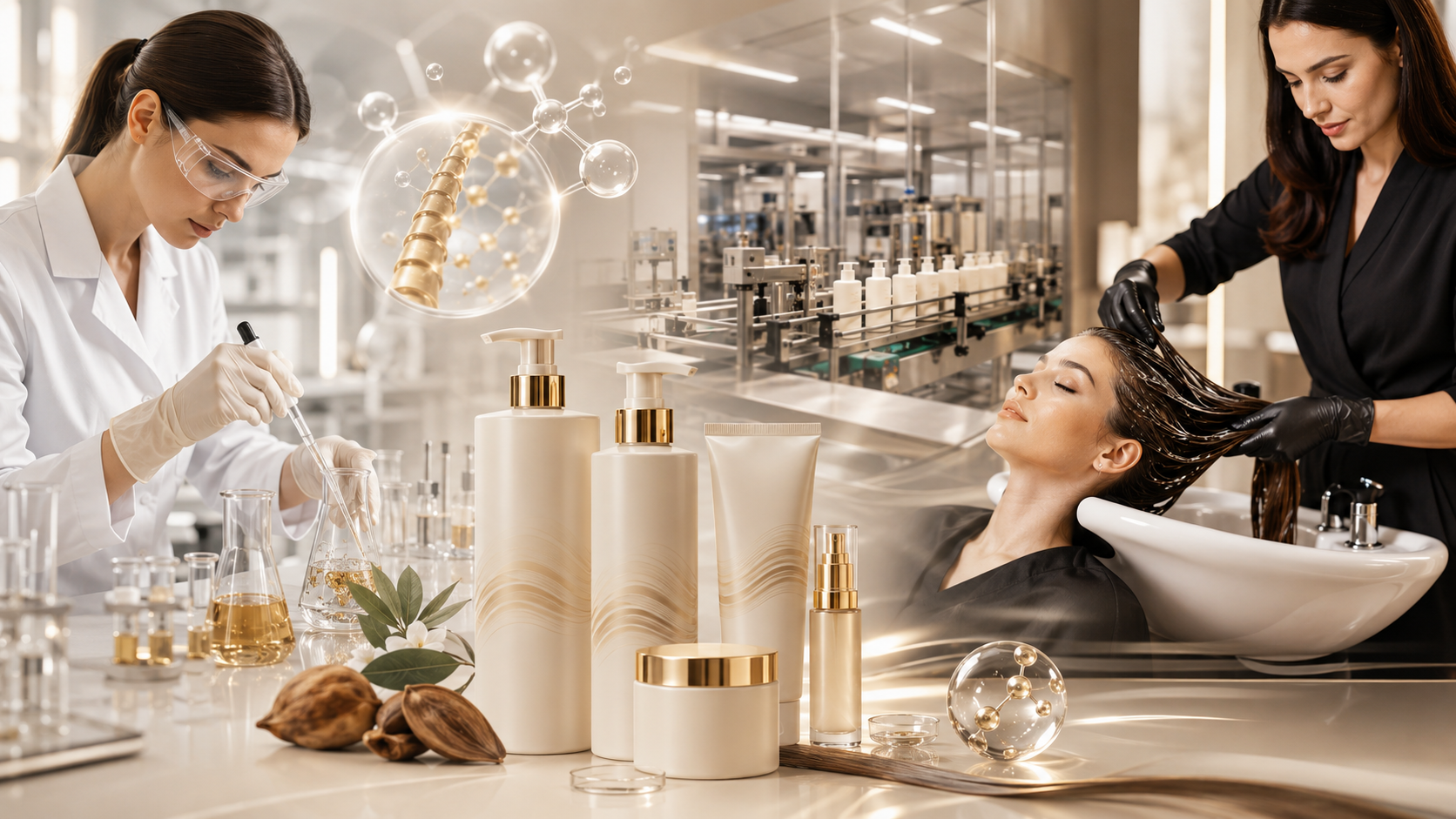
The development of a professional hair care system usually begins with a defined salon problem. The problem may be color damage, heat styling fatigue, frizz, loss of shine, scalp oil imbalance, chemical service aftercare, or breakage caused by bleaching and straightening. A brand may start with one hero product, but professional users often expect a complete routine: cleansing, treatment, conditioning, leave-in protection, and maintenance. This is why salon-grade development is system-oriented. A salon quality shampoo is not judged alone; it is judged by how it prepares the hair fiber for the mask, how the mask supports the leave-in, and how the entire experience helps stylists deliver repeatable outcomes.
For manufacturers and brand owners, the opportunity is significant. According to McKinsey’s global beauty market report, the global beauty market, including haircare, generated about USD 430 billion in 2022 and was expected to reach about USD 580 billion by 2027. This growth shows why professional hair care products remain an important category for salons, distributors, and private label brands.
At the same time, competition is becoming more sophisticated. Salons and distributors are no longer only asking whether a product smells good or feels rich. They are asking whether the product has a defensible formula story, whether the hair treatment manufacturer can support claims with tests, whether batch quality is consistent, whether the packaging supports professional use, and whether the brand can explain the difference between ordinary consumer hair care and salon hair care products designed for expert application.
Why Salon Hair Treatment Requires a Professional Hair Care System
A salon hair treatment is different from a daily consumer product because it is used in a controlled professional service environment. Stylists need predictable performance within a fixed service time. The treatment must spread easily, absorb or coat evenly depending on its purpose, rinse at the right speed, and leave the hair in a condition that can be cut, blow-dried, styled, or followed with another chemical service. If the product performs inconsistently, the stylist loses time and confidence.
Professional hair is also more varied than typical home-use hair. A salon client may arrive with previously bleached ends, new growth, overlapping color, hard-water buildup, high porosity, heat damage, and scalp sensitivity. A product used in this environment must be flexible enough for expert adjustment. Some formulas are designed for all-over application, while others are intended for mid-lengths and ends only. Some are rinse-off treatments, while others are layered as leave-in protection. This makes formula architecture critical.
A professional system also improves sell-through. Salons prefer routines they can explain clearly to clients: cleanse with the salon quality shampoo, apply the intensive treatment at the basin, seal with conditioner, then maintain results at home with matching retail products. From a B2B perspective, this system logic increases repeat purchases because the salon can recommend a full care pathway rather than a single item.
- For salon owners: a professional system creates a repeatable service menu and helps staff deliver consistent results.
- For distributors: a complete range provides stronger shelf presence and more cross-selling opportunities.
- For private label brands: a system supports clearer positioning, higher perceived value, and more defensible claims.
- For manufacturers: system development allows better control over ingredient compatibility, sensory balance, and performance testing.
Step 1: Defining the Target of Professional Hair Care Products
The first stage in development is product positioning. A reliable manufacturer will not begin by asking only what fragrance or color the buyer wants. The more important question is: what professional result should the product deliver? The answer defines the formula direction, testing plan, ingredient selection, claim language, packaging format, and even the ideal viscosity.
For example, a professional hair repair treatment for bleached hair may need cationic conditioning agents, film formers, amino acids, hydrolyzed proteins, bond-supporting ingredients, lipids, or cuticle-smoothing agents. A moisturizing treatment for dry but undamaged hair may use a different structure, focusing more on humectants, emollients, and sensory slip. A scalp-balancing shampoo may require surfactant mildness, sebum management, and a lighter after-feel. A color-protection system may prioritize low stripping, pH balance, antioxidant support, and shine.
The development brief should include target hair type, salon use scenario, regional market, expected claims, target cost, fragrance preference, packaging format, and benchmark products. Without this information, the lab may create a good formula, but not necessarily the right formula for the brand’s business model.
Step 2: Ingredient Strategy for Salon Hair Treatment
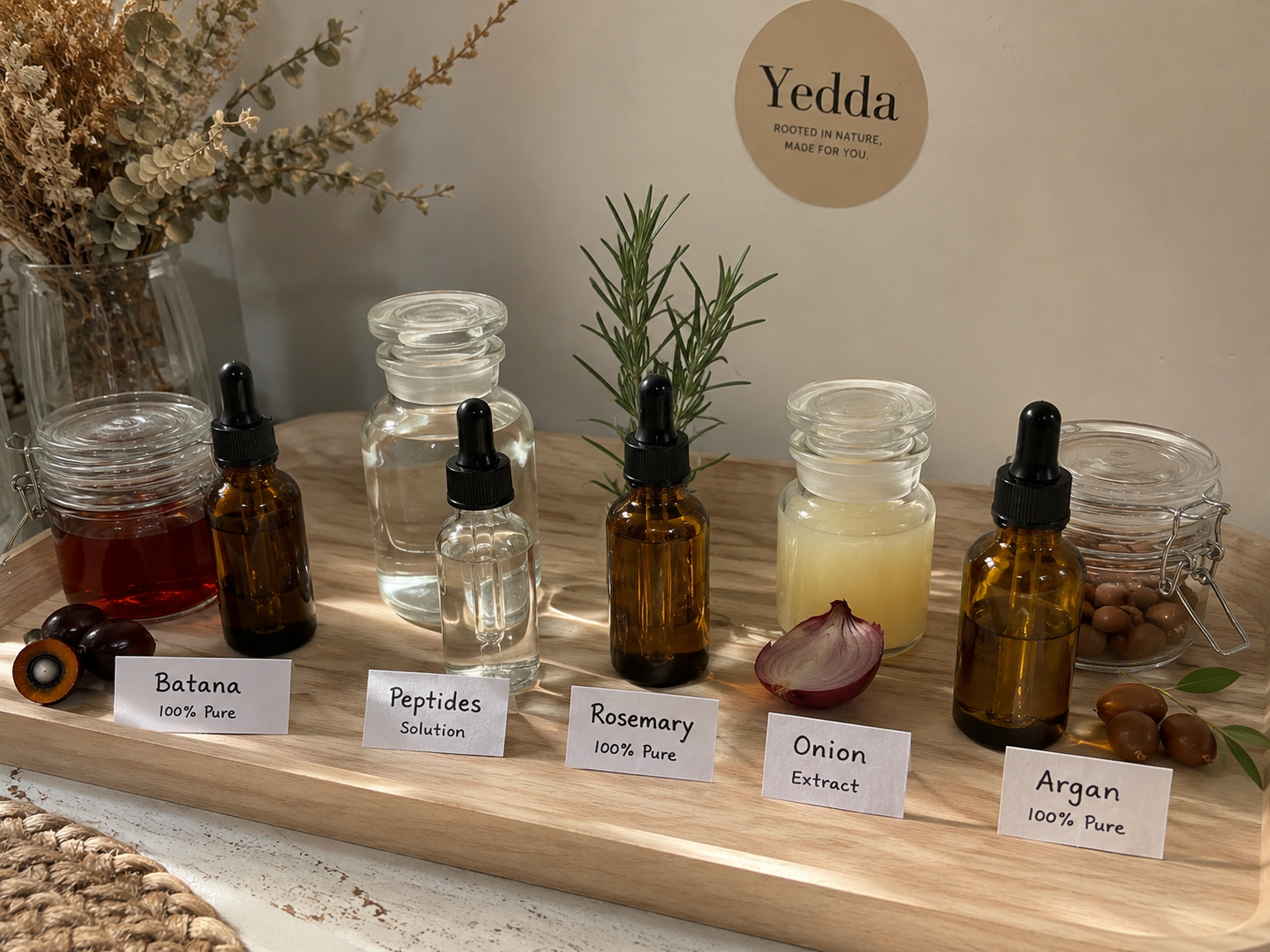
Ingredient selection is the technical heart of a salon hair treatment. In consumer marketing, ingredients are often described as trends. In professional development, ingredients must have a function inside the formula. The same ingredient can perform differently depending on concentration, pH, emulsifier system, surfactant base, processing temperature, and the order of addition during manufacturing.
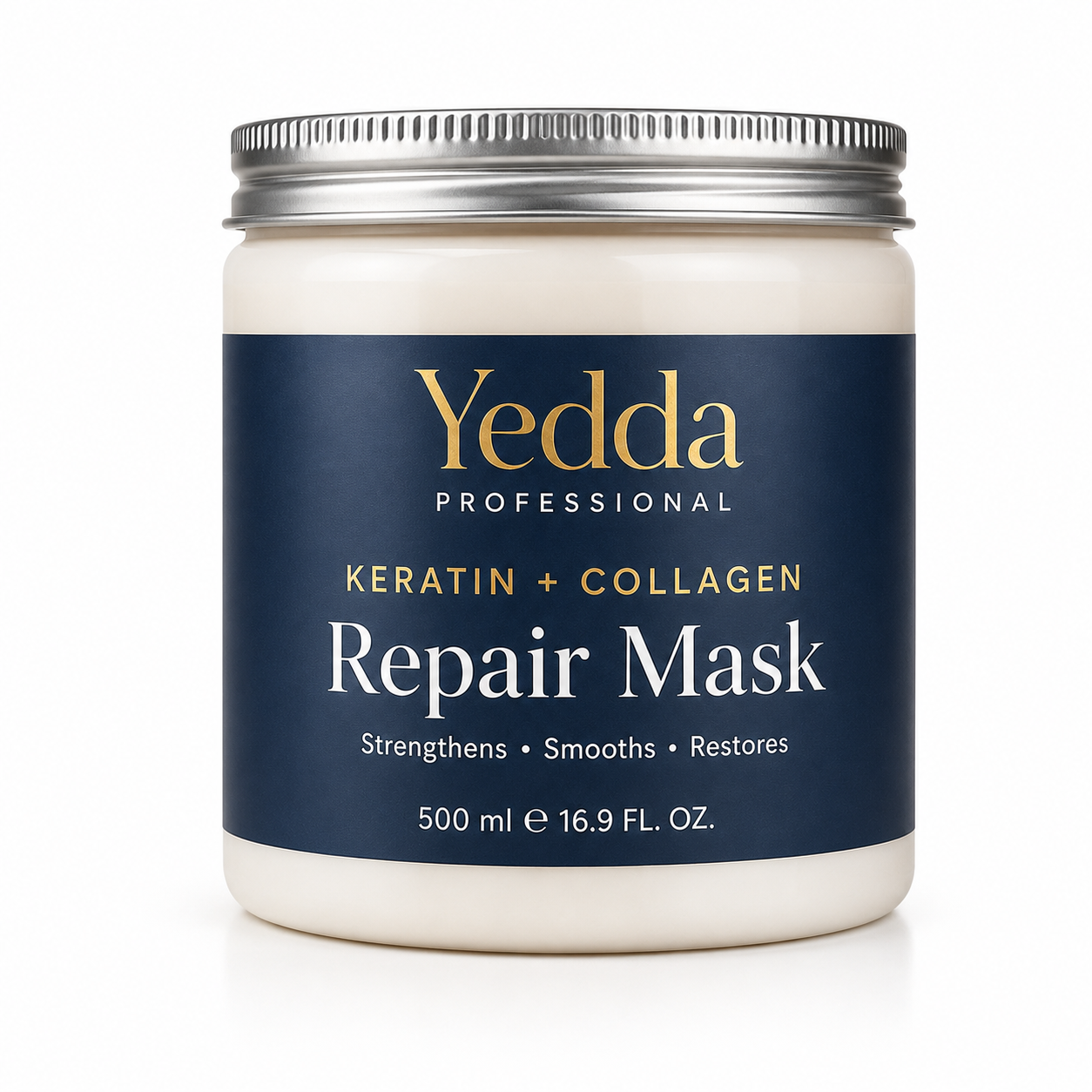
Professional formulas often use a combination of cosmetic technologies rather than relying on a single hero ingredient. A repair mask may include conditioning quats for combability, fatty alcohols for structure and creaminess, silicones or silicone alternatives for cuticle smoothness, proteins or amino acids for a repair story, oils or esters for shine, and film formers for anti-frizz performance. A salon quality shampoo may combine anionic, amphoteric, and nonionic surfactants to balance cleansing power with mildness and foam.
The manufacturer must also manage compatibility. Some cationic conditioning agents are not compatible with certain anionic systems. Some botanical extracts are heat-sensitive. Some proteins can affect viscosity or clarity. Some fragrances can destabilize emulsions or shift color over time. A professional formula must therefore be engineered as a stable system, not a collection of attractive ingredients.
Core Ingredient Categories in Professional Hair Care Products
- Surfactants: used in shampoos to cleanse oil, styling residue, pollution, and product buildup while controlling foam and mildness.
- Conditioning agents: improve wet combing, dry feel, manageability, anti-static performance, and softness.
- Proteins and amino acids: support a repair-positioning story and can improve the feel of damaged hair when used correctly.
- Lipids, oils, and esters: enhance shine, lubrication, smoothness, and the perception of nourishment.
- Film formers: help reduce frizz, support heat protection claims, and create a smoother surface feel.
- Humectants: attract and hold water, helping formulas position around hydration and softness.
- Preservatives: protect water-containing formulas from microbial contamination during storage and use.
- pH adjusters: help position the product within a suitable pH range for formula stability and hair feel.
Step 3: Building a Salon Quality Shampoo as the Foundation
A salon quality shampoo is often the first product in a professional routine, and its role is strategic. It must cleanse effectively without leaving the hair rough, overloaded, or difficult to treat. If the shampoo is too harsh, the following mask may need to compensate for excessive dryness. If the shampoo is too conditioning, it may leave residue that interferes with treatment absorption or professional styling. This is why salon-grade shampoo development requires a careful balance between detergency, foam, mildness, viscosity, rinse profile, and after-feel.
The surfactant system is usually the starting point. A manufacturer may design a sulfate-free system for markets that prefer mild positioning, or a sulfate-containing system for stronger cleansing and classic foam. Neither direction is automatically better. The correct choice depends on the brand positioning, regional expectations, hair type, and claims. For example, a color-care shampoo may prioritize gentle cleansing and low color stripping, while a clarifying shampoo for professional pre-treatment use may prioritize residue removal.
Foam quality is especially important in salons. Stylists often associate foam with spreadability and service satisfaction, even when foam alone does not determine cleansing performance. A good salon shampoo should spread quickly at the basin, rinse cleanly, and leave hair ready for the next step. For B2B buyers, sensory evaluation should include both consumer-like use and stylist use under real basin conditions.
Professional shampoo development also considers fragrance bloom, scalp feel, packaging flow, and backbar economics. A large salon backbar bottle must dispense consistently even when used repeatedly throughout the day. The formula should not clog pumps, separate in changing temperatures, or lose viscosity after fragrance aging. These details may appear small, but they directly affect salon adoption.
Step 4: Designing Professional Hair Repair Treatment Performance
A professional hair repair treatment must deliver visible and touchable benefits. Stylists and clients expect immediate improvement in softness, detangling, shine, and manageability after one service. However, credible B2B development should distinguish between cosmetic repair appearance and structural repair claims. Hair is a dead fiber, so many cosmetic products improve the surface, reduce breakage during combing, fill damaged areas temporarily, smooth the cuticle, or improve resistance to mechanical stress. These benefits can be valuable, but claims must be worded responsibly and supported by suitable testing.
Repair treatment formulas usually focus on damaged areas because high-porosity hair absorbs and loses materials differently from healthy hair. The challenge is to create enough conditioning effect without making hair heavy, greasy, or flat. This is particularly important for fine hair, blond hair, and chemically treated hair. A professional formula may need different versions for intensive repair, lightweight repair, color repair, and curly hair repair.
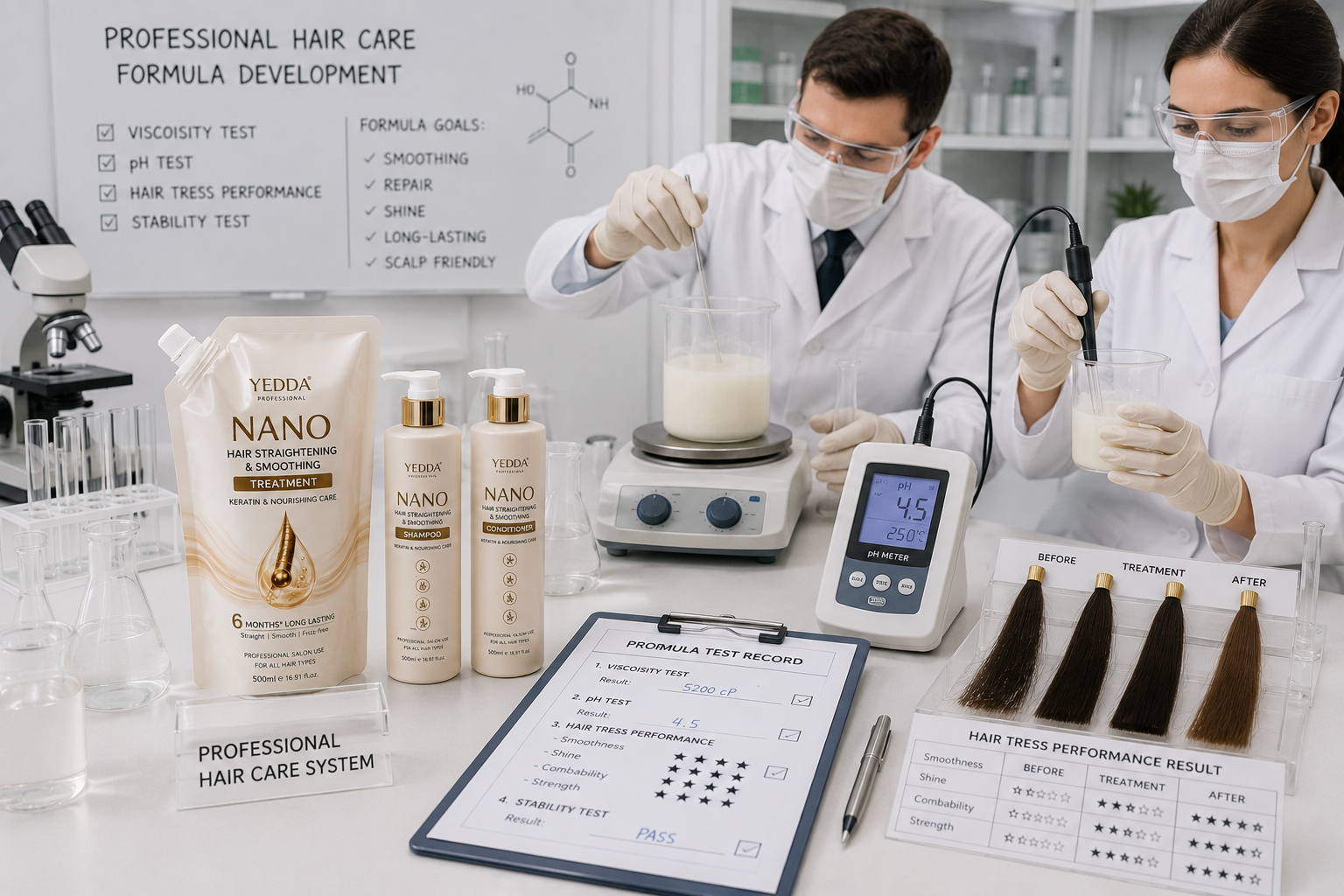
Performance development typically includes tress testing. Hair tresses can be bleached or chemically treated to create a controlled damage model. The manufacturer then compares treated and untreated tresses for wet combing, dry combing, shine, smoothness, frizz, breakage reduction, and sensory feel. Instrumental tests can support claims, while stylist panel evaluations help confirm real-world relevance.
For safety testing context, OECD Test Guideline No. 439 describes an in vitro reconstructed human epidermis method for identifying skin irritation hazards. While this is not a hair-performance test, it reflects the broader industry movement toward scientifically robust, non-animal safety evaluation methods.
Step 5: Safety, Compliance, and Claims for Salon Hair Care Products
For salon hair care products, safety and compliance are not optional back-office details. They are part of product value. Salons use products repeatedly, stylists may have frequent exposure, and distributors need confidence that products can be marketed without avoidable regulatory risk. A professional product that lacks safety documentation can create problems for brand owners, importers, and channel partners.
The European Commission’s cosmetics safety assessment guidance states that cosmetics legislation requires every cosmetic product placed on the European market to be safe to use, and that the manufacturer must ensure expert scientific safety assessment before launch. This is especially important for B2B buyers planning to sell professional hair care products across regulated markets.
For B2B buyers, this means a capable hair treatment manufacturer should be able to discuss formula documentation, ingredient compliance, allergen labeling considerations, microbiological quality, stability testing, packaging compatibility, and claim substantiation. The exact requirements depend on the sales region, but the principle is consistent: professional performance must be matched with professional documentation.
Common Safety and Quality Checks Before Launch
- Formula review: checks ingredient restrictions, concentration limits, regional compliance, and formula suitability.
- Stability testing: evaluates whether color, odor, viscosity, pH, and appearance remain acceptable under different conditions.
- Compatibility testing: confirms that the formula works with the selected bottle, tube, jar, cap, pump, liner, or pouch.
- Microbiological testing: confirms that the product meets microbial quality expectations.
- Preservative efficacy testing: evaluates whether the preservative system can protect the product during expected use.
- Patch or irritation-related evaluation: supports safety positioning when appropriate for the region and product type.
- Claims testing: supports statements such as improved combability, reduced breakage, smoother hair, stronger hair feel, or color-care performance.
ISO 11930:2019 specifies a procedure for interpreting data generated by preservation efficacy testing or microbiological risk assessment when evaluating the antimicrobial protection of cosmetic products. For salon hair care products, preservative system evaluation is especially relevant because many shampoos, conditioners, masks, and treatments are water-containing formulas used repeatedly over time.
Step 6: Pilot Samples and Salon Testing With Professional Users
Once the laboratory has created a promising prototype, the next stage is pilot evaluation. This step helps bridge the gap between bench chemistry and salon reality. A small formula sample may look good in the lab, but professional users judge products under different conditions: wet hair, basin use, gloves, time pressure, multiple clients, and immediate visual expectations.
Salon testing should include different hair types and damage levels. A repair treatment may perform beautifully on medium-thick bleached hair but feel heavy on fine hair. A moisturizing mask may detangle well but reduce volume. A shampoo may have excellent foam in soft water but behave differently in hard-water regions. For international B2B buyers, this matters because water quality, climate, hair texture, and salon habits vary by market.
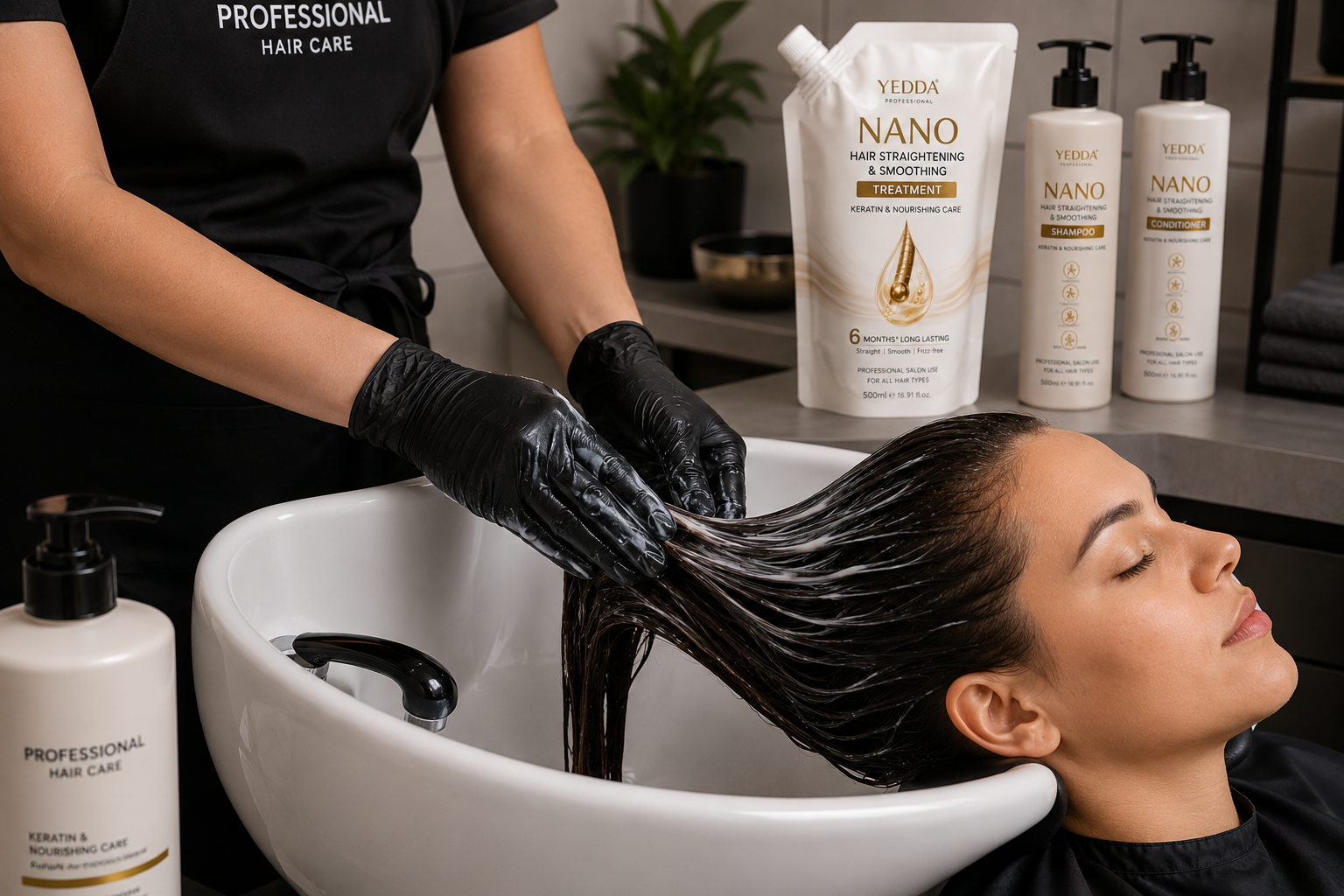
What Stylists Usually Evaluate
- How quickly the formula spreads through wet hair.
- Whether the product has enough slip during application.
- Whether the fragrance feels premium but not overpowering.
- How easily the product rinses out.
- How the hair feels when towel-dried.
- How the hair behaves during blow-drying.
- Whether shine, smoothness, and softness are visible to the client.
- Whether the result supports retail recommendation after the service.
Professional feedback should be structured, not casual. Manufacturers and brands can use scoring sheets to compare prototypes. For example, stylists can score foam, spreadability, wet combing, rinse feel, dry combing, shine, softness, volume, residue, and overall purchase intent. This helps the development team make targeted improvements instead of relying on vague opinions.
Step 7: Scale-Up by a Hair Treatment Manufacturer
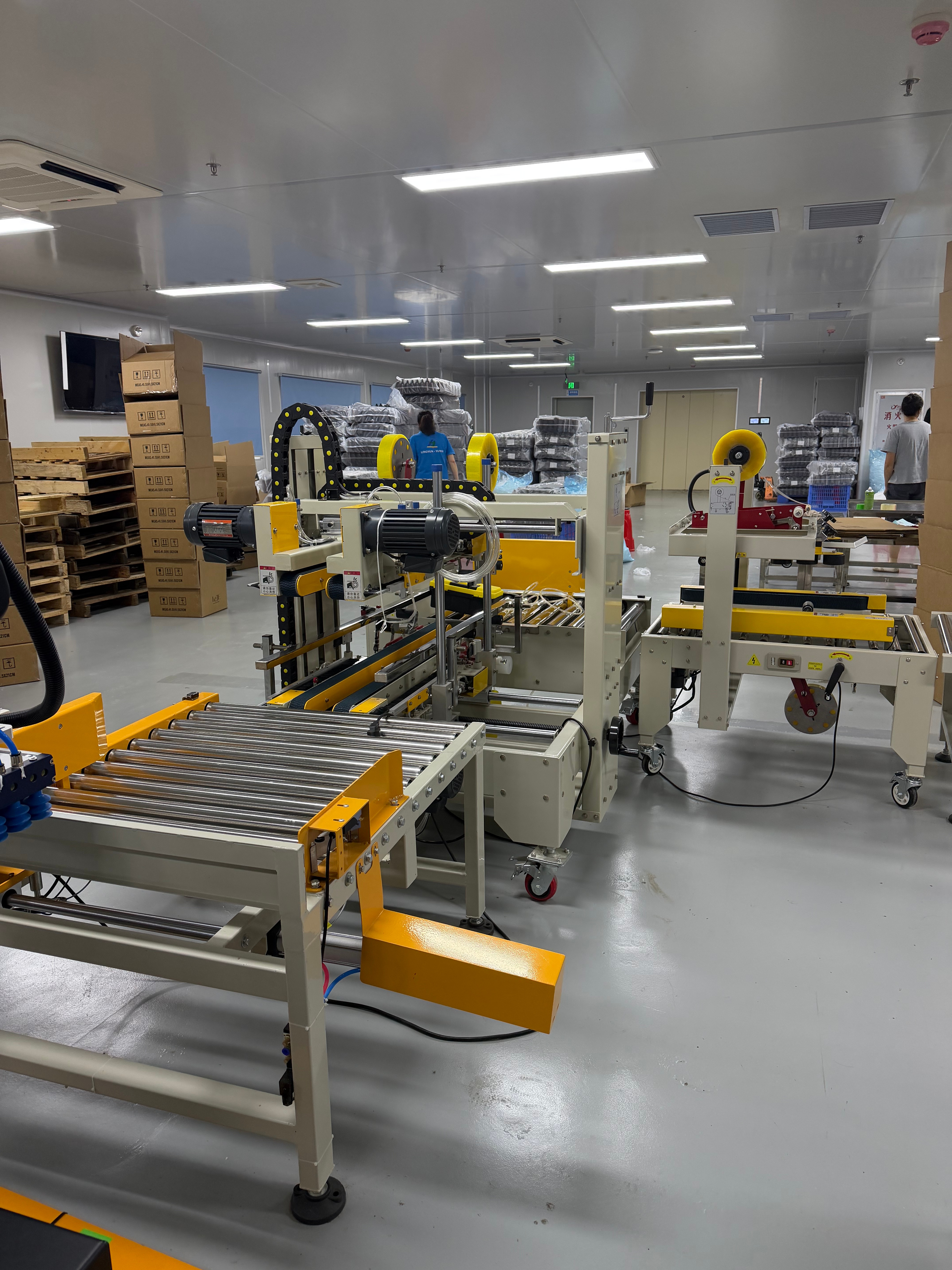
Scale-up is where many formulas face their first serious manufacturing challenge. A 500-gram laboratory batch may not behave the same way in a 500-kilogram production vessel. Mixing speed, heating time, cooling rate, ingredient addition order, homogenization, and filling temperature can all affect the final product. This is why an experienced hair treatment manufacturer must translate the lab formula into a reliable production process.
For emulsions such as masks and conditioners, scale-up must control oil phase and water phase processing, emulsification temperature, cooling curve, and final viscosity adjustment. For shampoos, production must control surfactant hydration, salt curve, fragrance solubilization, clarity, foam, and deaeration. For leave-in products, the manufacturer may need to manage sprayability, pump performance, or compatibility with heat-protection polymers.
Good manufacturing practice is essential. B2B buyers should evaluate whether the manufacturer has documented procedures for raw material inspection, batch records, equipment cleaning, in-process checks, finished product testing, retention samples, and traceability. A professional brand cannot grow sustainably if every batch feels slightly different.
Key Scale-Up Risks
- Viscosity drift: the product becomes too thick or too thin after scale-up or aging.
- Fragrance instability: fragrance changes color, affects viscosity, or separates over time.
- Air entrapment: the formula looks foamy or underfilled during production.
- Microbial risk: poor hygiene or weak preservation creates contamination risk.
- Packaging mismatch: a thick mask may not dispense from a pump, while a thin shampoo may leak from a cap.
- Performance inconsistency: processing changes alter sensory feel or conditioning effect.
Step 8: Packaging Professional Hair Care Products for Salon Use
Packaging for professional hair care products must balance shelf appeal, durability, cost, and usability. Salon products are handled frequently, often with wet hands, gloves, or product residue nearby. Backbar sizes need stable pumps, easy gripping, and clear identification. Retail sizes need premium shelf appearance and strong communication. Travel sizes or sample sachets may support stylist education and trial.
Packaging is also part of formula protection. A formula with certain essential oils, solvents, dyes, or fragrances may require compatibility testing with plastic, labels, liners, and closures. Transparent packaging may look attractive but could expose color-sensitive ingredients to light. A jar may work for a rich mask, but a tube may be more hygienic and easier for retail. A pump may improve salon speed, but only if the viscosity is suitable.
From a B2B standpoint, packaging decisions influence minimum order quantity, shipping cost, filling speed, brand perception, damage rate, and distributor acceptance. For export, packaging must also consider carton strength, leakage prevention, palletization, labeling language, barcode requirements, and regulatory symbols.
Step 9: Claim Substantiation and Professional Proof
Strong claims help sell a professional hair care system, but unsupported claims create risk. In the salon market, claims should be attractive, understandable, and realistic. Examples include “helps reduce breakage caused by combing,” “improves smoothness,” “enhances shine,” “supports color-treated hair,” “improves manageability,” or “leaves hair feeling stronger.” The best claim language depends on the testing available.
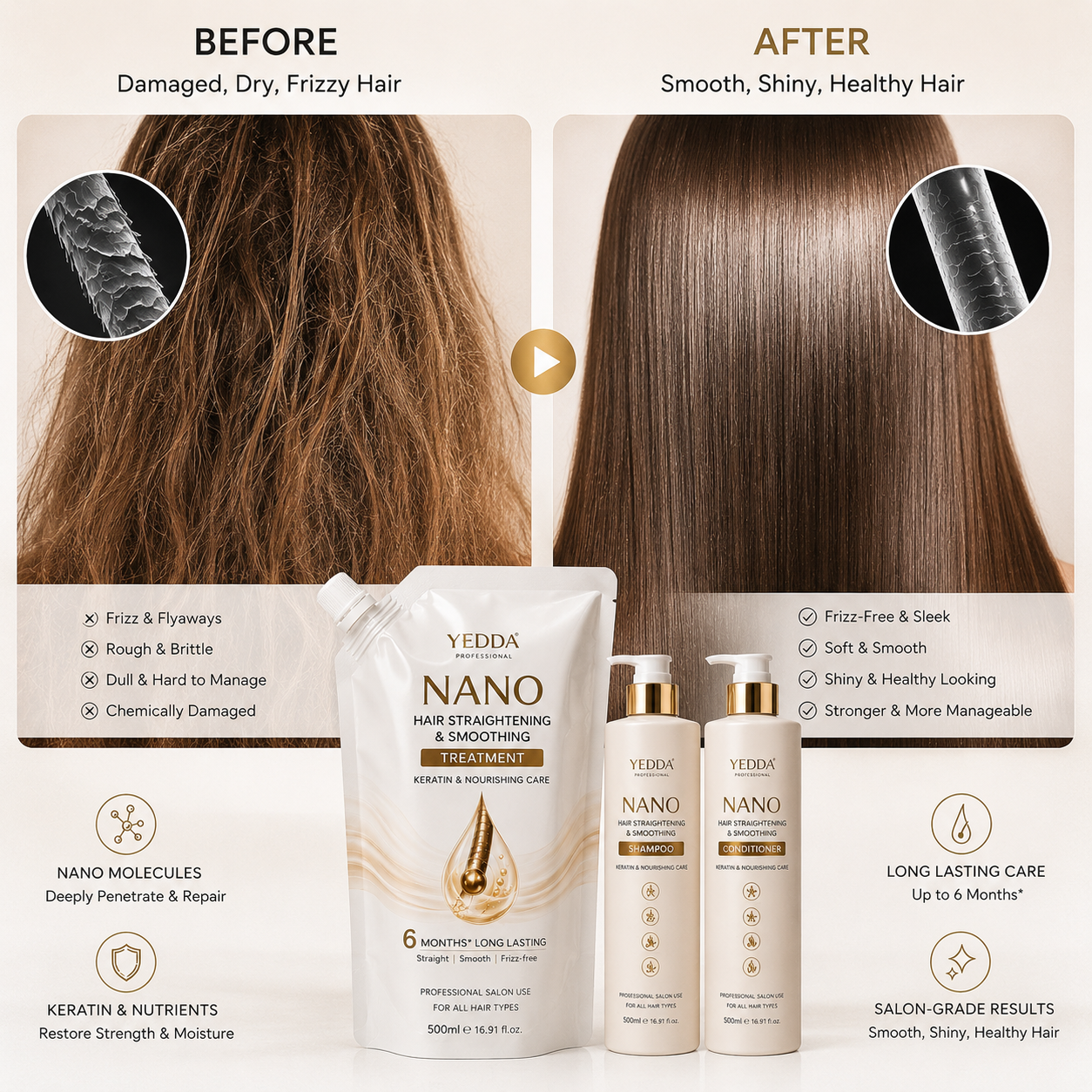
Instrumental testing can measure combing force, tensile properties, gloss, friction, or color fade under defined conditions. Salon panels can evaluate visible and sensory results. Consumer panels can support user perception claims. Before-and-after photography may support marketing, but it should be controlled and honest. Claims should not imply medical treatment, permanent structural repair, or therapeutic action unless the brand has the correct regulatory pathway and evidence.
For B2B buyers, substantiation has commercial value. Distributors can use test-backed claims in sales training. Salons can explain the service more confidently. E-commerce teams can build stronger product pages. Export partners can answer regulatory and retailer questions faster. In other words, testing is not only a compliance cost; it is a sales enablement tool.
Recommended external sources used in this article include McKinsey’s beauty market report, the European Commission cosmetics safety assessment page, OECD Test Guideline No. 439, and ISO 11930:2019.
Step 10: Building a Complete Professional Hair Care System
A single hero product can attract attention, but a complete professional hair care system creates stronger business value. For example, a repair range may include shampoo, intensive mask, conditioner, leave-in cream, serum, and salon ampoule. A color-care system may include gentle shampoo, acidic conditioner, glossing treatment, and UV or heat-protection spray. A scalp system may include purifying shampoo, balancing treatment, and lightweight leave-in tonic.
The challenge is to make the system coherent. Products should not compete with each other or overload the hair. A rich shampoo, heavy mask, heavy conditioner, and heavy leave-in may create softness but reduce movement. A clarifying shampoo followed by a lightweight conditioner may feel clean but fail to communicate repair. The development team must design the routine so each product has a role.
- Salon quality shampoo: cleanses and prepares hair for treatment while creating the first sensory impression.
- Salon hair treatment mask: delivers intensive softness, smoothness, and repair feel for premium service value.
- Conditioner: improves combing, seals the sensory finish, and supports daily maintenance.
- Leave-in product: provides protection, frizz control, and styling support after the salon service.
- Serum or finishing product: adds shine and polished final appearance for stylist recommendation and retail sales.
How B2B Buyers Should Evaluate a Hair Treatment Manufacturer
Choosing a hair treatment manufacturer is one of the most important decisions for a professional hair care brand. The right partner does more than produce bulk formula. A strong manufacturer helps turn positioning into product architecture, product architecture into tested prototypes, and tested prototypes into stable commercial batches. The wrong partner may provide a low-cost formula quickly but fail to support long-term quality, documentation, innovation, or export growth.
B2B buyers should evaluate both technical capability and communication quality. A manufacturer should be able to explain why a formula is structured a certain way, which tests are recommended, what claims are realistic, and what trade-offs exist between cost, performance, natural positioning, fragrance, viscosity, and packaging. Transparent communication during development can prevent expensive delays later.
Manufacturer Evaluation Checklist
- Experience with professional hair care products and salon-use formulas.
- Ability to develop a full professional hair care system, not only one product.
- Support for shampoo, conditioner, mask, leave-in, serum, ampoule, and scalp products.
- Knowledge of ingredient compatibility, pH control, viscosity control, and preservation.
- In-house or partner testing options for stability, microbiology, performance, and claims.
- Clear sample revision process with structured feedback.
- Scalable production equipment and documented batch control.
- Packaging sourcing support and compatibility evaluation.
- Regulatory documentation support for target markets.
- Ability to support private label, custom formula, or semi-custom development.
From Formula to Professional Results: What Makes Salon Quality Different
The difference between ordinary hair care and professional development lies in repeatability. A salon product must deliver under expert scrutiny. It must work for stylists, satisfy clients, support service menus, and make business sense for brands and distributors. The formula must be pleasant, but also stable. The ingredient story must be attractive, but also credible. The packaging must look premium, but also function in daily salon use. The claims must sell, but also be supportable.
Professional results come from the integration of many decisions. The shampoo must prepare the hair. The treatment must target the right damage profile. The conditioner must leave a balanced finish. The leave-in must protect without heaviness. The fragrance must fit the brand. The packaging must support the channel. The testing must support the claim. The manufacturer must reproduce the product consistently. When these elements work together, a brand can offer more than a product; it can offer a salon-ready solution.
Conclusion: Professional Hair Care Products Are Developed as Systems, Not Single Formulas
Developing professional hair care products requires a complete process from market positioning to formula design, safety review, salon testing, manufacturing scale-up, packaging validation, and claim substantiation. For B2B buyers, the most successful products are not created by trend-following alone. They are created by identifying a real salon need, translating that need into a technical brief, and working with a manufacturer that understands both chemistry and professional use.
A strong salon hair treatment can improve softness, shine, smoothness, manageability, and the client’s perception of hair quality. A well-designed salon quality shampoo can prepare the hair for better treatment results. A complete professional hair care system can help salons build service value and help brands increase repeat purchase. For private label owners, distributors, and salon-focused brands, the path from formula to professional results is a strategic development journey. The right hair treatment manufacturer can make that journey faster, safer, and more commercially successful.
FAQ About Professional Hair Care Products and Salon Hair Treatment Development
What is the difference between consumer hair care and professional hair care products?
Professional hair care products are usually developed for salon workflows, stylist expectations, and more specific hair conditions. They often require stronger sensory performance, clearer system logic, and better support for professional claims. Consumer products may focus more on daily convenience, broad appeal, and mass-market price points.
How long does it take to develop a salon hair treatment?
Development time depends on formula complexity, testing requirements, packaging, regulatory region, and the number of sample revisions. A simple private label adjustment may move faster, while a custom professional hair repair treatment with performance testing, stability testing, and packaging compatibility checks may require a longer development cycle.
What should a brand prepare before contacting a hair treatment manufacturer?
A brand should prepare target market, product type, benchmark samples, desired claims, price range, packaging preference, fragrance direction, hair type focus, and expected order quantity. This helps the hair treatment manufacturer create a formula that fits both technical performance and business goals.
Why is a professional hair care system better than launching only one product?
A professional hair care system gives salons and distributors a complete routine to sell. Instead of relying on one product, the brand can connect shampoo, treatment, conditioner, and leave-in care into a clear professional solution. This improves service consistency, retail recommendation, and repeat purchase potential.
```