
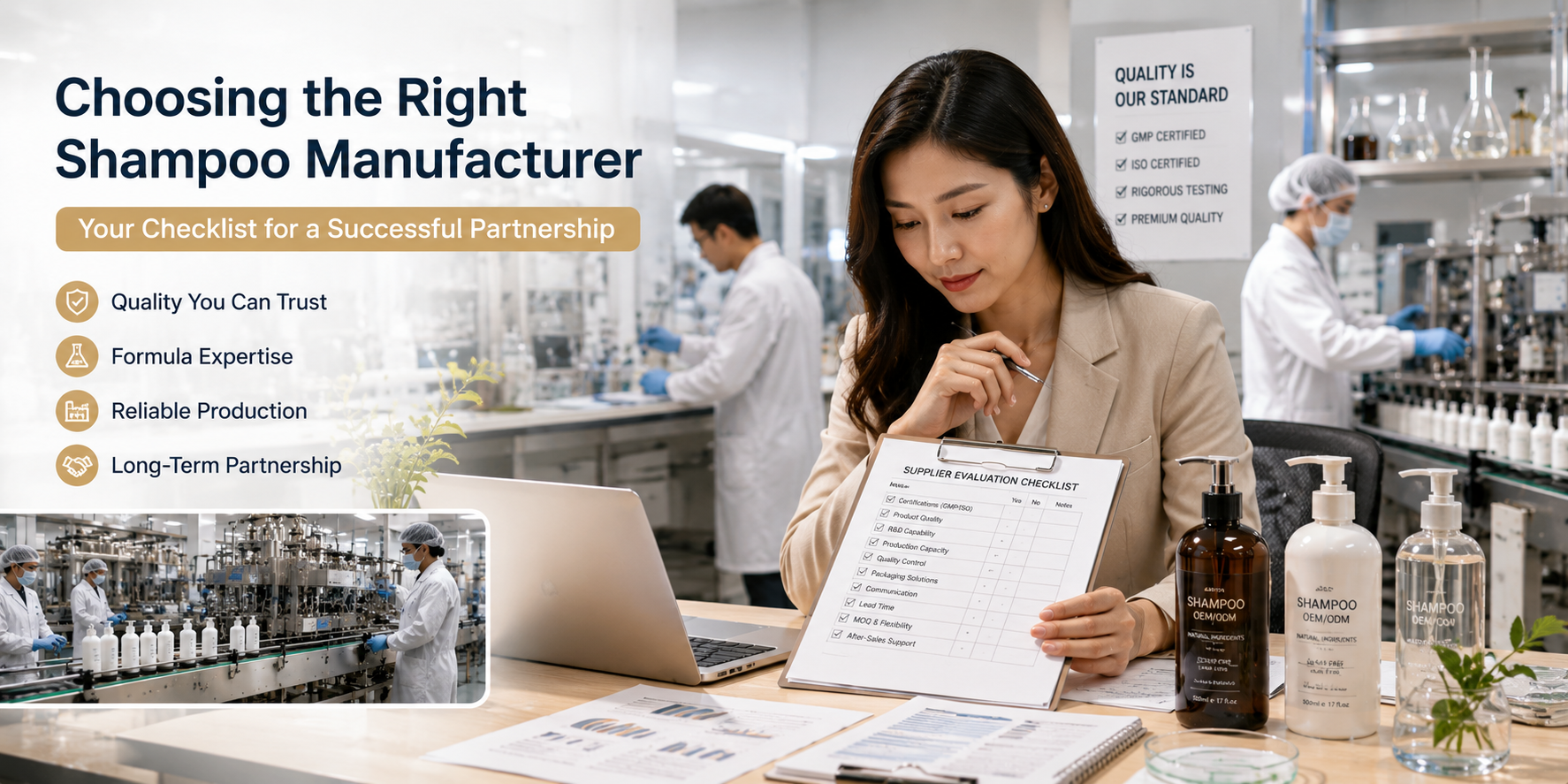
Selecting the right supplier is one of the most critical steps when launching a private label hair care brand. A comprehensive shampoo manufacturer checklist helps brands and buyers systematically evaluate potential partners, ensuring both quality and supply chain reliability. Without asking the right questions, even experienced entrepreneurs risk costly mistakes, delayed launches, or subpar products reaching the market.
This guide explains the essential questions to ask before ordering from a shampoo manufacturer, including production capacity, formula development, quality control, packaging options, shipping timelines, and regulatory compliance.
According to Grand View Research, the global hair care market continues to grow rapidly, with private label brands driving significant B2B opportunities. Understanding supplier capabilities is therefore more important than ever.
Why You Need a Shampoo Manufacturer Checklist
A shampoo manufacturer checklist helps brands:
- Identify reliable OEM suppliers
- Assess production capabilities and limitations
- Evaluate formula development support
- Verify packaging and customization options
- Check regulatory compliance and testing procedures
- Estimate cost and lead times accurately
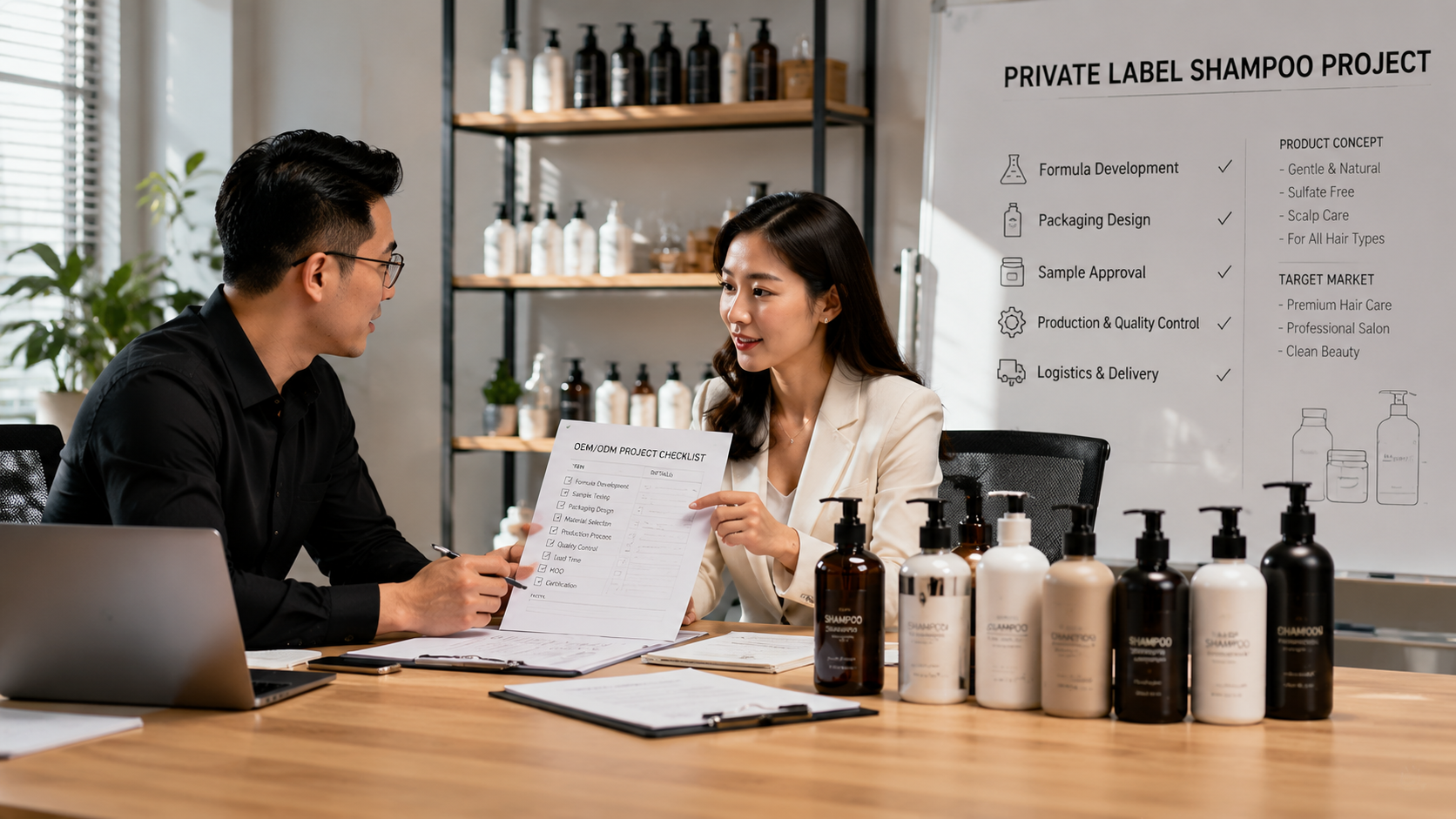
Following a checklist ensures that potential suppliers meet your brand’s quality standards and business goals. It also provides a structured way to compare multiple manufacturers.
Key Questions to Include in Your Shampoo Manufacturer Checklist
When evaluating an OEM partner, it is essential to ask questions across several categories:
1. Production Capacity and Lead Times
- What is your minimum and maximum production capacity?
- Do you have flexible MOQs for startups and small brands?
- What is the average lead time from order placement to shipment?
- Can you accommodate rush or seasonal orders?
Efficient production planning ensures timely delivery and helps prevent inventory shortages. According to McKinsey supply chain insights, supply chain efficiency is a major determinant of successful B2B brand operations.
2. Formula Development and Customization
- Do you offer custom shampoo formula development?
- Can you create salon-quality versus retail-targeted formulas?
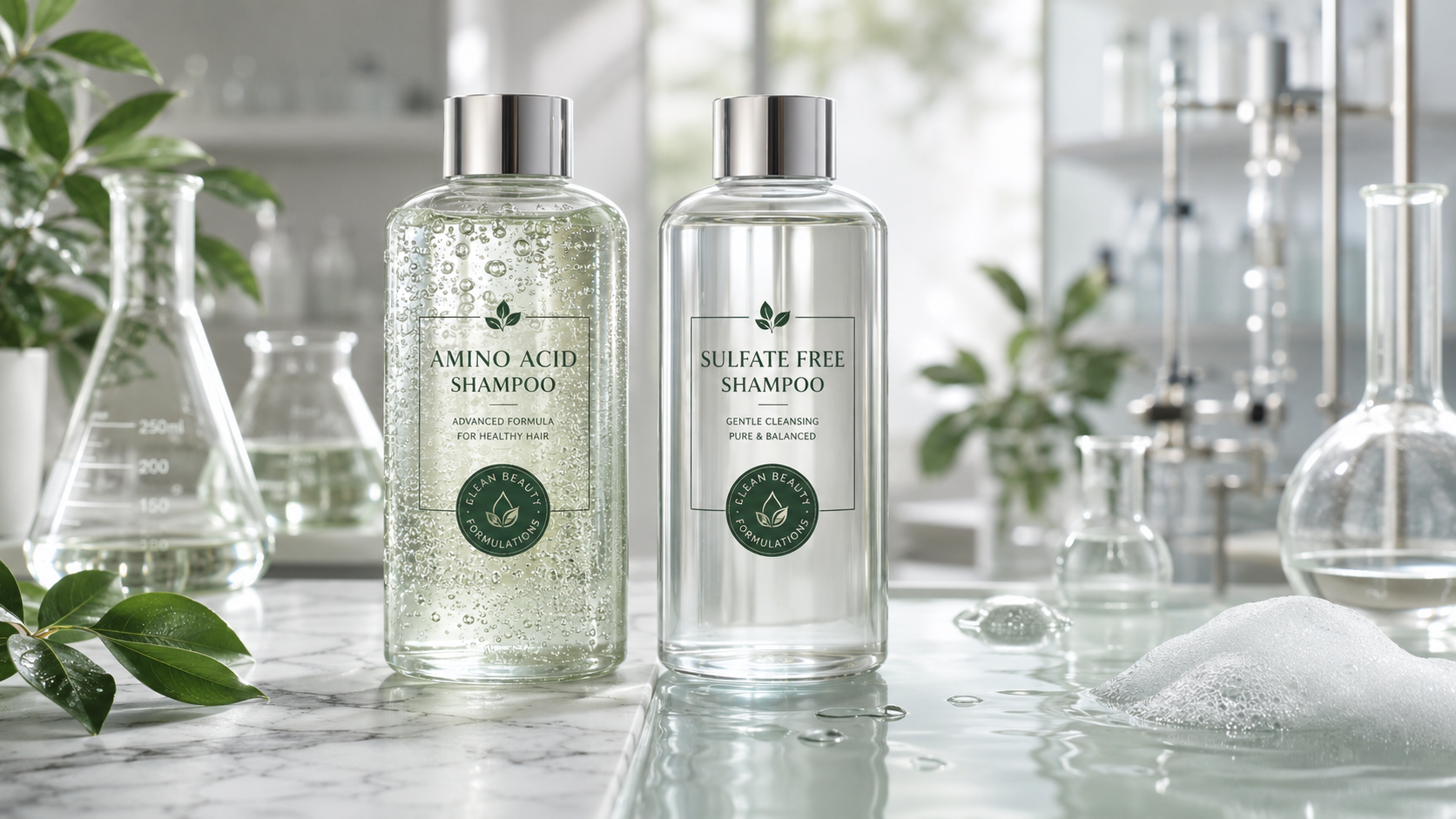
- Are you capable of developing sulfate-free, vegan, or specialty hair care products?
- What level of R&D support do you provide?
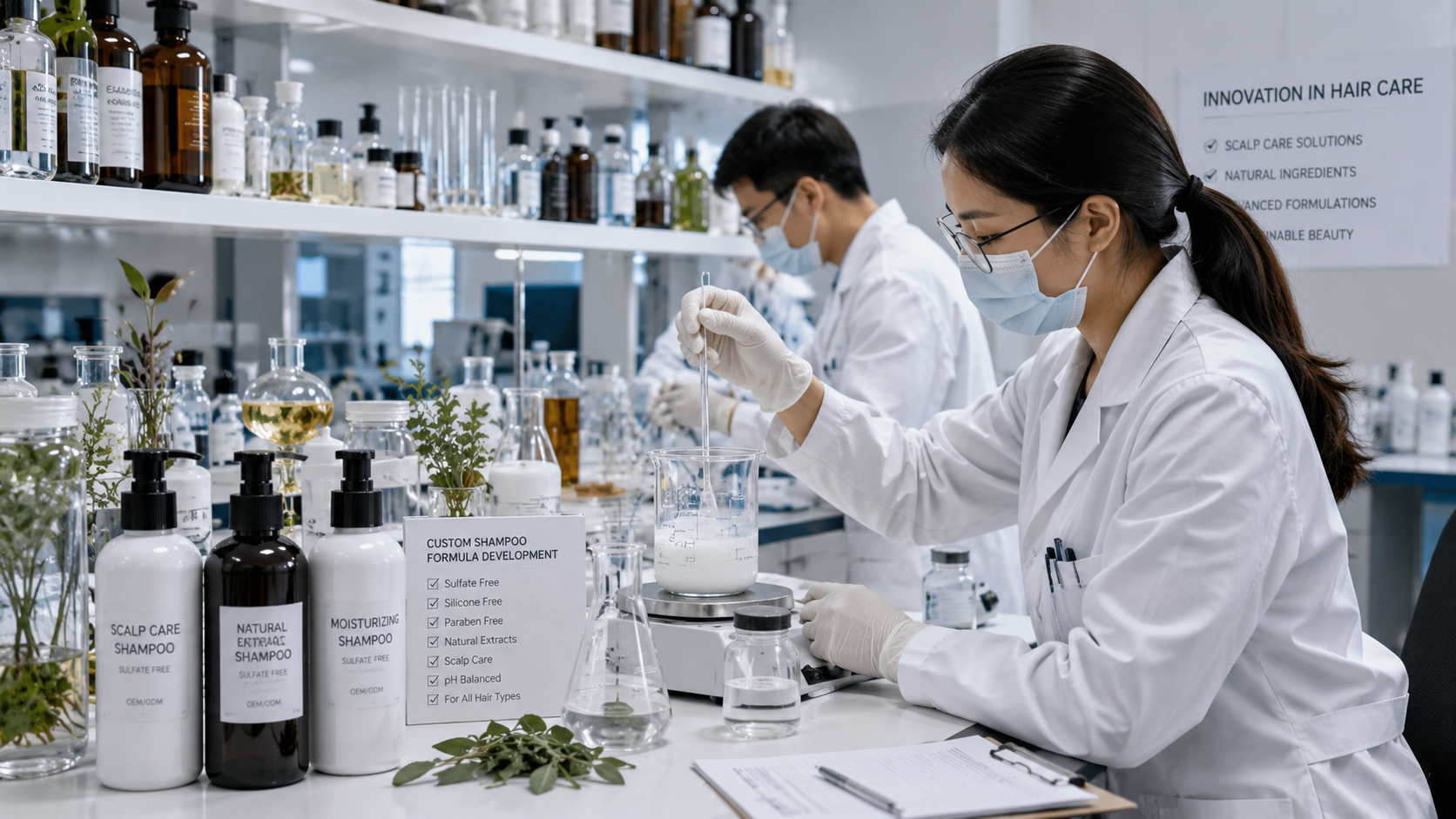
Professional brands increasingly demand formulas that align with consumer trends, including scalp care, hair repair, and clean beauty.
3. Ingredient Quality and Safety
- What ingredients do you source, and are they certified?
- Do you provide stability and microbiological testing reports?
- How do you ensure formula consistency across batches?
- Are allergens or restricted substances clearly documented?
Transparency in ingredient sourcing and testing reduces risks of regulatory issues and enhances product credibility. Cosmetics Europe regulatory guidance emphasizes the importance of proper safety documentation for hair care products.
4. Packaging Options and Customization
- Do you offer a range of bottle types, sizes, and pump systems?
- Can you provide custom printing or label solutions?
- Are eco-friendly or refillable packaging options available?
- Is packaging compatible with your formulas over the product’s shelf life?
High-quality packaging not only preserves formula integrity but also strengthens brand perception. According to Packaging Digest, sustainable packaging is increasingly valued by professional and retail buyers.
5. Pricing, Payment, and Shipping
- What are your pricing tiers for different order volumes?
- Do you offer quotations including private label branding?
- What payment terms are required?
- Can you assist with international shipping, including documentation and freight management?
Accurate cost estimates and transparent payment terms prevent surprises and help plan product launches effectively.
6. Regulatory Compliance and Certifications
- Do you comply with international cosmetic regulations?
- Which certifications do you hold (ISO, GMP, GMPC, etc.)?
- Do you provide documentation for FDA or EU compliance if exporting?
- Are testing and labeling procedures standardized?
Proper certification ensures that products meet safety and legal requirements for multiple markets.
Evaluating OEM Suppliers Effectively
After gathering answers, brands should compare suppliers systematically. Key evaluation factors include:
- Production reliability and capacity
- R&D and formulation support
- Quality control measures
- Packaging flexibility and options
- Pricing transparency
- Shipping efficiency
- Compliance documentation

Using a standardized shampoo manufacturer checklist reduces the risk of selecting an unsuitable supplier.
Best Practices for Working with Private Label Suppliers
- Establish clear product specifications before placing orders
- Request samples and small-batch prototypes for quality verification
- Maintain open communication regarding production schedules and potential delays
- Regularly review certifications and quality reports
- Negotiate flexible MOQs and scalable production agreements
Brands that adopt these practices often experience smoother launches and higher customer satisfaction.
FAQ
What should I include in a shampoo manufacturer checklist?
Include questions about production capacity, formula development, ingredient quality, packaging, pricing, shipping, and regulatory compliance to ensure a reliable supplier.
How do I evaluate an OEM supplier effectively?
Compare multiple suppliers using standardized criteria covering R&D capabilities, quality control, pricing, packaging options, and regulatory compliance.
Can a private label supplier help with formula customization?
Yes, many professional OEM suppliers provide custom shampoo formula development, including salon-quality, sulfate-free, or specialty hair care formulations.
What certifications should a professional shampoo manufacturer have?
Look for ISO, GMP, GMPC, and compliance with international cosmetic regulations to ensure safety and market readiness.