
Introduction
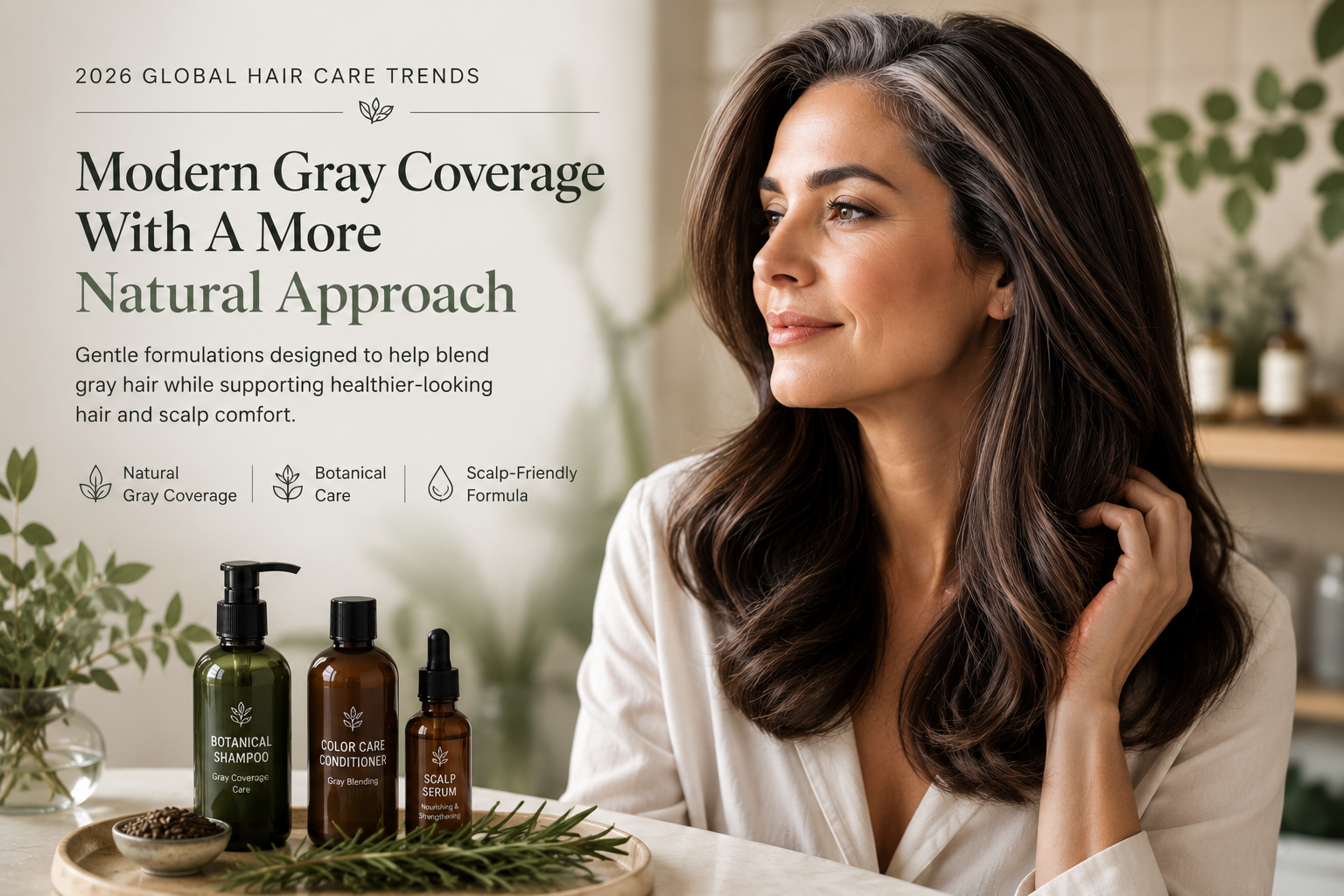
Gray hair care is no longer limited to traditional permanent hair dye products.
Across global beauty markets, consumers are increasingly looking for solutions that combine:
- Natural-looking gray coverage
- Scalp comfort
- Low-irritation formulations
- Botanical-inspired ingredients
- Long-term hair maintenance
This shift is changing how modern gray hair products are formulated, marketed, and manufactured.
For private label brands, salon distributors, and professional hair care buyers, gray hair care is becoming an important category within premium scalp care and functional hair wellness markets.
Many brands now work with experienced OEM & ODM hair care manufacturers to develop scalp-friendly and market-oriented gray coverage products.
Industry Definition: Gray Hair Maintenance Products refer to hair care solutions designed to gradually blend, soften, or maintain gray hair appearance while supporting scalp comfort and overall hair condition.
Unlike traditional permanent hair dyes, modern gray hair products increasingly focus on low-irritation formulations, botanical ingredients, and long-term hair wellness concepts.
1. Why Traditional Hair Dye Products Are Losing Consumer Appeal
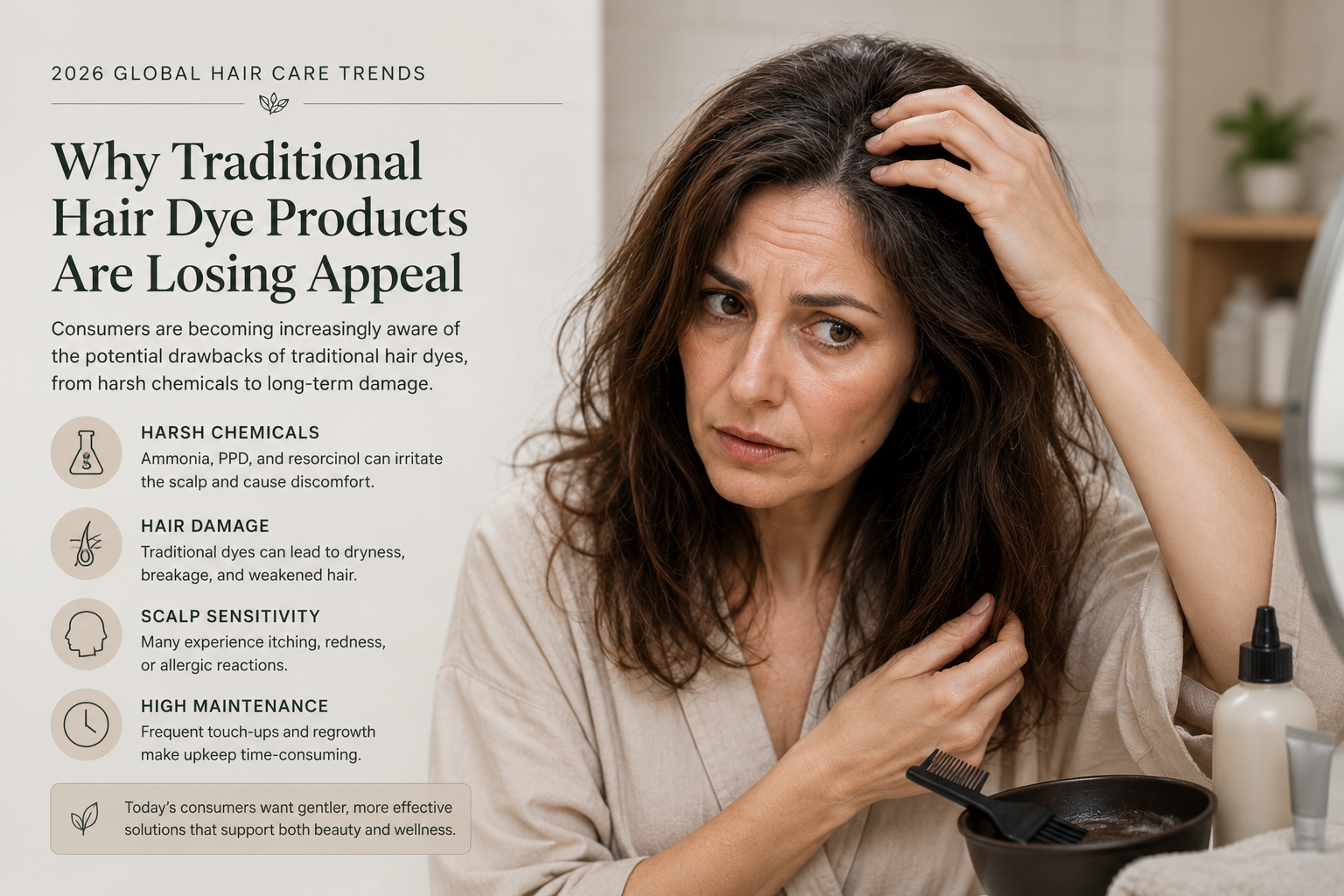
Traditional permanent dye systems have long dominated the gray hair market. However, modern consumers are becoming more cautious about repeated chemical exposure and scalp sensitivity.
Common Consumer Concerns
- Strong chemical odors
- Scalp discomfort
- Dryness and hair brittleness
- Frequent salon dependency
- Long-term scalp sensitivity
As ingredient transparency becomes more important globally, many consumers now prefer products that support gradual gray blending and daily hair maintenance rather than dramatic color transformation.
This trend is especially visible in:
- European clean beauty markets
- Premium salon channels
- Scalp-focused hair care brands
- Functional hair wellness categories
According to Allure, scalp-conscious and low-irritation beauty routines continue to influence purchasing behavior across mature consumer groups.
2. How Botanical Ingredients Are Reshaping The Gray Hair Care Market
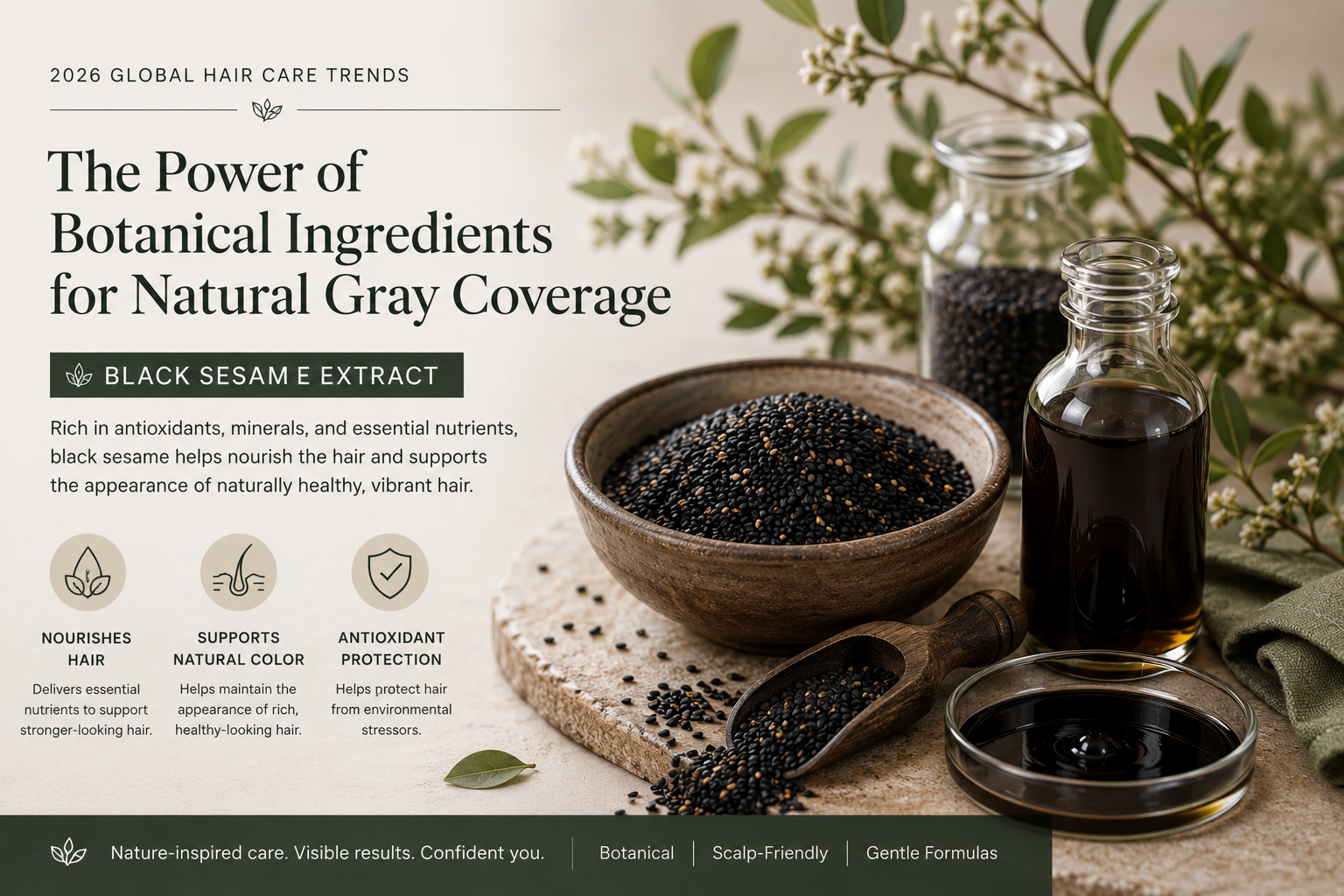
Botanical ingredients are becoming increasingly important in modern gray hair formulations.
Rather than focusing only on color coverage, many brands are now positioning gray hair products around scalp wellness, hair conditioning, and ingredient-conscious beauty routines.
Rosemary Extract And Scalp-Focused Hair Care
Rosemary extract continues to gain attention in scalp care categories due to its association with scalp-focused hair wellness concepts.
Common Applications Of Rosemary Extract
- Scalp shampoos
- Hair tonics
- Herbal cleansing systems
- Scalp maintenance serums
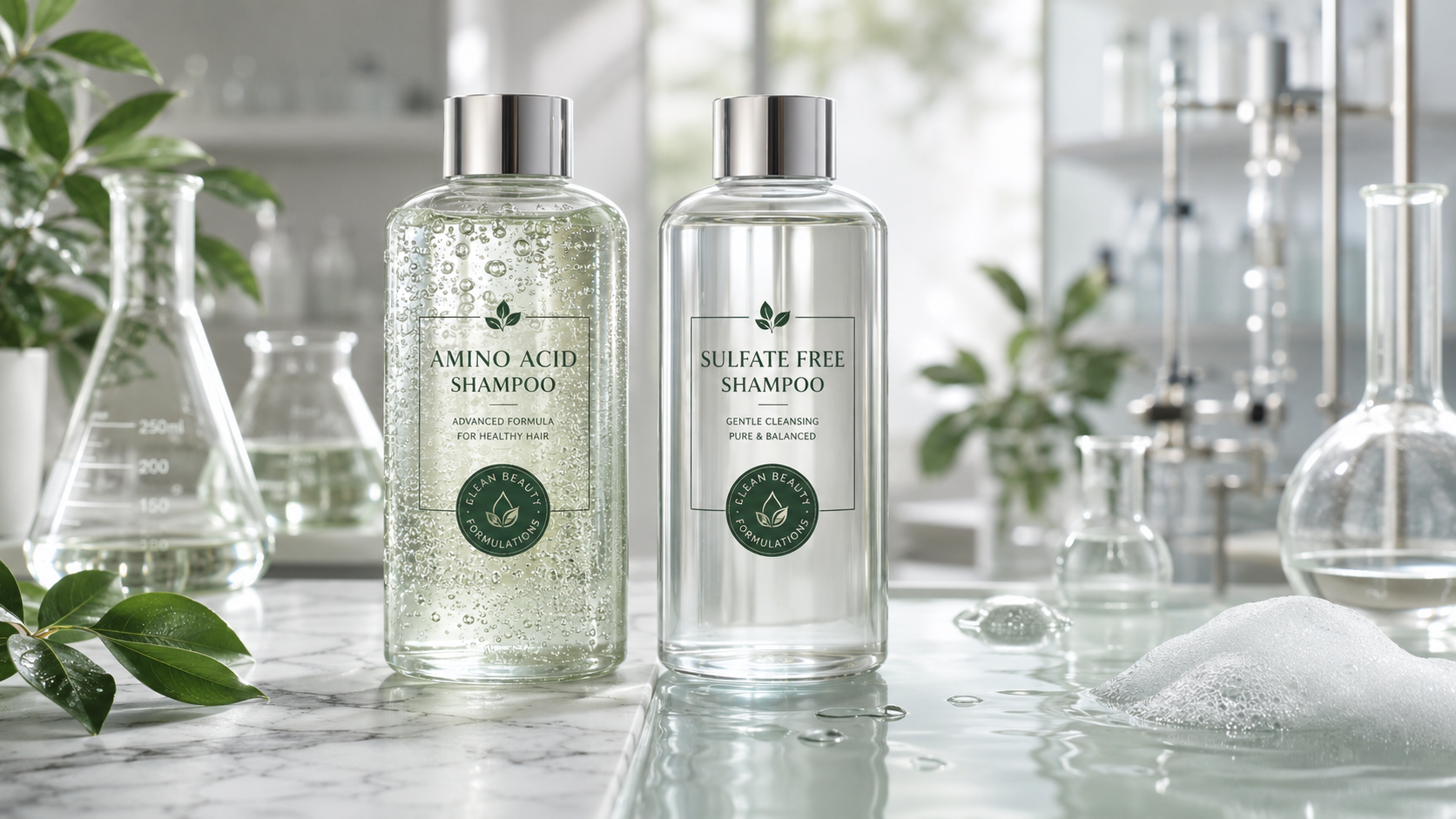
- Sulfate-free scalp care products
Its popularity reflects growing consumer interest in scalp health and botanical-inspired hair care routines.
Black Sesame Extract In Mature Hair Care Products
Black sesame remains a widely recognized ingredient in many Asian-inspired hair care concepts.
Why Brands Use Black Sesame In Gray Hair Products
- Associated with mature hair maintenance
- Fits herbal-inspired beauty positioning
- Supports nourishment-focused product concepts
- Commonly used in scalp-conditioning formulations
As herbal beauty concepts continue expanding globally, black sesame is becoming increasingly visible in gray hair product positioning.
Plant Oils And Hair Conditioning Systems
Gray hair is naturally more porous and often drier than pigmented hair.
Because of this, conditioning performance has become a key focus in modern gray hair formulations.
Frequently Used Conditioning Oils
- Argan oil
- Coconut oil
- Jojoba oil
- Avocado oil
These ingredients are widely used to improve softness, shine, and manageability.
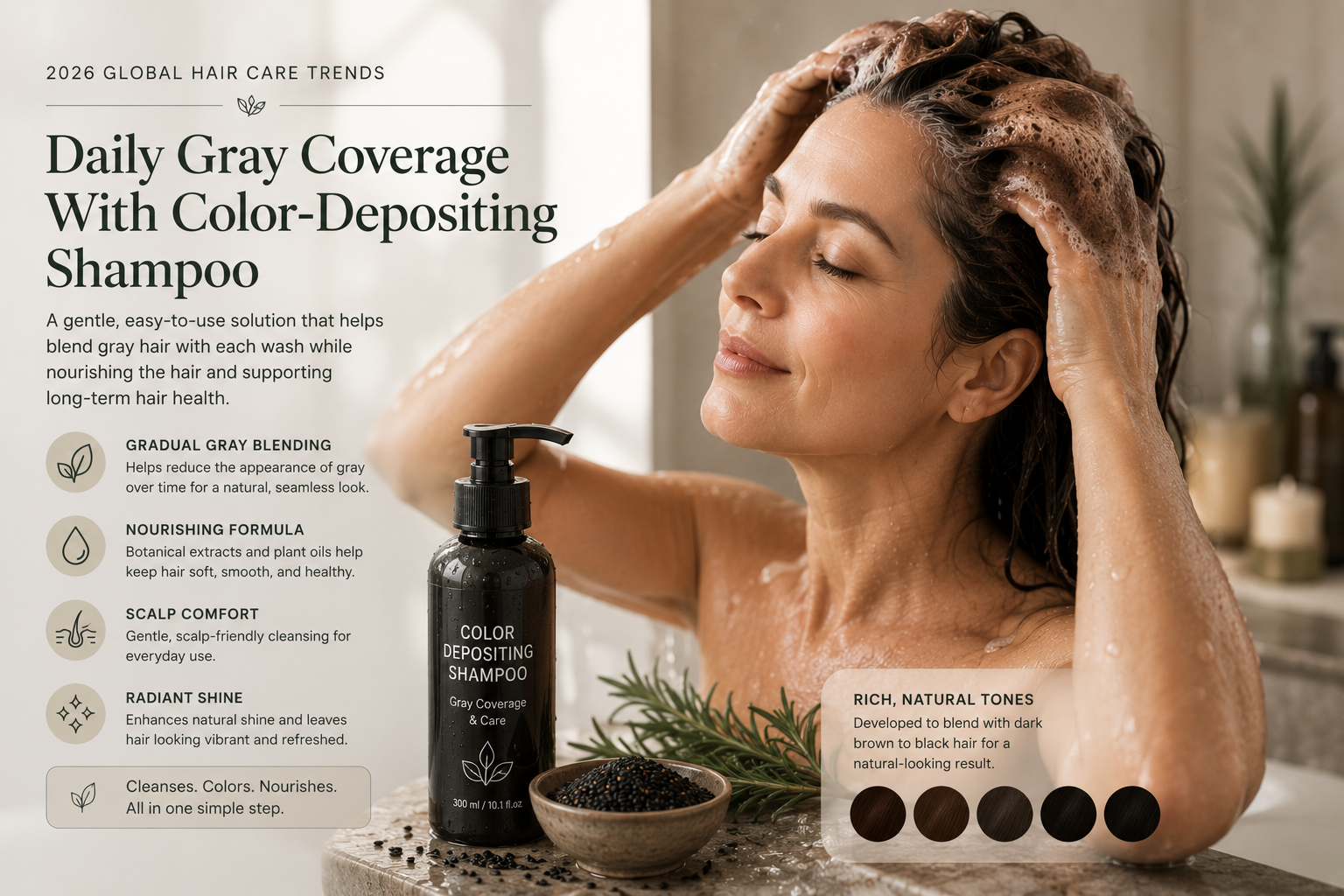
Many scalp-conscious brands are also expanding into gray coverage shampoo solutions that combine gentle cleansing with gradual color maintenance.
3. Ammonia-Free Hair Color Systems: Why Consumers Prefer Low-Irritation Formulations
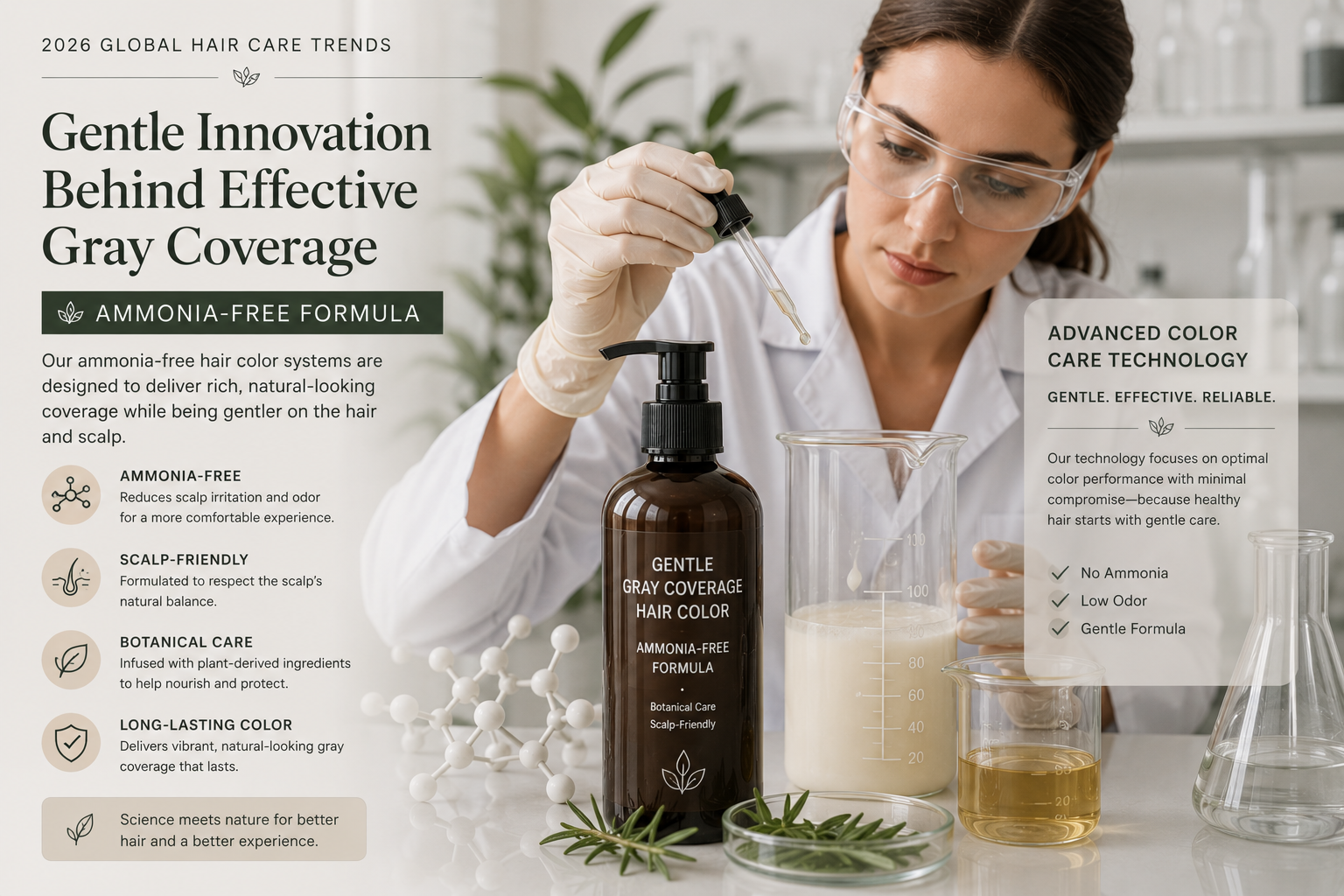
One of the most significant shifts in the gray hair category is the rapid growth of ammonia-free and low-irritation coloring systems.
Compared with traditional high-alkaline dye technologies, modern formulations increasingly focus on:
- Better scalp compatibility
- Reduced chemical odor
- Softer hair feel
- More natural-looking color results
Many brands are also developing alternative gray maintenance formats, including:
- Color-depositing shampoos
- Pigment conditioners
- Herbal coloring creams
- Temporary gray blending products
These formats allow consumers to maintain gray coverage more flexibly while reducing scalp stress from repeated coloring treatments.
According to CosmeticsDesign-Europe, clean beauty and scalp wellness continue to shape innovation across the global hair care market.
4. Traditional Hair Dye vs Modern Gray Hair Maintenance Products
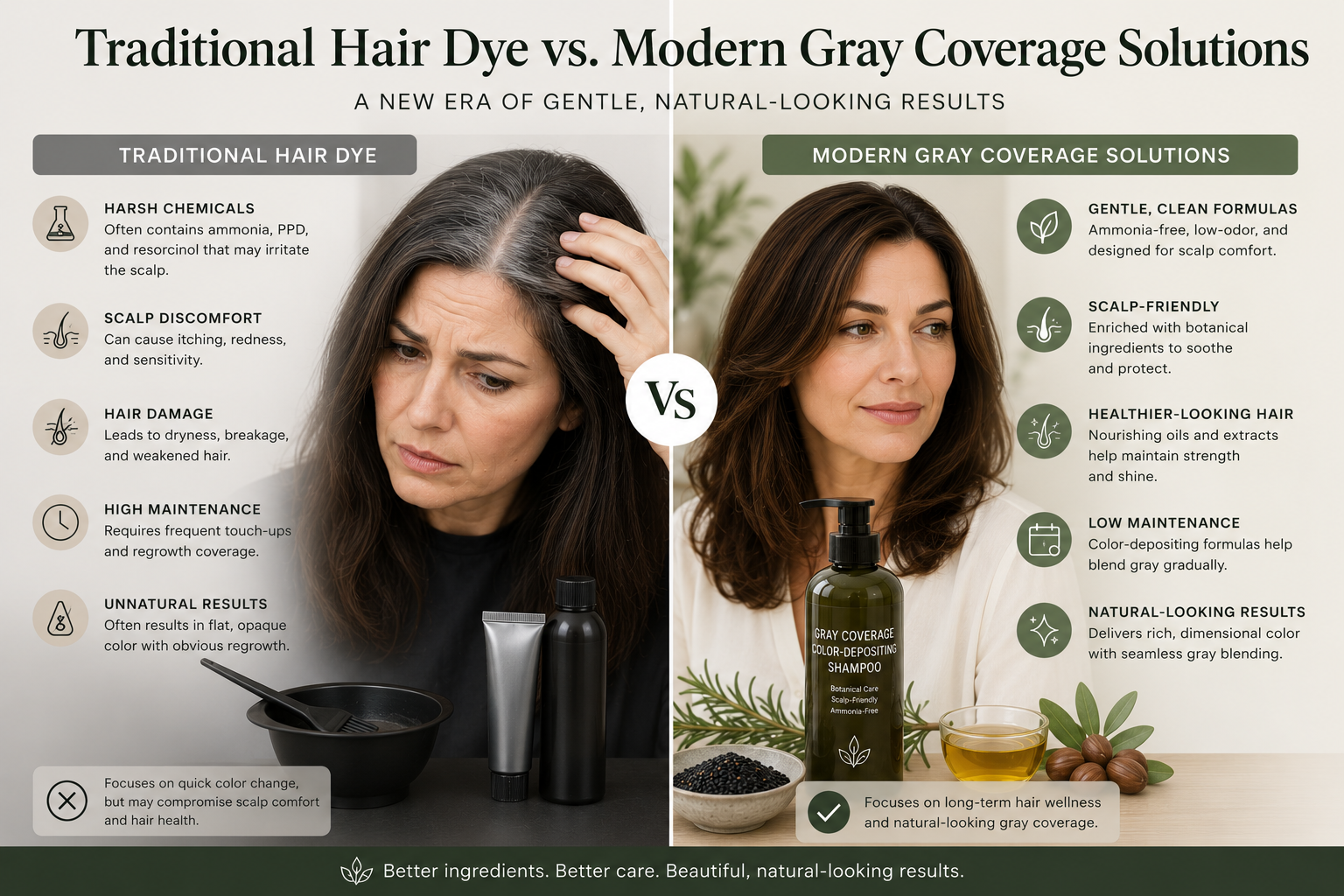
Below is a comparison between traditional permanent dye systems and modern gray hair maintenance products.
| Category | Traditional Permanent Hair Dye | Modern Gray Hair Maintenance Products |
| Core Ingredients | Ammonia, peroxide systems | Botanical extracts, pigment-depositing technologies |
| Scalp Experience | Strong odor, higher irritation potential | Low-irritation, scalp-friendly formulations |
| Hair Condition | May increase dryness and brittleness | Often combined with conditioning oils and repair systems |
| Usage Frequency | Usually every 1–2 months | Can be integrated into daily hair care routines |
| Product Direction | Strong color transformation | Gradual and natural-looking gray blending |
This shift reflects growing consumer demand for scalp-conscious and maintenance-oriented hair care solutions.
5. Gray Hair Care Is Expanding Beyond Simple Hair Coloring
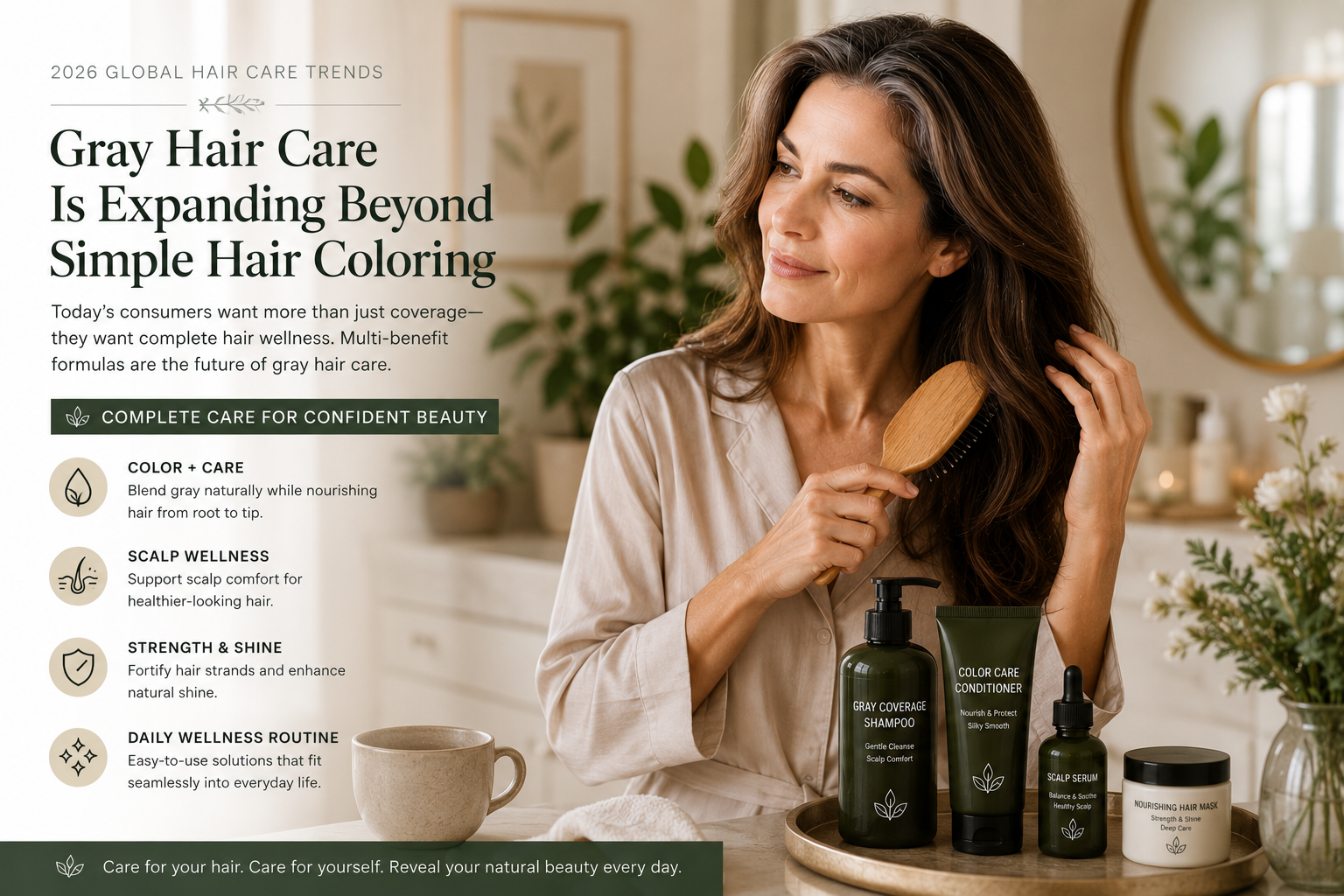
Modern consumers increasingly view gray hair as part of long-term scalp wellness and mature hair maintenance.
As a result, many brands are combining:
- Gray coverage support
- Scalp maintenance
- Hair strengthening
- Moisture repair
- Anti-breakage systems
This shift is creating demand for multifunctional hair care products rather than single-purpose coloring systems.
Modern Product Development Trends
- Sulfate-free cleansing systems
- Botanical extracts
- Scalp-conditioning ingredients
- Lightweight repair oils
- Gentle pigment technologies
This direction aligns closely with current premium hair care trends across global markets.
6. Sustainability Is Influencing Product Development In Hair Care Manufacturing
Sustainability continues to shape purchasing decisions across global beauty supply chains.
Key Sustainability Factors Buyers Focus On
- Ingredient transparency
- Sustainable packaging
- Plastic reduction strategies
- Water-conscious formulations
- Vegan and cruelty-free standards
This trend is also influencing gray hair product development.
Emerging Sustainable Product Formats
- Solid shampoo bars
- Refillable packaging systems
- Concentrated hair care products
- Waterless beauty concepts
Many emerging brands are now exploring waterless beauty and solid shampoo bar development as part of sustainable product collections.
7. OEM And Private Label Opportunities In The Gray Hair Care Market
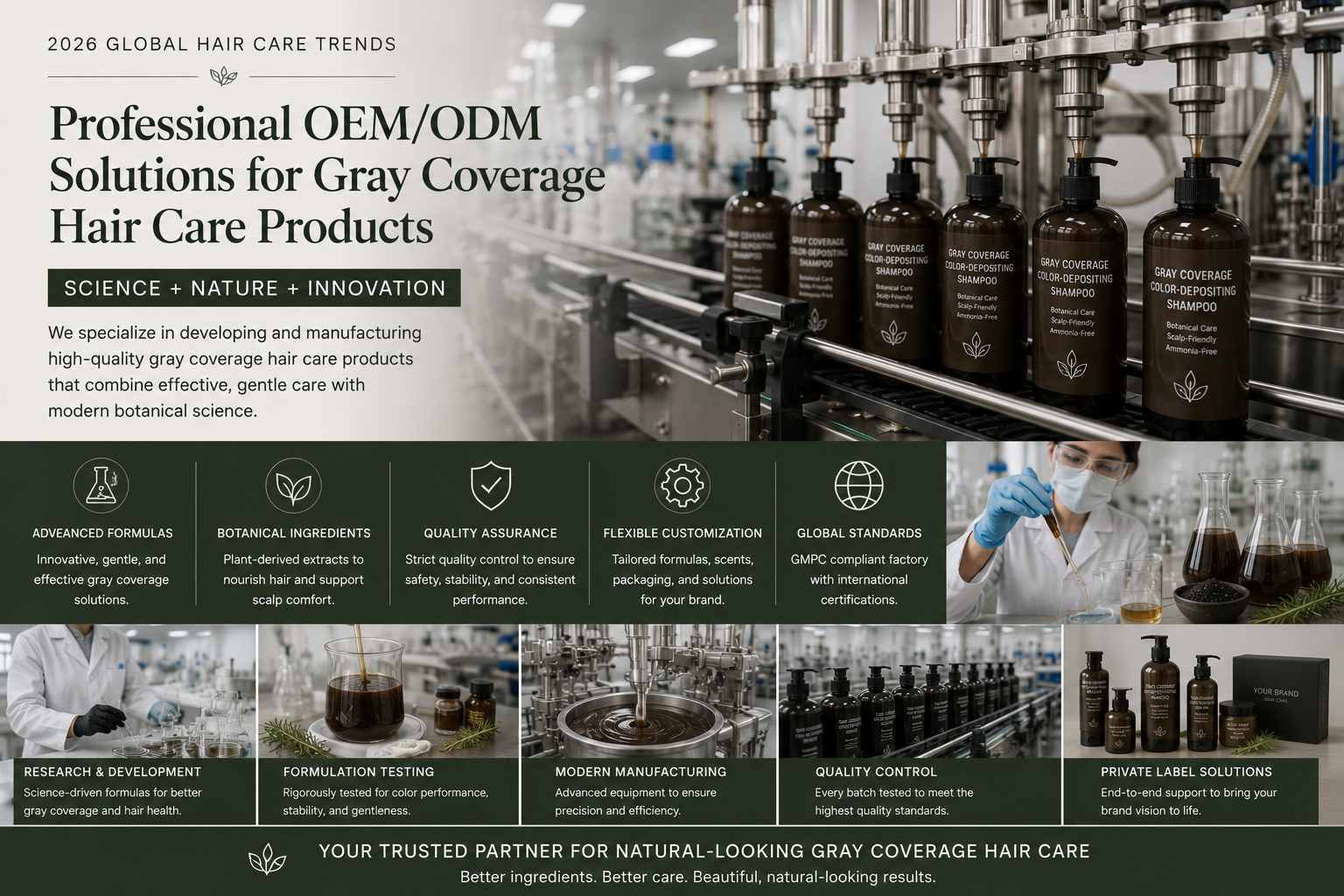
As the gray hair category continues to evolve, demand for differentiated private label products is growing steadily.
Many emerging brands and salon distributors are now exploring:
- Botanical-inspired gray hair shampoo
- Ammonia-free coloring systems
- Scalp-focused maintenance products
- Mature hair repair collections
- Temporary gray blending solutions
For OEM and ODM buyers, manufacturing consistency and formulation stability remain critical factors.
Key Manufacturing Considerations
Formula Stability
Maintaining color consistency and ingredient compatibility during transportation and storage.
Scalp Compatibility
Developing balanced formulations with mild surfactant systems suitable for frequent use.
Ingredient Traceability
Using traceable botanical ingredients and standardized extracts for premium product positioning.
International Compliance Support
- EU cosmetic regulations
- Ingredient documentation
- Stability testing
- Packaging compatibility
- GMP manufacturing systems
Many startup brands are also looking for flexible supply chain models that help reduce MOQ risk in hair care manufacturing.
Professional buyers increasingly prioritize experienced private label hair care manufacturers capable of supporting long-term product development and regulatory documentation.
8. Why More Brands Are Exploring Yedda’s Gray Hair Care Solutions
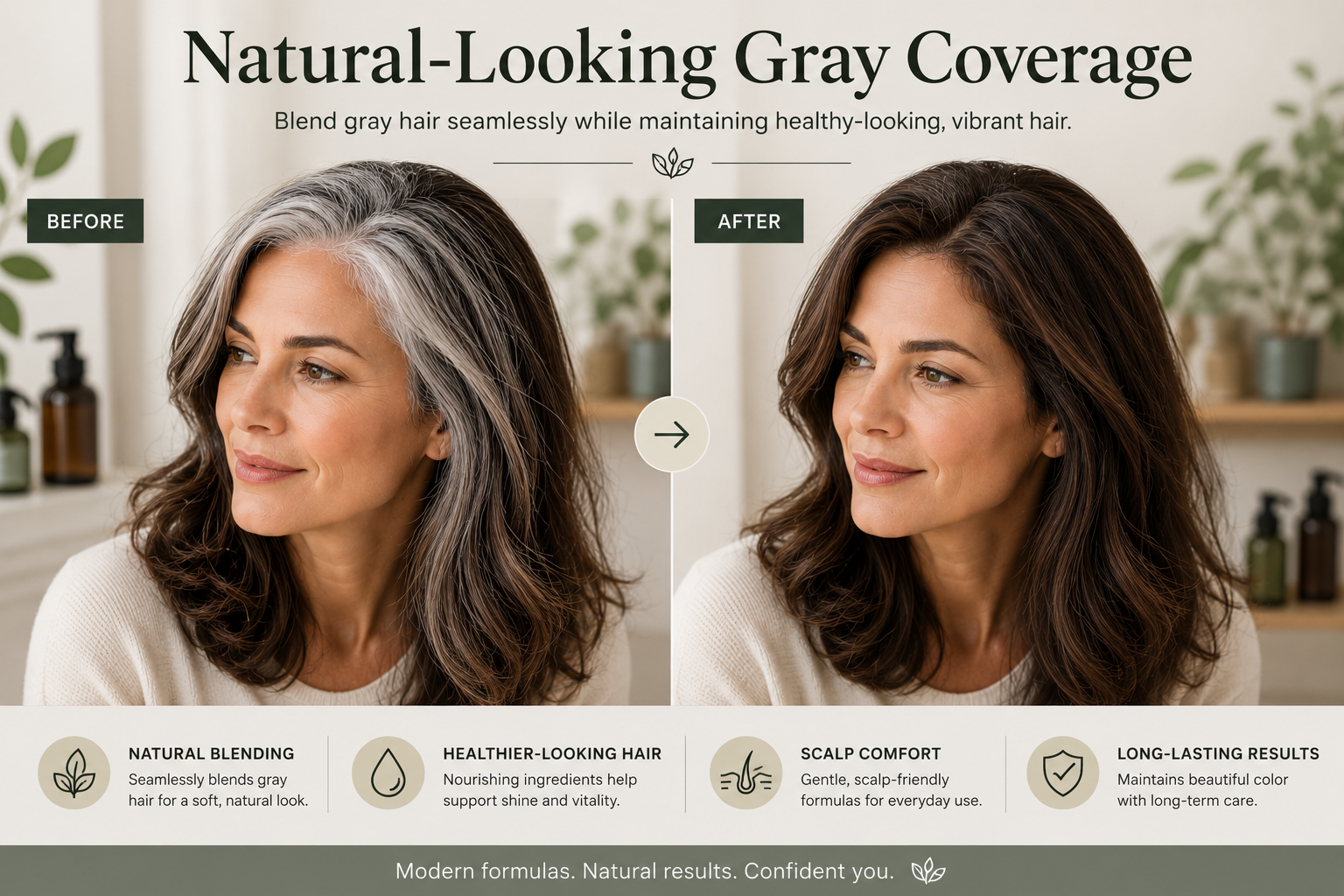
As a professional hair care manufacturer with over 13 years of industry experience, Yedda focuses on scalp-conscious and formulation-driven hair care development.
Yedda supports OEM and private label projects in categories such as:
- Botanical gray hair shampoo
- Sulfate-free scalp care products
- Ginger scalp care collections
- Solid shampoo bars
- Essential oil hair repair systems
- Mature hair maintenance products
The company emphasizes:
- Stable formulation systems
- Ingredient transparency
- Scalp-friendly product concepts
- Sustainable packaging development
- International manufacturing standards
This approach helps global distributors, salon brands, and emerging beauty companies develop differentiated hair care collections aligned with modern market trends.
9. FAQ: Gray Hair Care Market And Product Development
What Is The Difference Between Gray Hair Maintenance Products And Traditional Hair Dye?
Traditional hair dye products are primarily designed for permanent color transformation, while modern gray hair maintenance products focus more on gradual blending, scalp comfort, and daily maintenance.
Why Are Botanical Ingredients Becoming Popular In Gray Hair Care?
Consumers are increasingly interested in ingredient transparency and scalp-friendly formulations. Botanical ingredients help brands position products around gentle care and wellness-focused beauty concepts.
Are Ammonia-Free Gray Hair Products Suitable For Frequent Use?
Many ammonia-free or low-irritation systems are designed for more flexible and frequent maintenance routines compared with traditional permanent dye systems.
What Do Professional Buyers Look For In OEM Gray Hair Products?
Professional buyers often focus on:
- Formula stability
- Scalp compatibility
- Ingredient traceability
- Sustainable packaging
- International compliance support
10. Conclusion
The gray hair care category is evolving from simple color coverage into a broader market focused on scalp wellness, ingredient transparency, and long-term hair maintenance.
Today’s consumers increasingly expect products that balance:
- Effective gray blending
- Scalp comfort
- Botanical positioning
- Sustainable design
- Modern formulation standards
For private label brands and professional buyers, developing technically balanced and market-aligned gray hair care products will remain an important direction within the future global hair care industry.