
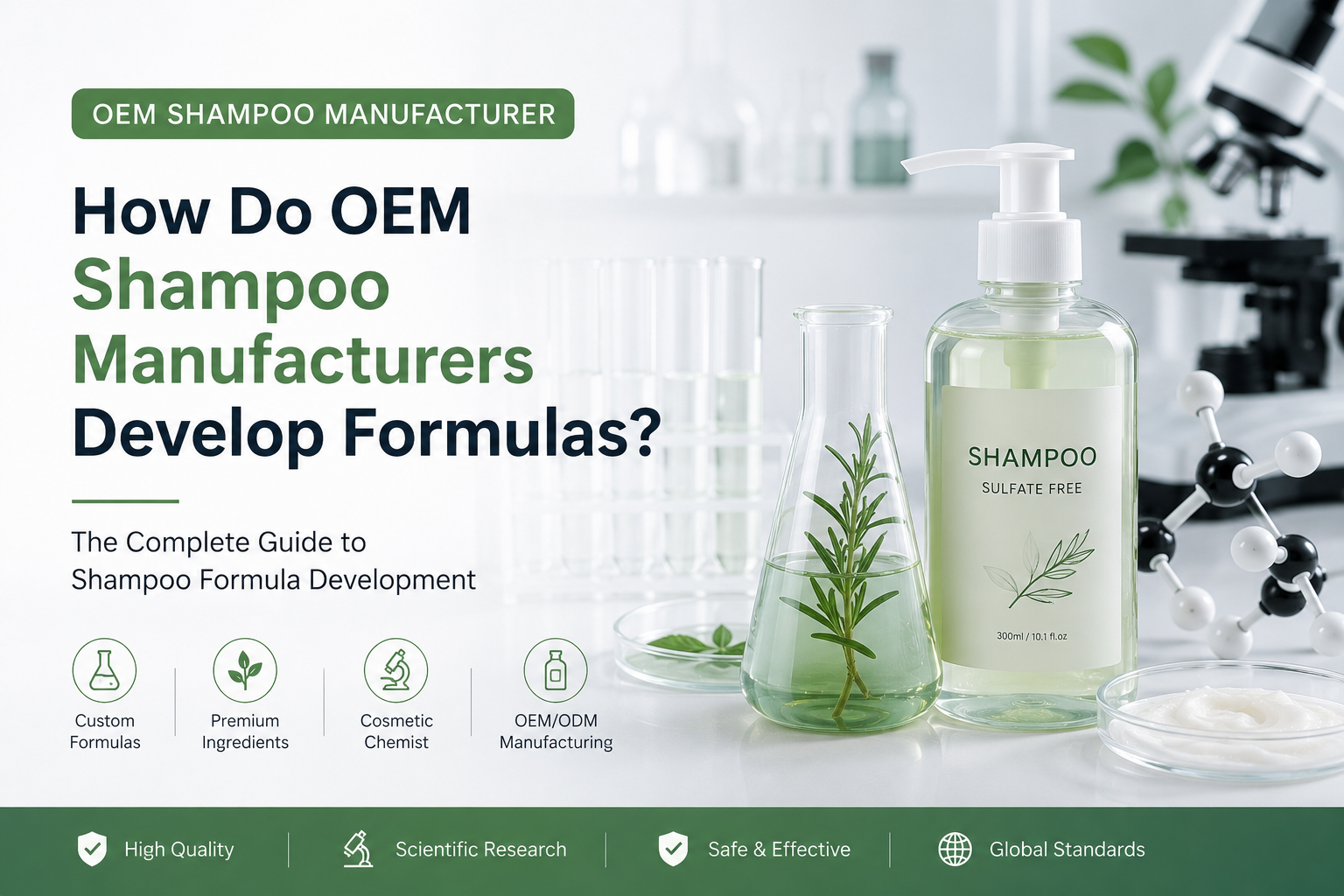
Understanding shampoo formula development is essential for modern beauty brands entering the competitive hair care industry. Whether launching a sulfate-free shampoo, scalp treatment, hair growth product, or salon-quality formula, brands increasingly rely on experienced OEM partners to transform product concepts into commercially successful formulations.
Today’s consumers expect more than basic cleansing products. They want functional ingredients, science-backed claims, clean beauty positioning, scalp care benefits, and premium user experiences. As a result, the role of the OEM shampoo manufacturer has evolved from simple production to full-scale product development and cosmetic innovation.
According to market research from Grand View Research, the global hair care market continues growing rapidly due to rising consumer demand for personalized and functional hair care products, especially in scalp health, hair growth, and clean beauty categories.
This article explains how professional manufacturers develop formulas, how cosmetic chemists select ingredients, how testing is performed, and how brands can successfully create a high-quality private label shampoo formula for global markets.
What Is Shampoo Formula Development?
Shampoo formula development refers to the research, testing, and manufacturing process used to create shampoo products that meet specific performance, safety, and branding requirements.
The development process combines cosmetic science, ingredient compatibility, consumer trends, regulatory standards, and manufacturing feasibility.
Professional formula development usually involves:
- Market trend analysis
- Ingredient selection
- Texture and viscosity adjustment
- Fragrance development
- Performance testing
- Stability testing
- Packaging compatibility testing
- Safety and microbiological evaluation
Unlike generic stock products, a custom shampoo formula is specifically designed around brand positioning, target consumers, and market trends
How OEM Shampoo Manufacturers Develop Formulas
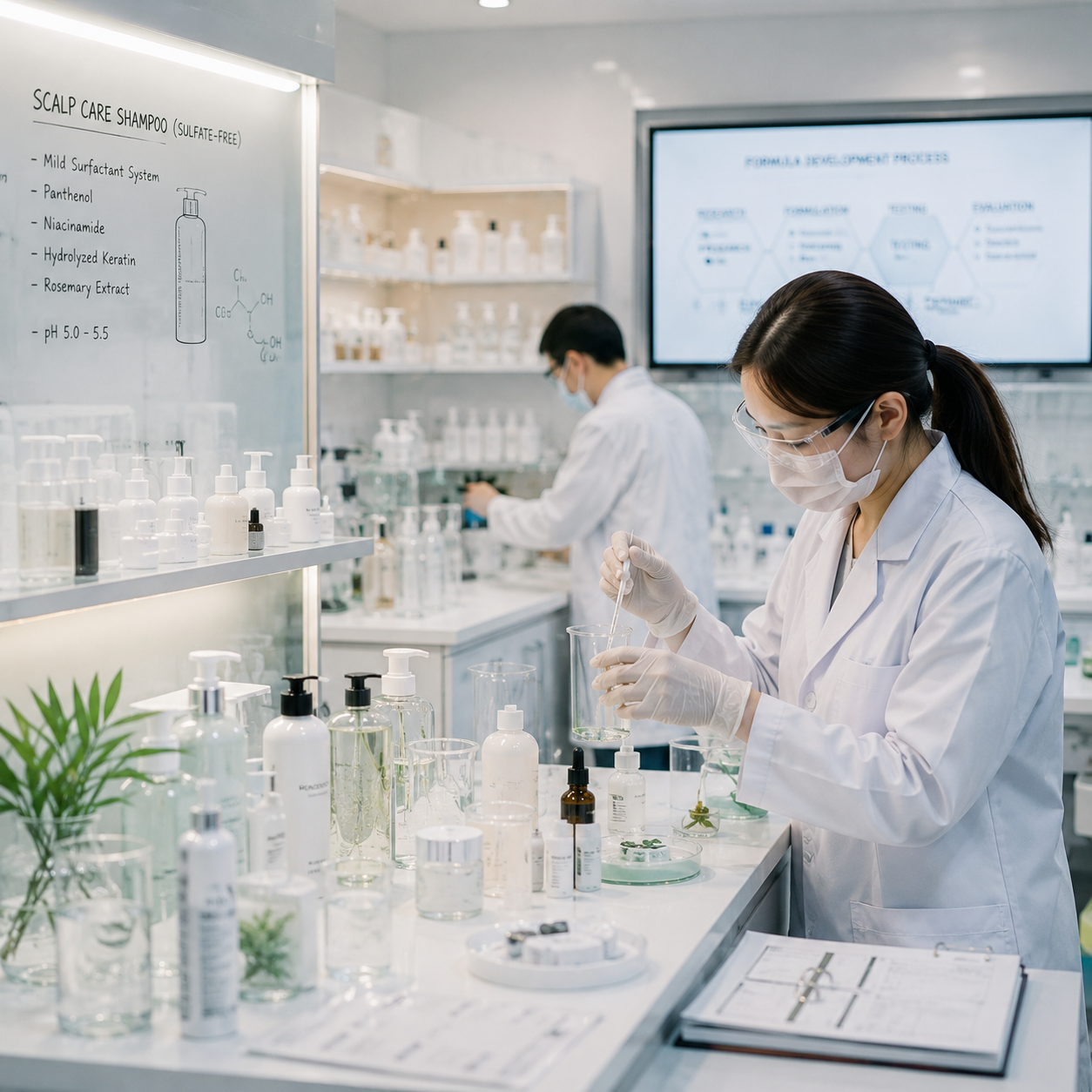
Professional OEM shampoo manufacturers follow a structured product development process that balances performance, scalability, safety, and marketability.
Most projects begin with a consultation phase where brands communicate:
- Target market
- Hair concerns
- Ingredient preferences
- Texture expectations
- Fragrance direction
- Packaging concepts
- Price targets
- Regulatory requirements
After the initial briefing, the manufacturer’s R&D team begins creating formula concepts based on the project goals.
Modern OEM suppliers increasingly integrate trend forecasting into formula development, especially for categories such as:
- Sulfate-free shampoo
- Scalp care
- Hair growth shampoo
- Bond repair systems
- Microbiome-friendly formulas
- Silicone-free shampoo
- Clean beauty hair care
According to Mintel Beauty & Personal Care research, consumers increasingly prioritize ingredient transparency, scalp wellness, and multifunctional hair care products, influencing how manufacturers formulate modern shampoos.
The Role of Cosmetic Chemists in Shampoo Formula Development
A professional cosmetic chemist plays a critical role in shampoo formulation.
Cosmetic chemists combine chemistry, dermatology knowledge, ingredient science, and formulation expertise to create stable and effective products.
During development, cosmetic chemists evaluate:
- Ingredient compatibility
- Foaming performance
- Cleansing strength
- Conditioning efficiency
- Scalp sensitivity
- Preservation systems
- pH balance
- Texture optimization
For example, shampoos designed for damaged hair may require proteins, amino acids, and conditioning polymers, while scalp detox formulas may use exfoliating acids or botanical extracts.
Cosmetic chemists also help ensure that formulas remain stable under different storage temperatures and transportation conditions.
Understanding the Structure of a Private Label Shampoo Formula
A professional private label shampoo formula contains multiple ingredient systems working together to achieve specific performance goals.
Typical formula components include:
- Surfactants
- Conditioning agents
- Thickeners
- Botanical extracts
- Proteins
- Silicones
- Preservatives
- Fragrance oils
- Colorants
- pH adjusters
Surfactants are responsible for cleansing and foaming performance.
Conditioning ingredients improve softness, manageability, and hair smoothness.
Modern clean beauty formulas increasingly replace harsh sulfates with gentler cleansing systems derived from coconut or amino acid surfactants.
Hair care brands targeting premium markets often prioritize:
- Sulfate-free systems
- Silicone-free positioning
- Vegan ingredients
- Plant-based extracts
- Scalp barrier support
- Microbiome-friendly ingredients
How Ingredient Trends Influence Shampoo Formula Development
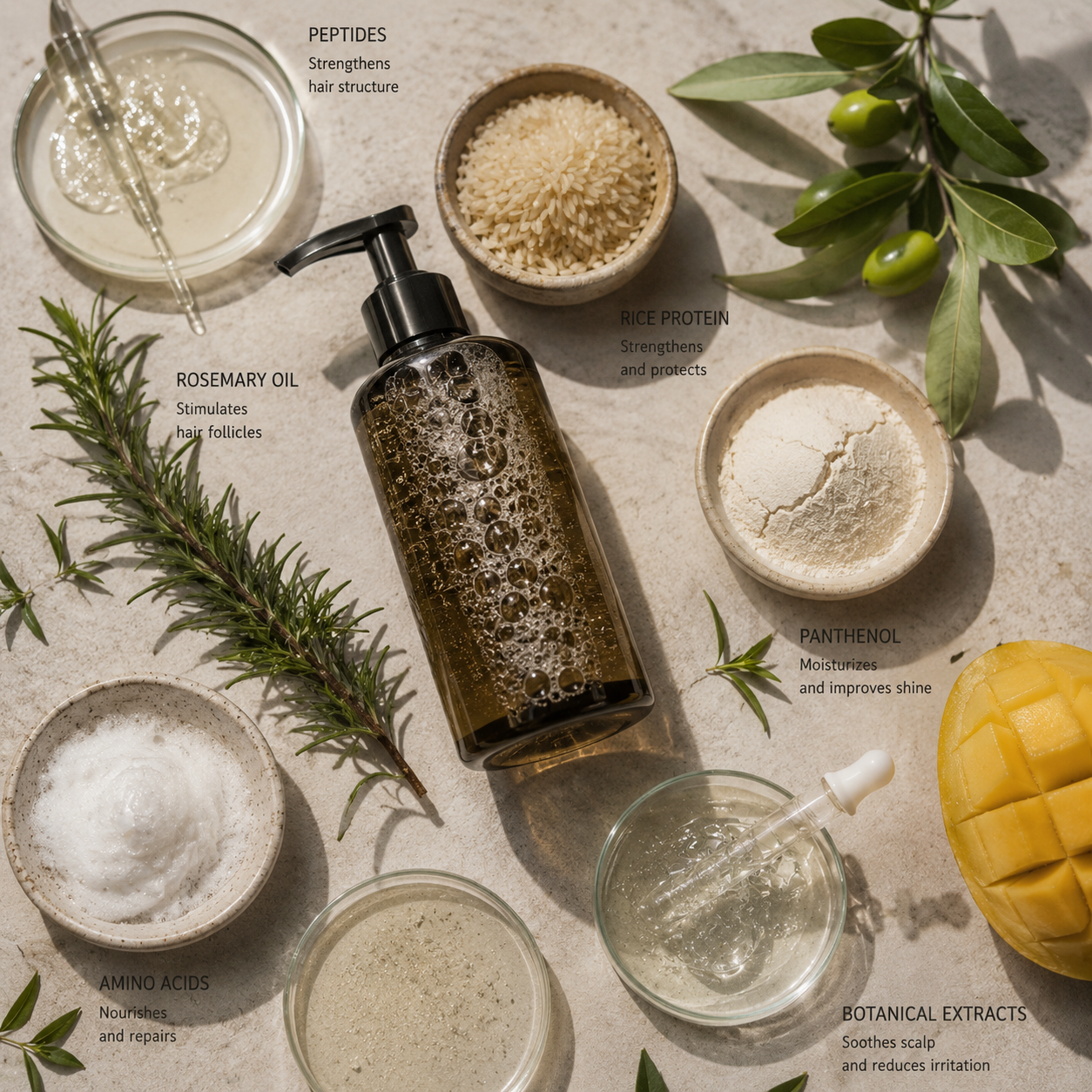
Ingredient trends significantly influence the direction of modern shampoo R&D.
Consumers increasingly seek functional ingredients with scientifically supported benefits.
Some of the fastest-growing hair care ingredients include:
- Rosemary oil
- Batana oil
- Biotin
- Peptides
- Niacinamide
- Keratin proteins
- Caffeine
- Tea tree oil
- Rice water extract
- Fermented botanical ingredients
According to CosmeticsDesign Europe, scalp care and functional ingredient positioning continue becoming major growth drivers in the global hair care market.
As a result, many OEM suppliers now offer advanced ingredient sourcing and customized active systems for different market segments.
Custom Shampoo Formula Development Process Explained
The custom shampoo formula development process usually follows multiple stages.
| Development Stage | Purpose |
| Market Research | Identify target trends and positioning |
| Ingredient Selection | Choose functional and compatible ingredients |
| Prototype Formulation | Create initial sample versions |
| Internal Testing | Evaluate texture, foam, and stability |
| Client Sampling | Collect feedback and revisions |
| Stability Testing | Verify long-term formula performance |
| Packaging Compatibility | Ensure formula works with packaging |
| Final Approval | Prepare for mass production |
This structured process helps reduce manufacturing risks and ensures consistent product quality.
Shampoo Stability Testing and Formula Safety
Stability testing is one of the most important stages in shampoo formula development.
Manufacturers perform stability tests to ensure formulas maintain:
- Texture consistency
- Color stability
- Fragrance integrity
- Foaming performance
- Microbiological safety
- Packaging compatibility
Common testing procedures include:
- High-temperature testing
- Freeze-thaw testing
- Centrifuge testing
- Microbiological challenge testing
- Long-term shelf-life testing
According to Cosmetics Europe regulatory guidance, product safety assessment and stability testing are becoming increasingly important for cosmetic exports and international compliance.
Without proper testing, formulas may separate, discolor, leak, or lose performance over time.
How OEM Manufacturers Develop Sulfate-Free and Clean Beauty Formulas
Sulfate-free and clean beauty shampoos are among the fastest-growing segments in hair care manufacturing.
However, developing effective sulfate-free systems can be technically challenging.
Traditional sulfates provide strong cleansing and foam generation, while sulfate-free surfactants often require careful balancing to maintain consumer satisfaction.
OEM R&D teams usually combine multiple surfactants to optimize:
- Foam quality
- Mildness
- Cleansing efficiency
- Viscosity
- Scalp comfort
Clean beauty formulations may also exclude:
- Sulfates
- Silicones
- Parabens
- Mineral oils
- Artificial dyes
As consumer awareness increases, brands increasingly request formulas with vegan, cruelty-free, and environmentally friendly positioning.
Packaging Compatibility in Shampoo Formula Development
Packaging compatibility testing is another important part of the development process.
Some active ingredients may react with packaging materials over time.
Manufacturers therefore test formulas with:
- PET bottles
- HDPE containers
- Airless pumps
- Refill pouches
- Aluminum packaging
- Luxury acrylic bottles
Compatibility testing helps prevent:
- Leakage
- Bottle deformation
- Discoloration
- Pump failure
- Ingredient instability
Professional OEM suppliers usually coordinate formula and packaging development simultaneously to reduce launch delays.
How Long Does Shampoo Formula Development Take?
The timeline for shampoo formula development depends on the complexity of the project.
Stock formula customization may only require a few days, while fully customized formulas often require several weeks.
| Development Stage | Estimated Timeline |
| Concept Discussion | 1–3 Days |
| Ingredient Selection | 3–7 Days |
| Prototype Development | 7–14 Days |
| Sample Revisions | 7–21 Days |
| Stability Testing | 14–30 Days |
| Packaging Compatibility | 7–14 Days |
Complex projects involving innovative ingredients or regulatory certifications may require additional testing time.
Challenges OEM Shampoo Manufacturers Face During Formula Development
Developing high-performance shampoo formulas involves multiple technical challenges.
Common formulation challenges include:
- Balancing cleansing and mildness
- Maintaining foam quality
- Preventing formula separation
- Achieving fragrance stability
- Ensuring ingredient compatibility
- Managing viscosity consistency
- Meeting regulatory standards
Ingredient supply chain instability can also affect development timelines.
According to McKinsey & Company supply chain insights, raw material volatility and global logistics disruptions continue impacting cosmetic manufacturing and ingredient sourcing.
How to Choose a Professional OEM Shampoo Manufacturer
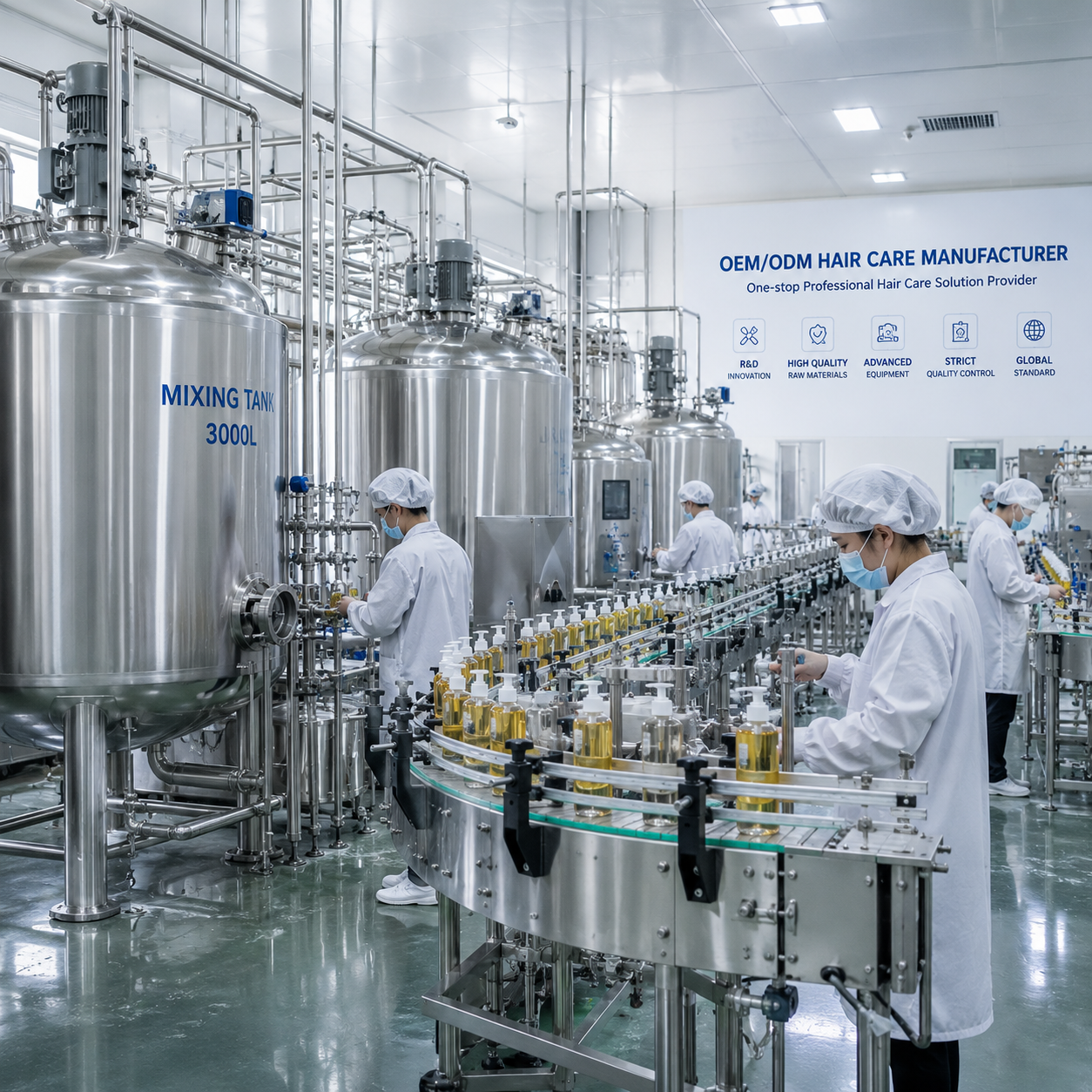
Choosing the right OEM shampoo manufacturer is essential for successful product launches.
Brands should evaluate suppliers based on:
- R&D capability
- Cosmetic chemist expertise
- Ingredient sourcing ability
- Manufacturing certifications
- Packaging development support
- Testing capability
- Export experience
- Communication efficiency
Professional manufacturers should provide transparent development processes, realistic timelines, and technical guidance throughout the project.
Manufacturers with strong R&D capabilities can also help brands identify emerging ingredient trends and optimize market positioning.
Why Shampoo Formula Development Matters for Brand Success
In today’s highly competitive beauty industry, product quality and formulation innovation play a major role in brand success.
Consumers increasingly expect visible performance, premium textures, clean ingredients, and science-backed claims.
As a result, professional shampoo formula development is no longer just a manufacturing process. It has become a strategic advantage for hair care brands seeking long-term market growth.
Brands that invest in advanced formulation, ingredient science, and reliable OEM partnerships are better positioned to build customer trust, increase repeat purchases, and compete in premium global markets.
FAQ
How do OEM shampoo manufacturers develop formulas?
OEM shampoo manufacturers develop formulas through market research, ingredient selection, laboratory testing, stability evaluation, and packaging compatibility testing to create safe and effective hair care products.
What does a cosmetic chemist do in shampoo development?
A cosmetic chemist designs and tests shampoo formulas, evaluates ingredient compatibility, optimizes performance, and ensures product stability and safety.
How long does shampoo formula development take?
Depending on customization complexity, shampoo formula development can take anywhere from several days to several weeks, especially when extensive testing is required.
What is a private label shampoo formula?
A private label shampoo formula is a customized hair care formulation developed by an OEM manufacturer for a brand that sells products under its own label.