
Why Microbiome Scalp Care Is Becoming the Fastest-Growing Hair Care Trend
The global hair care industry is entering a new era driven by scalp health, biotechnology ingredients, and personalized wellness solutions. Among all emerging categories, microbiome scalp care is rapidly becoming one of the most discussed innovations across the beauty, dermatology, and professional salon sectors.
Consumers are no longer only searching for basic shampoos or traditional conditioners. Instead, they are increasingly looking for products that support scalp balance, strengthen the scalp barrier, improve hair density, and reduce irritation caused by environmental stress, harsh surfactants, and over-cleansing.
According to reports from Mintel, Cosmetics Business, and Grand View Research, microbiome-based beauty products are expected to become one of the fastest-growing sectors in global personal care over the next decade.
For OEM and ODM hair care manufacturers, this trend represents a major opportunity to develop high-value scalp care formulations for salon brands, clean beauty startups, dermatology-focused retailers, and e-commerce businesses.
What Is Microbiome Scalp Care?
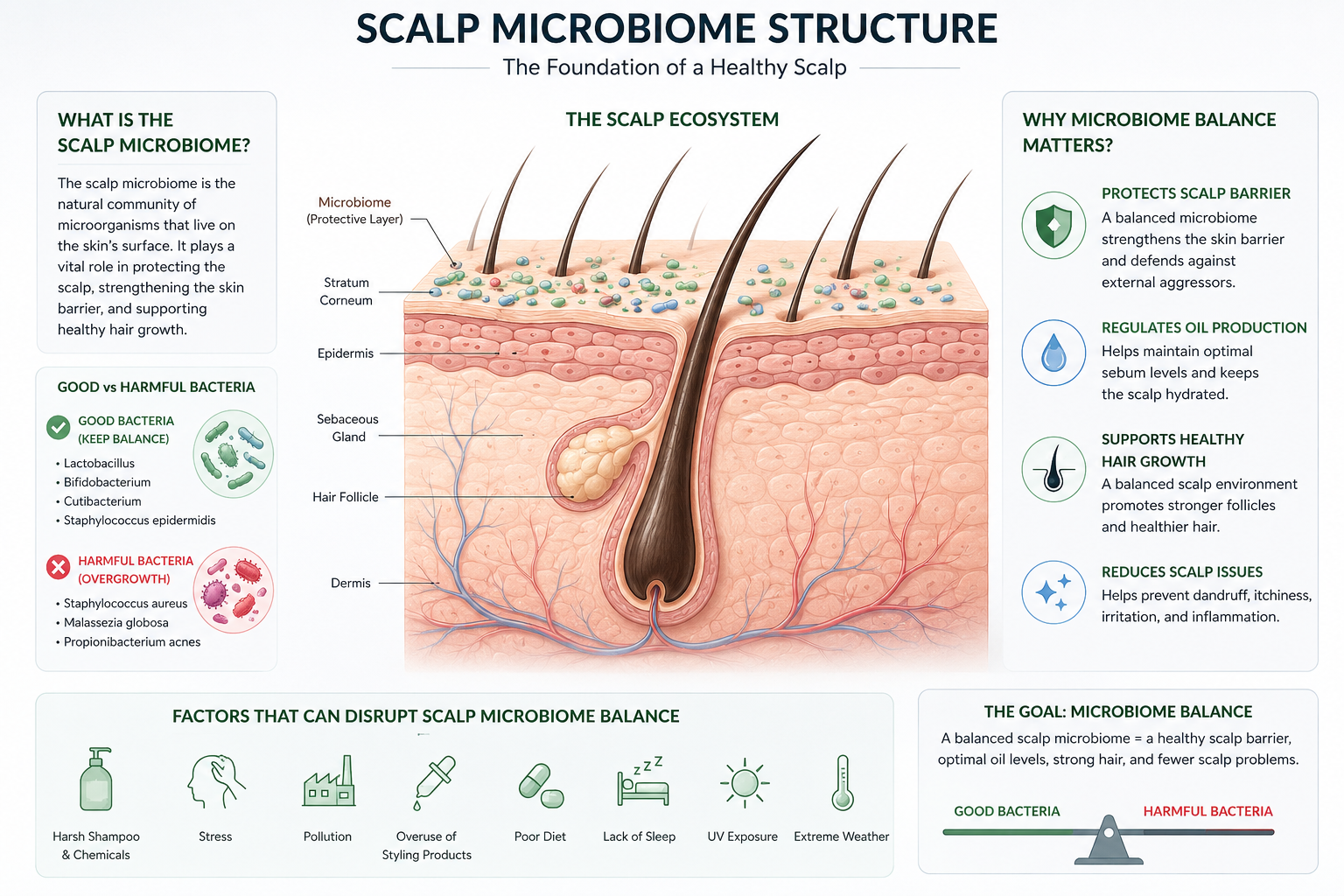
Microbiome scalp care refers to hair care products designed to maintain and support the natural ecosystem of microorganisms living on the scalp. Similar to the skin microbiome, the scalp contains billions of beneficial bacteria and microorganisms that help regulate oil production, inflammation, moisture balance, and scalp health.
When the scalp microbiome becomes unbalanced due to aggressive cleansing agents, pollution, stress, or excessive styling products, consumers may experience:
- Scalp irritation
- Excessive oiliness
- Dry scalp conditions
- Dandruff
- Sensitivity and redness
- Hair thinning
- Scalp inflammation
Modern microbiome scalp care products aim to restore this balance using gentle surfactants, probiotics, prebiotics, postbiotics, botanical extracts, and scalp barrier-supporting ingredients.
Why Consumers Are Shifting Toward Microbiome Scalp Care
The global beauty industry has experienced a major shift toward “skinification” of hair care. Consumers now treat the scalp similarly to facial skin, focusing on hydration, microbiome balance, anti-inflammatory ingredients, and long-term scalp wellness.
This trend is especially strong among:
- Millennial consumers
- Gen Z beauty buyers
- Professional salon clients
- Clean beauty shoppers
- Sensitive scalp consumers
- Hair loss treatment users
Microbiome Scalp Care and the Rise of Clean Beauty
The clean beauty movement is playing a major role in the growth of microbiome scalp care products. Consumers are actively avoiding harsh sulfates, silicones, parabens, and artificial additives that may disrupt scalp balance.
As a result, many brands are now launching:
- Sulfate free microbiome shampoo
- Silicone free scalp care
- Probiotic scalp serum
- Prebiotic scalp treatments
- Microbiome scalp masks
- Barrier repair scalp essence
These products are often marketed alongside:
- Vegan formulations
- Biotechnology ingredients
- Dermatologist-tested formulas
- Sensitive scalp solutions
- Clean scalp wellness conceptsa
How OEM Manufacturers Are Responding to the Microbiome Scalp Care Trend
For OEM and ODM manufacturers, microbiome scalp care is creating a new generation of high-margin product opportunities.
Leading hair care manufacturers are investing heavily in:
- Biotech scalp ingredients
- Probiotic fermentation technology
- Microbiome-friendly surfactants
- Scalp barrier repair systems
- Clinical scalp testing
- Sensitive scalp formulation research
An experienced OEM hair care manufacturer can help brands develop:
- Custom microbiome scalp shampoo
- Probiotic scalp serum
- Scalp microbiome ampoules
- Microbiome scalp exfoliator
- Salon-grade scalp treatment products
- Professional scalp wellness systems
Compared to traditional shampoo categories, microbiome scalp care products often command higher retail pricing due to their advanced scientific positioning and ingredient complexity.
Key Ingredients Used in Microbiome Scalp Care Products
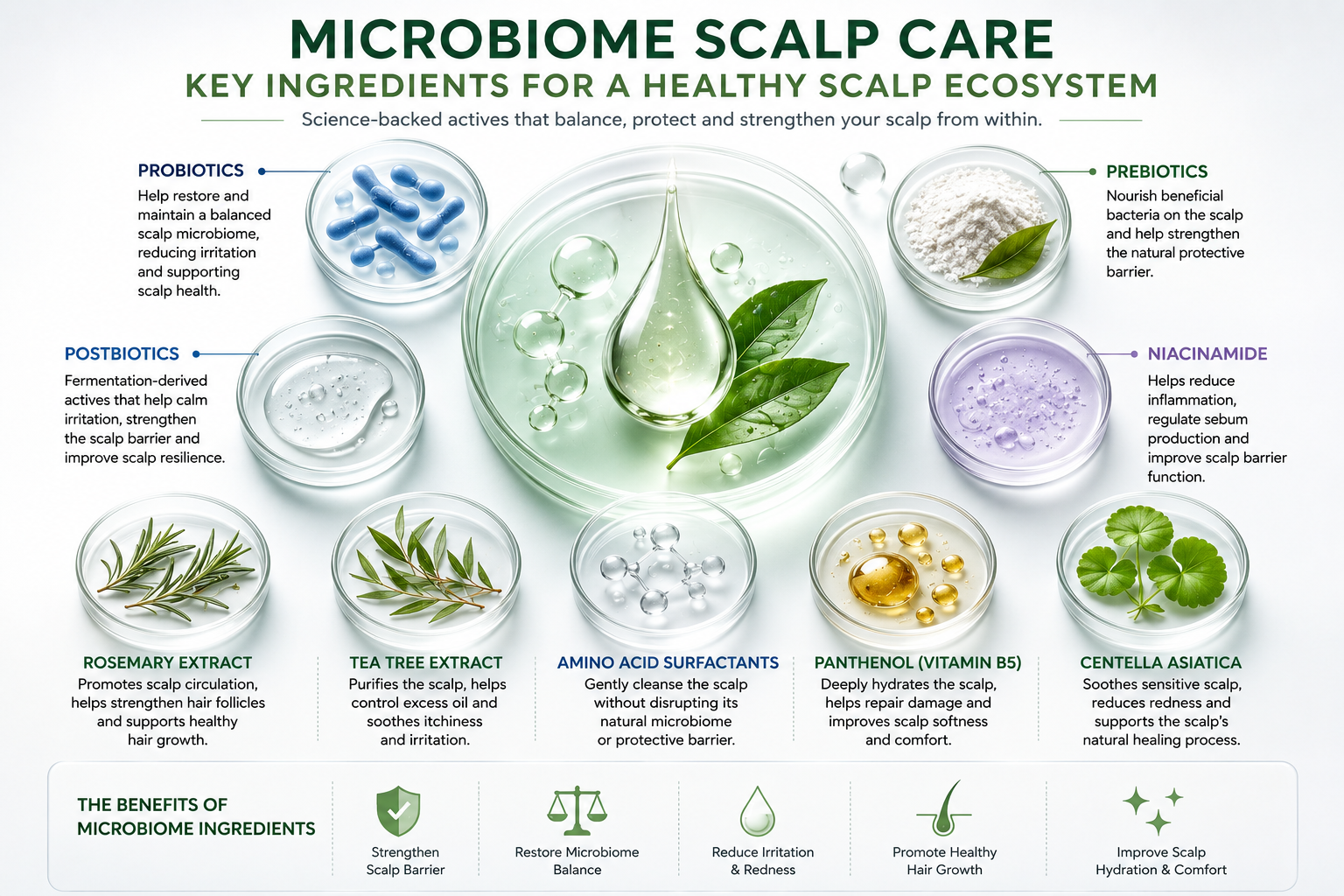
Ingredient innovation is one of the biggest drivers behind microbiome scalp care growth.
| Ingredient | Function |
|---|---|
| Prebiotics | Support beneficial scalp bacteria |
| Probiotics | Help rebalance scalp microbiome |
| Postbiotics | Strengthen scalp barrier function |
| Niacinamide | Reduce scalp inflammation |
| Panthenol | Improve scalp hydration |
| Tea Tree Extract | Purify oily scalp conditions |
| Rosemary Extract | Support scalp circulation |
| Amino Acid Surfactants | Gentle scalp cleansing |
Modern consumers increasingly prefer formulas that combine biotechnology with botanical scalp wellness ingredients.
Microbiome Scalp Care Market Trends in 2026
Several key trends are accelerating the global demand for microbiome scalp care products.
1. Sensitive Scalp Awareness
Consumers are becoming more aware of scalp irritation caused by harsh detergents and environmental pollution. This is increasing demand for scalp-friendly formulations.
2. Hair Loss Prevention
Many consumers now associate scalp microbiome health with hair growth and follicle strength.
3. Clinical Beauty Positioning
Hair care brands are increasingly using dermatology-inspired marketing strategies to position scalp products as science-driven wellness solutions.
4. Professional Salon Scalp Treatments
Salon chains are expanding scalp spa services and microbiome scalp treatment programs.
5. TikTok and Social Media Influence
Social media has dramatically accelerated awareness of scalp health routines and microbiome-friendly shampoos.
Why Microbiome Scalp Care Is Highly Profitable for B2B Brands
For distributors, salon brands, and e-commerce companies, microbiome scalp care offers several strong business advantages.
- Higher average selling prices
- Strong clean beauty positioning
- High repeat purchase rates
- Premium salon opportunities
- Scientific product storytelling
- Long-term market scalability
Unlike highly saturated traditional shampoo categories, microbiome scalp care remains relatively underdeveloped in many global markets, creating excellent opportunities for early-entry brands.
OEM and ODM Opportunities in Microbiome Scalp Care Manufacturing
OEM and ODM manufacturers that specialize in scalp wellness and biotechnology ingredients will likely dominate future hair care innovation.
Popular B2B product categories include:
- Microbiome scalp shampoo
- Scalp barrier repair serum
- Prebiotic scalp mist
- Probiotic scalp tonic
- Microbiome scalp exfoliator
- Scalp microbiome ampoule
- Sensitive scalp shampoo
OEM manufacturers offering:
- Low MOQ production
- Custom scalp formulations
- Clinical testing support
- Biotech ingredient sourcing
- Sustainable packaging
will gain significant competitive advantages in the global B2B beauty market.
Microbiome Scalp Care vs Traditional Hair Care
| Factor | Traditional Hair Care | Microbiome Scalp Care |
|---|---|---|
| Primary Focus | Hair appearance | Scalp ecosystem balance |
| Ingredients | Traditional surfactants | Prebiotics and probiotics |
| Consumer Positioning | Basic cleansing | Scalp wellness |
| Target Market | Mass market | Premium beauty consumers |
| Brand Value | Moderate | High-end scientific positioning |
The Future of Microbiome Scalp Care Industry
The future of microbiome scalp care will likely expand into:
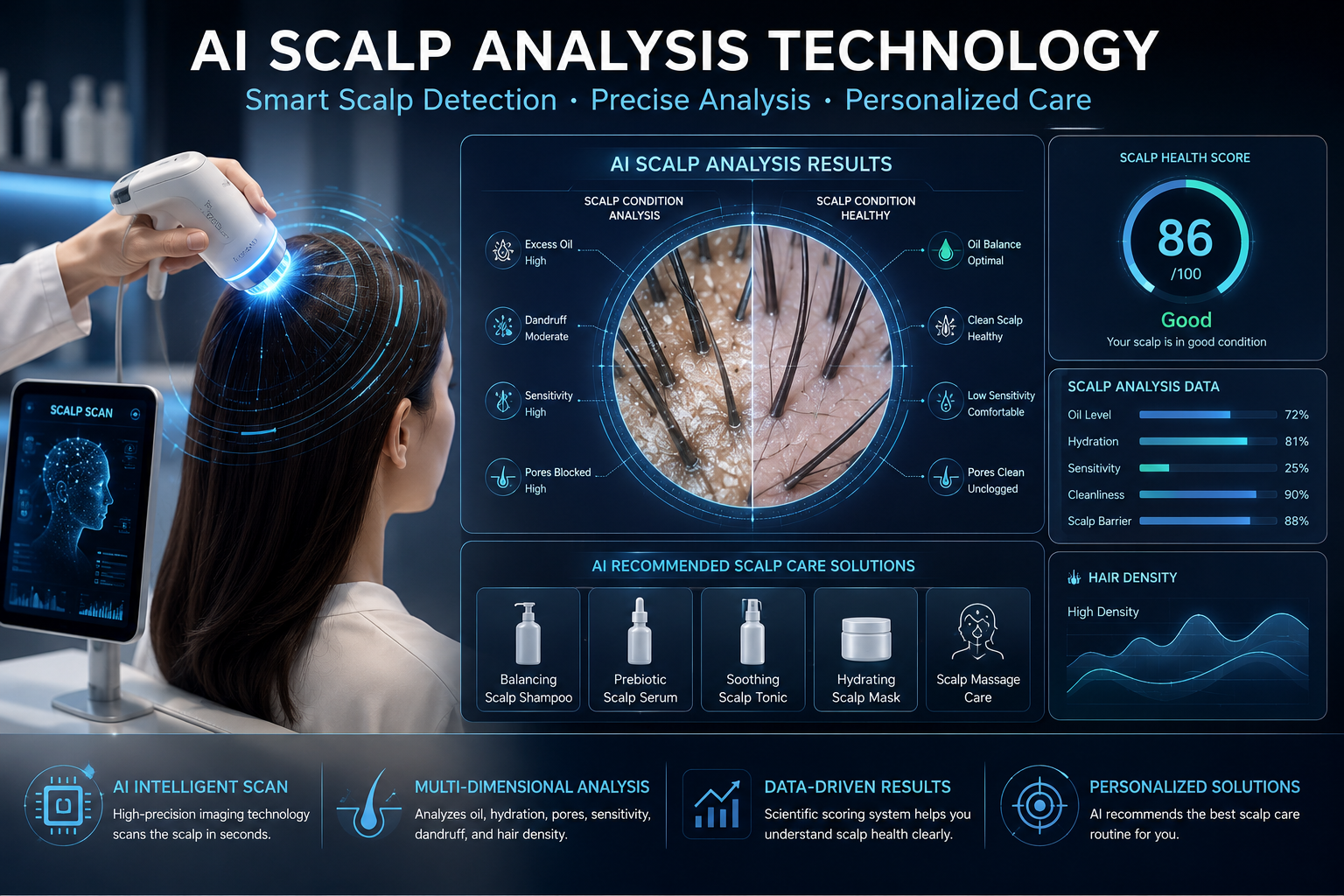
- Personalized scalp diagnostics
- AI scalp analysis
- Biotechnology scalp ingredients
- Microbiome scalp supplements
- Professional scalp spa systems
- Dermatology-inspired scalp wellness programs

According to multiple industry analysts, microbiome beauty products may become one of the largest premium beauty segments within the next decade.
Conclusion
The rise of microbiome scalp care represents a major transformation within the global hair care industry. Consumers are increasingly prioritizing scalp wellness, gentle formulations, biotechnology ingredients, and long-term hair health over traditional cosmetic-only solutions.
For OEM and ODM manufacturers, this trend creates substantial opportunities to develop high-value, science-driven scalp care products for salon brands, clean beauty startups, and global distributors.
Brands that invest early in microbiome scalp care innovation, probiotic scalp formulations, and scalp wellness technologies will likely gain strong competitive advantages as the market continues evolving.
Frequently Asked Questions About Microbiome Scalp Care
1. What is microbiome scalp care?
Microbiome scalp care refers to hair care products designed to support and balance the natural microorganisms living on the scalp. These products typically use probiotics, prebiotics, postbiotics, and gentle cleansing systems to improve scalp health and reduce irritation.
2. Why is microbiome scalp care becoming popular in the hair care industry?
Consumers are increasingly focusing on scalp wellness, sensitive scalp solutions, and clean beauty formulations. Social media trends, dermatologist recommendations, and scientific scalp care innovations are driving rapid growth in microbiome scalp care products worldwide.
3. What ingredients are commonly used in microbiome scalp care products?
Popular ingredients include probiotics, prebiotics, niacinamide, amino acid surfactants, rosemary extract, panthenol, tea tree oil, and postbiotic fermentation ingredients that help maintain scalp balance and strengthen the scalp barrier.
4. Can OEM manufacturers develop custom microbiome scalp care formulations?
Yes. Professional OEM hair care manufacturers can develop customized microbiome scalp care products, including probiotic shampoos, scalp serums, scalp exfoliators, and sensitive scalp treatments based on specific market and brand requirements.
5. What types of brands are investing in microbiome scalp care products?
Salon brands, clean beauty companies, dermatology-focused brands, TikTok beauty startups, and premium scalp wellness brands are increasingly investing in microbiome scalp care because of its strong growth potential and premium market positioning.