
Salon Professional System vs Home Care System: Understanding the Future of Hair Care Industry
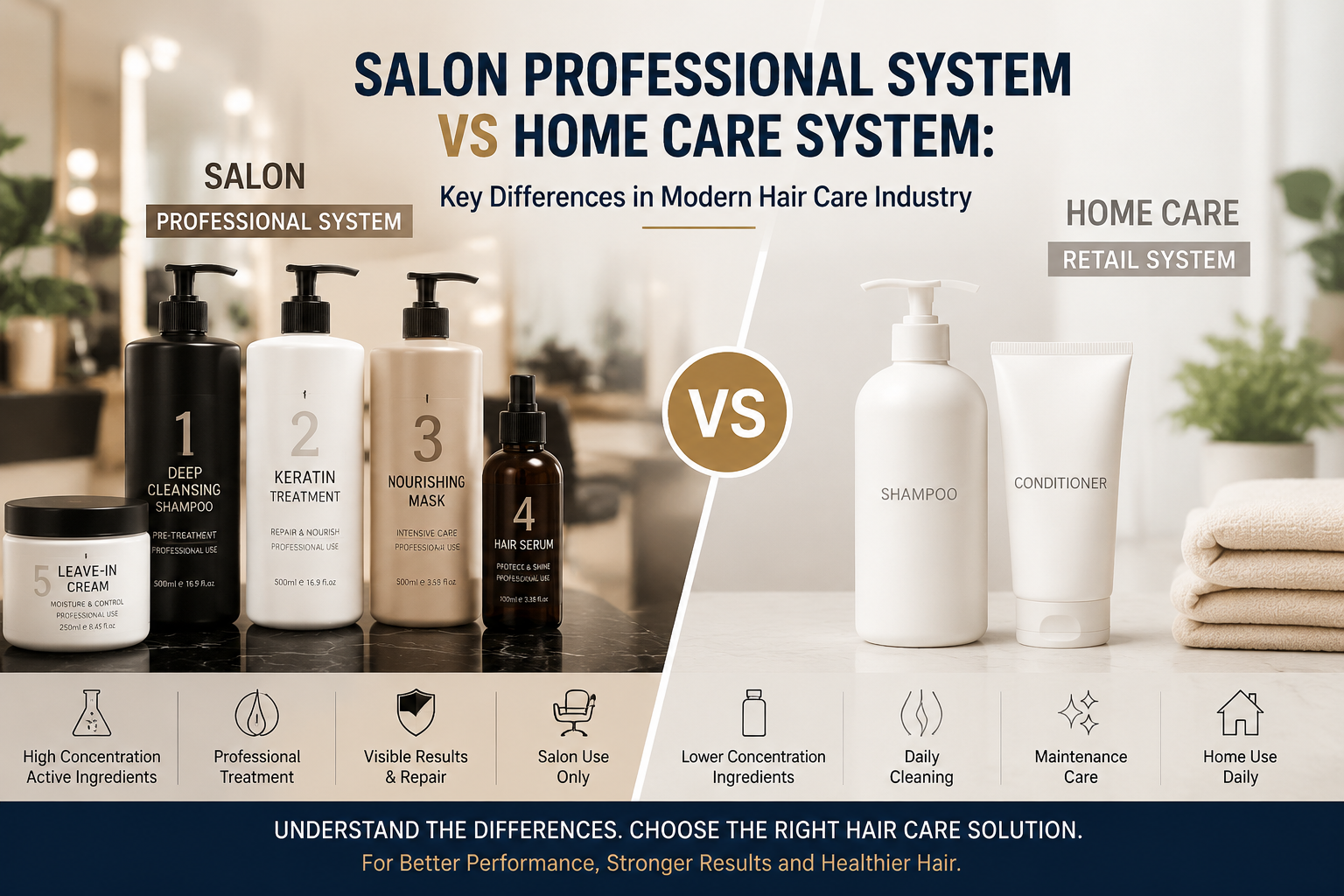
The global hair care market is undergoing a structural transformation. Brands, manufacturers, and consumers are increasingly distinguishing between professional hair care system solutions and traditional home-use formulations. This shift is driven by rising consumer expectations, advanced cosmetic science, and the growing influence of salon-grade performance standards in retail markets.
According to Statista hair care industry report, the professional salon segment is growing significantly faster than standard retail categories, indicating a strong demand for high-performance, system-based solutions.
What Defines a Professional Hair Care System?
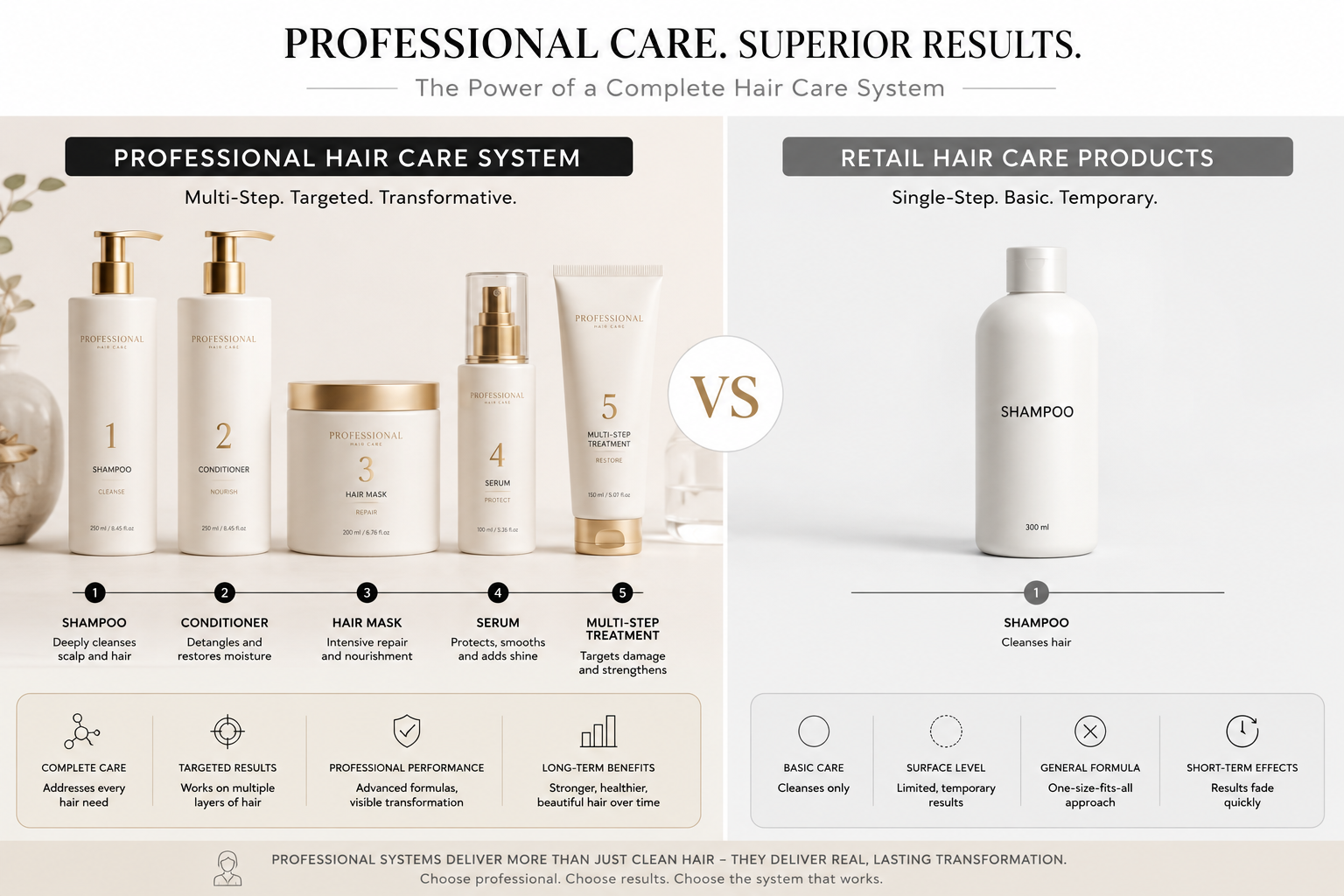
A professional hair care system is not a single product but a structured regimen designed for salon-level performance. It typically includes shampoo, conditioner, hair mask, treatment ampoules, and leave-in care products that work synergistically.
The purpose of these systems is to deliver visible transformation in hair quality through scientifically balanced formulation and controlled application environments.
- Multi-step treatment architecture for layered repair
- High-performance active ingredient systems
- Salon-controlled application process
- Targeted solutions for damaged, colored, or chemically treated hair
Unlike retail solutions, professional systems are designed with precision chemistry, ensuring compatibility across multiple product layers.
Evolution of Salon Hair Care Products in Modern Industry
Salon hair care products have evolved significantly over the past decade. Originally limited to shampoo and conditioner combinations, modern salon systems now include advanced technologies such as bond repair, peptide infusion, and scalp microbiome balancing.
Research from NIH cosmetic science journal confirms that salon-applied treatments significantly improve hair fiber integrity compared to standard consumer applications.
This evolution is driven by both consumer demand and technological advancements in cosmetic chemistry.
Key Innovations in Salon Systems
- Bond-building technology inspired by molecular repair science
- Keratin and peptide-based reconstruction systems
- Scalp detox and microbiome-friendly formulations
- Heat-activated repair mechanisms for salon treatments
Retail Hair Care vs Professional Systems: Fundamental Differences
Retail hair care products are designed for mass-market accessibility. They prioritize safety, affordability, and ease of use, making them suitable for daily home application.
However, the performance expectations of retail products differ significantly from salon systems, which are engineered for visible transformation.
| Category | Professional Hair Care System | Retail Hair Care |
|---|---|---|
| Ingredient Concentration | High-performance active ingredients | Low-to-moderate concentration |
| Application Environment | Professional salon use | Home consumer use |
| Result Speed | Fast visible transformation | Gradual improvement |
| Customization | Highly customizable | Standardized formula |
| Pricing Strategy | Premium positioning | Mass market pricing |
Why Professional Hair Care Systems Deliver Better Performance
The superiority of professional hair care system products lies in their formulation science. These systems are designed to penetrate deeper into the hair fiber structure, delivering targeted repair at multiple levels.
Unlike retail formulations, salon systems are built with layered actives that interact synergistically rather than independently.
According to McKinsey beauty market insights, consumers are increasingly prioritizing performance-based hair care solutions over traditional brand loyalty.
Scientific Structure Behind Salon Hair Care Products
Salon hair care products rely on advanced cosmetic engineering. Each product in the system plays a specific role in hair restoration.
- Shampoo: Cleanses and prepares hair fiber for treatment absorption
- Conditioner: Smooths cuticle and improves manageability
- Hair mask: Deep structural repair and hydration
- Leave-in treatment: Protection and long-term conditioning
This layered approach ensures maximum efficiency in hair repair and protection.
Market Growth of Professional Hair Care Systems
The demand for professional hair care system solutions is growing due to several macro trends:
- Rising consumer awareness of hair damage from heat and chemical treatments
- Influence of social media beauty standards
- Growth of salon-at-home hybrid care routines
- Increased demand for science-backed formulations
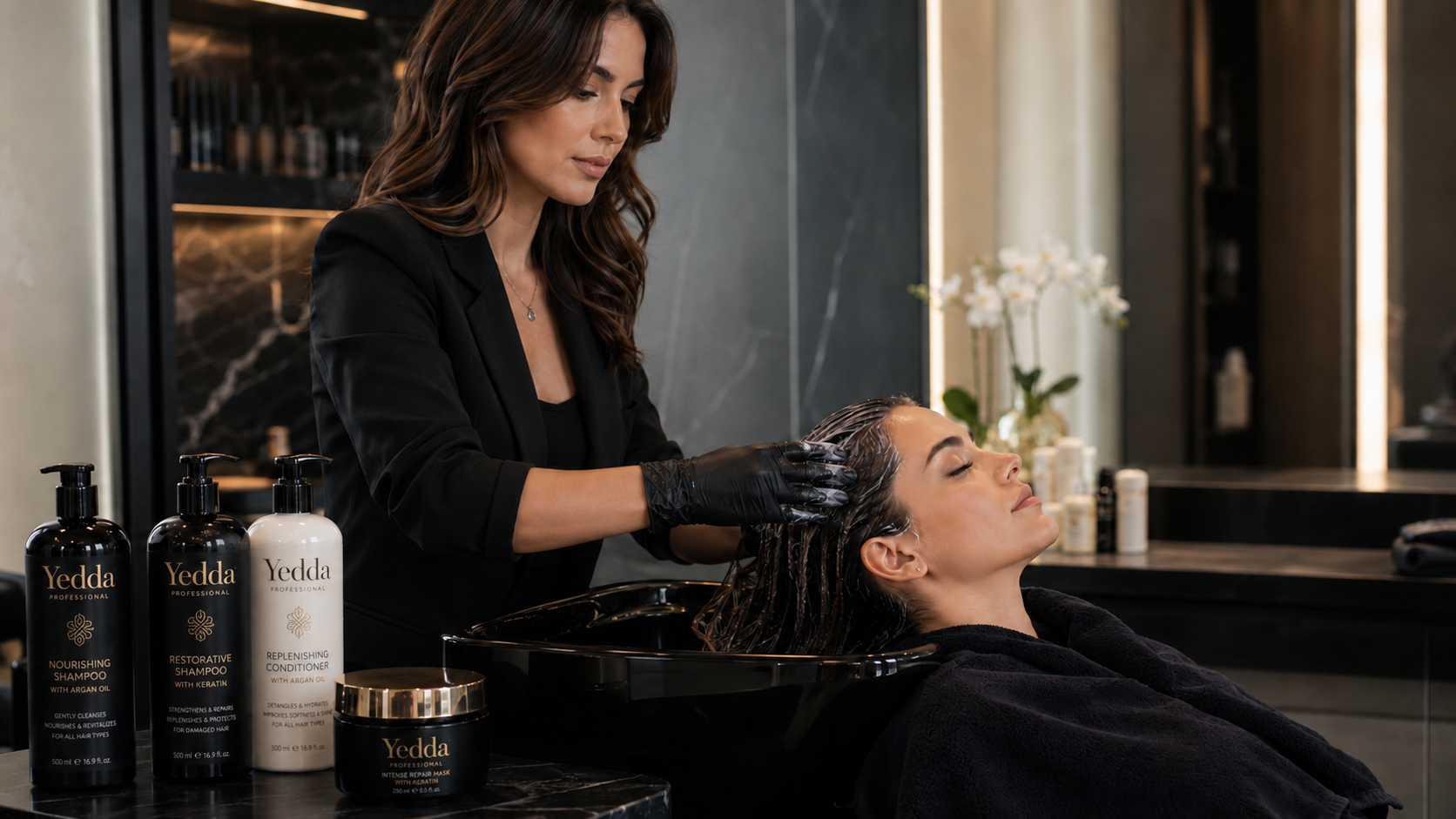
According to ScienceDirect cosmetic formulation study, advanced hair care systems significantly improve hair tensile strength and moisture retention compared to single-product solutions.
Why Retail Hair Care Still Dominates Global Markets
Despite the rise of salon systems, retail hair care continues to dominate global sales due to accessibility and affordability.
Retail products remain essential for daily maintenance and mass consumer usage, especially in emerging markets.
- Low price entry point
- Wide distribution channels
- Simple usage experience
- Strong FMCG branding support
OEM Manufacturing Perspective on Hair Care Systems
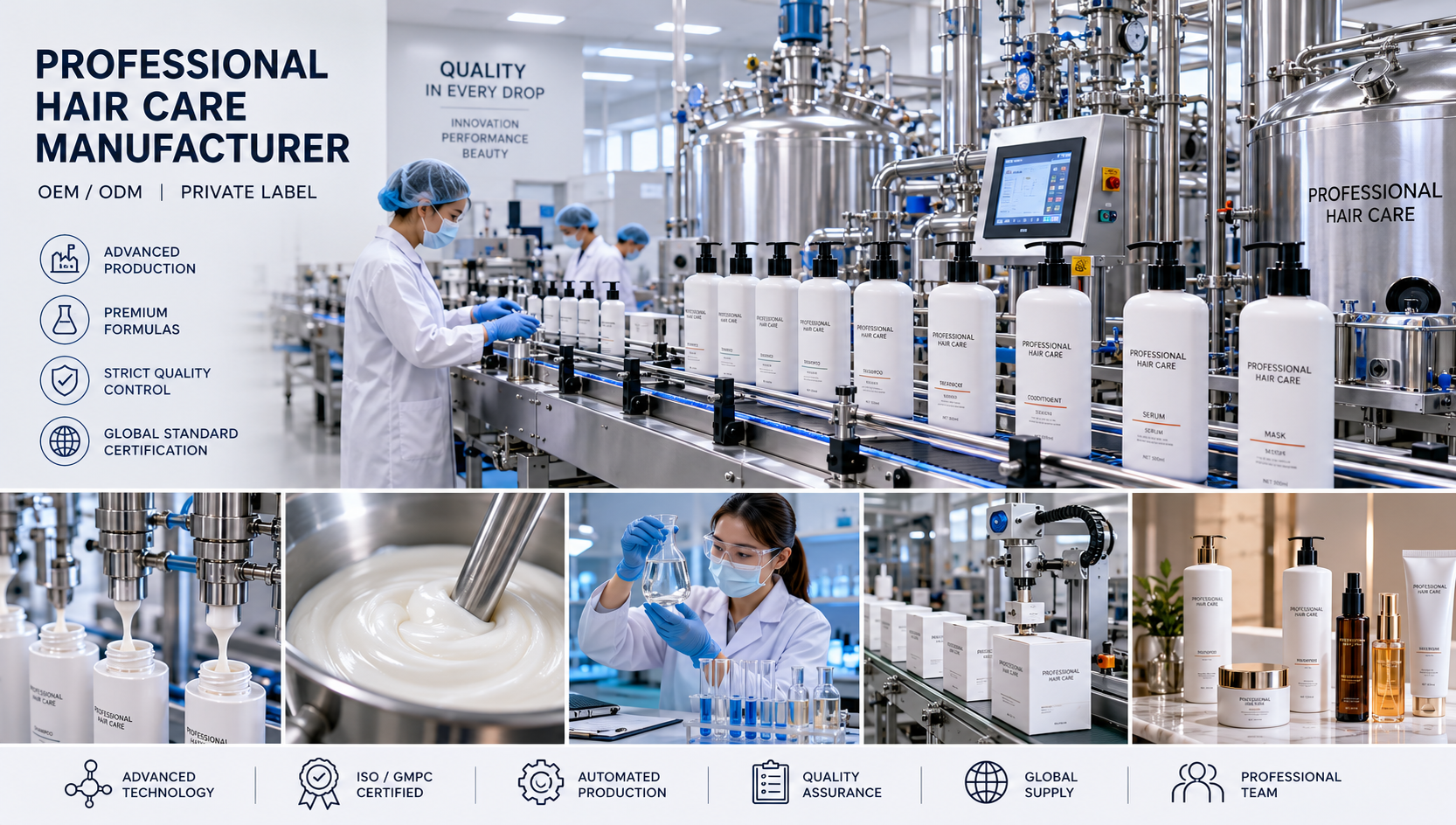
From an OEM perspective, the shift toward professional hair care system products represents a major opportunity for brands and manufacturers.
System-based product development allows higher product value, better brand positioning, and increased customer loyalty compared to single-product strategies.
Manufacturers now focus on delivering complete solutions rather than isolated formulations, integrating R&D, packaging, and branding into a unified system.
Future Trends in Hair Care Industry
The future of hair care is moving toward system-based, science-driven solutions. The integration of biotechnology, scalp microbiome research, and sustainable formulation design will redefine both salon hair care products and retail segments.
- AI-driven personalized hair care systems
- Biotech-based ingredient innovation
- Waterless and concentrated formulations
- Sustainable packaging integration
Conclusion
The difference between professional hair care system, salon hair care products, and retail hair care lies not only in formulation but also in philosophy and application structure.
Salon systems represent performance-driven transformation, while retail products focus on accessibility and daily maintenance. For brands and manufacturers, understanding this distinction is essential for successful product strategy and market positioning.
FAQ
What is a professional hair care system?
A structured set of salon-grade products designed to work together for advanced hair repair and treatment.
How are salon hair care products different from retail products?
They contain higher concentrations of active ingredients and are designed for professional application environments.
Why is retail hair care still popular?
Because it is affordable, widely available, and easy for consumers to use at home.
Is a professional hair care system better than retail products?
Yes, in terms of performance and repair capability, but retail products are more suitable for daily maintenance.