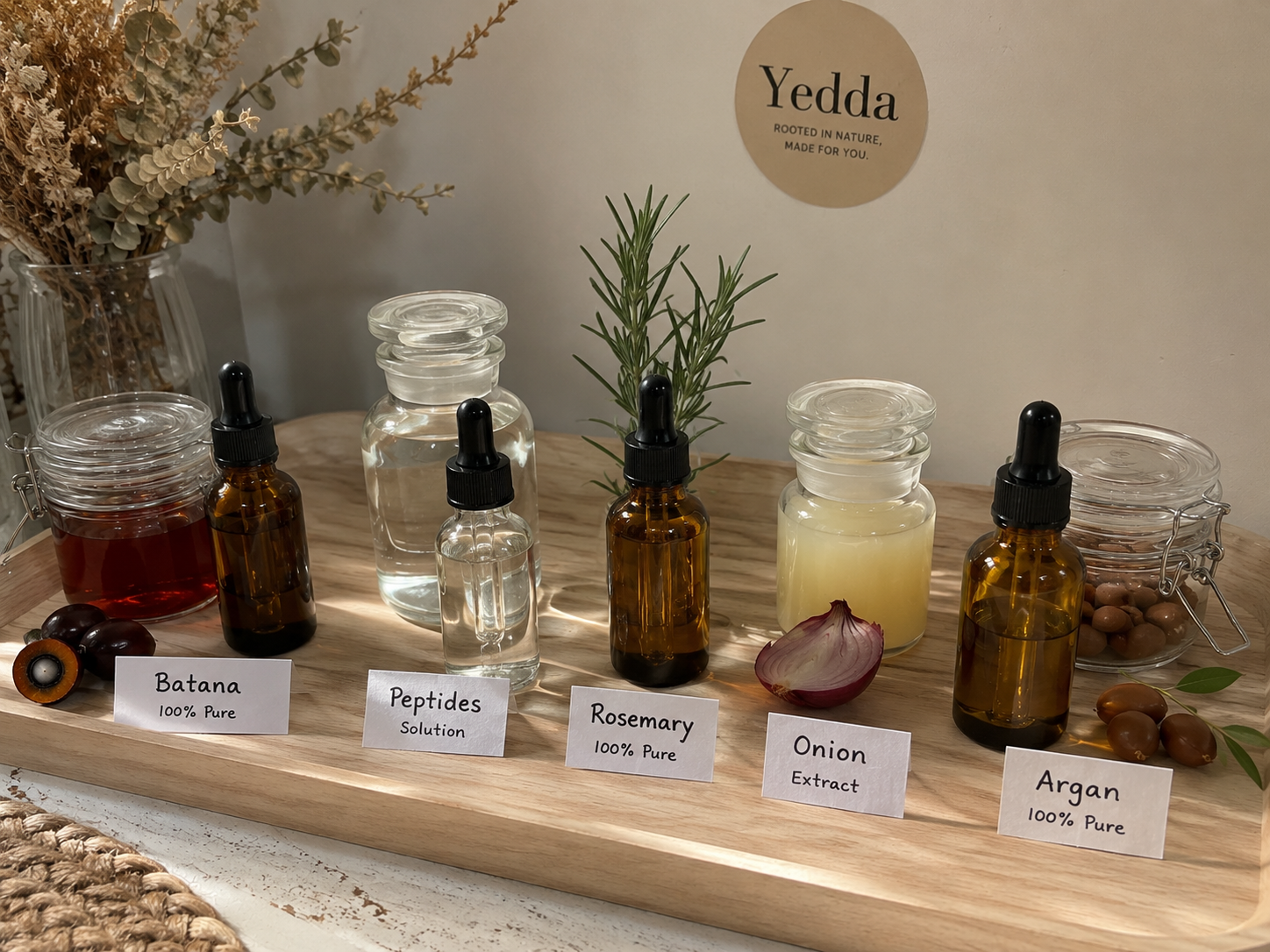

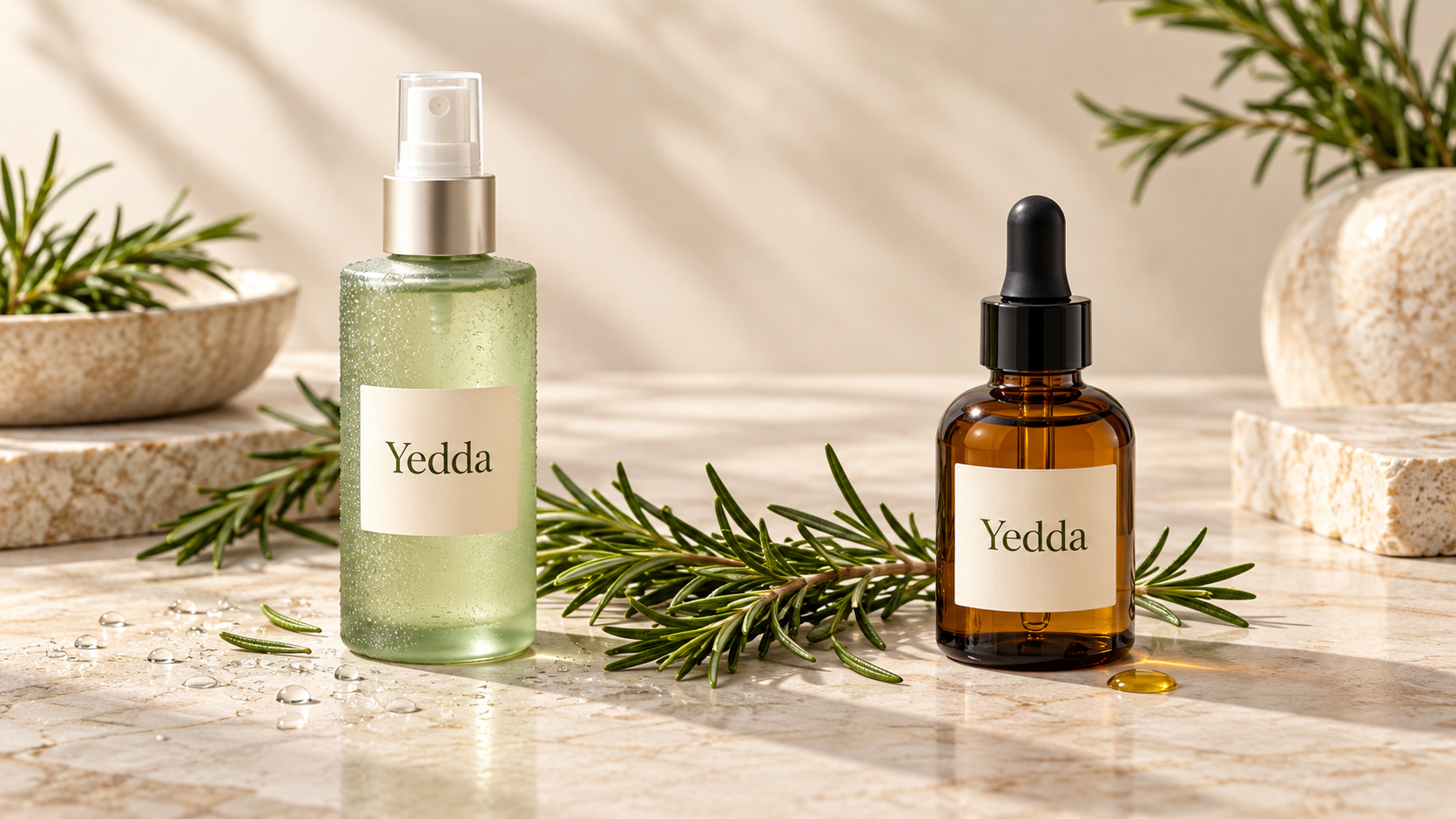
Rosemary has become one of the most recognizable botanical ingredients in modern hair care. From lightweight scalp mists to concentrated botanical oils, rosemary-inspired products are attracting attention from consumers, beauty entrepreneurs, professional salons, and private label hair care brands.
For B2B buyers, however, the real question is not simply whether rosemary is trending. It is which rosemary-based product offers the strongest combination of consumer demand, formulation feasibility, product differentiation, manufacturing scalability, and long-term commercial potential.
Should a brand launch a refreshing rosemary water spray, a concentrated rosemary hair oil, or a more sophisticated private label scalp serum?
Each format offers distinct advantages. Rosemary water can support a lightweight, everyday scalp care concept. Rosemary oil may appeal to consumers who prefer traditional botanical oiling rituals. A customized scalp serum can combine rosemary-derived ingredients with complementary cosmetic ingredients to create a more differentiated treatment experience.
1. Why Rosemary Water for Hair Is Becoming a Commercial Opportunity
Consumer interest in rosemary is part of a broader movement toward ingredient-focused beauty products and scalp-first hair care routines. Instead of purchasing shampoo based only on fragrance or general moisturizing claims, consumers increasingly investigate ingredients, textures, application methods, and product compatibility with their individual hair concerns.
Rosemary fits naturally into this trend because it is a familiar botanical associated with traditional hair care practices. It also lends itself to several commercial formats, including hair oils, scalp tonics, leave-in sprays, shampoos, and serums.
According to the Pinterest Beauty Trend Report 2026, published in October 2026, searches for "rosemary water for hair" increased by 269% in the report's trend dataset.
This is an important consumer-interest signal, although Pinterest search growth should not be confused with Google monthly search volume or confirmed product sales. For manufacturers and brand owners, it suggests that rosemary water deserves further evaluation as a potential product concept.
The opportunity is especially relevant to brands exploring:
- Lightweight scalp care products for daily use.
- Botanical hair care positioned around ingredient transparency.
- Non-greasy alternatives to conventional hair oils.
- Refreshing hair sprays for warm and humid climates.
- Affordable entry-level products for a larger scalp care collection.
- Convenient leave-in products for e-commerce and travel retail.
There is also a growing distinction between social media interest and intentional product research. In its Q4 2026 Hair Care Trends analysis, Spate highlights continued consumer interest in scalp serums, hair serums, and targeted scalp care products.
For B2B companies, these signals support a broader product-development hypothesis: consumers may be increasingly receptive to specialized scalp care formats rather than relying exclusively on conventional shampoo and conditioner.
2. Rosemary Water vs Rosemary Oil: Understanding the Differences
Before choosing a rosemary water hair spray manufacturer or developing a rosemary oil treatment, brands must understand that these two product categories are not interchangeable.
What Is Rosemary Water?
The term "rosemary water" can describe several different materials and finished products:
- Rosemary infusion: Water in which rosemary leaves have been steeped or simmered.
- Rosemary hydrosol: An aromatic aqueous distillate produced during steam or hydro-distillation.
- Formulated rosemary water spray: A commercial cosmetic containing water, selected rosemary-derived ingredients, preservatives, and potentially additional conditioning or scalp-care ingredients.
These preparations can have substantially different chemical compositions. A homemade rosemary infusion should not be assumed to have the same properties, stability, or performance as a professionally formulated rosemary hydrosol spray.
Commercial rosemary water sprays are generally designed around a lightweight aqueous base. Depending on the formulation, they may provide a refreshing sensation, easy application, and a non-oily finish.
What Is Rosemary Oil?
Rosemary essential oil is a concentrated aromatic material obtained from rosemary plant material, commonly through distillation. It contains volatile compounds whose composition can vary with botanical origin, harvesting conditions, and extraction methods.
In finished hair care products, rosemary essential oil is usually incorporated into a suitable carrier system or formulated at an appropriate concentration. Commercial rosemary hair oil may contain carrier oils such as jojoba, argan, sunflower, or other cosmetic-grade emollients.
Undiluted rosemary essential oil should not be treated as equivalent to a finished, safety-assessed hair oil product.
Rosemary Water vs Rosemary Oil Comparison for Beauty Brands
| Product Factor | Rosemary Water Hair Spray | Rosemary Hair Oil |
|---|---|---|
| Typical product base | Water-based formula | Oil-based formula |
| Texture | Lightweight liquid mist | Varies from light to rich oil |
| Common application | Scalp and hair spraying | Scalp massage or hair-length application |
| Consumer positioning | Daily scalp refresh and lightweight care | Botanical oiling and conditioning ritual |
| Preservation requirements | Requires a suitable preservation strategy | Depends on composition and potential water exposure |
| Key formulation challenge | Microbial stability and spray performance | Oxidation, sensory balance, and essential oil safety |
| Typical packaging | Fine-mist bottle or applicator | Dropper, nozzle, or controlled-dispensing bottle |
| Potential brand advantage | Convenience and frequent use | Premium ritual and sensorial experience |
Neither format is automatically superior. Their commercial value depends on the brand's target audience, product claims, expected retail price, distribution channel, and intended hair care routine.
3. Rosemary Water for Hair Growth: What Does Scientific Research Actually Support?
Scientific evidence is an important consideration when developing rosemary-based products. However, brand owners should distinguish consumer enthusiasm from clinical proof.
One frequently discussed study is the 2015 randomized comparative trial titled "Rosemary Oil vs Minoxidil 2% for the Treatment of Androgenetic Alopecia."
The study enrolled 100 participants with androgenetic alopecia and assigned them to either a rosemary oil group or a 2% minoxidil group over six months.
Researchers reported no significant improvement in hair count at three months in either group. By six months, both groups showed statistically significant increases compared with baseline, without a statistically significant difference between the two groups in the reported hair-count comparison.
These findings have attracted attention, but several limitations are important:
- The study evaluated a rosemary oil preparation, not rosemary water.
- It did not include a placebo group.
- The study population represented a specific hair-loss condition.
- The comparator was 2% minoxidil, which should not be generalized to all minoxidil products or treatment regimens.
- The results do not demonstrate that every commercial rosemary oil formulation will produce comparable effects.
Most importantly, clinical findings involving rosemary oil cannot be transferred automatically to rosemary water, rosemary hydrosol, rosemary shampoo, or an unrelated scalp serum.
These products may contain different concentrations of rosemary-derived compounds, use different delivery systems, and remain on the scalp for different lengths of time.
For cosmetic brands, this creates a practical product-development rule: build claims around evidence relevant to the actual finished formula, rather than borrowing conclusions from studies involving different products.
Rosemary water may still be commercially attractive for its lightweight texture, botanical identity, convenient format, and potential sensorial benefits. Those features can be valuable without making unsupported promises about regrowing hair.
4. Why Work With a Rosemary Water Hair Spray Manufacturer?
A commercial rosemary water spray is more complex than a homemade infusion transferred into a cosmetic bottle.
A qualified rosemary water hair spray manufacturer should help brands evaluate ingredient selection, preservation, pH, fragrance, application performance, packaging compatibility, and finished-product stability.
Developing a Stable Water-Based Formula
Water-based cosmetics can support microbial growth if preservation and manufacturing controls are inadequate. This is particularly relevant when botanical extracts or hydrosols are incorporated into a finished formula.
Manufacturers must select a preservation system appropriate for the product's composition, packaging, intended use, and distribution conditions. Botanical positioning alone does not establish product safety.
For a rosemary water hair spray, formulation development may involve:
- Purified water or an appropriately specified botanical hydrosol.
- Rosemary-derived ingredients with documented identity and quality.
- Humectants selected for scalp comfort and sensory performance.
- Suitable preservatives and pH-adjusting ingredients.
- Optional hair-conditioning agents to improve the feel of hair fibers.
- Compatible fragrance or fragrance-free positioning.
The final composition should be determined by testing and the product brief, rather than copying a social-media recipe.
Fine-Mist Application and Consumer Experience
Packaging plays an unusually important role in spray products. A formula that performs well in a laboratory beaker may feel disappointing when dispensed through an unsuitable spray pump.
Brands should evaluate spray angle, droplet distribution, pumping force, leakage resistance, and drying sensation.
For consumers with fine hair, a heavy spray may cause an undesirable damp or flattened appearance. For consumers with thick or textured hair, access to the scalp through dense hair may be a more important consideration.
A manufacturer should therefore assess the formula and applicator as one complete system.
Regional Product Positioning
For brands targeting warm or humid markets, a lightweight scalp mist may offer an appealing alternative to a rich oil treatment. For premium beauty retailers, rosemary water can be developed with refined packaging and a skincare-inspired sensory profile.
However, market preferences vary considerably. Positioning should be validated through consumer research and product testing rather than assuming all customers in a region share the same hair type or routine.
5. Rosemary Oil as a Private Label Hair Treatment: Benefits and Formulation Challenges
Rosemary oil represents a different commercial opportunity. It is often better suited to botanical oil collections, scalp massage rituals, pre-wash products, and hair conditioning treatments.
For brands building a private label hair treatment line, rosemary oil can serve as a recognizable ingredient within a larger oil-based formulation.
Choosing the Appropriate Carrier Oil System
Carrier oils influence texture, spreadability, appearance, fragrance, and how easily a product is removed during washing.
A brand seeking a lightweight scalp oil may prioritize fast-spreading emollients and a low-residue finish. A brand targeting dry hair lengths may prefer a richer conditioning experience.
Potential formula directions include:
- Lightweight botanical scalp oil: Designed for easier distribution and reduced heavy residue.
- Pre-shampoo oil treatment: Developed for a defined massage and wash-out routine.
- Premium multi-botanical oil: Combining rosemary with selected carrier oils and botanical ingredients.
- Hair-length finishing oil: Focused on cosmetic shine, softness, and manageability.
The concentration of rosemary essential oil must be determined through an appropriate safety assessment. More essential oil does not necessarily mean better performance.
Oxidation and Packaging Stability
Oil-based products may be vulnerable to oxidative changes, particularly when unsaturated carrier oils or sensitive fragrance components are present.
Manufacturers should assess changes in odor, color, clarity, and relevant quality indicators during stability evaluation.
Packaging selection also matters. Depending on the formulation, suitable containers may include compatible glass or plastic bottles with dispensing systems designed to minimize leakage and unnecessary product exposure.
A premium rosemary oil product should be formulated for its intended shelf conditions, not merely for an attractive appearance at launch.
6. Private Label Scalp Serum: A Third Option Beyond Rosemary Water and Rosemary Oil
Brands do not necessarily need to choose between a simple water spray and a conventional hair oil.
A private label scalp serum can offer a more specialized product concept by combining rosemary-derived ingredients with selected cosmetic ingredients in a leave-on formula.
Compared with a basic botanical spray, a scalp serum can provide more opportunities for differentiation through texture, ingredient combinations, packaging, and targeted cosmetic positioning.
Potential Ingredient Combinations
Depending on the product brief and intended claims, a manufacturer may evaluate combinations involving:
- Rosemary extract: Supports a botanical ingredient story.
- Niacinamide: May be considered in scalp-conditioning and barrier-care concepts.
- Panthenol: Commonly used for moisturizing and conditioning functions.
- Glycerin: A humectant that can contribute to an appropriately formulated moisturizing system.
- Selected peptides: Require ingredient-specific evaluation and evidence for proposed claims.
- Caffeine: A recognizable ingredient for specialized scalp-care positioning, subject to appropriate substantiation.
Not all ingredients are compatible with every formula. A successful serum depends on concentrations, pH, solubility, preservation, sensory properties, and the stability of the entire system.
A branded ingredient story should never substitute for finished-product evaluation.
Why Scalp Serums May Support Premium Positioning
Scalp serums offer flexibility in application design. Brands can consider precision nozzles, droppers, controlled pumps, or targeted applicators.
A well-designed scalp serum may also support a larger regimen containing shampoo, conditioner, a weekly scalp treatment, and a leave-in product.
From a B2B perspective, this creates opportunities for coordinated packaging, product bundles, routine education, and repeat purchases.
Nevertheless, higher perceived value does not automatically guarantee better margins. Ingredient costs, packaging complexity, testing requirements, and production volumes must all be considered.
7. What to Expect From a Custom Hair Serum Formulation Manufacturer
Choosing a reliable custom hair serum formulation manufacturer is particularly important when a brand wants to move beyond standard private label formulas.
A professional manufacturing partner should be able to translate a commercial product concept into measurable technical requirements.
Step 1: Create a Detailed Product Brief
Before requesting samples, the brand should define its target customer and intended product experience.
A practical brief should specify:
- Target market and intended distribution channels.
- Product format: spray, oil, serum, tonic, or pre-wash treatment.
- Primary cosmetic benefits and proposed claims.
- Target hair types and scalp-care needs.
- Preferred botanical ingredients and ingredients to avoid.
- Fragrance direction and desired application texture.
- Packaging format, size, and design preferences.
- Target retail price and estimated manufacturing budget.
- Expected initial order quantity and future demand.
Step 2: Develop and Evaluate Prototypes
The first sample should establish whether the chosen product format can deliver the intended experience.
For rosemary water, evaluation may emphasize spray distribution, scalp feel, fragrance, and residue. For rosemary oil, the emphasis may shift toward spreadability, absorption characteristics, oiliness, and wash-out performance.
For a customized scalp serum, brands may also evaluate dispensing precision, viscosity, ingredient compatibility, and the feel of repeated use.
Feedback should be recorded consistently instead of relying only on subjective descriptions such as "premium" or "lightweight."
Step 3: Verify Stability and Product Safety
Before mass production, manufacturers should identify the tests appropriate to the finished formulation and intended markets.
Depending on the formula, these may include:
- Physical and chemical stability evaluation.
- Microbiological quality testing.
- Preservative efficacy or challenge testing where appropriate.
- Packaging compatibility and dispensing performance.
- Raw-material identity and quality verification.
- Safety assessment and supporting documentation.
- Product performance testing for intended cosmetic claims.
Brands should confirm the relevant test methods, acceptance criteria, and supporting documents before approving commercial production.
8. Rosemary Water Hair Spray Manufacturer: Packaging and Product Design
Packaging should be selected early in product development because it can affect formula compatibility, application performance, minimum order quantities, cost, and shipping durability.
For rosemary water sprays, a fine-mist bottle may be suitable for broad application. A narrow nozzle can be considered when the goal is more targeted scalp application.
For rosemary oil products, brands may prefer a dropper or controlled-flow nozzle, depending on viscosity and intended usage.
For private label scalp serum products, applicators can become part of the product's competitive positioning. A convenient and reliable dispensing system may improve consumer satisfaction even when the underlying ingredient concept resembles competing products.
Packaging Questions for B2B Buyers
- Does the packaging material remain compatible with the finished formula?
- Can the sprayer or applicator dispense the product consistently?
- Does the closure resist leakage during transport?
- Are the selected bottle sizes appropriate for the retail channel?
- What are the minimum order quantities for custom colors, printing, and components?
- Can the packaging accommodate required labels and safety information?
- Has the complete formula-and-package combination been tested?
For emerging brands, standard packaging can sometimes reduce development complexity. Established brands may prefer custom components that strengthen visual identity and retail differentiation.
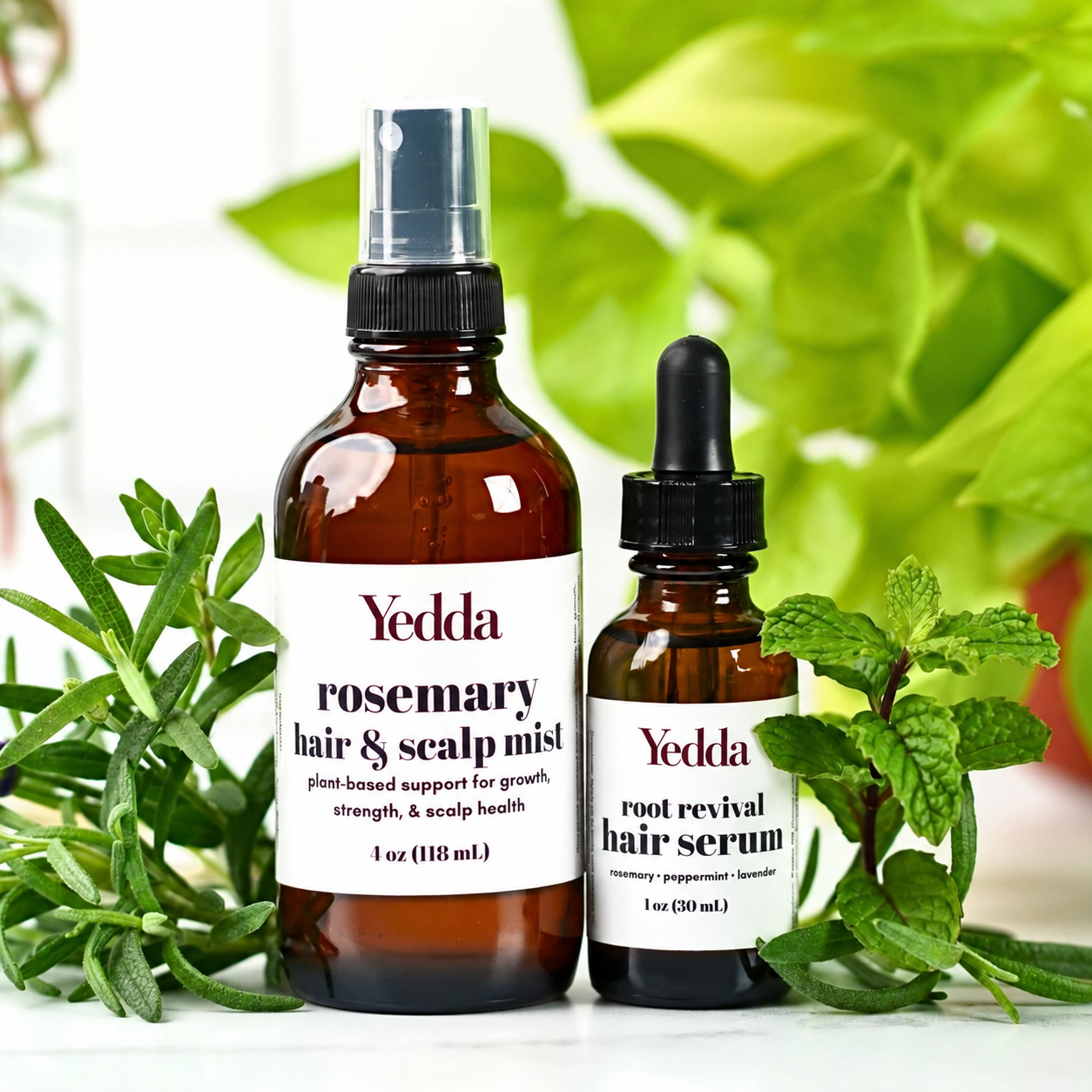
9. Rosemary Water vs Rosemary Oil: MOQ, Manufacturing Cost and Wholesale Planning
For B2B buyers, product development must be commercially sustainable. Ingredient trends may help a product attract attention, but manufacturing costs and inventory planning ultimately determine whether a brand can launch and scale successfully.
Minimum order quantity, commonly called MOQ, depends on the manufacturer's production system, formula complexity, packaging requirements, and selected raw materials.
A standard private label formula may have a different MOQ from a fully customized rosemary water spray or proprietary scalp serum.
Factors Affecting Rosemary Water Manufacturing Cost
- Rosemary hydrosol or extract specifications and sourcing.
- Preservation and microbiological testing requirements.
- Additional cosmetic ingredients.
- Fine-mist pump and bottle selection.
- Custom labels, printing, and secondary packaging.
- Formula development, sampling, and testing.
- Batch size and filling efficiency.
Factors Affecting Rosemary Oil Manufacturing Cost
- Essential oil quality and specifications.
- Carrier oil composition and sourcing.
- Antioxidant and stability requirements.
- Dropper, nozzle, or pump components.
- Packaging materials and decoration.
- Quality control and batch testing.
- Order quantity and production arrangements.
It would be misleading to claim that rosemary water is always cheaper than rosemary oil. A simple oil blend may be economical to manufacture, while a highly customized aqueous serum with specialized packaging and extensive testing may carry significantly higher development costs.
Similarly, a premium botanical oil containing expensive carrier oils and custom glass packaging may cost more than a standard rosemary water spray.
Buyers should compare complete project quotations rather than individual ingredient prices.
Calculate Total Landed Cost
For international buyers, product cost should include more than the factory quotation. A practical cost review may consider manufacturing, packaging, testing, documentation, freight, insurance, applicable duties, taxes, and local handling charges.
The most suitable product is the one that can meet quality expectations while supporting the brand's intended retail pricing and sustainable gross margin.
10. Which Rosemary Product Should Different Beauty Brands Launch?
The best launch decision depends on the target audience and business model.
Option A: Emerging E-Commerce Beauty Brands
An emerging brand seeking a lightweight botanical product may consider rosemary water hair spray as its initial concept.
The format is easy to explain, integrates into everyday routines, and can be positioned around convenient scalp refreshment and non-greasy application.
However, the brand should validate product performance, packaging, and customer willingness to pay before assuming strong demand.
Option B: Natural Hair Care and Botanical Oil Brands
For businesses already selling hair oils or botanical body care, rosemary oil may fit more naturally into the existing assortment.
It can complement pre-wash routines, conditioning products, and scalp massage concepts while retaining a recognizable botanical identity.
Brands should invest in an appealing sensory profile, clear instructions, and a properly assessed formula.
Option C: Premium Scalp Care Brands
For brands seeking more differentiated positioning, a private label scalp serum may offer greater formulation flexibility.
A customized serum can emphasize ingredient transparency, carefully selected cosmetic actives, elegant packaging, and a defined user experience.
The trade-off may be a more demanding development process involving ingredient compatibility testing, packaging evaluation, and more extensive claim substantiation.
Option D: Professional Salons and Distributors
Salon brands may prefer a coordinated range rather than launching a single standalone product.
For example, a collection could include:
- A rosemary-inspired cleansing shampoo.
- A lightweight scalp refreshing spray.
- A richer pre-wash botanical oil.
- A targeted leave-in scalp serum.
Such a system creates opportunities for product education, professional recommendations, retail bundles, and repeat purchases.
However, brands should avoid adding unnecessary products simply to increase the number of SKUs. Every item needs a clear purpose and a credible place in the consumer routine.
11. Cosmetic Claims and International Compliance for Rosemary Hair Care
Regulatory compliance should be considered before finalizing product names, labels, and marketing content.
This is especially important for rosemary products because online discussions frequently connect the ingredient with hair regrowth and hair-loss treatment.
In the United States, the U.S. Food and Drug Administration explains the distinction between cosmetics and drugs, including how promotional claims can affect a product's regulatory classification.
Claims that a product restores hair growth or treats a medical hair-loss condition may establish a drug intended use. Such products can be subject to requirements beyond those applicable to ordinary cosmetics.
For rosemary water sprays, cosmetic-oriented descriptions might focus on:
- Refreshing the scalp.
- Providing a lightweight, non-greasy application.
- Helping condition the hair.
- Supporting a comfortable scalp-care routine.
- Improving cosmetic hair feel or manageability when substantiated.
These are examples of potential positioning directions, not pre-approved claims. Their suitability depends on the actual formulation, evidence, and target-market regulations.
Brands should not assume that terms such as "natural," "herbal," or "rosemary-based" establish safety or regulatory compliance.
For international launches, requirements may differ across the United States, European Union, United Kingdom, Middle East, and other markets. Ingredient restrictions, safety assessments, labeling, responsible-party obligations, product notifications, and permitted claims must be reviewed for each destination.
A reliable manufacturing partner can help organize technical documentation, but the brand should also establish who is legally responsible for compliance in each sales market.
12. How to Launch a Private Label Rosemary Hair Treatment Line
A successful rosemary product launch should follow a structured development process rather than beginning with packaging design or a trending ingredient alone.
Phase 1: Identify the Consumer Problem
Determine whether the target customer is looking for a lightweight scalp refresh, a traditional oiling ritual, easier hair management, or a premium leave-in treatment.
This decision should guide the product format and brand positioning.
Phase 2: Select a Hero Product
Choose one primary product based on the audience, budget, channel, and manufacturing feasibility.
For example, a botanical lifestyle brand might begin with a rosemary water mist, while a premium scalp-care brand may prioritize a customized serum.
Phase 3: Develop Samples
Work with the manufacturer to evaluate texture, fragrance, ingredient compatibility, application method, and packaging.
Use structured evaluation criteria and involve representative target consumers when appropriate.
Phase 4: Confirm Testing and Claims
Review safety, stability, microbiological quality, packaging compatibility, and the evidence required for the intended product claims.
Finalize labels and instructions only after the formulation and relevant requirements have been reviewed.
Phase 5: Prepare Production and Commercial Launch
Confirm order quantity, approved samples, packaging specifications, artwork, production schedule, quality acceptance criteria, and shipping arrangements.
After launch, monitor customer feedback, product returns, repeat purchases, and emerging consumer preferences before expanding the assortment.
13. Working With Yedda as Your Rosemary Water Hair Spray Manufacturer
Yedda Haircare supports international beauty brands, salon businesses, distributors, and e-commerce companies seeking OEM/ODM and private label hair care solutions.
Its hair care development services cover categories such as shampoo, conditioner, hair masks, botanical hair oils, scalp care, and leave-in treatments.
Brands exploring a rosemary water spray, rosemary oil, or customized scalp serum can discuss their product concept, ingredient preferences, target markets, packaging requirements, and estimated order quantities with the Yedda team.
For a differentiated product, buyers may consider Yedda's custom hair care development services. Brands seeking private label product options can review the private label hair care solutions page.
Specific rosemary ingredients, product formats, available formulations, MOQ, sampling arrangements, testing, and production lead times should be confirmed for each project.
Rosemary Water or Rosemary Oil: The Final Recommendation
For a brand seeking a convenient, lightweight botanical product, rosemary water hair spray can be a promising development direction.
For a brand emphasizing traditional botanical oiling, richer conditioning textures, and a premium ritual, rosemary hair oil may offer a more suitable fit.
For brands targeting a specialized scalp-care category, private label scalp serum provides an opportunity to build a more differentiated formula and product experience.
The strongest strategy is not necessarily to launch the product generating the most social media attention. It is to select a format that matches consumer needs, can be manufactured consistently, supports defensible claims, and fits the brand's commercial objectives.
Ready to develop your own rosemary-inspired hair care product? Contact Yedda Haircare to discuss formulation options, packaging, samples, and an OEM/ODM quotation.
Frequently Asked Questions About Rosemary Water Hair Spray Manufacturing
FAQ 1: Is rosemary water better than rosemary oil for a private label hair care brand?
Neither product is automatically better. Rosemary water may be more suitable for brands seeking a lightweight, non-greasy daily scalp spray, while rosemary oil may appeal to consumers who prefer botanical oil treatments or pre-shampoo routines. The best choice depends on the target customer, brand positioning, product performance, manufacturing requirements, and expected retail price. Brands should evaluate samples before making a launch decision.
FAQ 2: Can a rosemary water hair spray manufacturer create a customized formula for my brand?
A qualified rosemary water hair spray manufacturer may offer formula development, ingredient selection, fragrance customization, packaging support, and product testing. Customization options depend on the manufacturer's technical capabilities and the project's requirements. Buyers should provide a detailed product brief covering target markets, intended cosmetic benefits, packaging preferences, desired texture, and estimated order volume.
FAQ 3: Can rosemary water be combined with other ingredients in a private label scalp serum?
Yes, a rosemary-derived ingredient may be incorporated into a customized scalp serum alongside suitable cosmetic ingredients such as panthenol, glycerin, niacinamide, or selected conditioning agents. However, compatibility, stability, preservation, safety, and claim substantiation must be evaluated for the finished formula. A custom hair serum formulation manufacturer should determine whether the proposed combination is technically and commercially feasible.
FAQ 4: What is the minimum order quantity for private label rosemary water spray or rosemary oil?
MOQ depends on the selected formula, customization requirements, bottle specifications, printing, raw materials, and manufacturing arrangements. Standard private label formulas may have different minimum quantities from fully customized rosemary water sprays or scalp serums. Brands should request a project-specific quotation and confirm whether pricing includes packaging, testing, labeling, and relevant documentation before placing a bulk order.