
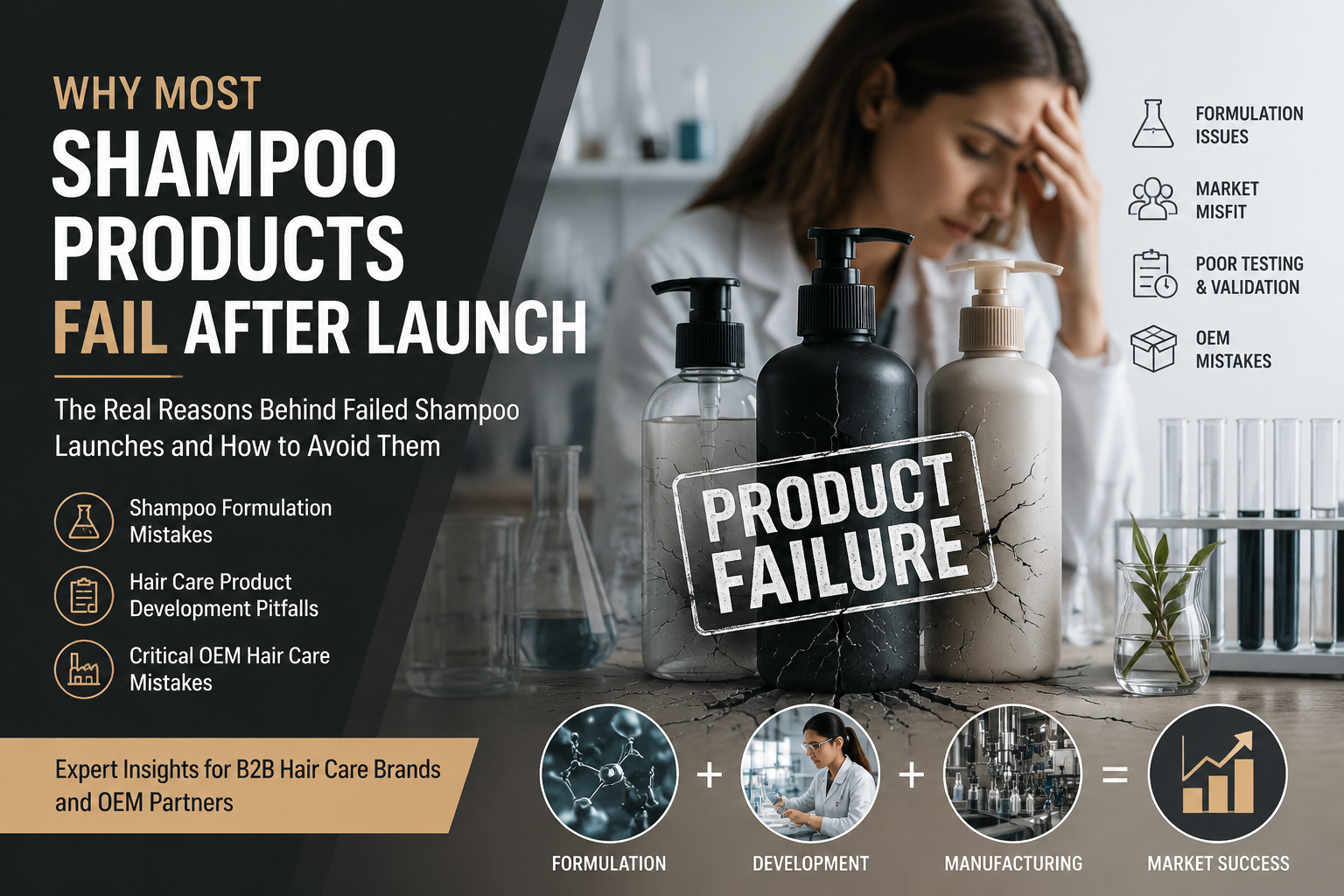
Why Most Shampoo Products Fail: The B2B Reality Behind Shampoo Formulation
At the core of every failed shampoo product is often a flawed shampoo formulation. In B2B manufacturing, brands frequently underestimate how sensitive consumers are to performance signals such as foam quality, scalp comfort, fragrance persistence, and long-term hair texture improvement.
According to industry insights from global cosmetic research platforms such as McKinsey & Company, product differentiation in personal care is becoming increasingly difficult, and “functional performance + sensory experience” is now a key purchasing driver.
However, many OEM projects still rely on generic base formulas with minimal customization. This creates three major issues:
- Products feel identical to competitors
- No clear functional positioning (anti-dandruff, repair, smoothing, etc.)
- Weak repurchase rate due to lack of sensory loyalty

In modern hair care product development, formulation is no longer just chemistry — it is a direct translation of brand value.
Hair Care Product Development Mistakes That Lead to Market Failure
Many brands believe that launching a shampoo product is simply about selecting ingredients and packaging. In reality, successful hair care product development requires deep coordination between formulation science, consumer psychology, and market positioning.
Research from Statista shows that global hair care spending continues to grow, but product churn is extremely high, especially in mid-tier private label brands.
1. Weak Product Positioning Strategy
One of the biggest failures in OEM projects is unclear positioning. A shampoo cannot be “for everything” — it must solve one dominant problem such as:
- Damaged hair repair
- Scalp oil control
- Color protection
- Smoothness and frizz control
2. Ignoring Regional Hair Type Differences
Many OEM hair care products fail because they use a one-size-fits-all formula. For example, European consumers often prefer lightweight silicone-free textures, while Middle Eastern markets may prefer richer hydration systems.
3. Over-investing in Packaging, Under-investing in Formula
Another common issue is allocating too much budget to packaging design while neglecting formulation performance. However, repurchase behavior is driven by results, not bottle design.

OEM Hair Care Mistakes That Destroy Product Launch Success
From a manufacturer perspective, OEM hair care mistakes are the most critical reason why promising products fail after launch. Even strong branding cannot compensate for poor technical execution.
Below are the most common OEM failures observed in international B2B supply chains:
1. Copying Existing Formulas Without Optimization
Many OEM clients request “similar to top-selling products” formulations. This leads to saturated competition and zero differentiation in retail environments.
2. Stability Testing Neglected
Skipping proper stability testing leads to viscosity changes, fragrance breakdown, or even microbial contamination during export shipping cycles.
According to safety guidelines referenced by U.S. Food & Drug Administration (FDA), cosmetic products must maintain stability and safety under expected storage conditions — a requirement often underestimated in fast OEM production cycles.
3. Wrong Active Ingredient Dosage
Another critical issue is incorrect dosage of actives such as keratin, biotin, or botanical extracts. Too low = no effect. Too high = instability or irritation.
Shampoo Formulation Strategy: What Successful Brands Do Differently
High-performing brands treat shampoo formulation as a strategic asset rather than a cost center. They invest heavily in R&D validation and consumer testing before scaling production.
Key success factors include:
- Multi-layer cleansing system (mild surfactant + conditioning agents)
- Scalp microbiome balance ingredients
- Silicone alternatives for smoothness
- pH-balanced formulation for long-term scalp health
Leading industry analysis from Euromonitor International highlights that premiumization in hair care is driven by “treatment-based shampoo formats” rather than traditional cleansing products.

Hair Care Product Development Trends in Global Markets
Modern hair care product development is shifting toward science-backed and sustainability-driven formulations. OEM manufacturers who fail to adapt to these trends often struggle with product survival after launch.
Key global trends include:
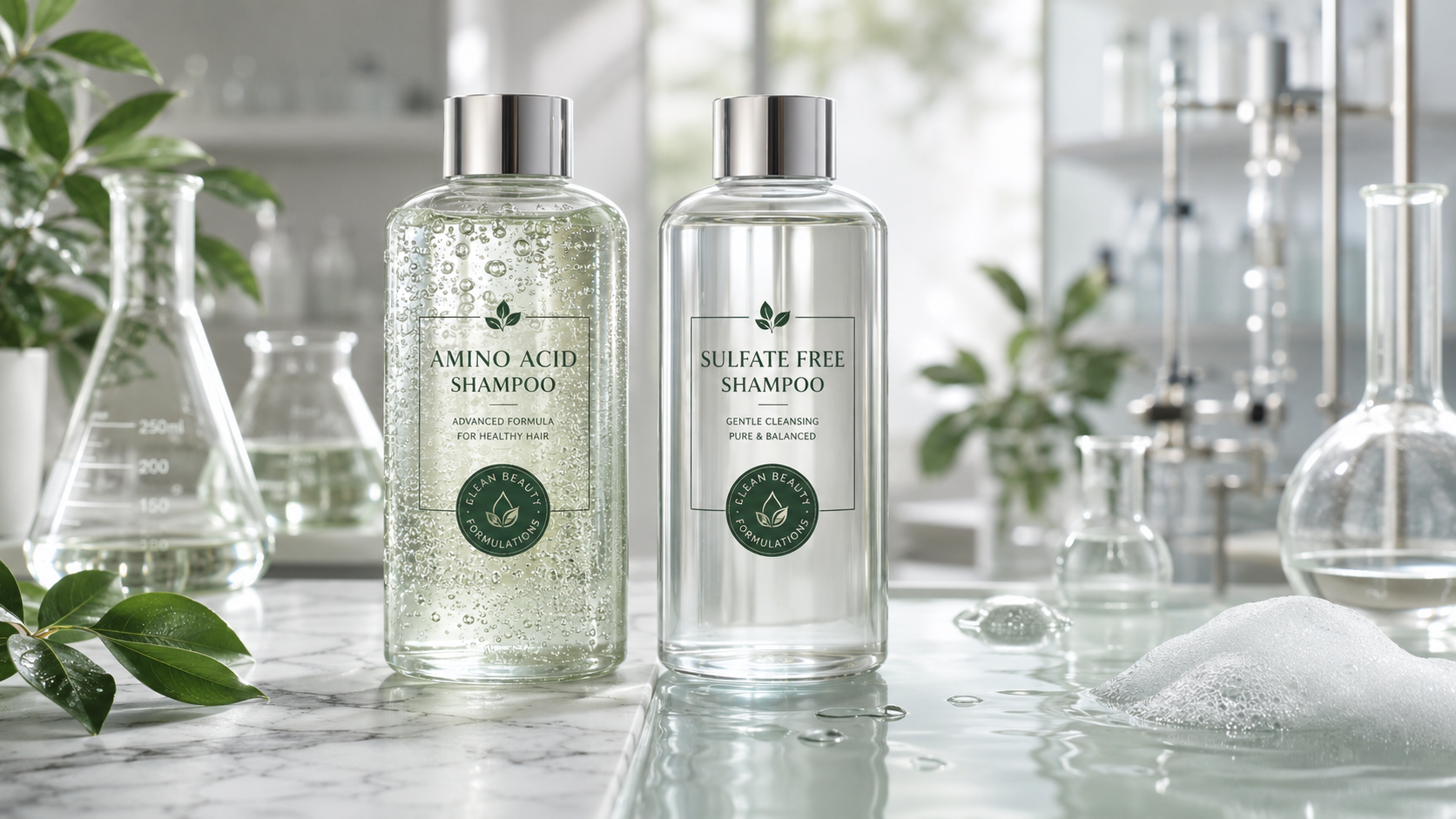
- Clean beauty (sulfate-free, paraben-free systems)
- Botanical-based actives (argan oil, batana oil, rosemary)
- Scalp-first approach instead of hair-only care
- Waterless or concentrated formulas
This shift means OEM suppliers must rethink formulation systems from the ground up instead of iterating old recipes.
OEM Hair Care Mistakes in Marketing and Market Entry
Even when formulation is correct, many products still fail due to poor market execution. This is another critical dimension of OEM hair care mistakes.
1. Misaligned Target Audience
Launching a premium formula into a price-sensitive market often results in low conversion rates.
2. Weak B2B Storytelling
Distributors and salon partners need technical clarity — not just branding. Lack of scientific communication reduces trust in OEM products.
3. No Pre-Launch Testing Strategy
Successful brands always validate formulas with small batch salon testing or regional pilot launches before scaling globally.
Conclusion: Why Shampoo Products Fail After Launch
The failure of shampoo products is rarely caused by a single issue. It is usually a combination of weak shampoo formulation, incomplete hair care product development, and avoidable OEM hair care mistakes.
To succeed in the competitive global market, brands must integrate formulation science, consumer insight, and OEM manufacturing discipline into a unified development strategy.
Only when these three dimensions align can a shampoo product achieve long-term market success.
FAQ: Shampoo Formulation & OEM Hair Care Development
Q1: Why do most shampoo products fail after launch?
Most failures come from weak formulation performance, unclear positioning, and lack of differentiation in a highly competitive market.
Q2: What is the most important factor in shampoo formulation?
The balance between cleansing efficiency and scalp/hair conditioning performance is the most critical factor.
Q3: What are common OEM hair care mistakes?
Common mistakes include copying formulas, ignoring stability testing, and incorrect active ingredient dosing.
Q4: How can brands improve hair care product development success?
Brands should focus on targeted positioning, regional customization, and pre-launch testing before scaling production.