
If you are constantly battling greasy roots by day two, dealing with persistent flaky dandruff, or wondering why your ends feel like straw while your roots are slick with oil, you’ve likely fallen victim to "haircare marketing myths."
In the era of "Skinification of Hair"—the scientific realization that your scalp is a direct extension of your facial skin—we need to treat our scalp with the same dermatological respect we give our face. As a hair trichologist and cosmetic formulation expert with a decade of clinical experience at Yedda, I see countless clients who have compromised their scalp barrier simply by following viral but unscientific trends.
Today, we are stripping away the marketing hype. No "miracle overnight transformations"—just pure dermatological science, ingredient breakdowns, and actionable habits to restore your scalp’s ecosystem.
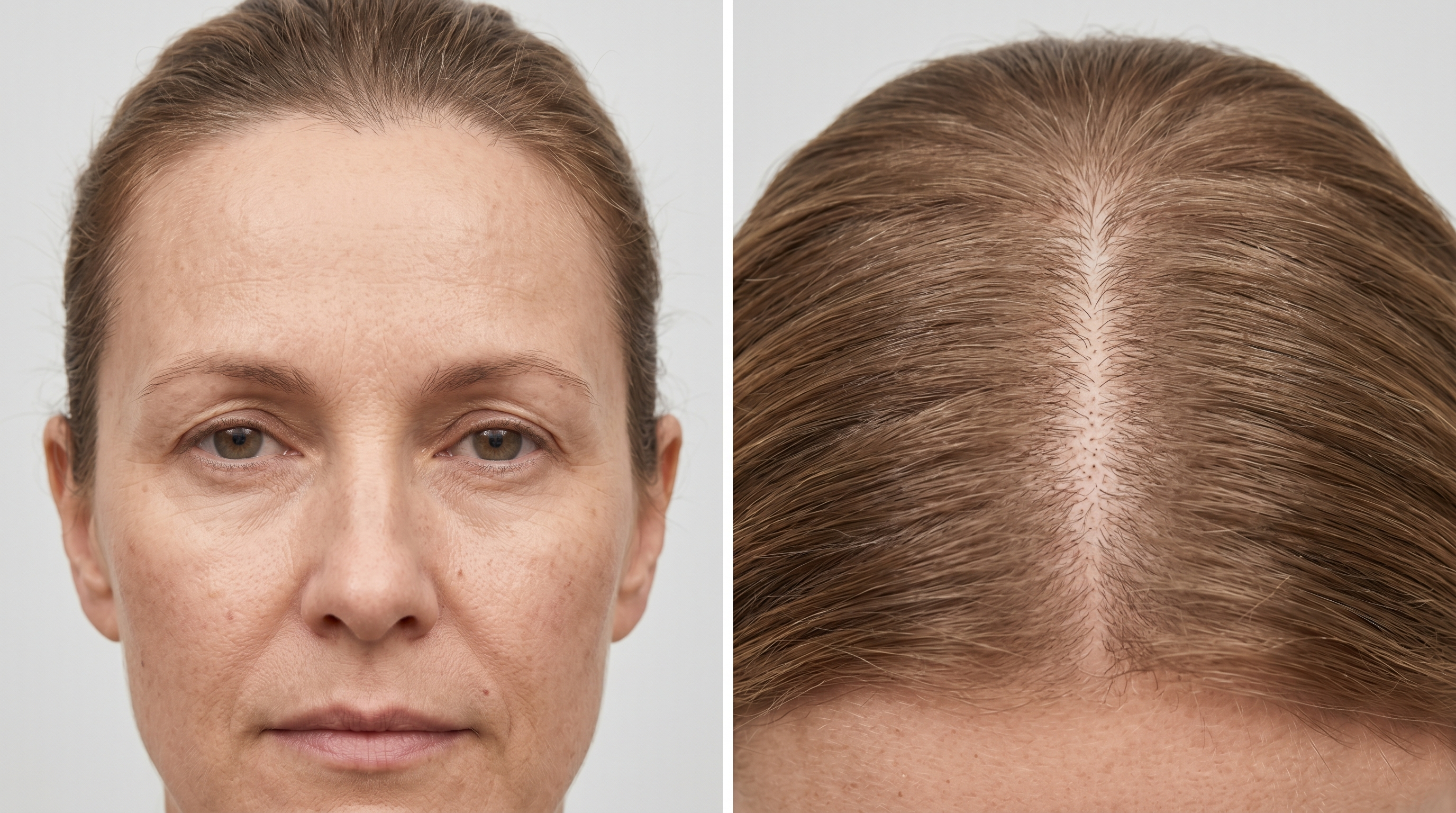
1. The Debunk: Busting the "Silicone" & "Washing Frequency" Myths
To build a reliable haircare routine, we must first unlearn the misinformation circulating on social media.
Myth 1: Silicones clog hair follicles and cause hair loss.
The Dermatological Fact: No, they don’t.
Common silicones like Dimethicone have large molecular structures that are physically incapable of penetrating or clogging a healthy hair follicle. Instead, they form a breathable, protective microscopic film over the hair cuticle, reducing friction and sealing in moisture. If you have fine, flat hair, silicone-free formulas will prevent your hair from being weighed down. However, if you have chemically treated, coarse, or curly hair, silicones (and their water-soluble counterparts) are highly safe, effective conditioning agents. Follicle blockage is actually caused by oxidized sebum, dead skin cells, and microbial buildup—not cosmetic silicones.
Myth 2: Washing your hair every day causes it to fall out.
The Dermatological Fact: Washing simply removes hairs that have already entered their shedding phase.
According to the American Academy of Dermatology (AAD), hair follicles operate on a strict biological clock consisting of the Anagen (growth), Catagen (regression), and Telogen (resting/shedding) phases. Normal physical washing cannot dislodge a healthy hair in its growth phase. If you have an oily scalp (greasy roots), withholding washes allows excess sebum to build up. This sebum oxidizes and becomes a breeding ground for yeast, leading to seborrheic dermatitis—which can actually trigger premature hair shedding. Wash your hair based on your scalp's sebum production, not an arbitrary calendar rule.
2. The Science: Understanding Your Scalp Microbiome
The scalp is a complex biochemical environment. It features a sebaceous gland density twice as high as the face. To resolve oiliness and flaking, we must maintain the stability of the scalp microbiome triangle.
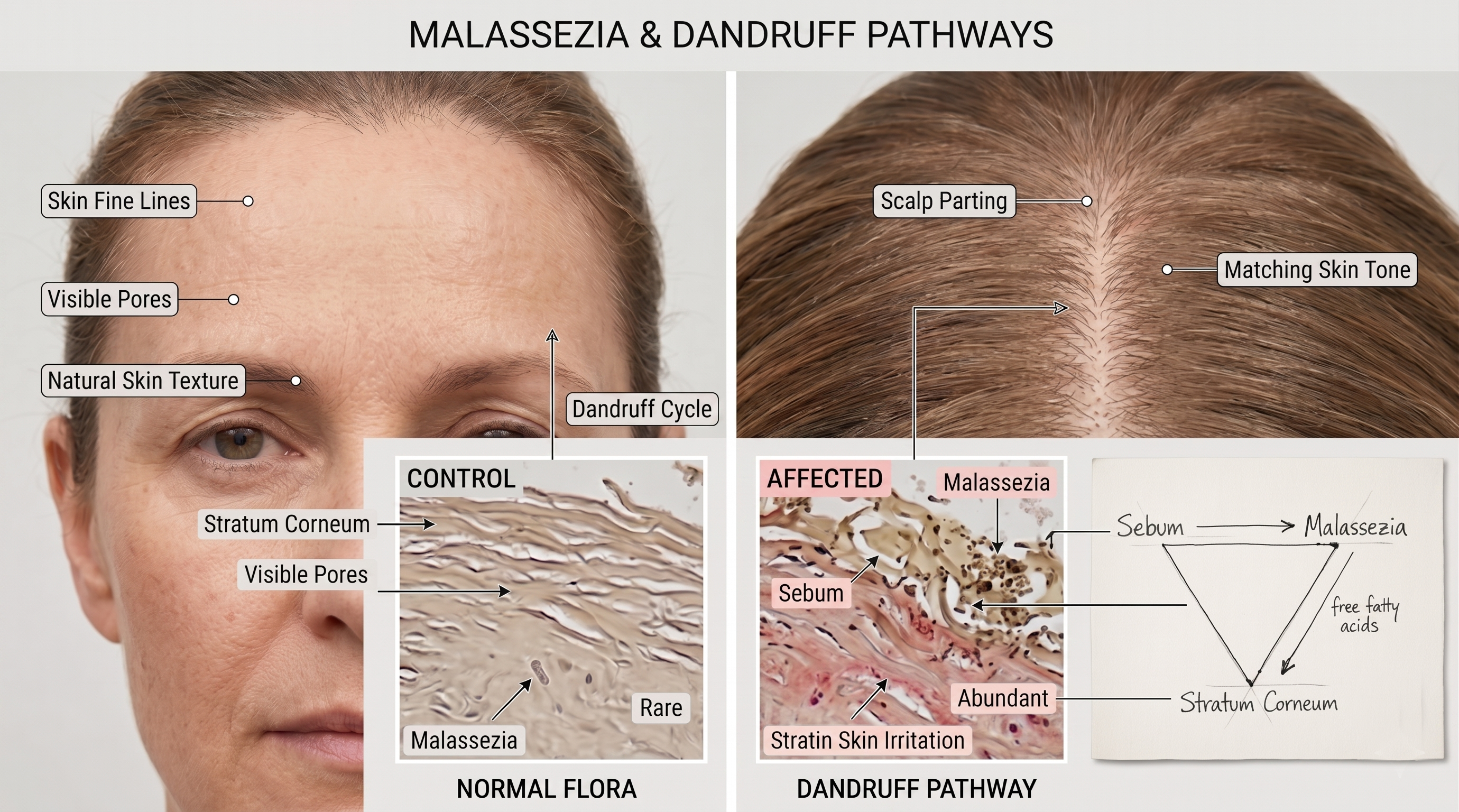
- Sebum Dynamics: Your scalp secretes sebum to form a protective lipid barrier. However, excess sebum serves as the primary food source for a naturally occurring lipophilic yeast called Malassezia.
- The Flaking Cascade: When Malassezia overproliferates, it breaks down sebum into free fatty acids. These fatty acids irritate the scalp skin barrier, triggering an accelerated cell-turnover response. This manifests as visible dandruff and chronic itchiness.
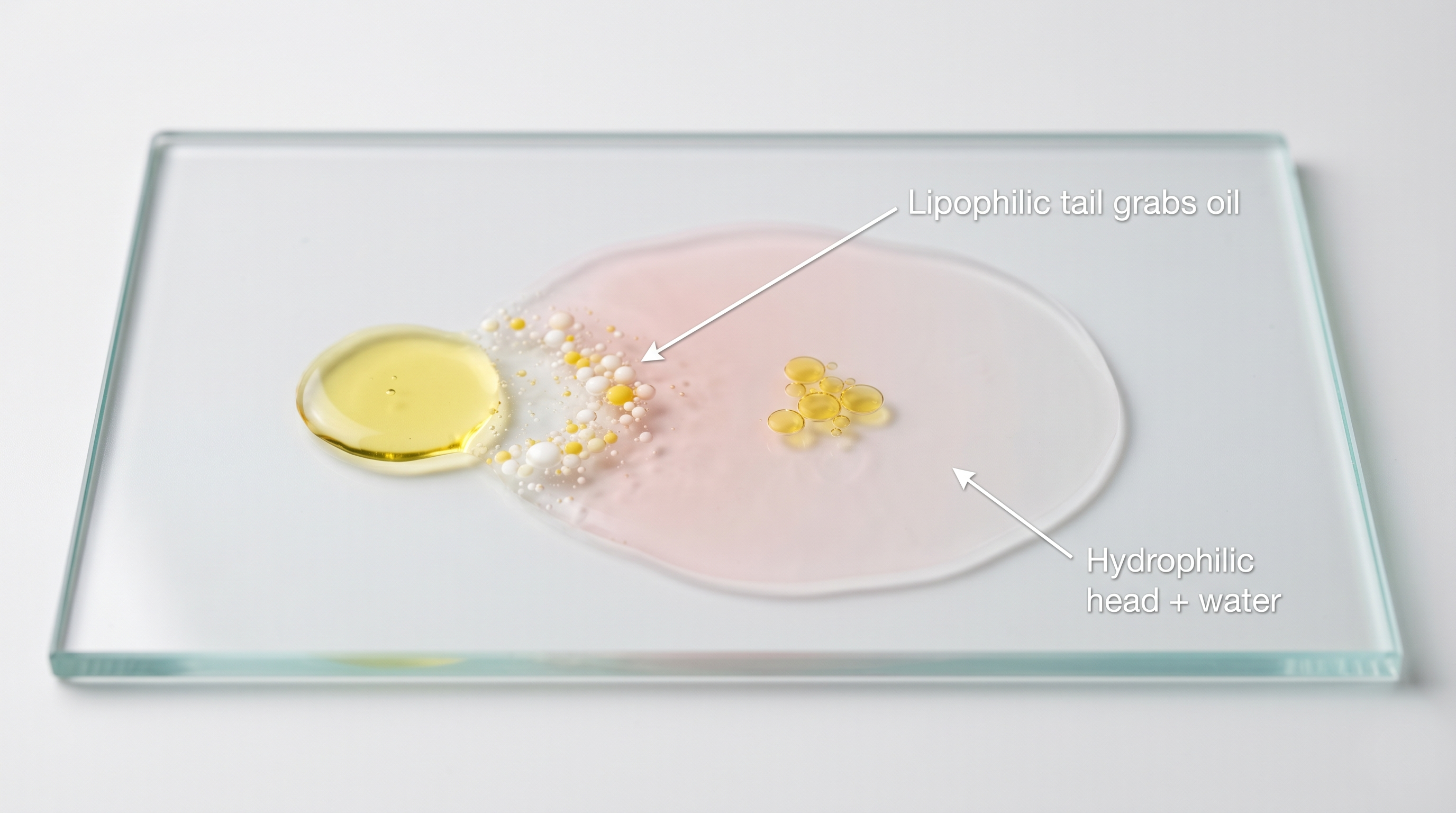
- Surfactant Logic: Shampoos clear this buildup using surfactants—molecules with a hydrophilic (water-loving) head and a lipophilic (fat-loving) tail. The tail grabs the oxidized lipids, and the head carries them away in the water stream.
- Cationic Conditioning: Damaged or weathered hair shafts carry a negative electrical charge, causing strands to repel each other (frizz and static). High-quality conditioners utilize cationic surfactants (e.g., Guar Hydroxypropyltrimonium Chloride or Behentrimonium Chloride). These positively charged molecules are electrostatically drawn to the damaged areas, smoothing down the cuticle and preventing mechanical breakage.
3. The Ingredient Decoder: How to Read a Shampoo Label Like a Pro
Ignore the front-label marketing claims like “purifying” or “deeply nourishing.” Flip the bottle over. Ingredients are listed in order of concentration; the first 5 ingredients (after water) dictate exactly what the product will do to your scalp.
3.1 The Surfactant Spectrum
Choosing the wrong surfactant can compromise your scalp's moisture barrier. For an in-depth analysis of how different cleansing agents behave, read our comprehensive guide on Surfactants Decoded: SLS, SLES, SCS, and C14-16 Olefin Sulfonate.
| Surfactant Type | Common INCI Names | Best Suited For |
|---|---|---|
| Sulfates | Sodium Laureth Sulfate (SLES) Sodium Lauryl Sulfate (SLS) |
Profile: High-performance cleansing, rich lather. Removes heavy silicone/styling buildup. Best For: Extremely oily scalps or those using heavy styling pomades. Can fade color-treated hair over time. |
| Sulfate-Free / Amino Acid | Sodium Cocoyl Isethionate Sodium Lauroyl Glutamate |
Profile: Exceptionally mild, bio-compatible, preserves the natural lipid barrier. Best For: Sensitive scalps, dry/coarse hair, and chemically processed or colored hair. |
| Amphoteric / Non-Ionic | Cocamidopropyl Betaine (CAPB) Lauryl Glucoside |
Profile: Mild co-surfactants used to reduce the irritation potential of primary cleansing agents while maintaining adequate lathering. |
3.2 Target Actives for Specific Scalp Typologies
- For Oily Scalps & Dandruff (The Clarifiers): Look for Salicylic Acid (BHA to exfoliate oil inside the follicle), Zinc PCA (to regulate sebum production), or Piroctone Olamine (a highly effective anti-fungal that targets Malassezia without stripping the skin).
- For Thinning & Scalp Longevity: Look for Rosemary Leaf Oil (Rosmarinus Officinalis). Research published by the National Center for Biotechnology Information (NCBI) indicates that rosemary oil aids microcirculation in the scalp, supporting the anagen growth phase similarly to low-concentration minoxidil, but without the scalp irritation.
- For Dry, High-Porosity Hair (Frizz Control): Seek out Hydrolyzed Keratin, Panthenol (Pro-Vitamin B5), and bio-mimetic lipids like Argan Oil or Jojoba Esters to replenish lost structural proteins and seal the cuticle.
If you are looking to scale your own brand with balanced, dermatologically driven formulations, check out our professional B2B Custom Hair Care Manufacturing Services, where we engineer advanced formulas tailored to global consumer trends.
4. The Protocol: A Step-by-Step Trichologist-Approved Wash Routine
Executing a wash routine requires precise mechanical and thermal boundaries. Follow this clinical workflow.
The 4-Step Clinical Execution:
- 1. The Tepid Pre-Rinse (60 Seconds): Thoroughly saturate your hair with lukewarm water (35°C–38°C / 95°F–100°F). Never use hot water, as it liquefies the essential structural lipids of the scalp barrier. This minute-long rinse removes dust, sweat, and pollutants, making your surfactant system significantly more effective.
- 2. Palmar Emulsification (Never Apply Directly): Dispense a quarter-sized amount of shampoo into your palms. Add a splash of water and rub your hands together until a rich emulsion forms before touching your head. Applying concentrated surfactant directly to the crown can cause localized irritation and chemical residue.
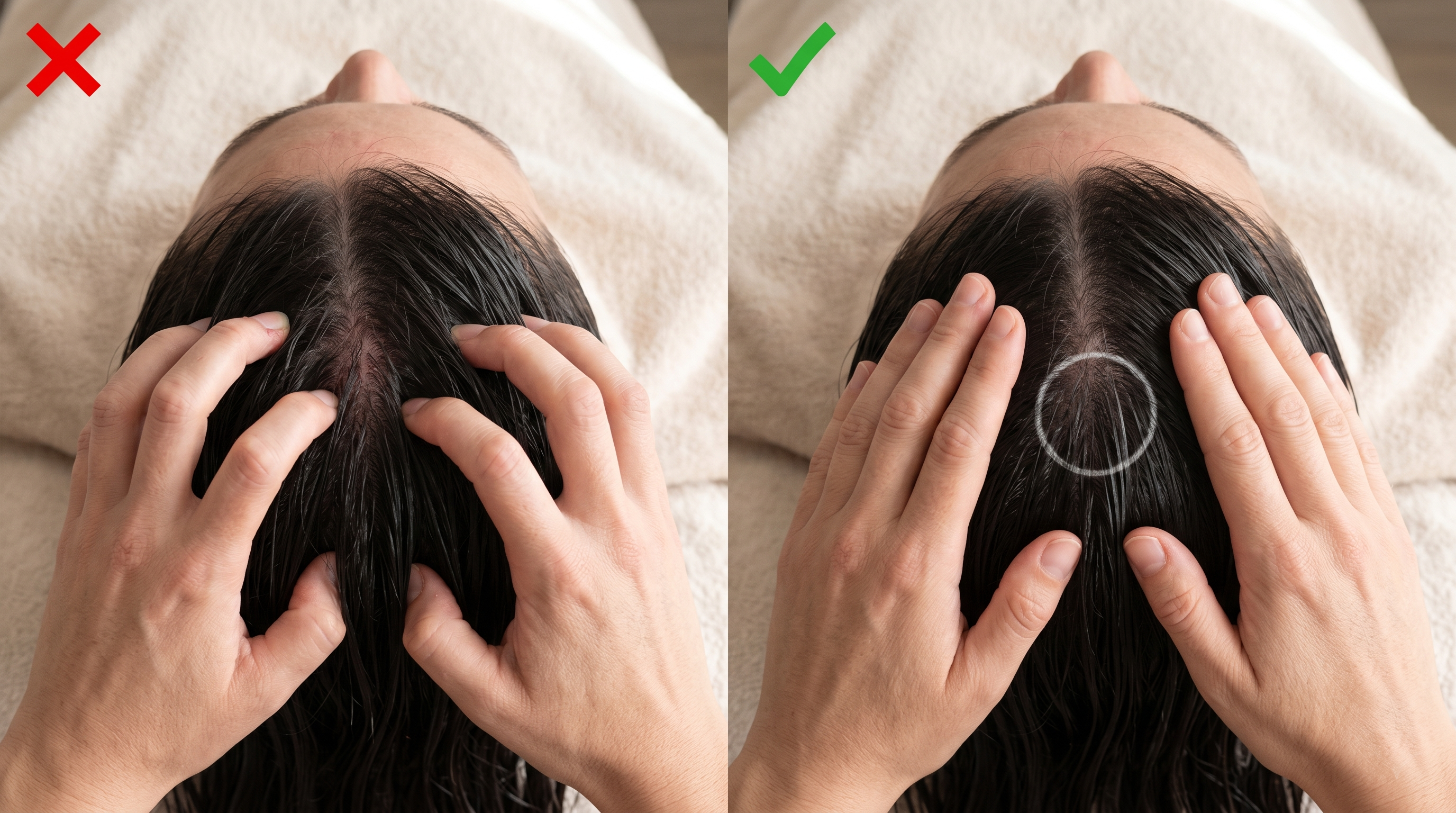
- 3. The Finger-Pad Micro-Massage (120 Seconds): Never use your fingernails. Scratching creates micro-fissures that invite bacterial infections. Spread your hands and place the pads of your ten fingers firmly against your scalp. Move the scalp skin over the skull bone in small, localized circles (about the size of a coin) for 2 minutes. Work systematically from the hairline and temples back toward the occipital bone (the base of the skull). Target the scalp, not the hair strands. The foam that runs down during rinsing is entirely sufficient to cleanse the mid-lengths and ends.
- 4. The Complete Flood Rinse (90 Seconds): Rinse thoroughly with lukewarm water. Residual surfactants left on the skin will degrade the stratum corneum, causing post-wash itching and flaking.
5. The Hidden Triggers: Hard Water, Towel Friction, and Heat Damage
Often, the issue isn’t your products—it’s your environment and styling mechanics.
5.1 The Hard Water Crisis
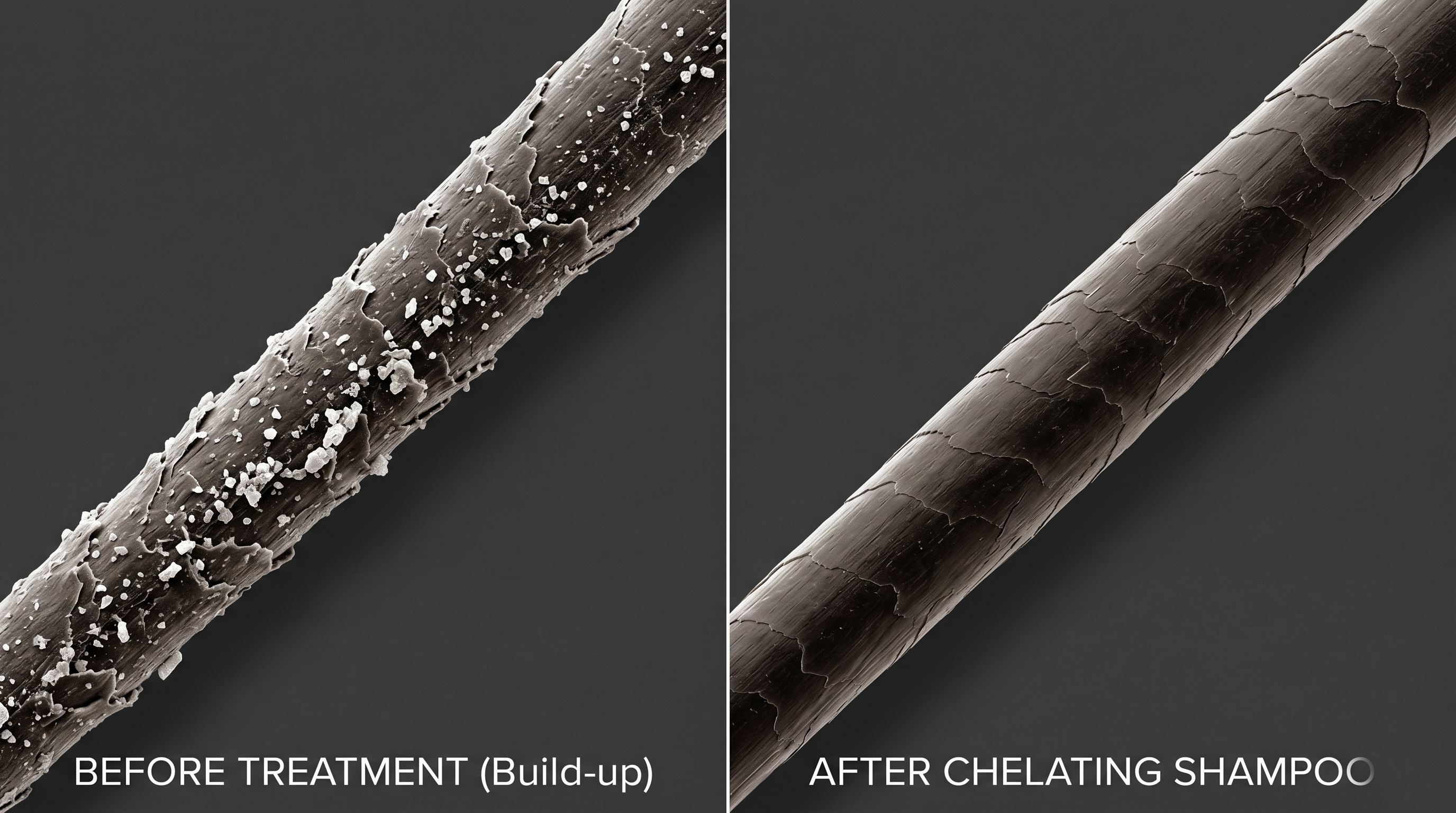
Many metropolitan areas feature "hard water" packed with high concentrations of Calcium and Magnesium. These minerals chemically bind with surfactants, creating a sticky residue known as "scum" that glues down the hair cuticle, rendering hair dull, brittle, and causing scalp irritation.
- The Fix: If you live in a hard water area, incorporate a specialized Clarifying Shampoo (containing chelating agents like Disodium EDTA or Tetrasodium EDTA) once every two weeks, or install an NSF-certified shower head filter.
5.2 Post-Wash Friction: A Mechanical Danger Zone
When wet, the hair’s keratin structure absorbs water, causing the shaft to swell and the cuticle scales to lift. In this state, hair has low elastic recovery and is highly vulnerable to mechanical damage.
- The Mistake: Vigorously rubbing your hair with a standard terrycloth towel. This shreds the cuticles, leading to chronic frizz and split ends.
- The Fix: Use a microfiber towel or a clean cotton T-shirt. Wrap the hair and gently press or squeeze to draw out excess moisture without friction.
- Conditioning Boundaries: Apply conditioner or hair masks from the mid-lengths to ends only. Keep the scalp zone completely clear to prevent product buildup or dynamic limpness. For intense, biocompatible mid-length replenishment, consider formulas like the Yedda Deep Repair Seaweed Hair Conditioner, which utilizes marine botanicals to smooth the cuticle without weighing down the roots.
6. Your Action Plan: 3 Shifts to Make This Week
Transforming your hair profile doesn't require a complete overhaul of your vanity. Start with these three precise, scientifically sound adjustments:
- 1. Switch to Finger-Pad Agitation: Stop scratching. During your next wash, focus entirely on using the pads of your fingers to massage your scalp in small, controlled circles for at least 60 seconds.
- 2. Adopt the "Press-Drying" Method: Eliminate towel friction. Squeeze out excess moisture post-wash rather than rubbing the hair shafts together.
- 3. Audit Your Top 5 Ingredients: Check the back label of your current shampoo. Identify the primary surfactant and check if it aligns with your true scalp type (Sulfate vs. Sulfate-free).
For brands and enterprise buyers evaluating supply chain mechanics, balancing top-tier raw materials with optimal manufacturing costs is key. Read our global analysis on China vs. USA Shampoo Manufacturing Cost Comparison to learn how premium formulations are scaled efficiently.
7. Frequently Asked Questions (FAQ)
Q1: Why is my hair still greasy even though I use a "Deep Cleansing" sulfate shampoo every day?
A: You might be experiencing reactive seborrhea or a compromised skin barrier. When you strip away 100% of the natural lipids using harsh sulfates daily, the scalp signaling path signals that the barrier is vulnerable, sometimes triggering a temporary surge in sebum production to compensate. Additionally, harsh stripping dries out the stratum corneum, making it flake—which people often mistake for oily dandruff. Try switching to a mild, sulfate-free amino acid primary shampoo, and use your deep-cleansing sulfate shampoo only 1–2 times a week as a clarifying treatment.
Q2: Can a leave-in hair oil or serum repair split ends?
A: Microscopic and chemical analysis shows that nothing can truly "repair" or re-fuse a hair fiber once it has physically split apart. Hair is non-living tissue; it cannot heal. Hair oils and serums containing silicones or plant lipids merely act as temporary cosmetic "glue" that coats and patches the split end so it looks smooth and resists further unraveling. The only permanent medical cure for split ends is a clean trim with professional shears.
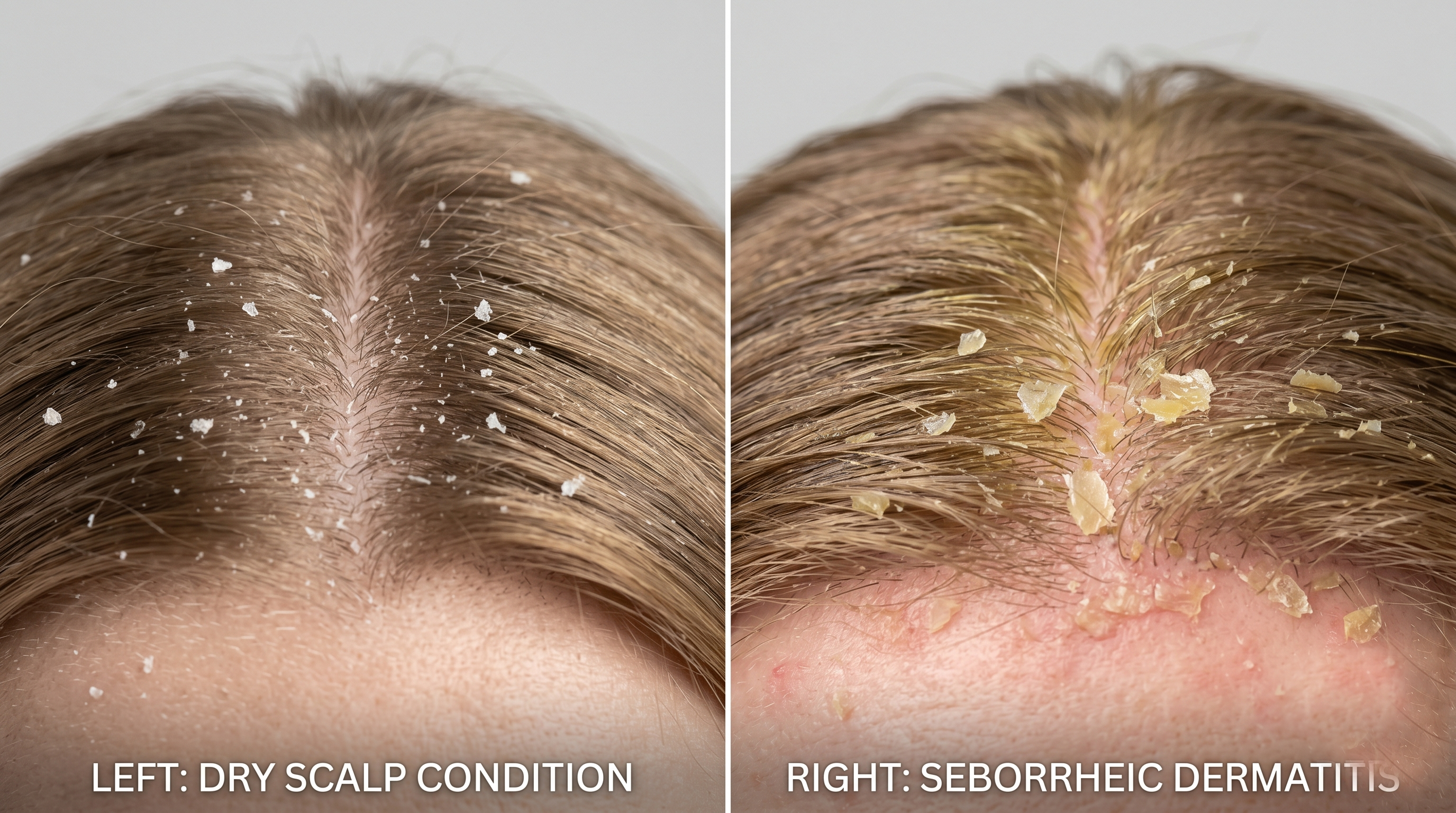
Q3: How can I tell if my flakes are "Dry Scalp" or "Oily Dandruff (Malassezia)"?
A: The treatment for these two conditions is completely opposite, so diagnosis is crucial:
- Dry Scalp Flakes: Typically small, white, loose, and powdery. They fall easily onto your shoulders and are accompanied by a tight, dry feeling across the scalp (similar to dry facial skin). Solution: Mild surfactants + hydration.
- Oily Dandruff (Seborrheic Dermatitis): Larger, yellowish, waxy, or sticky flakes that adhere to the hair shafts and scalp. This is often accompanied by redness, an oily odor, and intense itching. Solution: Use anti-fungal ingredients (Piroctone Olamine, Zinc PCA) + BHA (Salicylic Acid).
Q4: Does using "Sulfate-Free" shampoo mean it won't foam up?
A: This is a common misconception based on older cosmetic formulations. While pure amino acid surfactants do produce a looser, more unstable foam compared to dense sulfates, modern high-end formulations complex them with amphoteric co-surfactants (like Cocamidopropyl Betaine). This creates a rich, luxurious lather without the aggressive, barrier-stripping side effects. If your sulfate-free shampoo isn't foaming, it usually means your hair has heavy product or sebum buildup; simply do a quick initial wash to break the surface tension, rinse, and the second wash will foam beautifully.
The Bottom Line Summary: Beautiful hair is an anatomical byproduct of a healthy, balanced scalp. By moving past viral anti-silicone trends, selecting surfactants that match your sebum production rate, and controlling variables like water temperature and mechanical friction, you allow your scalp microbiome to stabilize itself naturally.
💬 Scalp Diagnosis & Ingredient Check
Every scalp operates on a unique biochemical matrix. If you want a personalized evaluation, drop a comment below with your current scalp profile (e.g., oily roots with dry, bleached ends) or list the first 5 ingredients of your favorite shampoo. I will break down the formulation physics for you!