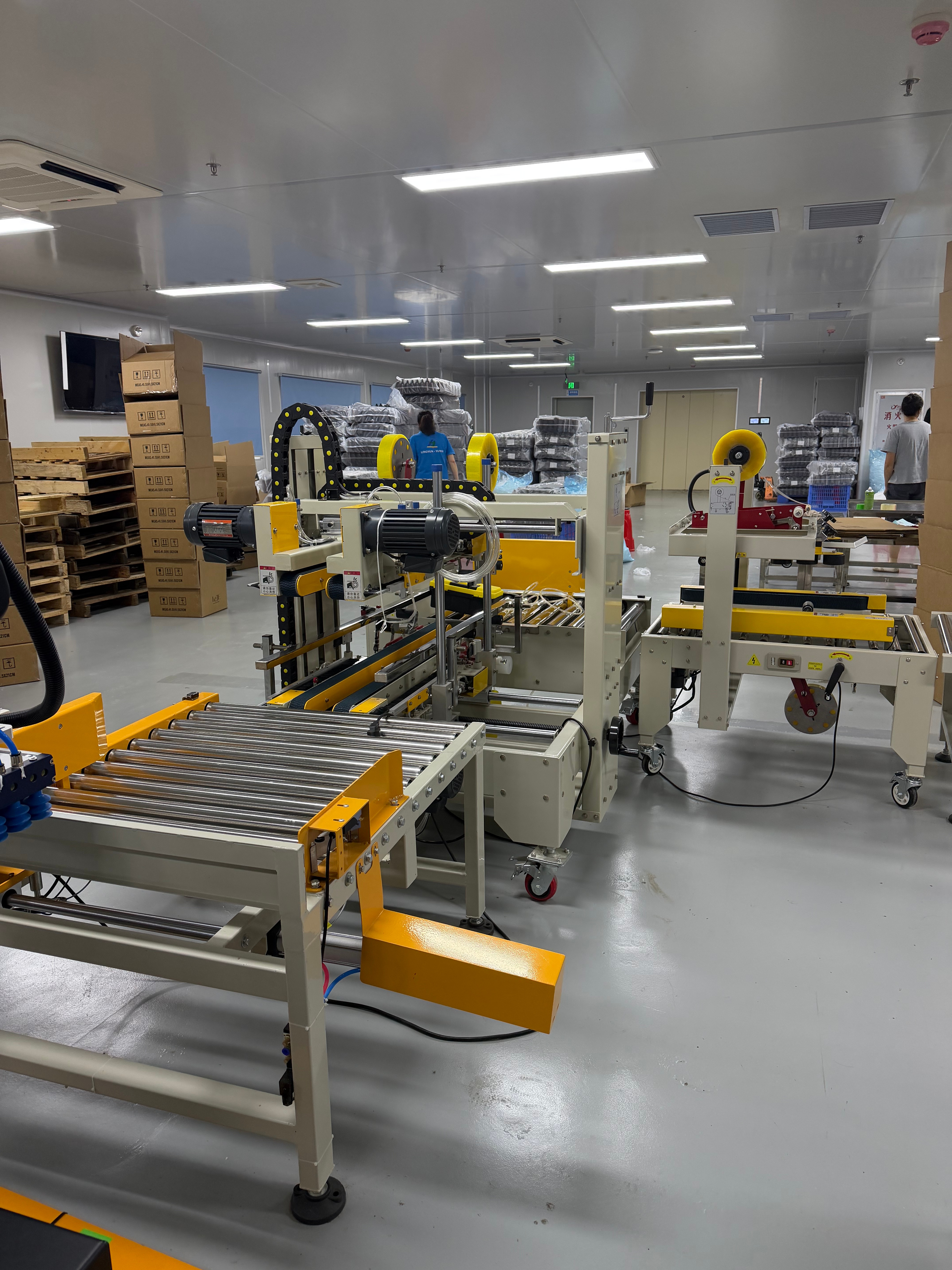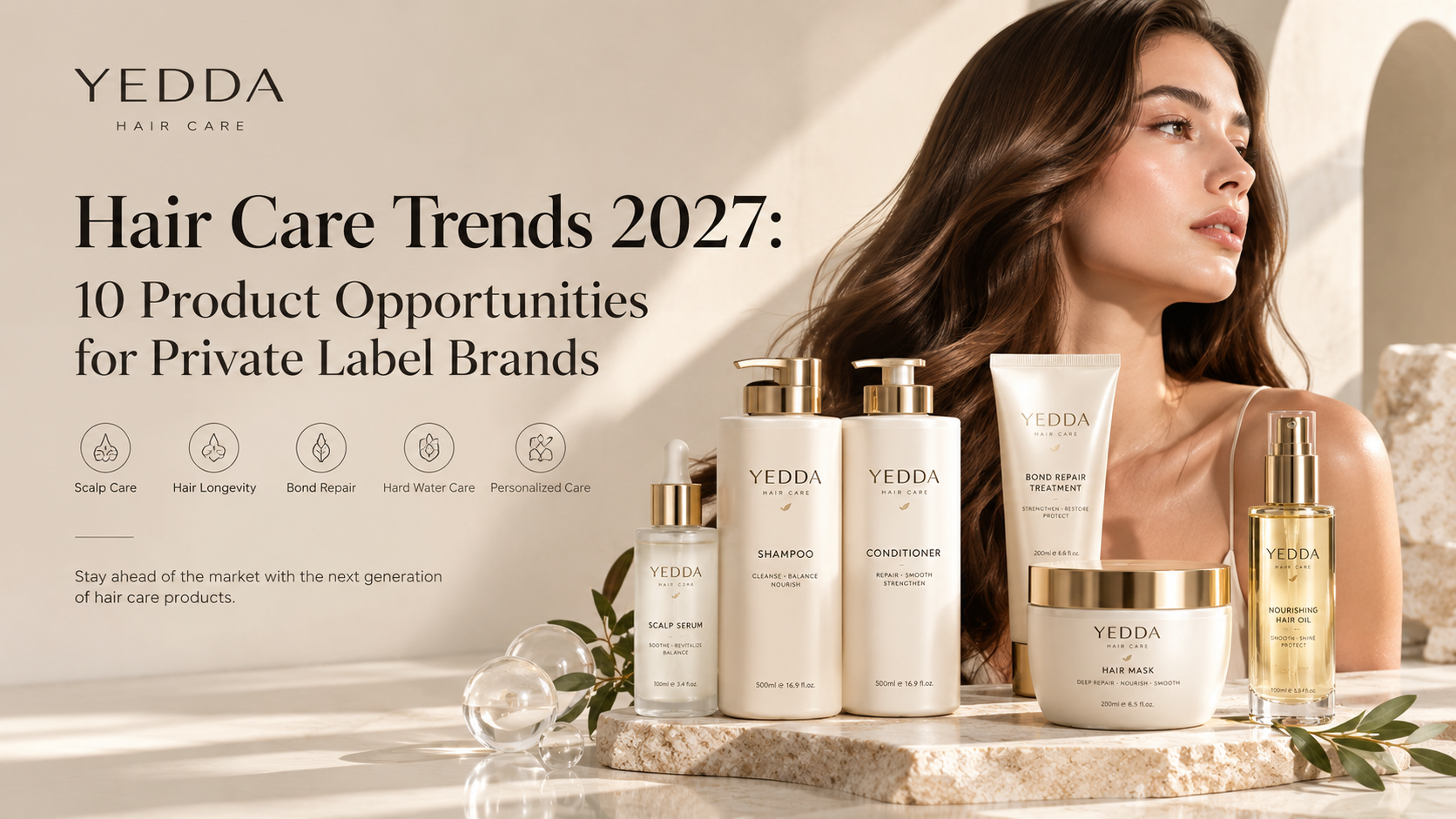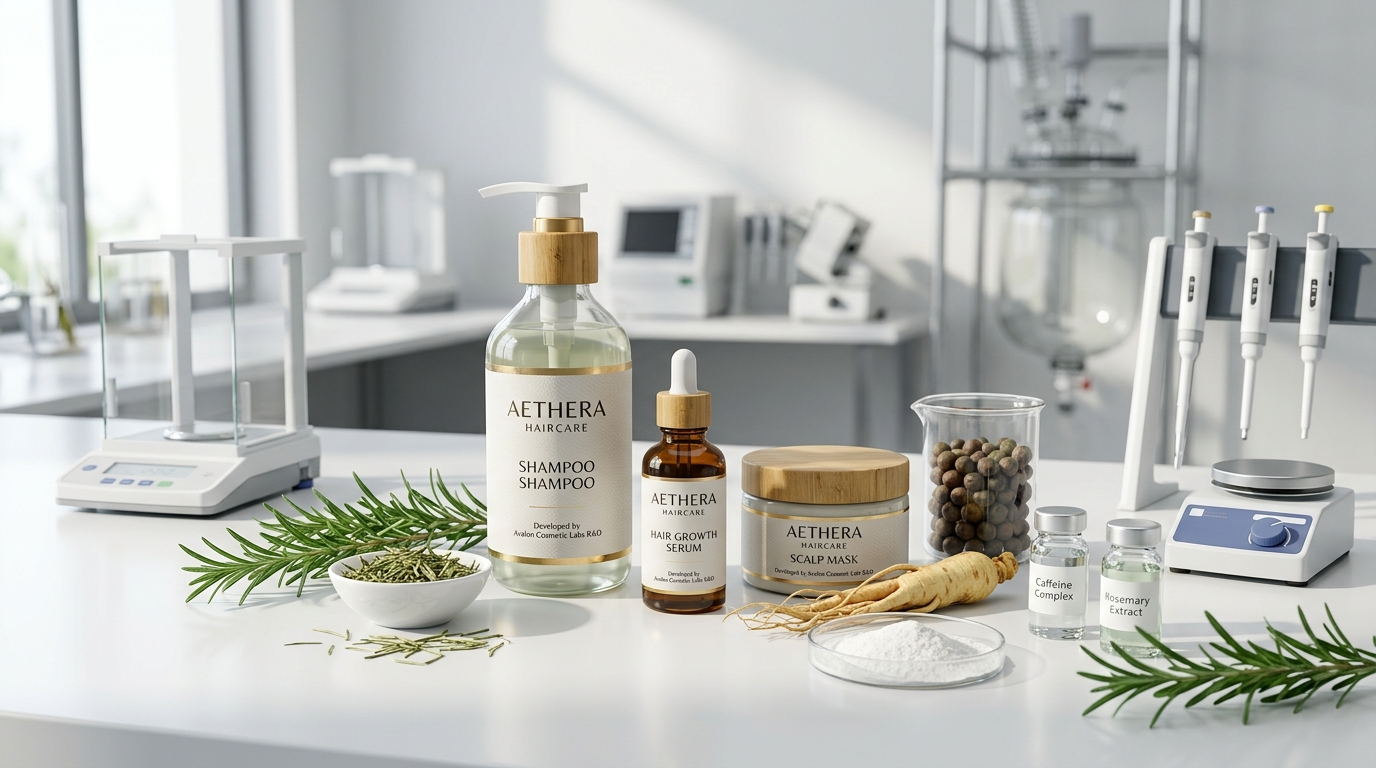

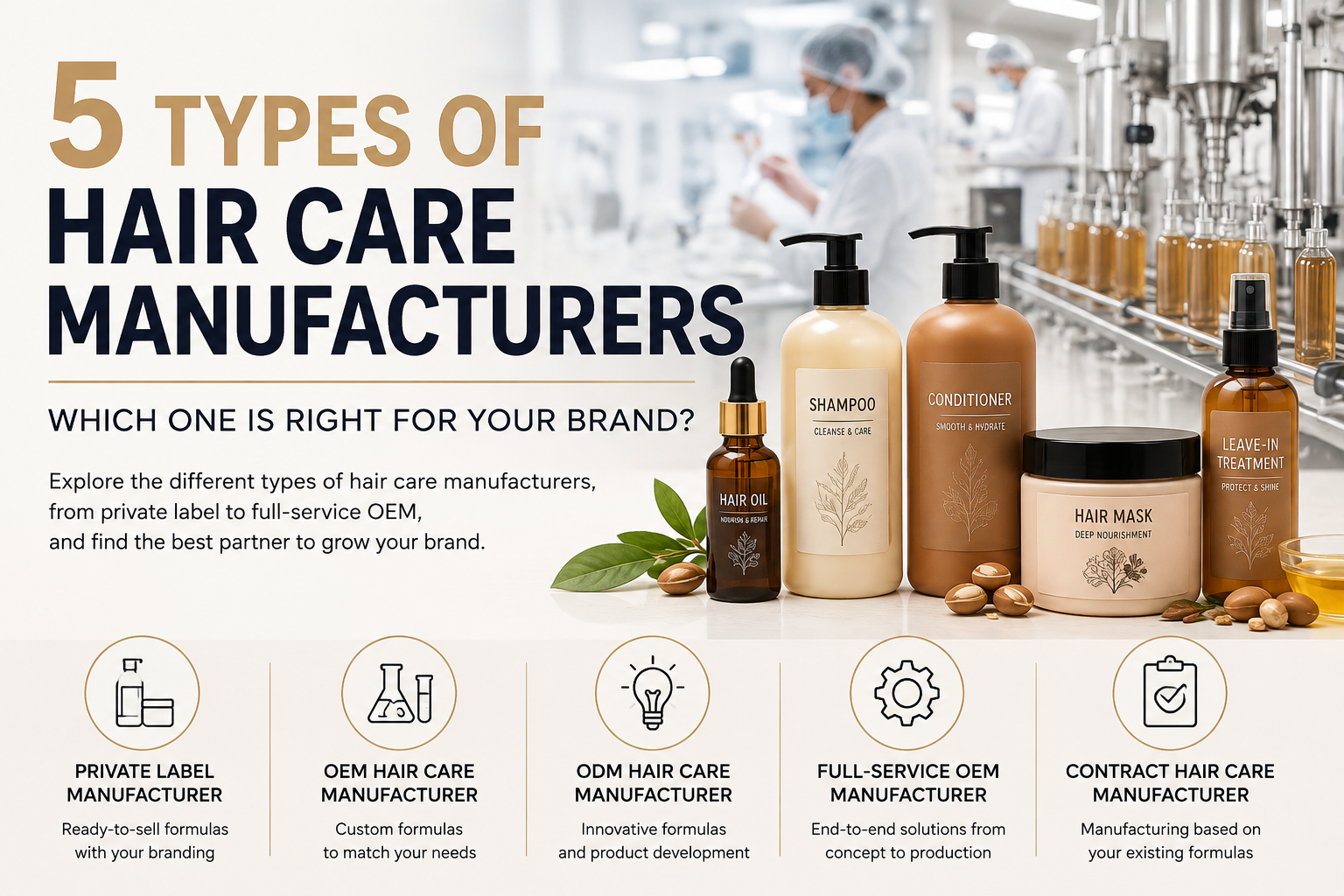
Before launching a new product line, choose the right oneHair care productsManufacturers are critical. For beauty brands, choosing the right manufacturer is one of the most important decisions. Manufacturer choice affects formulation development, product quality, minimum order quantities, packaging options, production lead time, cost structure and the ability to expand capacity as the brand grows.
The manufacturing landscape can be confusing for both emerging and established brands in the U.S. and European markets. Some suppliers focus on private label products, while others focus on OEM or ODM development. Some suppliers are full-service, while others primarily provide volume products or contract manufacturing services.
Learn about the different typesHair care product manufacturer helps brand owners make more informed purchasing decisions. Brands no longer select suppliers based solely on price, but can evaluate their production capabilities based on product concept, target market, order volume, customization needs and long-term development plans.
This guide explains five common types of hair care product manufacturers and compares their benefits, limitations, and ideal use cases for international beauty brands.
Why chooseThe right hair care product manufacturer is crucial
The competition in the global beauty industry is becoming increasingly fierce, and hair care products have become an important category for established companies and emerging brands. The "2025 Beauty Industry Research Report" released by McKinsey pointed out that consumers are increasingly paying attention to the value and efficacy of products, and beauty brands need stronger product differentiation and more accurate consumer segmentation.
For hair care brands, this means production is no longer just about finding a factory that can fill shampoo bottles. A capable familyHair care product manufacturer inherit;">Can become a strategic product development partner.
The right manufacturing partner can help brands achieve the following goals:
- Recipe development and customization
- Raw material procurement
- Product samples
- Stability and quality testing
- Packaging selection and customization
- Filling and production
- Labels and secondary packaging
- Quality Control
- Production Plan
- Mass production and scale
For brands entering the private label market, these features can significantly reduce the complexity of launching new product lines.
Private brands are also becoming an increasingly important part of the cosmetics industry. Grand View Research estimates that the global private label cosmetics market could reach approximately $11.7 billion by 2026 and $14.4 billion by 2030, spanning categories such as hair care, skin care, color cosmetics and fragrances.
This creates opportunities for brands, but it also makes the choice of manufacturer even more important. A supplier that is suitable for small-volume trial orders may not be suitable for a brand preparing to enter the international retail market.
Introduction to five hair care product manufacturers
No one production model works for all brands. The best option depends on the degree of customization you require, how quickly you can bring your product to market, the volume of orders you expect, and whether you already have your own formula and packaging specifications.
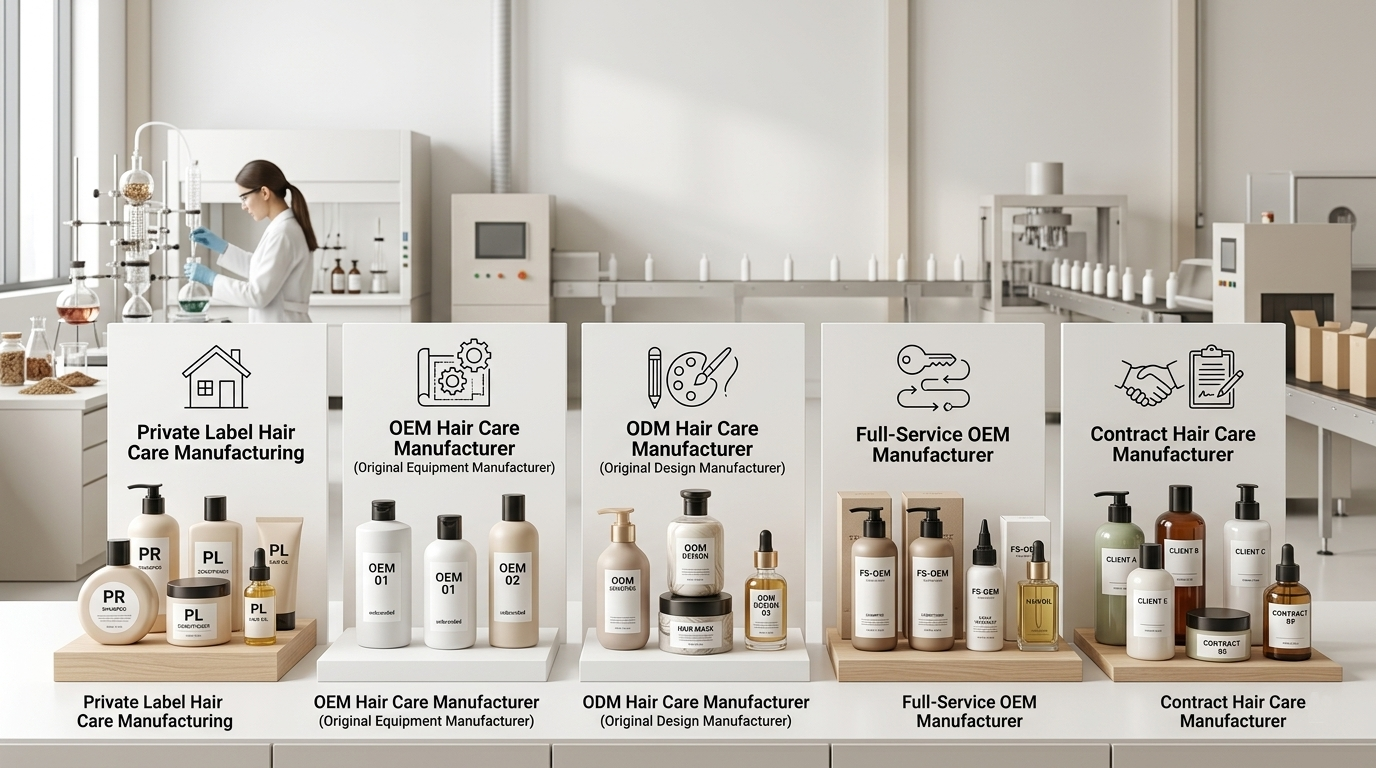
The five main types of manufacturers that hair care brands typically encounter are:
- Private label hair care product manufacturer
- OEM hair care product manufacturer
- ODM hair care product manufacturer
- Full-service OEM manufacturer
- Contract hair care product manufacturer
There may be overlap between these categories. Some experienced manufacturers offer two or more services simultaneously. Therefore, brands should not rely solely on the terminology used on their websites when assessing a supplier’s actual capabilities.
1.Private brandHair care product manufacturer
Own inherit;">Branded hair care product manufacturer
Manufacturers may offer product catalogs containing shampoos, conditioners, hair masks, hair oils, scalp care products, leave-in hair care products, and other hair care products.
Private label hair care product production process
A typical process might look like this:
- Select an existing product or formula
- Request samples
- Evaluate texture, fragrance, color and performance
- Select packaging
- Custom labels and branding
- Confirm specifications and order quantity
- Start mass production
The biggest advantage is speed. Since the product concept and formula may already exist, the development process can be significantly shorter than developing an entirely new formula from scratch.
Who should choose private label production?
Private label production is especially suitable for:
- New beauty brand
- SMEs
- Online Retailer
- Salon brand
- Brands led by Internet celebrities
- Distributors are testing new product categories
However, private label products may not be as differentiated as fully customized products. If many customers use similar formulas, the brand may need to differentiate through packaging, positioning, fragrance, ingredients, product claims or customer experience.
2. OEM hair care product manufacturer
OEM hair care product manufacturers are often the better choice for brands that want more control over product specifications. OEM production can involve custom formulas, ingredients, flavors, textures, packaging, filling specifications, and other product requirements.
Rather than simply selecting existing products, the brand works with manufacturers to develop products based on specific requirements.
What can OEM hair care product manufacturers customize?
- Shampoo Recipe
- Conditioner Recipe
- Hair mask formula
- Hair oils and serums
- Scalp care products
- Fragrance
- Texture and viscosity
- Composition
- Packaging specifications
- Product color and appearance
This model is especially valuable for brands with clear market positioning. For example, a brand targeting damaged hair may require a customized repair formula, while a scalp care brand may require a lightweight shampoo containing specific scalp care ingredients.
The main advantage of OEM production is product differentiation. The main consideration is that custom development typically requires more communication, prototyping, testing and development time than standard private label production.
3. ODM hair care product manufacturer
ODM hair care product manufacturers often provide product development capabilities and may already have proprietary technology, formulations, ingredient systems, or product concepts that brands can adapt to their own markets.
ODM is ideal for companies that have product ideas but do not have their own formulation team.
OEM and ODM hair care product manufacturing
| Factors | OEM | ODM |
|---|---|---|
| Recipe customization | Tall | Medium High |
| Brand product concept | Usually provided by brands | Manufacturer support |
| Manufacturer R&D participation | Tall | Very high |
| Develop flexibility | Tall | Depends on existing technology |
| Speed to market | Medium | May be faster |
| Suitable for start-ups | Yes | Yes |
The difference between OEM and ODM is not always the same, and some companies even use the two terms interchangeably. Therefore, buyers should inquire about the services actually provided by the manufacturer and not rely solely on the label "OEM" or "ODM."
4. 全方位服务的OEM制造商
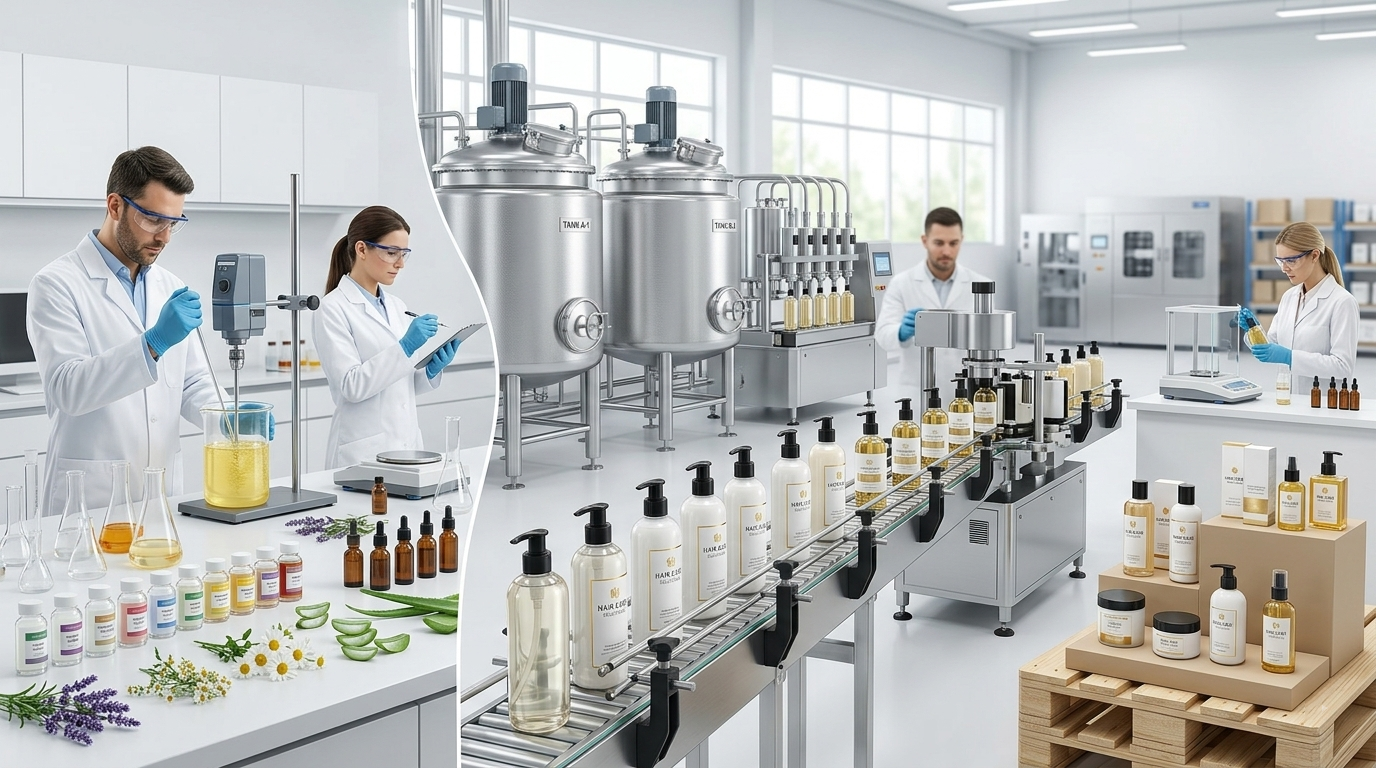
全方位服务 OEM 制造商在产品开发和制造过程中提供更广泛的服务。品牌无需管理多个配方、原材料、包装、灌装和成品供应商,即可通过单一制造合作伙伴协调项目的大部分工作。
对于希望降低供应链复杂性的国际护发品牌而言,这种模式尤其有用。
提供全方位服务的OEM制造商可以提供哪些服务?
- 产品概念开发
- 配方开发
- 原材料采购
- 样品开发
- 包装采购
- 定制包装协调
- 灌装和生产
- 质量控制
- 成品组装
- 出口导向型生产支持
例如,一个品牌推出四件套护发产品可能需要洗发水、护发素、发膜和护发油。一家提供全方位服务的护发产品OEM制造商能够协调整个系列产品的配方、包装规格、生产计划和最终组装。
与分别与配方商、包装供应商、灌装商和组装公司合作相比,这简化了供应链的管理。
为什么全规模OEM制造模式对国际品牌具有吸引力
国际品牌往往需要协调时区、供应商、语言、生产计划和质量要求等方面的差异。全方位服务制造商可以通过设立中央联络点来简化沟通。
当同时推出多个 SKU 时,这一点尤其有价值。
例如,与其单独管理:
- 配方供应商
- 瓶子供应商
- 帽子供应商
- 标签供应商
- 装瓶厂
- 纸箱供应商
- 装配供应商
品牌可以通过经验丰富的制造商来管理项目的大部分工作。
5. OEM护发产品制造商
护发产品制造商通常专注于根据客户提供的规格生产产品。客户可能已经拥有自己的配方、包装规格、技术文档或产品开发团队。
这种模式通常适用于产品开发已完成但需要生产能力的成熟品牌。
什么情况下更适合选择OEM生产?
当品牌需要以下服务时,合同制造可能是一个合适的选择:
- 已拥有或控制该产品配方
- 具有详细的产品规格
- 包装要求已制定
- 需要额外的生产能力
- 希望将生产外包
- 拓展现有成功产品
与提供全方位服务的 OEM 制造商相比,品牌商可能对产品开发和规格制定承担更大的责任。
这使得合同制造对拥有成熟的内部研发、产品开发或采购团队的大品牌来说尤其具有吸引力。
护发产品工厂与贸易公司:有什么区别?
国际买家在寻找护发产品制造商时,可能会遇到直接与工厂对接的制造商,也可能遇到贸易公司。了解这两者的区别有助于品牌避免意想不到的沟通和供应链问题。
| 因素 | 直接护发工厂 | 贸易公司 |
|---|---|---|
| 直接生产控制 | 通常较高 | 取决于制造合作伙伴 |
| 配方开发 | 可能内部提供 | 通常外包或协调进行 |
| 工厂通讯 | 直接的 | 通常通过中间人 |
| 提高透明度 | 一般较高 | 取决于供应商网络 |
| 产品定制 | 通常非常强 | 取决于工厂 |
| 供应商灵活性 | 根据工厂产能 | 可能进入多家工厂 |
贸易公司未必都是糟糕的供应商。有些贸易公司拥有强大的采购能力,能够协调多个产品类别。 However, brands seeking long-term product development should understand who truly controls the formulation and production process.
对于定制护发产品而言,在购买过程中,询问供应商是否是实际制造商是最有用的问题之一。
如何为您的品牌选择合适的护发产品制造商
最好的护发产品制造商未必是规模最大的工厂,也未必是报价最低的供应商。 The right choice depends on your business model and product strategy.
1. 考虑您的产品开发阶段
如果您已经拥有完整的配方,OEM生产可能就足够了。如果您只有产品概念,那么ODM或全方位OEM制造商可能会提供更高的性价比。
2. 考虑您的最小起订量
最小起订量对初创企业尤为重要。即使制造商拥有卓越的生产能力,如果其最小起订量远高于您的初始销售预测,仍然不合适。
请提出以下问题:
- 每个 SKU 的最低订购量
- 每份食谱的最低订购量
- 定制包装的最低订购量
- 样品数量
- 试生产计划
3. 评估制剂开发能力
如果差异化对你的品牌很重要,那就寻找一家拥有经验丰富的配方能力的OEM护发产品制造商,而不是仅仅根据现有的产品目录来选择供应商。
询问制造商是否可以调整质地、香味、活性成分、粘度、颜色、清洁力、护发性能和其他相关产品特性。
4. 检查生产和质量体系
产品质量应进行系统性评估。 ISO 22716:2007 为化妆品良好生产规范 (GMP) 提供了国际公认的指导,涵盖化妆品的生产、控制、储存和运输。国际标准化组织 (ISO) 目前将 ISO 22716:2007 列为现行标准。
品牌商可以在下大订单之前,审查制造商的质量管理流程、生产环境、批次记录、原材料控制、成品检验和可追溯性系统。
5. 检查包装能力
包装是护发产品开发的重要组成部分。 Manufacturers may provide bottles, pumps, tubes, jars, bags, cartons, labels, and other packaging formats.
对于国际品牌而言,评估供应商是否能够协调包装采购和生产,而不是要求品牌单独管理每个包装组件,是非常有用的。
6. 考虑长期可扩展性
您的首笔订单金额可能较小,但您的生产合作伙伴应该能够支持您未来的增长。
询问工厂你的产品是否畅销,以及能否应对更高的产量。能够满足1000件需求的供应商可能无法满足5万件或10万件的需求。
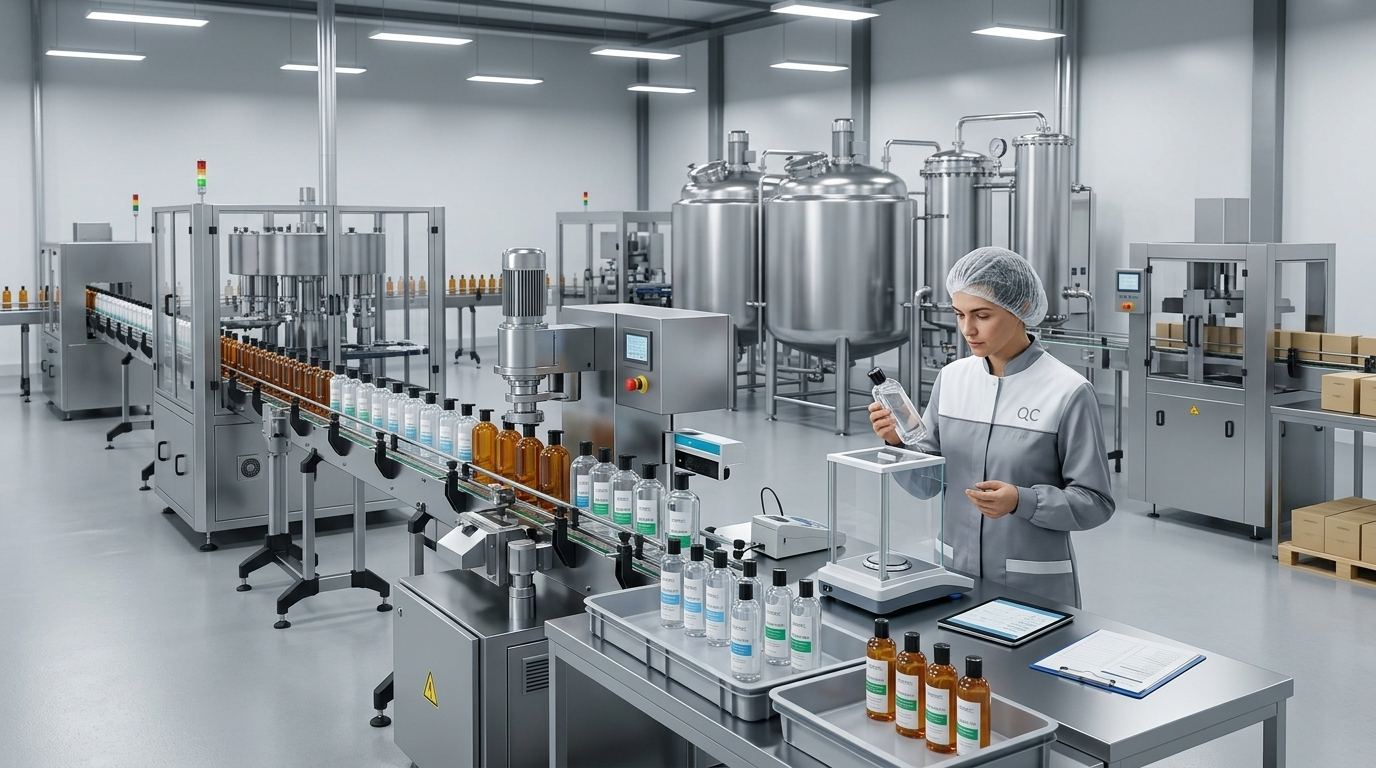
品牌在向护发产品制造商订购产品前应该问哪些问题?
买家在签署 OEM、ODM、自有品牌或合同制造协议之前,应就整个生产过程提出明确的问题。
- 您是直接生产厂家还是贸易公司?
- 你们专营哪些护发产品?
- 你们提供OEM和ODM服务吗?
- 你能开发自定义公式吗?
- 每个SKU的最小订购量是多少?
- 批量生产前能否提供样品?
- 有哪些包装方案可供选择?
- 你们能协调定制包装吗?
- 典型的生产周期是怎样的?
- 如何在生产过程中进行质量控制?
- 你们的项目可以支持多个 SKU 吗?
- 随着品牌的发展,能否扩大生产规模?
这些问题有助于买家根据实际能力而非仅仅比较报价来比较不同制造商。
哪种类型的护发产品制造商最适合不同的品牌?
| 品牌地位 | 推荐制造商 | 主要原因 |
|---|---|---|
| 新品牌,产品经验有限。 | 自有品牌/ODM | 更快的产品开发 |
| 品牌寻求独特的配方 | OEM/全方位服务的OEM | 更高程度的定制化 |
| 品牌需要完整的产品开发 | 全方位服务的OEM厂商 | 一体化开发和制造 |
| 一个拥有自己配方的知名品牌 | 合同制造商 | 关注产能 |
| 小型电商品牌 | 自有品牌/低起订量 OEM | 降低初始库存风险 |
| 不断发展的国际品牌 | 全方位服务的OEM厂商 | 更好的供应链协调 |
为什么全方位服务的OEM厂商能够成为一项强有力的长期战略
提供全方位服务的OEM制造商可以提供显著优势。
一个品牌最初可能只推出一款洗发水,然后逐步拓展产品线,例如护发素、发膜、护发油、头皮精华和免洗护发素。与了解品牌最初定位的生产合作伙伴携手,能够使未来的产品开发更加稳定和一致。
这也有助于品牌在香味、质地、包装外观、产品定位和整体消费者体验方面保持一致性。
对于 B2B 买家而言,最有价值的制造合作伙伴关系往往不是首单价格最低的,而是能够提供可靠的质量、快速响应的沟通、灵活的开发以及在多个产品周期内可扩展生产的。
结论:选择合适的护发产品制造商
护发产品生产商有很多种,每种生产模式都满足不同的业务需求。
自有品牌生产通常适合希望利用现有产品快速推出新品的品牌。 OEM护发产品制造商更适合寻求定制配方和产品规格的品牌。 ODM 生产可以帮助需要更强大产品开发支持的品牌,而合同制造商通常更适合拥有自身配方和规格的成熟公司。
对于寻求能够涵盖产品开发、配方定制、包装、生产和质量控制的一体化合作伙伴的品牌而言,全方位服务的OEM制造商可以提供更完整的解决方案。
最终,正确的决策取决于您的产品理念、最小起订量、目标市场、预算、定制需求以及预期增长。国际买家不应只问“最低价格是多少?”,而应问“哪家制造商能够从我的第一款产品到下一阶段的发展,全程支持我的品牌?”
对于国际护发品牌而言,选择在能力、质量体系、沟通、定制化和可扩展性方面具有优势的生产合作伙伴,可以为长期发展奠定更坚实的基础。
关于护发产品制造商的常见问题
什么是护发产品生产商?
护发产品制造商是指生产洗发水、护发素、发膜、护发油、头皮护理产品以及其他面向品牌商、零售商、美发沙龙、分销商或其他企业的护发产品的公司。 Depending on their capabilities, manufacturers can offer private label, OEM, ODM or contract manufacturing services.
OEM护发产品制造商和自有品牌制造商有什么区别?
自有品牌制造商通常提供现成产品或半成品,并可根据品牌要求定制包装和品牌标识。 OEM hair care product manufacturers usually provide a higher degree of customization and can develop formulas or product specifications according to brand requirements.
什么是全方位服务的OEM制造商?
全方位OEM制造商为产品开发和制造过程的多个阶段提供服务,包括配方研发、原材料采购、样品制作、包装协调、生产、质量控制、灌装和最终组装。 This model can simplify supply chain management for international brands.
如何为我的品牌选择最佳的护发产品生产商?
首先评估您的产品开发需求,包括最小订购量、配方要求、包装要求、生产能力、质量管理体系、交货周期、沟通以及可扩展性。优秀的护发产品制造商不仅应满足您当前的需求,还应具备足够的生产能力和技术实力,以支持您未来的发展。