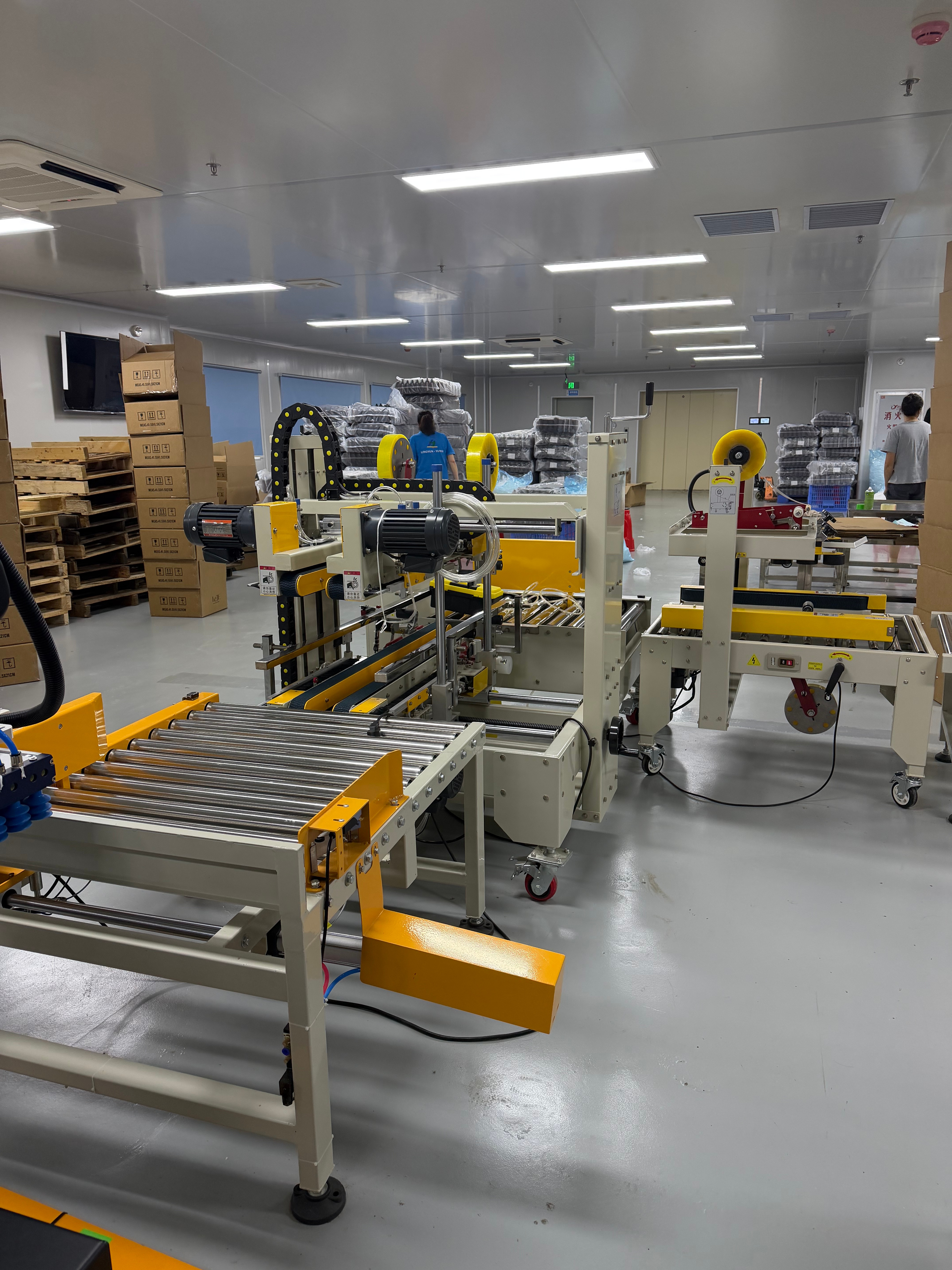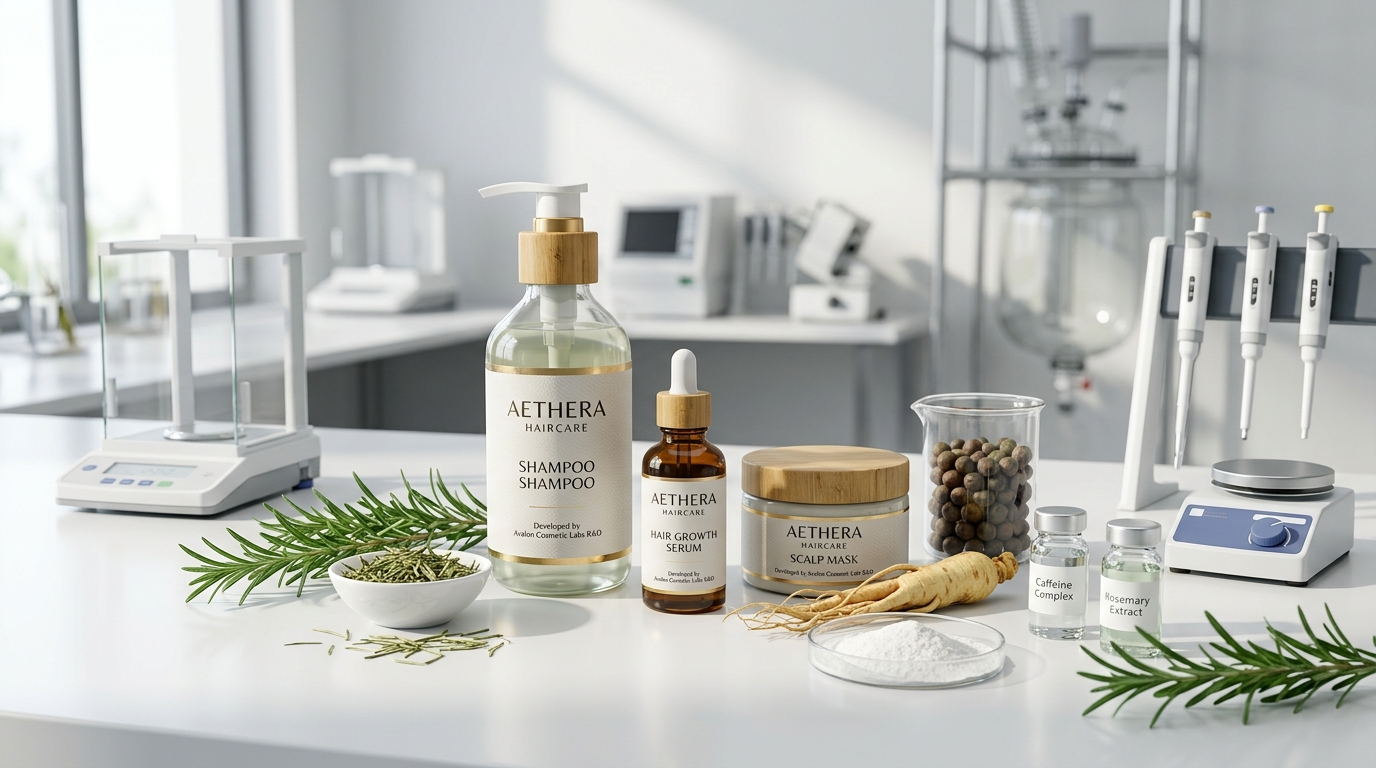

Bevor Sie eine neue Produktlinie auf den Markt bringen, wählen Sie die richtige ausHaarpflege ProdukteHersteller sind von entscheidender Bedeutung. Für Beauty-Marken ist die Wahl des richtigen Herstellers eine der wichtigsten Entscheidungen. Die Wahl des Herstellers beeinflusst die Formulierungsentwicklung, die Produktqualität, die Mindestbestellmengen, die Verpackungsoptionen, die Produktionsvorlaufzeit, die Kostenstruktur und die Fähigkeit, die Kapazität zu erweitern, wenn die Marke wächst.
Die Fertigungslandschaft kann sowohl für aufstrebende als auch etablierte Marken in den USA und Europa verwirrend sein. Einige Lieferanten konzentrieren sich auf Eigenmarkenprodukte, während andere sich auf die OEM- oder ODM-Entwicklung konzentrieren. Einige Lieferanten sind Full-Service-Anbieter, während andere hauptsächlich Massenprodukte oder Auftragsfertigungsdienstleistungen anbieten.
Erfahren Sie mehr über die verschiedenen TypenHersteller von Haarpflegeprodukten hilft Markeninhabern, fundiertere Kaufentscheidungen zu treffen. Marken wählen ihre Lieferanten nicht mehr nur nach dem Preis aus, sondern können ihre Produktionskapazitäten anhand des Produktkonzepts, des Zielmarkts, des Bestellvolumens, des Anpassungsbedarfs und der langfristigen Entwicklungspläne bewerten.
Dieser Leitfaden erklärt fünf gängige Arten von Haarpflegeproduktherstellern und vergleicht ihre Vorteile, Einschränkungen und idealen Anwendungsfälle für internationale Schönheitsmarken.
Warum wählenDer richtige Hersteller von Haarpflegeprodukten ist entscheidend
Der Wettbewerb in der globalen Schönheitsindustrie wird immer härter und Haarpflegeprodukte sind zu einer wichtigen Kategorie für etablierte Unternehmen und aufstrebende Marken geworden. Der von McKinsey veröffentlichte „2025 Beauty Industry Research Report“ wies darauf hin, dass Verbraucher zunehmend auf den Wert und die Wirksamkeit von Produkten achten und Schönheitsmarken eine stärkere Produktdifferenzierung und eine genauere Verbrauchersegmentierung benötigen.
Für Haarpflegemarken bedeutet dies, dass es bei der Produktion nicht mehr nur darum geht, eine Fabrik zu finden, die Shampooflaschen abfüllen kann. Eine leistungsfähige FamilieHaarpflegeprodukt Hersteller inherit;">Kann ein strategischer Produktentwicklungspartner werden.
Der richtige Fertigungspartner kann Marken dabei helfen, die folgenden Ziele zu erreichen:
- Rezeptentwicklung und Anpassung
- Rohstoffbeschaffung
- Produktbeispiele
- Stabilität und Qualität Testen
- Verpackungsauswahl und -anpassung
- Abfüllung und Produktion
- Etiketten und Sekundärverpackung
- Qualitätskontrolle
- Produktionsplan
- Massenproduktion und Skalierung
Für Marken, die in den Handelsmarkenmarkt eintreten, können diese Funktionen die Komplexität der Einführung neuer Produktlinien erheblich reduzieren.
Auch Privatmarken gewinnen in der Kosmetikindustrie zunehmend an Bedeutung. Grand View Research schätzt, dass der weltweite Markt für Handelsmarkenkosmetik bis 2026 etwa 11,7 Milliarden US-Dollar und bis 2030 14,4 Milliarden US-Dollar erreichen könnte und Kategorien wie Haarpflege, Hautpflege, Farbkosmetik und Düfte umfasst.
Das schafft Chancen für Marken, macht aber auch die Wahl des Herstellers noch wichtiger. Ein Lieferant, der für Probebestellungen in kleinen Mengen geeignet ist, ist möglicherweise nicht für eine Marke geeignet, die sich auf den Eintritt in den internationalen Einzelhandelsmarkt vorbereitet.
Vorstellung bei fünf Herstellern von Haarpflegeprodukten
Kein Produktionsmodell funktioniert für alle Marken. Die beste Option hängt davon ab, welchen Grad an Individualisierung Sie benötigen, wie schnell Sie Ihr Produkt auf den Markt bringen können, wie hoch Ihr erwartetes Bestellvolumen ist und ob Sie bereits über eigene Formel- und Verpackungsspezifikationen verfügen.
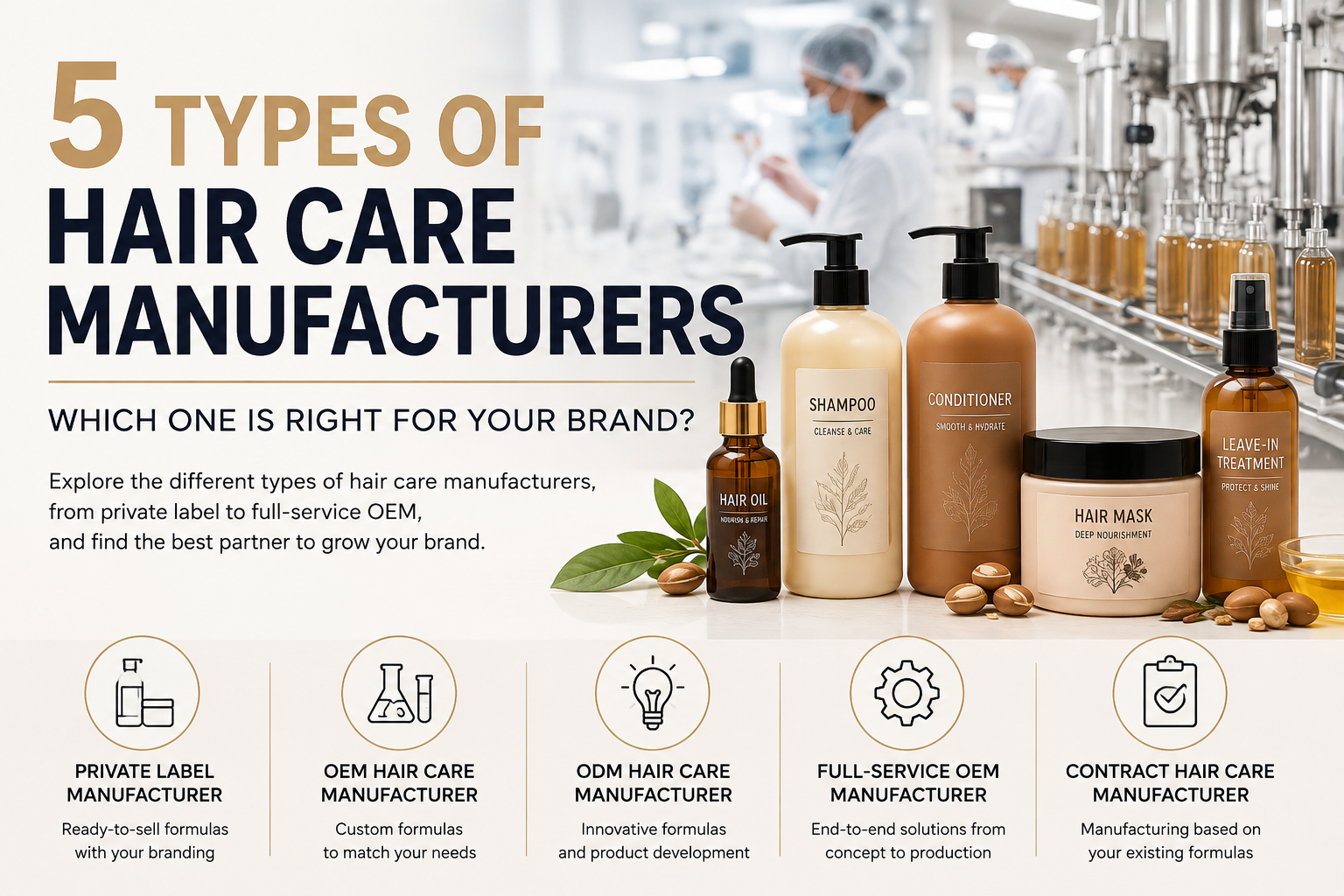
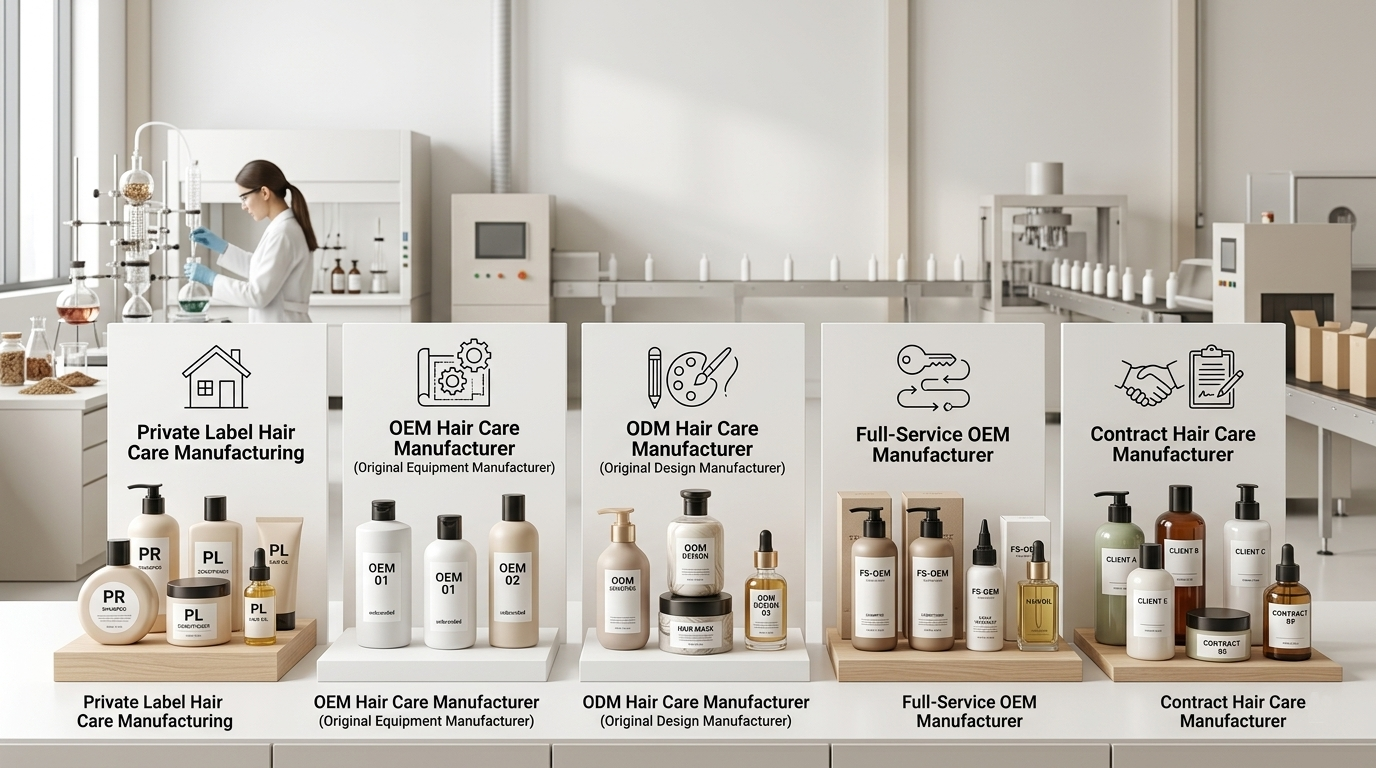
Die fünf Haupttypen von Herstellern, denen Haarpflegemarken normalerweise begegnen, sind:
- Privater Hersteller von Haarpflegeprodukten
- OEM-Hersteller von Haarpflegeprodukten
- Hersteller von ODM-Haarpflegeprodukten
- Full-Service-OEM-Hersteller
- Vertragshersteller von Haarpflegeprodukten
Es kann zu Überschneidungen zwischen diesen Kategorien kommen. Einige erfahrene Hersteller bieten zwei oder mehr Dienste gleichzeitig an. Daher sollten sich Marken bei der Beurteilung der tatsächlichen Fähigkeiten eines Anbieters nicht ausschließlich auf die auf ihren Websites verwendete Terminologie verlassen.
1.PrivatmarkeHersteller von Haarpflegeprodukten
Eigene inherit;">Hersteller von Marken-Haarpflegeprodukten
Hersteller bieten möglicherweise Produktkataloge an, die Shampoos, Spülungen, Haarmasken, Haaröle, Kopfhautpflegeprodukte, Leave-in-Haarpflegeprodukte und andere Haarpflegeprodukte enthalten.
Private-Label-Produktionsprozess für Haarpflegeprodukte
Ein typischer Prozess könnte so aussehen:
- Wählen Sie ein vorhandenes Produkt oder eine vorhandene Formel
- Beispiele anfordern
- Bewerten Sie Textur, Duft, Farbe und Leistung
- Verpackung auswählen
- Benutzerdefinierte Beschriftungen und Branding
- Spezifikationen und Bestellmenge bestätigen
- Massenproduktion starten
Der größte Vorteil ist die Geschwindigkeit. Da das Produktkonzept und die Formel möglicherweise bereits vorhanden sind, kann der Entwicklungsprozess deutlich kürzer sein als die Entwicklung einer völlig neuen Formel von Grund auf.
Wer sollte sich für die Produktion von Eigenmarken entscheiden?
Private Label-Produktion eignet sich besonders für:
- Neue Beauty-Marke
- KMU
- Online-Händler
- Salonmarke
- Marken, die von Internet-Prominenten geführt werden
- Distributoren testen neue Produktkategorien
Private-Label-Produkte sind jedoch möglicherweise nicht so differenziert wie vollständig maßgeschneiderte Produkte. Wenn viele Kunden ähnliche Formeln verwenden, muss sich die Marke möglicherweise durch Verpackung, Positionierung, Duft, Inhaltsstoffe, Produktaussagen oder Kundenerlebnis differenzieren.
2. OEM-Hersteller von Haarpflegeprodukten
OEM-Hersteller von Haarpflegeprodukten sind oft die bessere Wahl für Marken, die mehr Kontrolle über die Produktspezifikationen wünschen. Die OEM-Produktion kann kundenspezifische Formeln, Zutaten, Aromen, Texturen, Verpackungen, Füllspezifikationen und andere Produktanforderungen umfassen.
Anstatt einfach bestehende Produkte auszuwählen, arbeitet die Marke mit Herstellern zusammen, um Produkte basierend auf spezifischen Anforderungen zu entwickeln.
Was können OEM-Hersteller von Haarpflegeprodukten anpassen?
- Shampoo-Rezept
- Conditioner-Rezept
- Haarmaskenformel
- Haaröle und Seren
- Kopfhautpflegeprodukte
- Duft
- Textur und Viskosität
- Komposition
- Verpackungsspezifikationen
- Produktfarbe und Erscheinungsbild
Dieses Modell ist besonders wertvoll für Marken mit klarer Marktpositionierung. Beispielsweise benötigt eine Marke, die auf geschädigtes Haar abzielt, möglicherweise eine maßgeschneiderte Reparaturformel, während eine Marke für die Pflege der Kopfhaut möglicherweise ein leichtes Shampoo mit bestimmten Inhaltsstoffen für die Kopfhautpflege benötigt.
Der Hauptvorteil der OEM-Produktion ist die Produktdifferenzierung. Die wichtigste Überlegung besteht darin, dass die kundenspezifische Entwicklung in der Regel mehr Kommunikations-, Prototyping-, Test- und Entwicklungszeit erfordert als die Standardproduktion unter Eigenmarken.
3. Hersteller von ODM-Haarpflegeprodukten
Hersteller von ODM-Haarpflegeprodukten bieten häufig Produktentwicklungskapazitäten an und verfügen möglicherweise bereits über proprietäre Technologien, Formulierungen, Inhaltsstoffsysteme oder Produktkonzepte, die Marken an ihre eigenen Märkte anpassen können.
ODM ist ideal für Unternehmen, die Produktideen haben, aber kein eigenes Formulierungsteam haben.
OEM- und ODM-Herstellung von Haarpflegeprodukten
Der Unterschied zwischen OEM und ODM ist nicht immer derselbe, und einige Unternehmen verwenden die beiden Begriffe sogar austauschbar. Therefore, buyers should inquire about the services actually provided by the manufacturer and not rely solely on the label "OEM" or "ODM."
4. Full-service OEM manufacturer
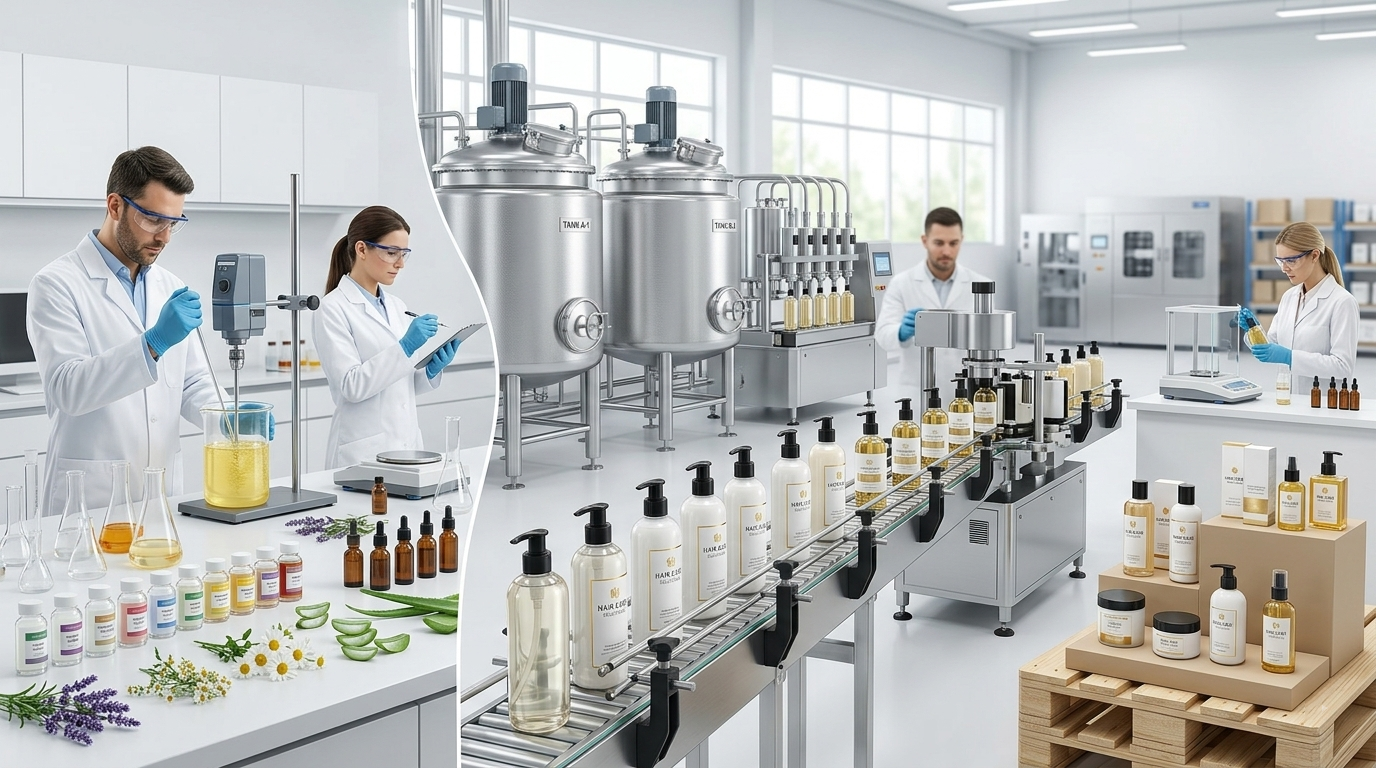
All-roundService OEM ManufacturersProvide a wider range of services during product development and manufacturing. Instead of having to manage multiple suppliers of formulation, raw materials, packaging, filling and finished goods, brands can coordinate much of a project through a single manufacturing partner.
This model is particularly useful for international hair care brands looking to reduce supply chain complexity.
What services can a full-service OEM manufacturer provide?
- Product concept development
- Recipe development
- Raw material procurement
- Sample development
- Packaging Purchasing
- Custom packaging coordination
- Filling and production
- Quality Control
- Finished product assembly
- Export-oriented production support
For example, a brand launching a four-piece set of hair care products may require shampoo, conditioner, hair mask, and hair oil. One family inherit;">Full-service hair care product OEM manufacturers are able to coordinate the formulation, packaging specifications, production planning and final assembly of an entire line of products.
This simplifies the management of the supply chain compared to working with formulators, packaging suppliers, fillers and assembly companies separately.
Why the full-scale OEM manufacturing model is attractive to international brands
International brands often need to coordinate differences in time zones, suppliers, languages, production schedules and quality requirements. Full-Service-Hersteller können die Kommunikation optimieren, indem sie eine zentrale Anlaufstelle einrichten.
This is especially valuable when launching multiple SKUs at the same time.
For example, instead of managing it separately:
- Formulation supplier
- Bottle supplier
- Hat supplier
- Label supplier
- Bottling plant
- Carton supplier
- Assembly supplier
Brands can manage much of the project through experienced manufacturers.
5. OEM hair care product manufacturer
Hair care product manufacturers typically focus on producing products based on specifications provided by their customers. Customers may already have their own formulations, packaging specifications, technical documentation, or product development teams.
This model is usually suitable for mature brands that have completed product development but need production capabilities.
Under what circumstances is it more suitable to choose OEM production?
Contract manufacturing may be a suitable option when a brand requires the following services:
- Own or control the product formula
- With detailed product specifications
- Packaging requirements have been established
- Requires additional production capacity
- Want to outsource production
- Expand existing successful products
Brands may have greater responsibility for product development and specification than a full-service OEM manufacturer.
This makes contract manufacturing particularly attractive to larger brands with established in-house R&D, product development, or procurement teams.
Hair care product factory vs. trading company: what is the difference?
International buyers lookingHair care product manufacturer, Sie können auf Hersteller treffen, die direkt mit Fabriken kommunizieren, oder Sie können auf Handelsunternehmen stoßen. Understanding the difference between the two can help brands avoid unexpected communication and supply chain issues.
Trading companies are not necessarily bad suppliers. Some trading companies have strong sourcing capabilities and are able to coordinate multiple product categories. Marken, die eine langfristige Produktentwicklung anstreben, sollten jedoch verstehen, wer den Formulierungs- und Produktionsprozess wirklich kontrolliert.
For custom hair care products, asking the supplier if they are the actual manufacturer is one of the most useful questions to ask during the purchasing process.
How to choose the right hair care product manufacturer for your brand
The bestHair care product manufacturer may not be the largest factory, nor may it be the supplier with the lowest quotation. Die richtige Wahl hängt von Ihrem Geschäftsmodell und Ihrer Produktstrategie ab.
1. Consider your product development stage
If you already have the complete formula, OEM production may be sufficient. If you only have a product concept, then an ODM or full-scale OEM manufacturer may offer better value for money.
2. Consider yourMOQ
Minimum order quantity is especially important for startups. Selbst wenn ein Hersteller über ausgezeichnete Produktionskapazitäten verfügt, ist es dennoch unangemessen, wenn seine Mindestbestellmenge viel höher ist als Ihre ursprüngliche Verkaufsprognose.
Please ask the following questions:
- Minimum order quantity per SKU
- Minimum order quantity per recipe
- Minimum order quantity for custom packaging
- Number of samples
- Trial production plan
3. Assess formulation development capabilities
If differentiation is important to your brand, look for a company with experienced formulation capabilities inherit;">'s OEM hair care product manufacturer, inherit;">Rather than selecting suppliers based solely on existing product catalogs.
Ask the manufacturer if you can adjust texture, fragrance, active ingredients, viscosity, color, cleansing power, hair care properties, and other relevant product properties.
4. Check the production and quality system
Product quality should be systematically evaluated. ISO 22716:2007 provides internationally recognized guidance on Good Manufacturing Practice (GMP) for cosmetics, covering the production, control, storage and transportation of cosmetics. Die Internationale Organisation für Normung (ISO) listet derzeit ISO 22716:2007 als aktuellen Standard auf.
Brands can review the manufacturer's quality management processes, production environment, batch records, raw material controls, finished product inspection and traceability systems before placing a large order.
5. Check packaging capabilities
Packaging is an important part of hair care product development. Hersteller können Flaschen, Pumpen, Tuben, Gläser, Beutel, Kartons, Etiketten und andere Verpackungsformate anbieten.
It is useful for international brands to assess whether a supplier can coordinate packaging sourcing and production, rather than requiring the brand to manage each packaging component individually.
6. Consider long-term scalability
Your first order may be smaller, but your manufacturing partner should be able to support your future growth.
Ask the factory if your product sells well and can handle higher volumes. A supplier that can meet demand for 1,000 units may not be able to meet demand for 50,000 units or 100,000 units.
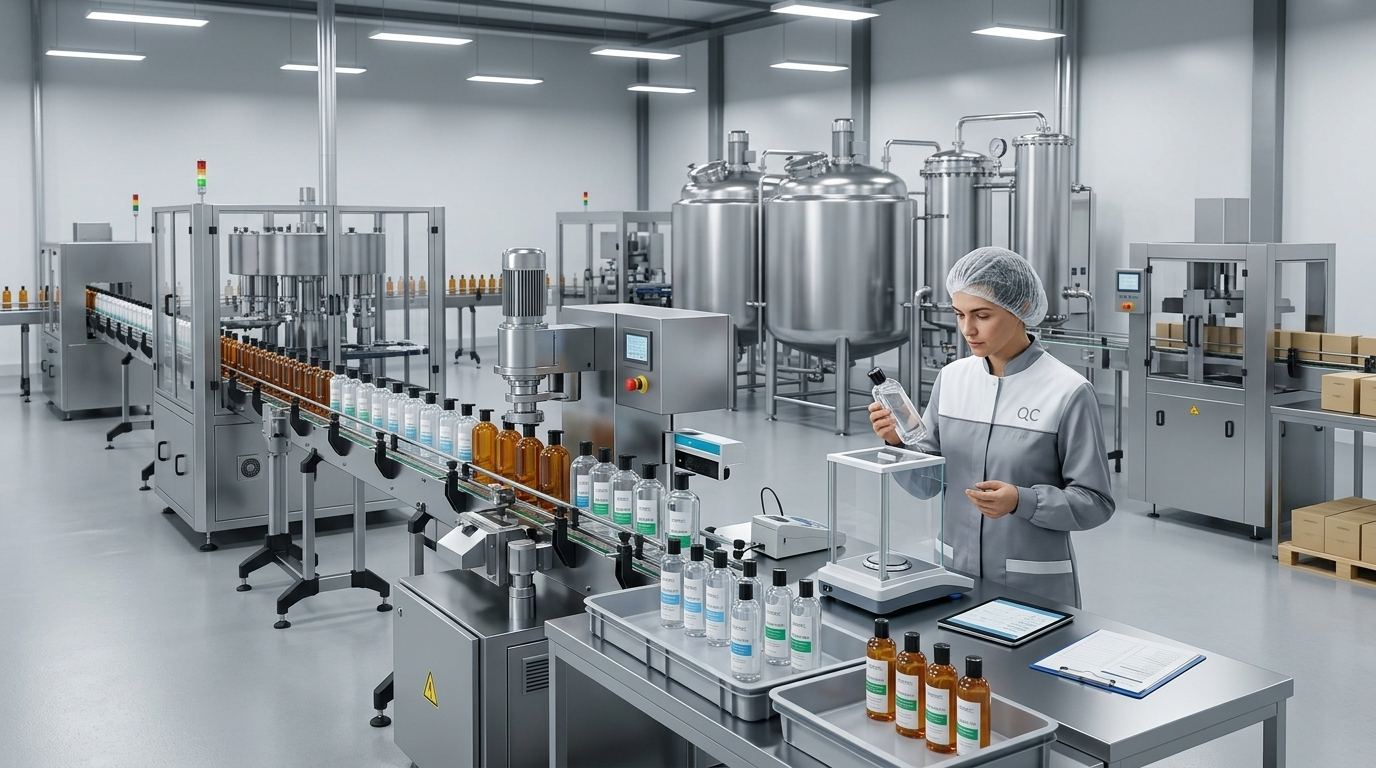
What questions should brands ask before ordering products from hair care manufacturers?
Buyers should ask clear questions about the entire production process before signing an OEM, ODM, private label or contract manufacturing agreement.
- Are you a direct manufacturer or a trading company?
- What hair care products do you specialize in?
- Do you provide OEM and ODM services?
- Can you develop custom formulas?
- What is the minimum order quantity for each SKU?
- Can samples be provided before mass production?
- What packaging options are available?
- Can you coordinate custom packaging?
- What is a typical production cycle?
- How to perform quality control during the production process?
- Can your project support multiple SKUs?
- As the brand develops, can the production scale be expanded?
These questions help buyers compare different manufacturers based on actual capabilities rather than just comparing quotes.
What type of hair care product manufacturer is best for different brands?
Why a full-service OEM can be a strong long-term strategy
Full-service OEM manufacturercan provide significant advantages.
A brand may start with just one shampoo and then gradually expand its product line to include conditioners, hair masks, hair oils, scalp serums and leave-in conditioners. Die Zusammenarbeit mit einem Produktionspartner, der die ursprüngliche Positionierung der Marke versteht, kann die zukünftige Produktentwicklung stabiler und konsistenter gestalten.
This also helps brands maintain consistency in terms of fragrance, texture, packaging appearance, product positioning and overall consumer experience.
For B2B For buyers, the most valuable manufacturing partnerships are often not those with the lowest first-order price, but those that offer reliable quality, responsive communication, flexible development, and scalable production over multiple product cycles.
Conclusion: Choosing the right hair care product manufacturer
Hair care product manufacturerThere are many kinds inherit;">, each production model meets different business needs.
Private label production is often suitable for brands that want to quickly launch new products using existing products. OEMHair care product manufacturersBetter suited for brands looking for customized formulas and product specifications. ODM production can help brands that require greater product development support, while contract manufacturers are often better suited to established companies with their own formulations and specifications.
For brands looking for an integrated partner that can cover product development, formulation, packaging, production and quality control, style="vertical-align: inherit;">Full-service OEM manufacturercan provide a more complete solution.
Ultimately, the right decision depends on your product concept, minimum order quantity, target market, budget, customization needs, and expected growth. Internationale Käufer sollten nicht einfach fragen: „Was ist der niedrigste Preis?“ but "Which manufacturer can support my brand from my first product to the next stage of development?"
For international hair care brands, choosing production partners with advantages in capabilities, quality systems, communication, customization and scalability can lay a stronger foundation for long-term development.
Frequently asked questions about hair care product manufacturers
What is a hair care product manufacturer?
Hair care product manufacturers are companies that produce shampoo, conditioner, hair masks, hair oils, scalp care products, and other hair care products for brands, retailers, hair salons, distributors, or other businesses. Abhängig von ihren Fähigkeiten können Hersteller Handelsmarken-, OEM-, ODM- oder Auftragsfertigungsdienstleistungen anbieten.
What is the difference between OEM hair care product manufacturers and private label manufacturers?
Private label manufacturers usually provide ready-made products or semi-finished products, and can customize packaging and branding according to brand requirements. Hersteller von OEM-Haarpflegeprodukten bieten in der Regel einen höheren Grad an Individualisierung und können Formeln oder Produktspezifikationen entsprechend den Markenanforderungen entwickeln.
What is a full-service OEM manufacturer?
Full-range OEM manufacturer provides services for multiple stages of the product development and manufacturing process, including formulation development, raw material procurement, sample production, packaging coordination, production, quality control, filling and final assembly. Dieses Modell kann das Supply Chain Management für internationale Marken vereinfachen.
How do I choose the best hair care product manufacturer for my brand?
Start by assessing your product development needs, including minimum order quantities, formulation requirements, packaging requirements, production capabilities, quality management systems, lead times, communications, and scalability. An excellent hair care product manufacturer should not only meet your current needs, but also have sufficient production capacity and technical strength to support your future development.