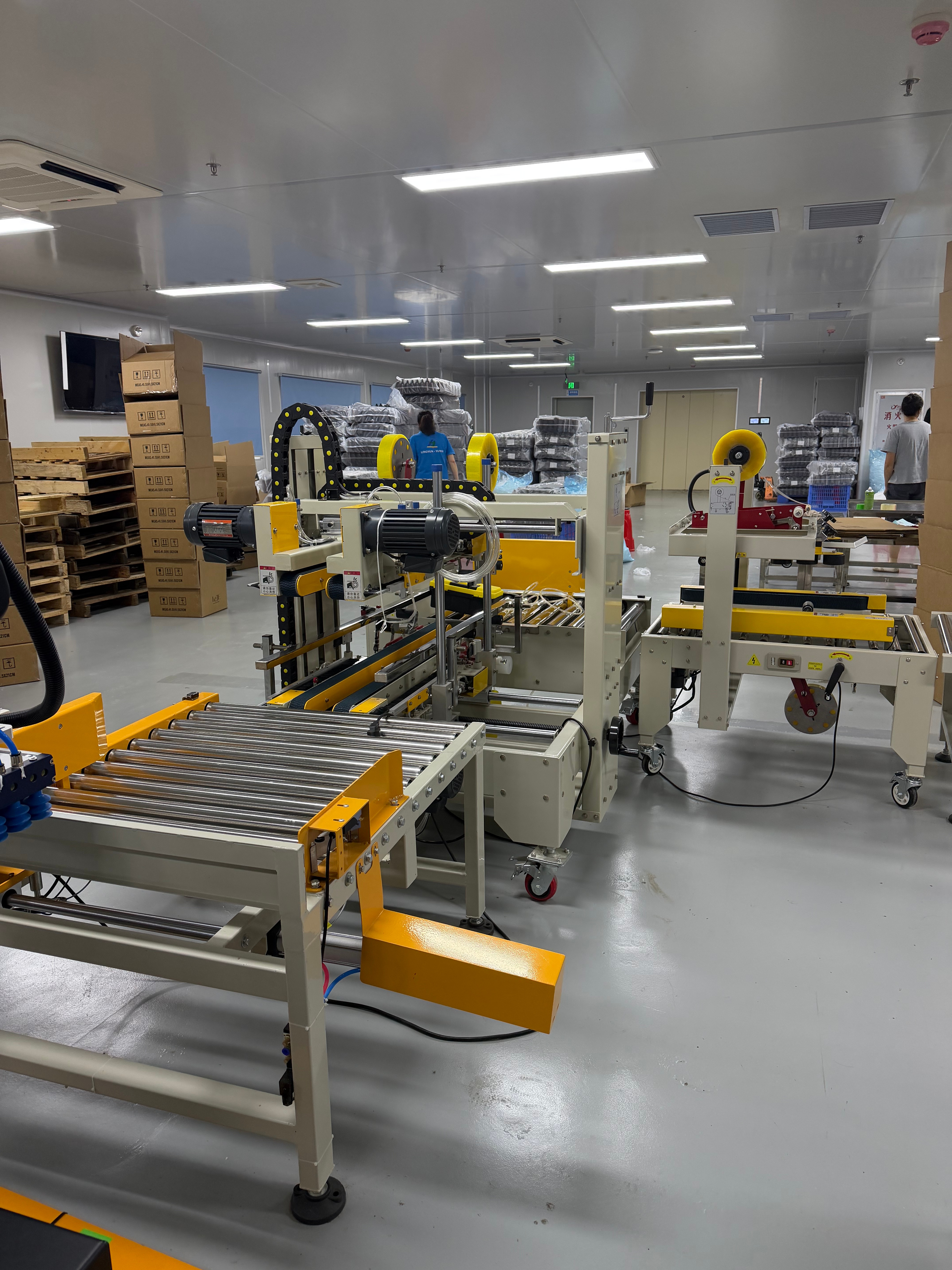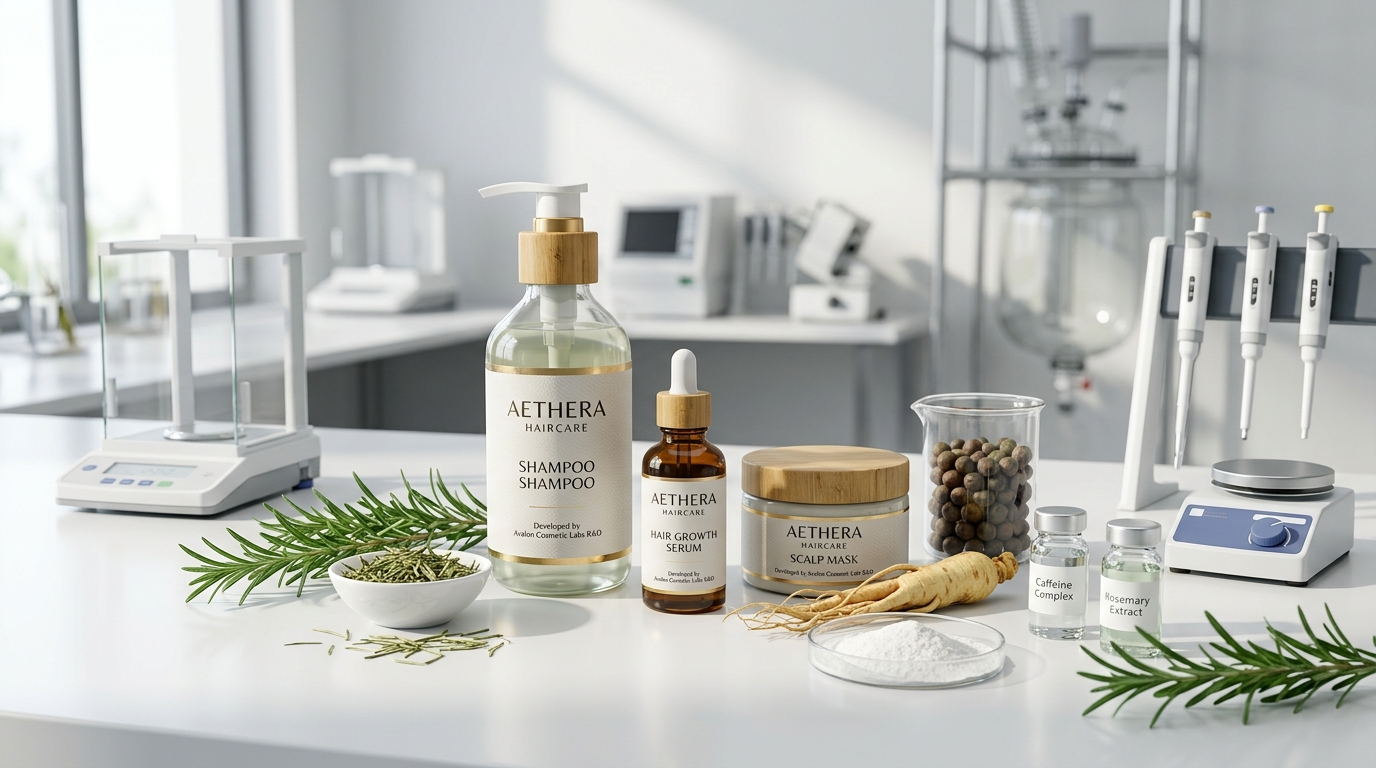

新しい製品ラインを発売する前に、適切な製品ラインを選択してくださいヘアケア製品メーカーは非常に重要です。美容ブランドにとって、適切なメーカーを選択することは最も重要な決定の 1 つです。メーカーの選択は、配合開発、製品品質、最小注文数量、包装オプション、生産リードタイム、コスト構造、ブランドの成長に伴う生産能力の拡大能力に影響を与えます。
製造環境は、米国および欧州市場の新興ブランドと既存のブランドの両方にとって混乱を招く可能性があります。プライベートブランド製品に重点を置くサプライヤーもあれば、OEM または ODM 開発に重点を置くサプライヤーもいます。一部のサプライヤーはフルサービスを提供していますが、他のサプライヤーは主に大量生産品や受託製造サービスを提供しています。
さまざまなタイプについて学ぶヘアケア製品メーカーは、ブランド所有者がより多くの情報に基づいて購入を決定するのに役立ちます。ブランドはもはや価格のみに基づいてサプライヤーを選択するのではなく、製品コンセプト、ターゲット市場、注文量、カスタマイズのニーズ、長期開発計画に基づいて自社の生産能力を評価できるようになりました。
このガイドでは、一般的な 5 種類のヘアケア製品メーカーについて説明し、そのメリット、制限、および国際的な美容ブランドの理想的な使用例を比較します。
選択する理由適切なヘアケア製品メーカーが重要です
世界の美容業界の競争はますます激化しており、ヘアケア製品は老舗企業と新興ブランドにとって重要なカテゴリーとなっています。マッキンゼーが発表した「2025年美容業界調査報告書」では、消費者の製品価値や有効性への注目が高まっており、美容ブランドは製品の差別化を強化し、より正確な消費者セグメンテーションを必要としていると指摘した。
ヘアケア ブランドにとって、これは、もはやシャンプー ボトルに充填できる工場を見つけることだけが生産ではないことを意味します。有能な家族ヘアケア製品メーカーinherit;">戦略的な製品開発パートナーになることができます。
適切な製造パートナーは、ブランドが次の目標を達成できるよう支援します。
- レシピ開発とカスタマイズ
- 原材料の調達
- 製品サンプル
- 安定性と品質テスト
- パッケージの選択とカスタマイズ
- 充填と生成
- ラベルと二次パッケージ
- 品質管理
- 生産計画
- 大量生産とスケール
プライベート ラベル市場に参入するブランドにとって、これらの機能により、新しい製品ラインの立ち上げの複雑さが大幅に軽減されます。
プライベート ブランドも化粧品業界でますます重要な部分になりつつあります。 Grand View Research は、世界のプライベートブランド化粧品市場は、ヘアケア、スキンケア、カラー化粧品、フレグランスなどのカテゴリーに及び、2026 年までに約 117 億ドル、2030 年までに約 144 億ドルに達する可能性があると推定しています。
これはブランドにチャンスをもたらしますが、メーカーの選択もさらに重要になります。少量の試用注文に適したサプライヤーは、国際小売市場への参入を準備しているブランドには適していない可能性があります。
ヘアケア製品メーカー 5 社の紹介
すべてのブランドに対応する 1 つの量産モデルはありません。最適なオプションは、必要なカスタマイズのレベル、製品をどれだけ早く市場に投入できるか、予想される注文量、独自の配合とパッケージ仕様をすでに持っているかどうかによって異なります。
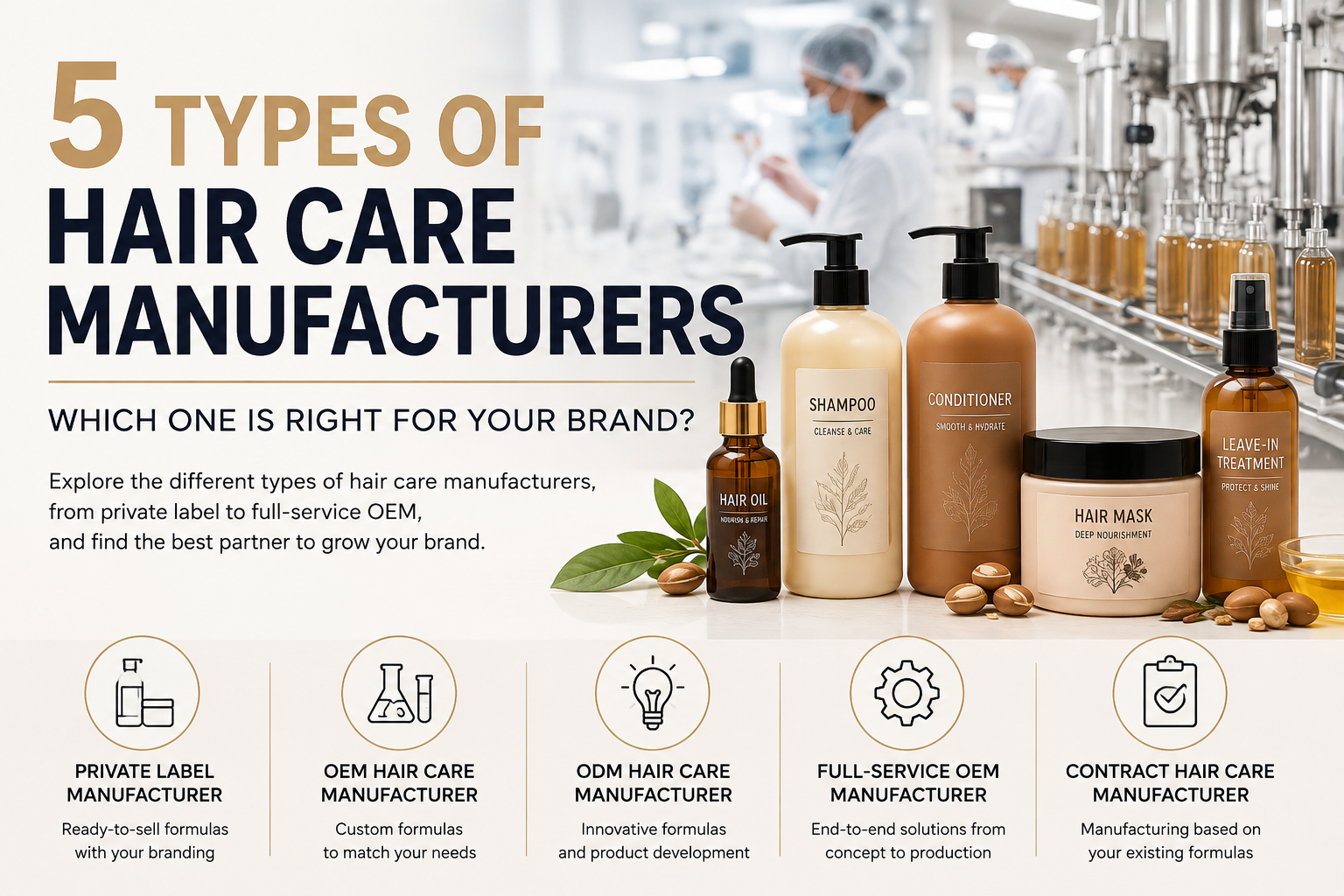
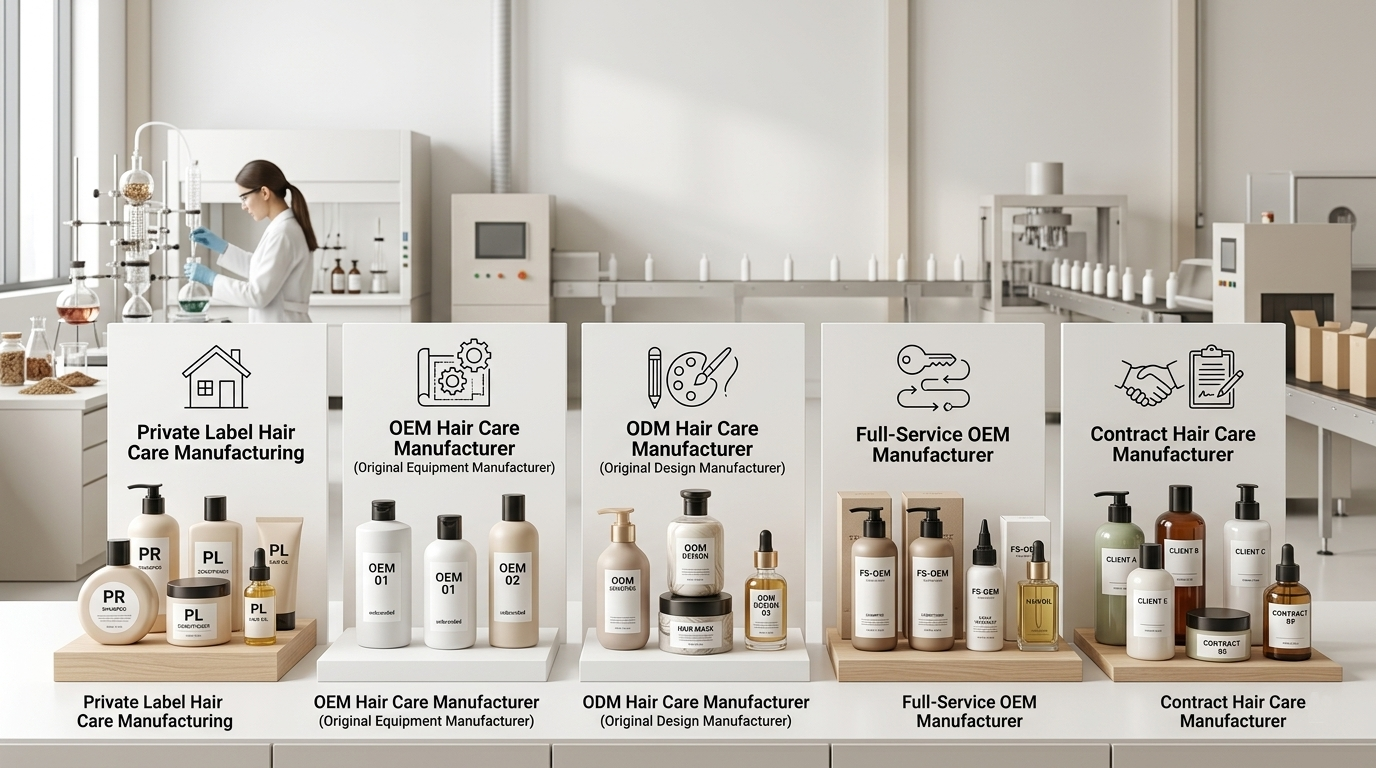
ヘアケア ブランドが通常扱うメーカーの主なタイプは次の 5 つです。
<オル>これらのカテゴリの間には重複がある場合があります。経験豊富なメーカーの中には、2 つ以上のサービスを同時に提供しているものもあります。したがって、ブランドはサプライヤーの実際の能力を評価する際に、自社の Web サイトで使用されている用語だけに頼るべきではありません。
1.プライベート ブランドヘアケア製品メーカー
所有継承;">ブランドのヘアケア製品メーカー
メーカーは、シャンプー、コンディショナー、ヘアマスク、ヘアオイル、スカルプ ケア製品、洗い流さないヘアケア製品、およびその他のヘアケア製品を含む製品カタログを提供している場合があります。
プライベート ブランドのヘアケア製品の製造プロセス
一般的なプロセスは次のようになります。
- 既存の製品またはフォーミュラを選択します
- サンプルのリクエスト
- テクスチャー、香り、色、および性能を評価する
- パッケージの選択
- カスタムラベルとブランディング
- 仕様と注文数量を確認する
- 量産開始
最大の利点は速度です。製品コンセプトや配合がすでに存在している可能性があるため、まったく新しい配合をゼロから開発するよりも開発プロセスを大幅に短縮できます。
プライベート ラベルの制作を選択するのは誰ですか?
プライベート ラベルの制作は、以下の場合に特に適しています。
- 新しいビューティー ブランド
- 中小企業
- オンライン小売業者
- サロンブランド
- インターネットの有名人が率いるブランド
- 販売代理店が新しい製品カテゴリーをテスト中
ただし、プライベート ラベル製品は、完全にカスタマイズされた製品ほど差別化されていない場合があります。多くの顧客が同様の処方を使用している場合、ブランドはパッケージング、ポジショニング、フレグランス、成分、製品の主張、または顧客体験を通じて差別化する必要があるかもしれません。
2. OEM ヘアケア製品メーカー
製品仕様をより詳細に管理したいブランドにとって、OEM ヘアケア製品メーカーは多くの場合、より良い選択肢となります。 OEM 生産には、カスタム配合、成分、フレーバー、テクスチャー、パッケージング、充填仕様、その他の製品要件が含まれる場合があります。
このブランドは、単に既存の製品を選択するのではなく、メーカーと協力して特定の要件に基づいて製品を開発します。
OEM ヘアケア製品メーカーは何をカスタマイズできますか?
- シャンプーのレシピ
- コンディショナーのレシピ
- ヘアマスクの公式
- ヘアオイルと美容液
- 頭皮ケア製品
- フレグランス
- テクスチャーと粘度
- 構成
- パッケージ仕様
- 製品の色と外観
このモデルは、明確な市場ポジショニングを持つブランドにとって特に価値があります。たとえば、ダメージを受けた髪をターゲットとするブランドでは、カスタマイズされた修復処方が必要な場合がありますが、スカルプ ケア ブランドでは、特定のスカルプ ケア成分を含む軽量のシャンプーが必要な場合があります。
OEM 生産の主な利点は製品の差別化です。主な考慮事項は、カスタム開発には通常、標準的なプライベート ラベルの生産よりも多くのコミュニケーション、プロトタイピング、テスト、開発時間が必要であるということです。
3. ODM ヘアケア製品メーカー
ODM ヘアケア製品メーカーは多くの場合、製品開発能力を提供しており、ブランドが自社の市場に適応できる独自の技術、配合、成分システム、または製品コンセプトをすでに持っている場合があります。
ODM は、製品のアイデアはあるものの、独自の策定チームを持たない企業に最適です。
OEM および ODM ヘアケア製品の製造
<テーブル> <頭>The difference between OEM and ODM is not always the same, and some companies even use the two terms interchangeably. Therefore, buyers should inquire about the services actually provided by the manufacturer and not rely solely on the label "OEM" or "ODM."
4. Full-service OEM manufacturer
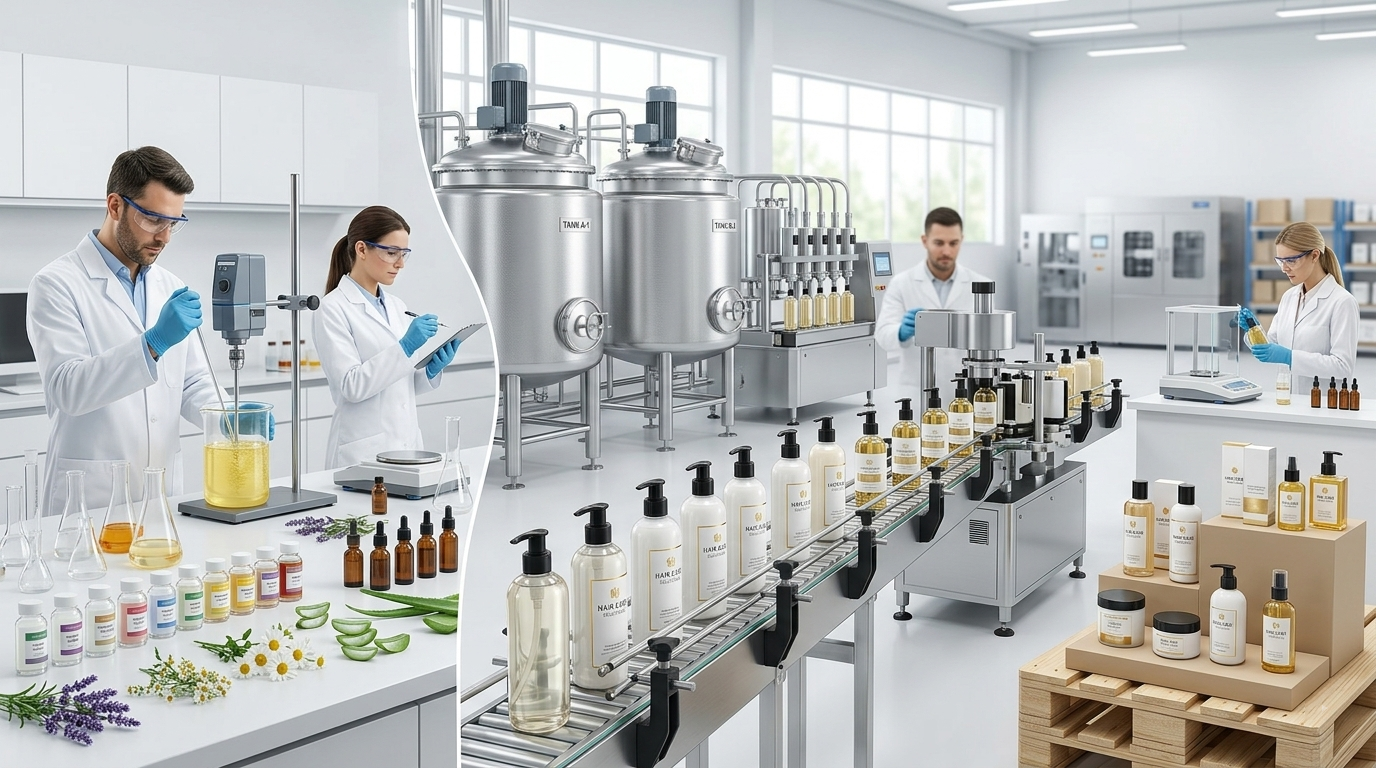
All-roundService OEM ManufacturersProvide a wider range of services during product development and manufacturing. Instead of having to manage multiple suppliers of formulation, raw materials, packaging, filling and finished goods, brands can coordinate much of a project through a single manufacturing partner.
This model is particularly useful for international hair care brands looking to reduce supply chain complexity.
What services can a full-service OEM manufacturer provide?
- Product concept development
- Recipe development
- Raw material procurement
- Sample development
- Packaging Purchasing
- Custom packaging coordination
- Filling and production
- Quality Control
- Finished product assembly
- Export-oriented production support
For example, a brand launching a four-piece set of hair care products may require shampoo, conditioner, hair mask, and hair oil. One family inherit;">Full-service hair care product OEM manufacturers are able to coordinate the formulation, packaging specifications, production planning and final assembly of an entire line of products.
This simplifies the management of the supply chain compared to working with formulators, packaging suppliers, fillers and assembly companies separately.
Why the full-scale OEM manufacturing model is attractive to international brands
International brands often need to coordinate differences in time zones, suppliers, languages, production schedules and quality requirements.フルサービスの製造業者は、中央の連絡窓口を確立することでコミュニケーションを合理化できます。
This is especially valuable when launching multiple SKUs at the same time.
For example, instead of managing it separately:
- Formulation supplier
- Bottle supplier
- Hat supplier
- Label supplier
- Bottling plant
- Carton supplier
- Assembly supplier
Brands can manage much of the project through experienced manufacturers.
5. OEM hair care product manufacturer
Hair care product manufacturers typically focus on producing products based on specifications provided by their customers. Customers may already have their own formulations, packaging specifications, technical documentation, or product development teams.
This model is usually suitable for mature brands that have completed product development but need production capabilities.
Under what circumstances is it more suitable to choose OEM production?
Contract manufacturing may be a suitable option when a brand requires the following services:
- Own or control the product formula
- With detailed product specifications
- Packaging requirements have been established
- Requires additional production capacity
- Want to outsource production
- Expand existing successful products
Brands may have greater responsibility for product development and specification than a full-service OEM manufacturer.
This makes contract manufacturing particularly attractive to larger brands with established in-house R&D, product development, or procurement teams.
Hair care product factory vs. trading company: what is the difference?
International buyers lookingHair care product manufacturer, you may encounter manufacturers who directly interface with factories, or you may encounter trading companies. Understanding the difference between the two can help brands avoid unexpected communication and supply chain issues.
<テーブル> <頭>Trading companies are not necessarily bad suppliers. Some trading companies have strong sourcing capabilities and are able to coordinate multiple product categories. However, brands seeking long-term product development should understand who truly controls the formulation and production process.
For custom hair care products, asking the supplier if they are the actual manufacturer is one of the most useful questions to ask during the purchasing process.
How to choose the right hair care product manufacturer for your brand
The bestHair care product manufacturer may not be the largest factory, nor may it be the supplier with the lowest quotation. The right choice depends on your business model and product strategy.
1. Consider your product development stage
If you already have the complete formula, OEM production may be sufficient. If you only have a product concept, then an ODM or full-scale OEM manufacturer may offer better value for money.
2. Consider yourMOQ
Minimum order quantity is especially important for startups. Even if a manufacturer has excellent production capabilities, it is still inappropriate if its minimum order quantity is much higher than your initial sales forecast.
Please ask the following questions:
- Minimum order quantity per SKU
- Minimum order quantity per recipe
- Minimum order quantity for custom packaging
- Number of samples
- Trial production plan
3. Assess formulation development capabilities
If differentiation is important to your brand, look for a company with experienced formulation capabilities inherit;">'s OEM hair care product manufacturer, inherit;">Rather than selecting suppliers based solely on existing product catalogs.
Ask the manufacturer if you can adjust texture, fragrance, active ingredients, viscosity, color, cleansing power, hair care properties, and other relevant product properties.
4. Check the production and quality system
Product quality should be systematically evaluated. ISO 22716:2007 provides internationally recognized guidance on Good Manufacturing Practice (GMP) for cosmetics, covering the production, control, storage and transportation of cosmetics. The International Organization for Standardization (ISO) currently lists ISO 22716:2007 as the current standard.
Brands can review the manufacturer's quality management processes, production environment, batch records, raw material controls, finished product inspection and traceability systems before placing a large order.
5. Check packaging capabilities
Packaging is an important part of hair care product development. Manufacturers may offer bottles, pumps, tubes, jars, bags, cartons, labels, and other packaging formats.
It is useful for international brands to assess whether a supplier can coordinate packaging sourcing and production, rather than requiring the brand to manage each packaging component individually.
6. Consider long-term scalability
Your first order may be smaller, but your manufacturing partner should be able to support your future growth.
Ask the factory if your product sells well and can handle higher volumes. A supplier that can meet demand for 1,000 units may not be able to meet demand for 50,000 units or 100,000 units.
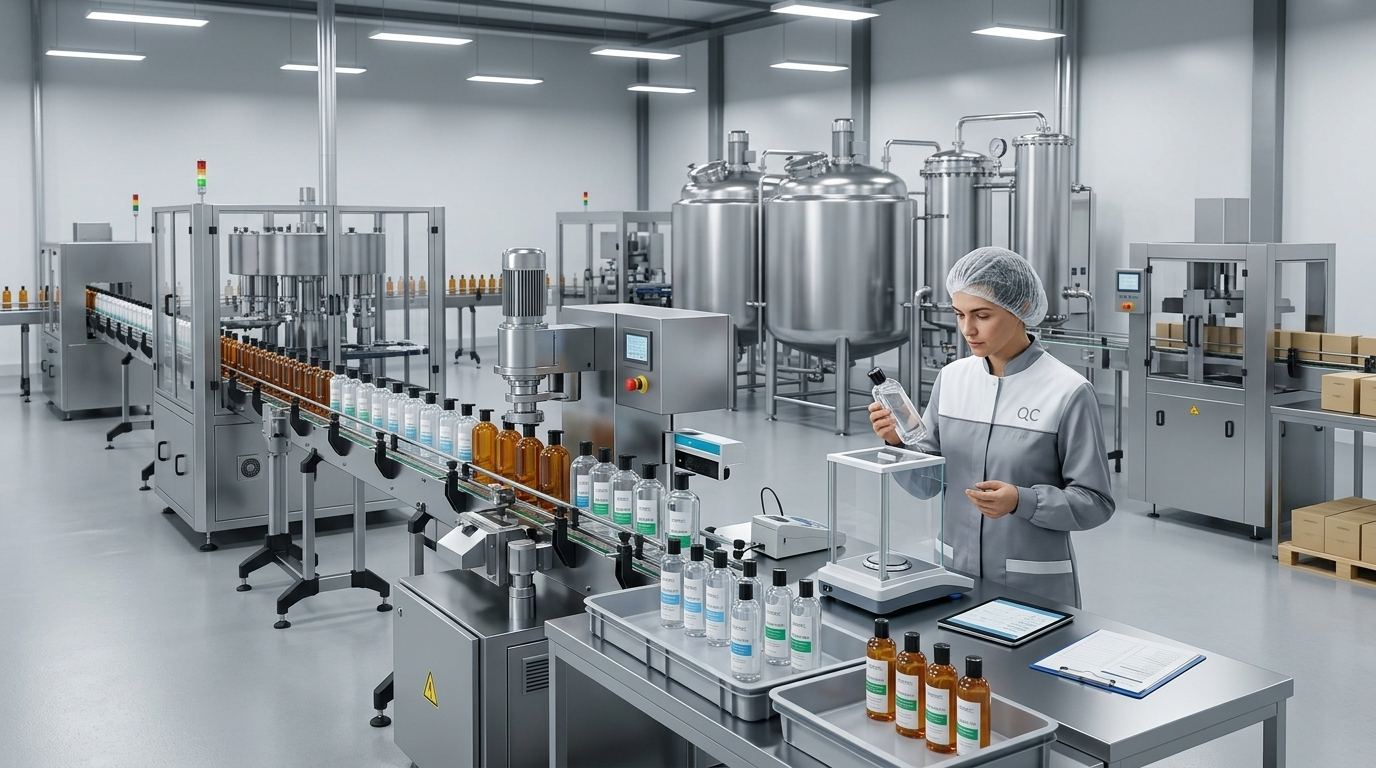
What questions should brands ask before ordering products from hair care manufacturers?
Buyers should ask clear questions about the entire production process before signing an OEM, ODM, private label or contract manufacturing agreement.
- Are you a direct manufacturer or a trading company?
- What hair care products do you specialize in?
- Do you provide OEM and ODM services?
- Can you develop custom formulas?
- What is the minimum order quantity for each SKU?
- Can samples be provided before mass production?
- What packaging options are available?
- Can you coordinate custom packaging?
- What is a typical production cycle?
- How to perform quality control during the production process?
- Can your project support multiple SKUs?
- As the brand develops, can the production scale be expanded?
These questions help buyers compare different manufacturers based on actual capabilities rather than just comparing quotes.
What type of hair care product manufacturer is best for different brands?
<テーブル> <頭>Why a full-service OEM can be a strong long-term strategy
Full-service OEM manufacturercan provide significant advantages.
A brand may start with just one shampoo and then gradually expand its product line to include conditioners, hair masks, hair oils, scalp serums and leave-in conditioners. Working with a production partner who understands the original positioning of the brand can make future product development more stable and consistent.
This also helps brands maintain consistency in terms of fragrance, texture, packaging appearance, product positioning and overall consumer experience.
For B2B For buyers, the most valuable manufacturing partnerships are often not those with the lowest first-order price, but those that offer reliable quality, responsive communication, flexible development, and scalable production over multiple product cycles.
Conclusion: Choosing the right hair care product manufacturer
Hair care product manufacturerThere are many kinds inherit;">, each production model meets different business needs.
Private label production is often suitable for brands that want to quickly launch new products using existing products. OEMHair care product manufacturersBetter suited for brands looking for customized formulas and product specifications. ODM production can help brands that require greater product development support, while contract manufacturers are often better suited to established companies with their own formulations and specifications.
For brands looking for an integrated partner that can cover product development, formulation, packaging, production and quality control, style="vertical-align: inherit;">Full-service OEM manufacturercan provide a more complete solution.
Ultimately, the right decision depends on your product concept, minimum order quantity, target market, budget, customization needs, and expected growth. International buyers should not just ask "What's the lowest price?" but "Which manufacturer can support my brand from my first product to the next stage of development?"
For international hair care brands, choosing production partners with advantages in capabilities, quality systems, communication, customization and scalability can lay a stronger foundation for long-term development.
Frequently asked questions about hair care product manufacturers
What is a hair care product manufacturer?
Hair care product manufacturers are companies that produce shampoo, conditioner, hair masks, hair oils, scalp care products, and other hair care products for brands, retailers, hair salons, distributors, or other businesses. Depending on their capabilities, manufacturers can offer private label, OEM, ODM or contract manufacturing services.
What is the difference between OEM hair care product manufacturers and private label manufacturers?
Private label manufacturers usually provide ready-made products or semi-finished products, and can customize packaging and branding according to brand requirements. OEM hair care product manufacturers usually provide a higher degree of customization and can develop formulas or product specifications according to brand requirements.
What is a full-service OEM manufacturer?
Full-range OEM manufacturer provides services for multiple stages of the product development and manufacturing process, including formulation development, raw material procurement, sample production, packaging coordination, production, quality control, filling and final組み立て。 This model can simplify supply chain management for international brands.
How do I choose the best hair care product manufacturer for my brand?
Start by assessing your product development needs, including minimum order quantities, formulation requirements, packaging requirements, production capabilities, quality management systems, lead times, communications, and scalability. An excellent hair care product manufacturer should not only meet your current needs, but also have sufficient production capacity and technical strength to support your future development.