
As a salon owner, independent stylist, or spa purchasing manager, you act as the clinical gatekeeper for your clients' hair and scalp health. Every day, you make inventory and backbar decisions that directly affect your business's retention rates and service margins. In today's professional hair care landscape, buyers and end-consumers are highly educated. They scrutinize Ingredient (INCI) lists, question product raw materials, and frequently enter salons with rigid preconceptions fueled by clean-beauty marketing campaigns.
For over a decade, the word "sulfate" has been heavily targeted by consumer media, often categorized as a toxic, universally damaging chemical class. However, from a cosmetic formulation and trichological perspective, evaluating an entire product category based on a single marketing buzzword is counterproductive to running a professional salon business.
Understanding the salon vs retail shampoo production differences is critical for B2B buyers who wish to provide high-performance backbar solutions rather than diluted mass-market configurations.
To maintain a competitive edge, maximize backbar efficiency, and correctly prescribe retail regimens, industry professionals must understand the physical chemistry of cleansing agents. This means analyzing the specific molecular weights, critical micelle concentrations (CMC), and relative irritation scores of different primary surfactants based on empirical data rather than clean-beauty marketing claims.
When managing a global supply chain, it is equally important to review the financial backend, such as the china vs usa shampoo manufacturing cost comparison, to balance high-tier formula chemistry with commercial viability.
Let us look closely at the data, chemical mechanics, and clinical application profiles of four of the most widely utilized primary surfactants in the hair care industry: Sodium Lauryl Sulfate (SLS), Sodium Laureth Sulfate (SLES), Sodium Coco-Sulfate (SCS), and Sodium C14-16 Olefin Sulfonate.
1. The Physical Chemistry of Cleansing: How Surfactants Function
To evaluate surfactants objectively, one must first understand their physical behavior at the interface of water, sebum, and the hair cuticle. The word surfactant is a portmanteau of surface-active agent.
These amphiphilic molecules possess a dual affinity within a single molecular structure: a hydrophilic (water-loving) polar head group and a lipophilic (oil-loving) non-polar hydrocarbon tail.
On an unwashed scalp, sebum, environmental particulate matter ($PM_{2.5}$ and $PM_{10}$), styling polymers, and dead corneocytes form a hydrophobic film over the hair shaft and stratum corneum. Water alone cannot remove this film due to its high surface tension ($72.8 \text{ mN/m}$ at $20^\circ\text{C}$). Surfactants lower this surface tension to under $30\text{ mN/m}$, allowing the wash water to wet the substrate thoroughly, a mechanism extensively thoroughly documented in papers published by the International Federation of Societies of Cosmetic Chemists (IFSCC).
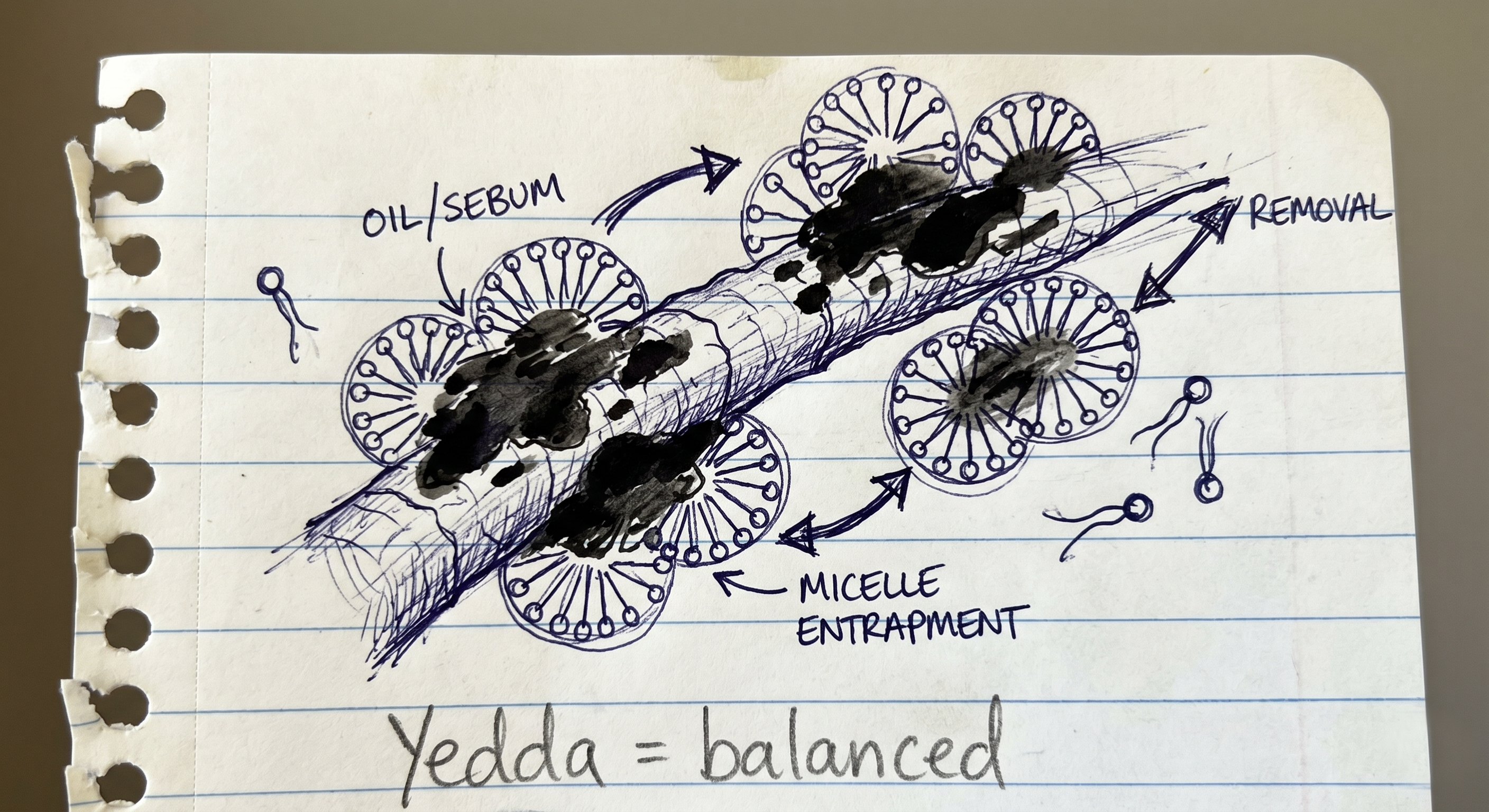
When a shampoo is massaged into wet hair, the surfactant molecules reach a specific thermodynamic threshold known as the Critical Micelle Concentration (CMC). At this precise concentration, individual surfactant monomers spontaneously organize themselves into three-dimensional spherical structures called micelles.
The lipophilic hydrocarbon tails turn inward to create a hydrophobic core, while the hydrophilic polar heads face outward into the aqueous solution. The non-polar core solubilizes, traps, and emulsifies the oils and styling resins from the hair shaft.
When the hair is rinsed, the mechanical action of the water pulls the outward-facing hydrophilic heads, lifting the entire oil-loaded micelle off the hair structure and carrying it cleanly down the drain.
2. In-Depth Chemical Profiles of the Four Competitors
The intensity of a surfactant’s cleansing action, its flash foam metrics, and its potential to cause cutaneous irritation are determined by its exact molecular geometry, carbon chain length distribution, and chemical processing.
Sodium Lauryl Sulfate (SLS) — INCI: Sodium Lauryl Sulfate
SLS is an anionic surfactant typically synthesized via the sulfation of pure lauryl alcohol (derived from palm kernel or coconut oil), followed by neutralization with sodium carbonate.
- Molecular Composition: SLS features a highly uniform, straight-chain hydrocarbon profile dominated by a short C12 (dodecyl) chain length (typically $>95\%$). Its molecular weight is relatively low, hovering around $288.38 \text{ g/mol}$.
- The Micellar Mechanism: Because the C12 chain is short and uniform, SLS creates highly compact, agile micelles with a low CMC (approximately $8 \text{ mM}$ in pure water). These small monomers can easily penetrate the tight intercellular lipid bilayers of the skin’s stratum corneum.
- Performance Metrics: SLS reduces water surface tension faster than almost any other surfactant, resulting in immediate "flash foam" and excellent emulsification of heavy fats. However, this deep penetration can disrupt the skin’s natural moisturizing factors (NMF) and denature structural keratin proteins, leading to high scores on the Zein Protein Irritation Test if used as a standalone cleanser.
Sodium Laureth Sulfate (SLES) — INCI: Sodium Laureth Sulfate
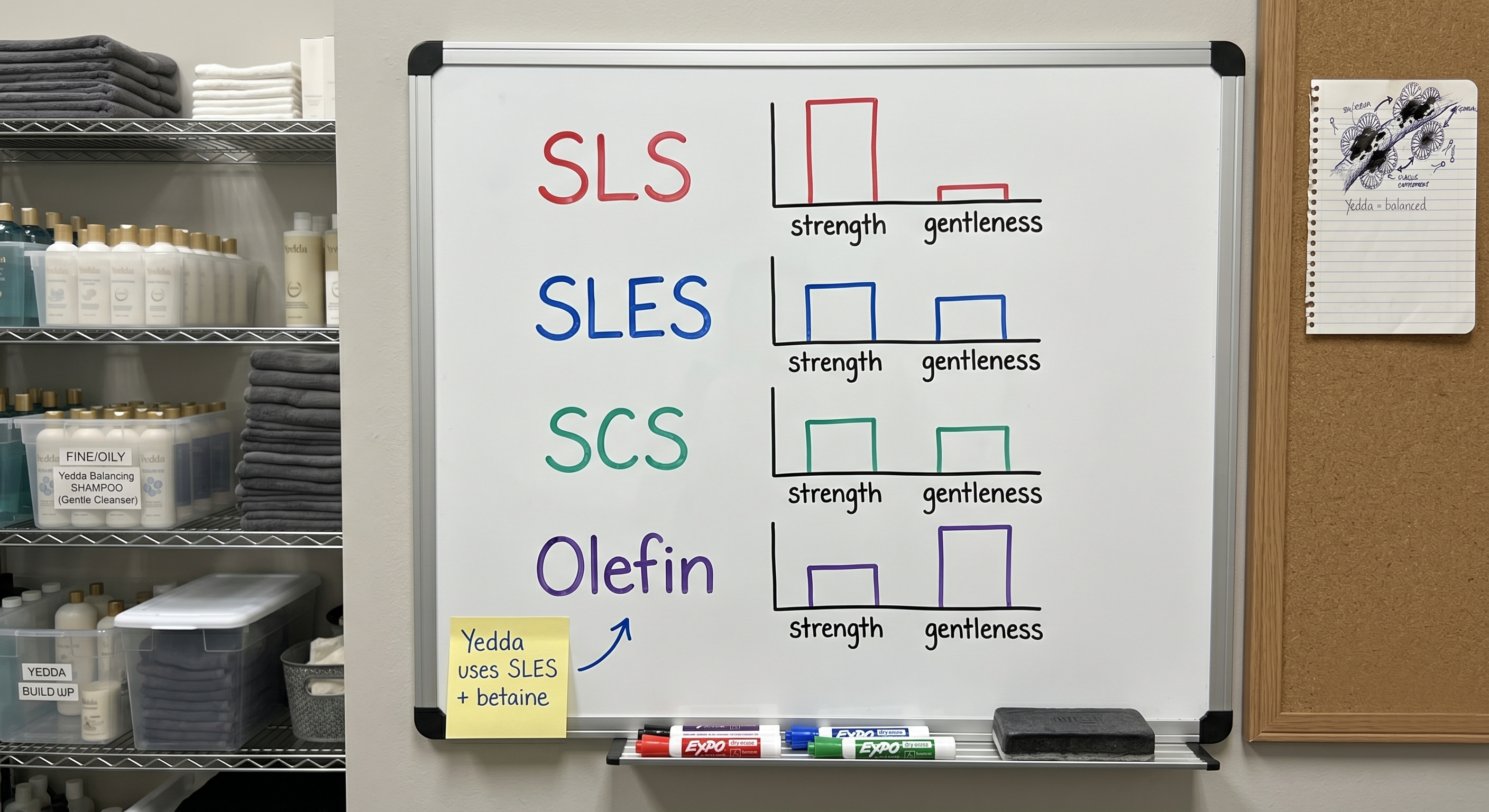
SLES is created by modifying SLS through a process called ethoxylation. Lauryl alcohol is reacted with ethylene oxide before undergoing sulfation. This adds repeating ether groups ($-CH_2-CH_2-O-$) between the alkyl chain and the sulfate head group. In professional formulations, the average degree of ethoxylation is typically 2 to 3 moles.
- Molecular Composition: The insertion of these ethoxy groups significantly alters the physical properties of the molecule. It raises the average molecular weight to roughly $376.48 \text{ g/mol}$ (for an average of 3 ethoxyl groups) and changes the geometry of the molecule.
- The Micellar Mechanism: The added ethoxy chains act as bulky spacers, causing the hydrophilic head group to occupy a much larger space. This steric hindrance prevents SLES monomers from easily entering the microscopic lipid matrix of the scalp.
- Performance Metrics: Because it is restricted to surface-level action, SLES cleanses hair without penetrating or stripping the delicate skin barrier. According to long-term safety monographs by the Cosmetic Ingredient Review (CIR), SLES retains excellent water solubility, remains highly stable across a wide pH range ($5.0 \text{ to } 7.5$), and creates a remarkably dense, creamy lather while cutting Zein irritation scores by over $60\%$ compared to pure SLS.
Sodium Coco-Sulfate (SCS) — INCI: Sodium Coco-Sulfate
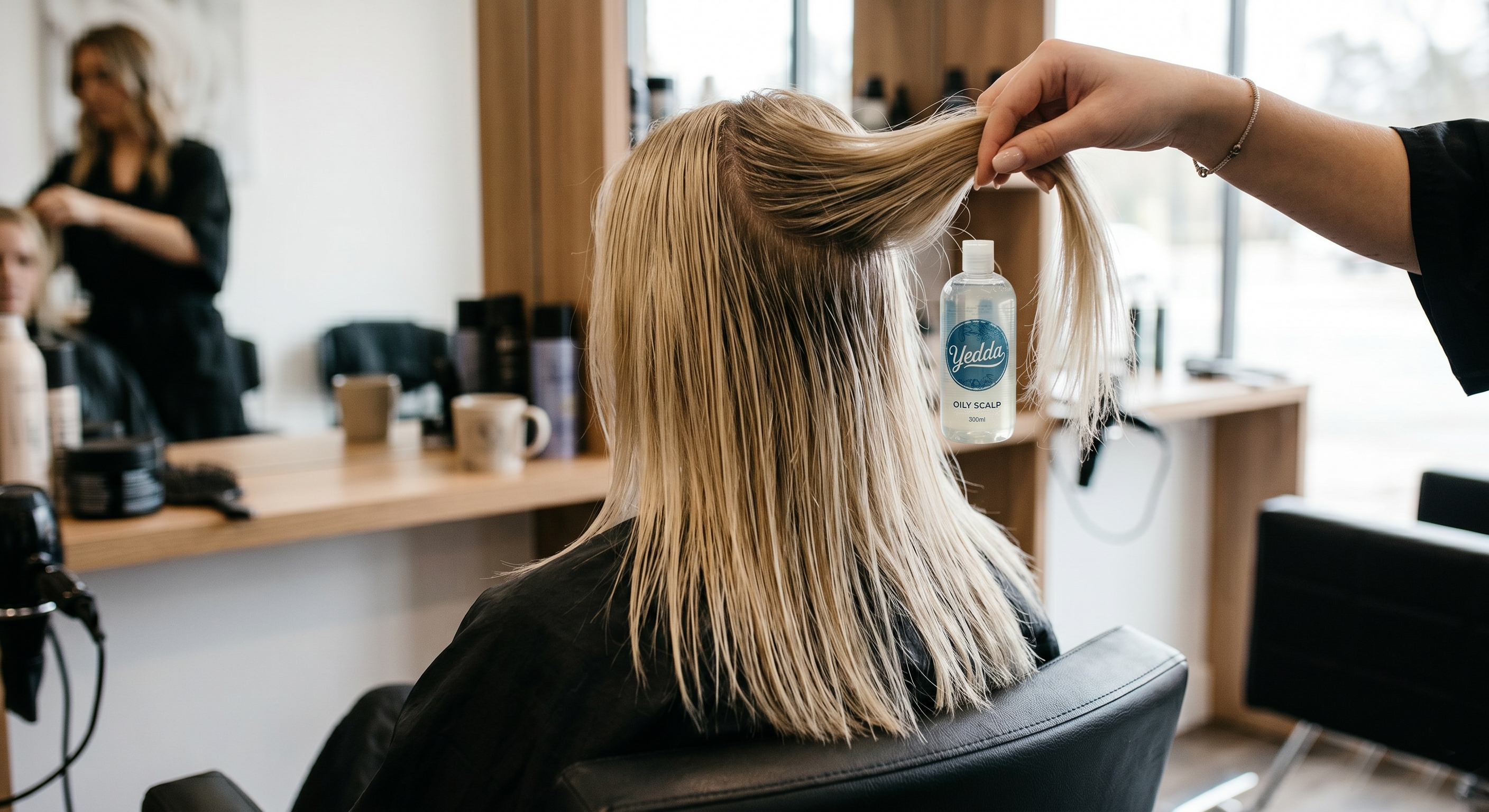
SCS is frequently marketed as a natural, eco-friendly, or plant-derived alternative to traditional sulfates. To understand its true performance, one must look closely at its chemical extraction path. While SLS is made from purified, isolated C12 lauryl alcohol, SCS is made from the whole, unrefined fatty acid blend obtained from cold-pressed coconut oil.
- Molecular Composition: Coconut oil naturally contains a broad spectrum of fatty acids. Therefore, when sulfated and neutralized, SCS is not a single compound but a complex, pre-existing chemical blend of multiple sodium alkyl sulfates: C12 (Lauryl Sulfate) $50\% \text{ to } 55\%$, C14 (Myristyl Sulfate) $16\% \text{ to } 20\%$, C16 (Cetyl Sulfate) $8\% \text{ to } 10\%$, C18 (Stearyl Sulfate) $2\% \text{ to } 4\%$, and the remaining balance of C8-C10 (Caprylic/Capric Sulfates).
- The Micellar Mechanism: Because it is composed of over $50\%$ lauryl chains, SCS chemically contains a substantial amount of SLS. However, the remaining $45\%+$ consists of longer, heavier C14 to C18 chains. These longer carbon chains create larger, mixed micelles with lower skin penetration potential.
- Performance Metrics: SCS provides a natural cushioning effect. It offers the high-foaming characteristics of SLS but feels slightly milder on the scalp because the heavier molecules slow down the overall rate of skin penetration.
Sodium C14-16 Olefin Sulfonate — INCI: Sodium C14-16 Olefin Sulfonate
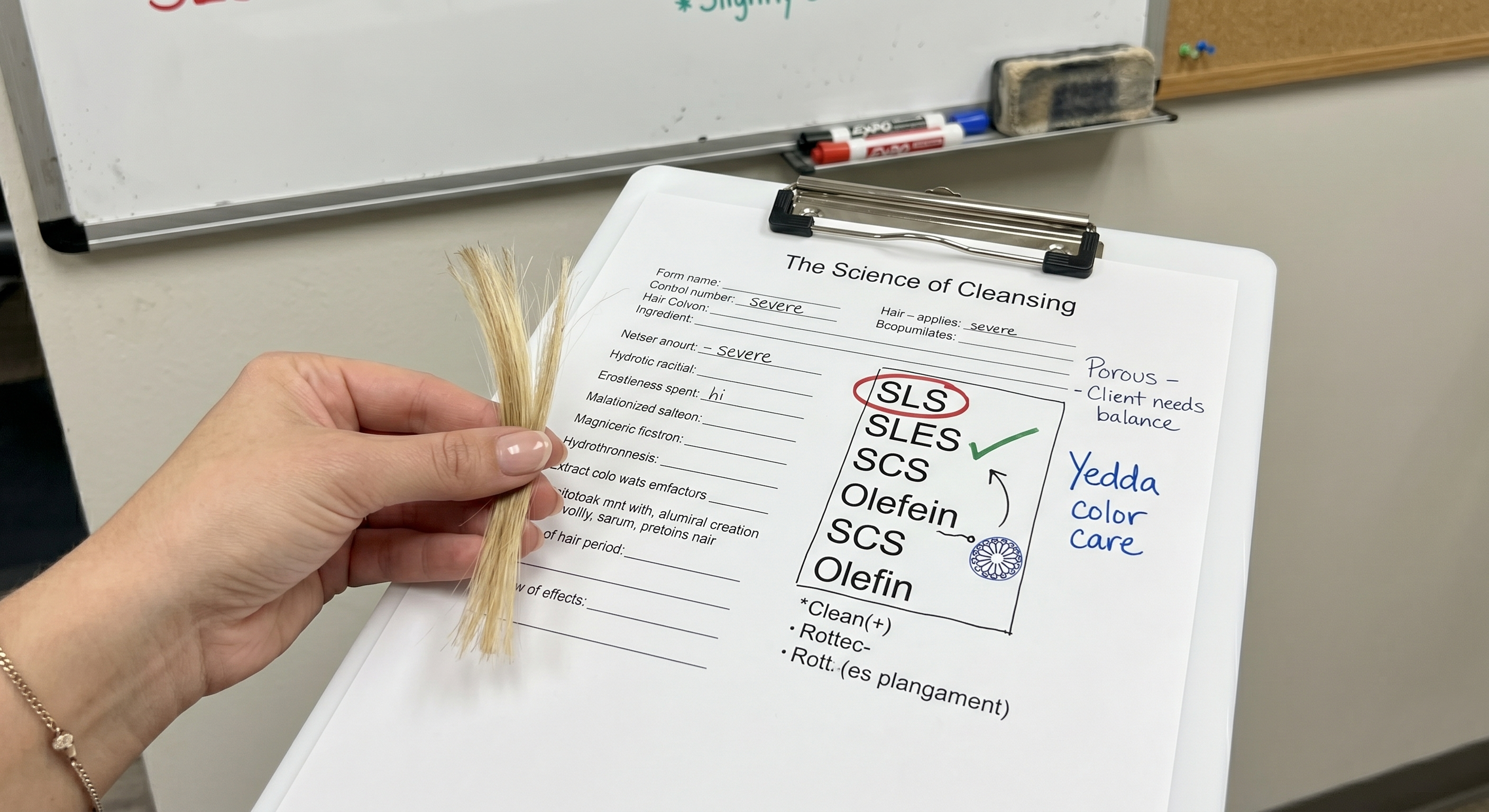
This surfactant has become the primary choice for brands formulating clarifying products in accordance with modern sulfate-free shampoo trends in haircare. Structurally, it is synthesized via the sulfonation of unbranched long-chain alpha-olefins.
- Molecular Composition: The crucial chemical distinction lies in its functional group connection. In a sulfate (like SLS or SLES), the sulfur atom is bound to the carbon chain through a linking oxygen atom ($\text{C}-\text{O}-\text{SO}_3^-$). In a sulfonate, the sulfur atom is bound directly to a carbon atom ($\text{C}-\text{SO}_3^-$). This direct carbon-sulfur bond is chemically stable and less susceptible to hydrolysis in acidic conditions.
- The Micellar Mechanism: It consists of a blend of C14 and C16 alkenyl sulfonates and hydroxyalkane sulfonates. Its micellar structure is tightly packed and exhibits strong foaming capacity even in hard water containing high concentrations of calcium and magnesium ions.
- Performance Metrics: Because it lacks the $\text{C}-\text{O}-\text{S}$ linkage, it can legally be labeled "Sulfate-Free." However, lab data shows that its degreasing profile, surface-tension reduction rate, and Zein protein irritation potential are actually quite close to SLS. It is a robust, heavy-duty cleanser that should not be mistaken for a mild amino acid surfactant.
3. Quantitative Formulation Comparison Matrix
When assessing inventory from different manufacturers, technical purchasing managers can use these established laboratory metrics to evaluate raw performance:
| Chemical Parameter | SLS (Sodium Lauryl Sulfate) | SLES (Sodium Laureth Sulfate, 2-3 EO) | SCS (Sodium Coco-Sulfate) | C14-16 Olefin Sulfonate |
|---|---|---|---|---|
| Primary Classification | Anionic Sulfate | Anionic Ethoxylated Sulfate | Anionic Mixed-Alkyl Sulfate | Anionic Sulfonate |
| Legal "Sulfate-Free" Status | No | No | No | Yes |
| Average Molecular Weight | $288.38 \text{ g/mol}$ | $\approx 376.48 \text{ g/mol}$ | Variable ($\approx 302 \text{ g/mol}$) | $\approx 314.42 \text{ g/mol}$ |
| Critical Micelle Concentration (CMC) | $\approx 8.0 \text{ mM}$ | $\approx 3.0 \text{ mM}$ | $\approx 5.0 \text{ mM}$ | $\approx 2.3 \text{ mM}$ |
| Zein Score (Irritation Index) | High ($350 - 400 \text{ mg N/100mL}$) | Low-Medium ($110 - 150 \text{ mg N/100mL}$) | Medium ($220 - 260 \text{ mg N/100mL}$) | Medium-High ($290 - 330 \text{ mg N/100mL}$) |
| Flash Foam Kinetics (Volume) | Immediate, High ($180\text{mm}$ Initial) | High, Stable ($175\text{mm}$ Initial) | Medium-High ($160\text{mm}$ Initial) | Very High, Dense ($185\text{mm}$ Initial) |
| Sebum Emulsification Rate | $98\%$ removal rate | $85\%$ removal rate | $90\%$ removal rate | $95\%$ removal rate |
4. Trichological Application Guidelines for Professional Hair Salons
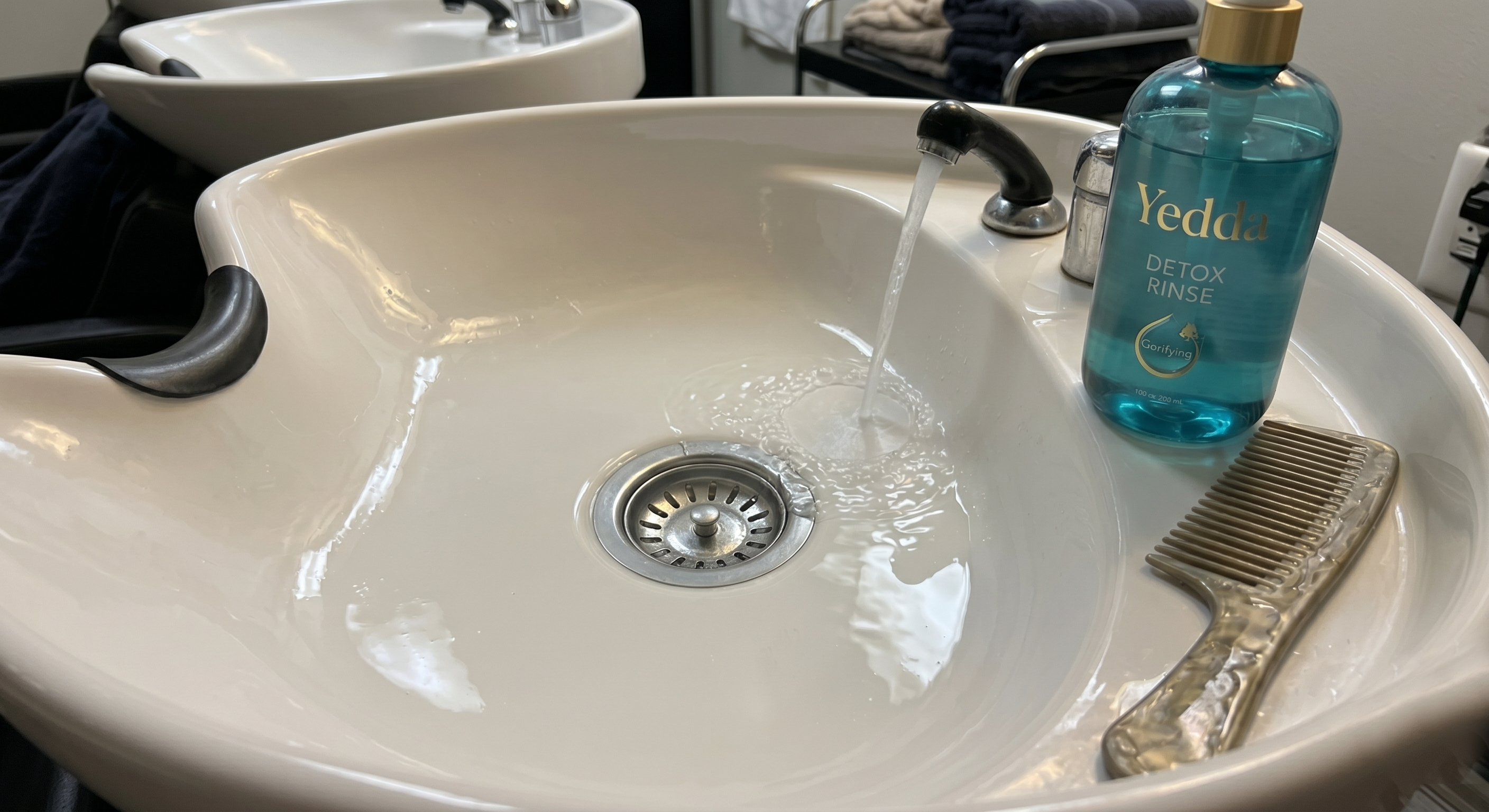
To optimize backbar services and minimize product returns, chemical selection must be precisely matched to the client's specific scalp sebum production rate, hair shaft porosity, and chemical processing history. These real-world dynamics are essential to review across diverse salon case studies.
Case Study A: Fine, Limp Hair with Seborrheic Tendencies
The Client Profile: Hair diameter $< 50 \mu\text{m}$, high sebaceous gland activity resulting in visible oil pooling within 18 hours of washing, flat root alignment, and lack of styling retention.
The Formulation Strategy: A primary surfactant blend of SLES paired with SCS or C14-16 Olefin Sulfonate.
The Scientific Rationale: Fine hair is easily weighed down by its own weight when coated in a thin layer of liquid sebum (composed of triglycerides, wax esters, and squalene). Low-cleansing amino acid surfactants often leave these lipids behind, causing the hair to look flat. Using a blend of SLES and SCS ensures complete emulsification of the oily film. This resets the contact angle of the hair root, providing immediate volume, a clean feel, and excellent root lift.
Case Study B: High-Porosity, Bleached, and Color-Treated Hair
The Client Profile: Cortical structure exposed via repeated chemical lifts (Level 9+ blonde), high oxidative damage, chipped or missing cuticle scales, and low tensile strength.
The Formulation Strategy: Sulfate-free amino acid systems, or heavily buffered SLES formulations containing zero pure SLS.
The Scientific Rationale: When the hair's protective cuticle scales are damaged by chemical processing, the inner cortex becomes highly vulnerable. High-penetration surfactants like SLS can enter the open cortical structure, stripping out internal lipids and accelerating the leaching of water-soluble artificial color molecules.
For these compromised structures, substituting harsh defaults with an intensive nutritive system like the natural seaweed highly moisturizing shampoo preserves the delicate artificial hair pigments trapped inside the cortex while restoring essential trace minerals to the fiber matrix.
Case Study C: Heavy Styling Build-Up and Hard Water Clarification (Detox)
The Client Profile: Frequent users of anhydrous styling waxes, high-molecular-weight dimethicone silicones, or swimmers exposed to hard water minerals ($\text{Ca}^{2+}$ and $\text{Mg}^{2+}$) and chlorine.
The Formulation Strategy: C14-16 Olefin Sulfonate or SLS supported by a strong chelating agent like Tetrasodium EDTA.
The Scientific Rationale: Styling clays and water-insoluble polymers form a stubborn, layer-by-layer film over the hair cuticle that resists mild surfactants. This is where the high cleaning efficiency of C14-16 Olefin Sulfonate becomes a major professional asset. It breaks down these stubborn polymeric films and lifts away bound mineral complexes.
For clients suffering from simultaneous thinning or hair loss caused by follicle clogging, transitioning them later to a clarifying, growth-stimulating regimen like the natural onion rosemary biotin shampoo and conditioner set for hair growth sulfate free vegan hair care ensures an unblocked, highly oxygenated follicular environment without compromising scalp health.
5. The Co-Surfactant Buffer: Why the Ingredient List Lies
A common mistake when analyzing ingredient lists is judging a primary surfactant as if it works alone in the bottle. In professional cosmetic formulation, a primary surfactant is critically engineered to never be used in isolation. The total performance, irritation score, and mildness of a shampoo depend heavily on its secondary (co-surfactant) matrix.
When harsh anionic surfactants like SLS or C14-16 Olefin Sulfonate are mixed with amphoteric co-surfactants—such as Cocamidopropyl Betaine (CAPB) or Sodium Cocoamphoacetate—they undergo a physical change called mixed micelle formation.
Clinical studies indexed by the National Center for Biotechnology Information (NCBI) indicate that optimizing this secondary surfactant ratio directly limits barrier disruption and prevents transepidermal water loss (TEWL).
The amphoteric molecules position themselves between the negatively charged head groups of the anionic surfactants. This reduces the electrostatic repulsion between the negative charges, allowing the molecules to pack into a larger, more stable, and irregularly shaped mixed micelle. These larger mixed micelles have a significantly harder time passing through the narrow channels of the skin barrier. Consequently, a shampoo that uses SLES or C14-16 Olefin Sulfonate properly buffered with $5\% \text{ to } 8\%$ Cocamidopropyl Betaine and non-ionic alkyl glucosides can deliver a lower irritation score than a poorly made "sulfate-free" product that relies solely on raw, unbuffered olefin sulfonate.
Technical Purchasing and Inventory Strategies for B2B Buyers
To optimize your inventory and ensure your product selections are grounded in scientific fact, consider implementing these three manufacturing principles:
- Look for Formulations with Mixed Surfactant Systems: When choosing private label inventory or premium retail products, look for formulas that combine an anionic primary cleanser (like SLES or SCS) with an amphoteric co-surfactant (like Cocamidopropyl Betaine) and a non-ionic stabilizer (like Lauryl Glucoside). This layout delivers excellent flash foam alongside a well-protected skin barrier. You can evaluate balanced configurations directly through our curated professional wholesale index at the Yedda products item portfolio.
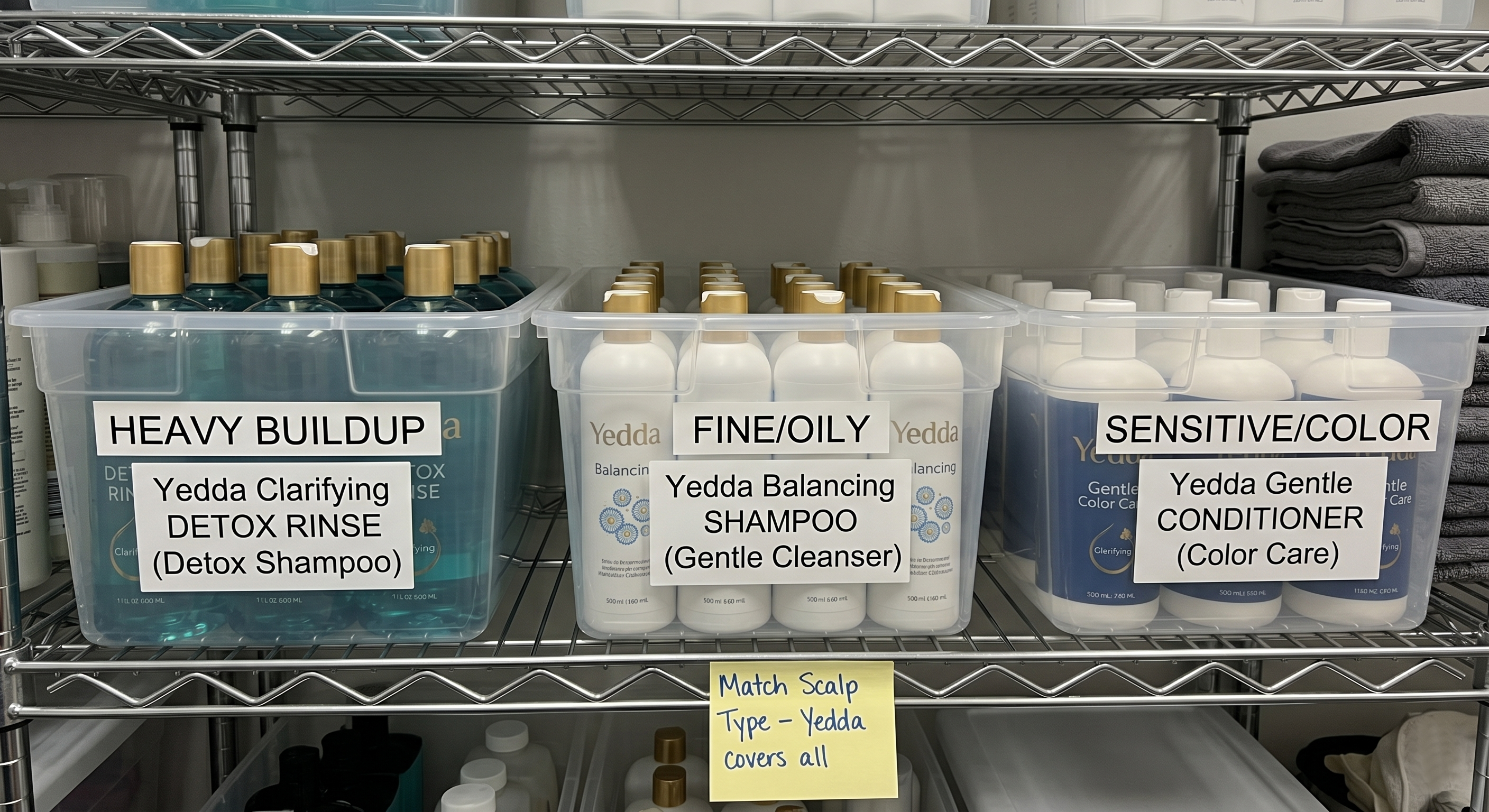
- Match Product Function directly to Scalp Typology: Do not try to find a single "holy grail" shampoo for all clients. Stock your backbar with a clear range of products: an olefin sulfonate-based clarifying shampoo for heavy buildup removal, an SLES/SCS-based shampoo for fine or oily hair, and a mild, amino-acid-based shampoo for delicate, post-color maintenance.
- Train Your Staff on Ingredient Mechanics: Ensure your salon stylists and sales representatives can confidently explain product selection using professional, anatomy-based terms—such as "molecular size," "surface residue," and "lipid protection"—rather than relying on vague, unscientific marketing clichés like "chemical-free" or "pure."
Frequently Asked Questions (FAQ)
Is C14-16 Olefin Sulfonate considered a sulfate?
No, chemically it is a sulfonate, not a sulfate. While sulfates contain a sulfur atom bonded to the carbon chain through a linking oxygen atom, sulfonates feature a sulfur atom bonded directly to a carbon atom. This structural difference allows products containing C14-16 Olefin Sulfonate to legally and regulatory-wise carry a "Sulfate-Free" label on their packaging.
Why does my hair feel dry after using a sulfate-free shampoo?
This usually happens because the formula uses a strong primary surfactant like C14-16 Olefin Sulfonate without enough secondary surfactants to balance it out. Laboratory tests show that unbuffered olefin sulfonate has a degreasing profile and irritation potential very close to SLS. This proves that a "sulfate-free" label does not automatically mean a product is mild or hydrating.
Can Sodium Coco-Sulfate (SCS) trigger a negative reaction in clients sensitive to SLS?
Yes, it can. Because SCS is derived from whole coconut oil, it naturally retains the oil's fatty acid distribution, which consists of 50% to 55% lauric acid. This means SCS chemically contains a substantial amount of Sodium Lauryl Sulfate. While the remaining heavier fatty acids make it slightly gentler than pure SLS, it can still cause a reaction in clients with a known, severe sensitivity to SLS.
How does ethoxylation make SLES gentler than SLS?
Ethoxylation inserts repeating ether groups into the molecule, which increases its overall molecular weight and creates steric hindrance around the hydrophilic head group. Because the SLES molecule is much larger and more bulky than SLS, it cannot easily penetrate the tight lipid bilayers of the scalp's stratum corneum, confining its cleansing action strictly to the surface of the hair and skin.
Which surfactant is best for maintaining professional salon hair color?
For post-color maintenance, large-molecule ethoxylated surfactants like SLES (when properly balanced) or very mild, non-sulfate amino acid surfactants (such as Sodium Lauroyl Methyl Isethionate) are ideal. These surfactants clean the surface of the hair without entering the open cortical structure of high-porosity hair, which prevents water-soluble artificial color pigments from leaching out.